


















Electrochemical Specifications & RuO2-IrO2 Coating Chemistry
High-efficiency electrolytic chlorine generation in saltwater swimming pools requires catalytic anode coatings engineered to operate at low sodium chloride concentrations (2,500 to 4,000 ppm NaCl). Direct factory supply of MMO Titanium Anodes from China Titanium Factory ensures high electrocatalytic selectivity, maintaining a chlorine evolution current efficiency of ≥90% while suppressing parasitic oxygen evolution reactions.
In standard chlor-alkali electrolysis cells, high salinity minimizes parasitic reactions. Swimming pool salt water chlorinators (SWG), however, operate under dilute conditions where the standard reduction potential of the Chlorine Evolution Reaction (CER, $E^0 = 1.358\text{ V}$) competes directly with the Oxygen Evolution Reaction (OER, $E^0 = 1.229\text{ V}$).
Chlorine Evolution Overpotential ($\eta_{Cl_2}$): The incremental electrochemical potential above the thermodynamic equilibrium required to drive the oxidation of chloride ions ($2\text{Cl}^- \rightarrow \text{Cl}_2 + 2e^-$) at the electrocatalytic surface interface.
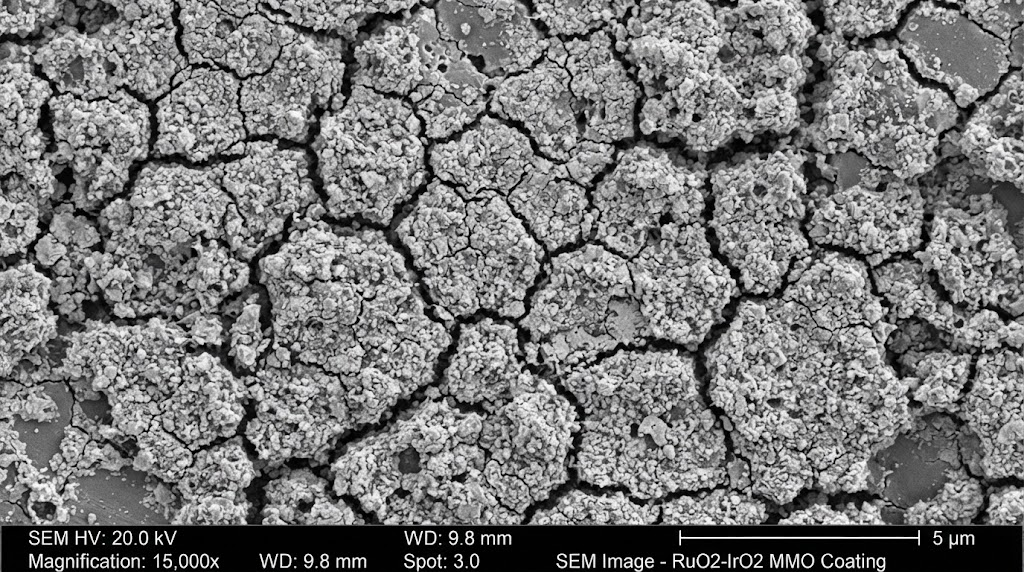
Our mixed metal oxide formulations pair ruthenium dioxide ($\text{RuO}_2$) as the active primary electrocatalyst with iridium dioxide ($\text{IrO}_2$) as the crystalline stabilizing agent. By precisely controlling the molar ratio ($\text{Ru}:\text{Ir} = 65:35$ to $70:30$), the coating lowers the chlorine evolution overpotential to < 40 mV at a current density of $1,000\text{ A/m}^2$, while establishing a high overpotential for oxygen evolution (> 350 mV). This prevents unnecessary power consumption and substrate oxidation.
| Operating Parameter | Target Range | CTF Laboratory Benchmark |
|---|---|---|
| Electrolyte Salinity (NaCl) | 2,500 – 4,500 ppm | Nominal: 3,200 ppm |
| Working Cell Voltage | 6.0 – 24.0 V DC | 12.0 – 18.5 V DC |
| Current Density Range | 400 – 1,200 A/m² | Optimum: 600 – 800 A/m² |
| Chlorine Current Efficiency | ≥ 85% | 91.5% to 94.2% |
| Operating Temperature | 10°C – 45°C | Calibrated at 25°C |
Substrate Metallurgy: ASTM B265 Grade 1 Titanium Standards
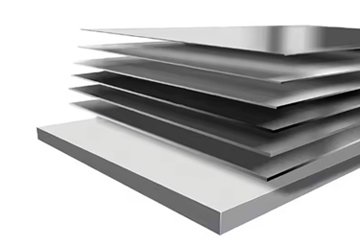
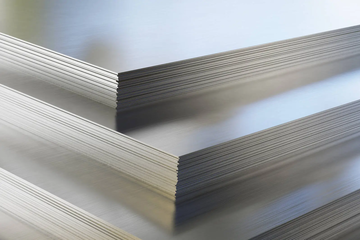
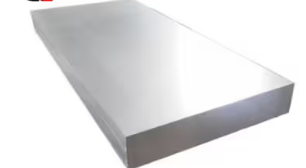
The operational integrity of a salt chlorinator electrode relies on the underlying substrate. We strictly utilize commercially pure (CP) ASTM B265 Titanium Sheet & Plate (Grade 1). Its low interstitial element profile ($O \le 0.18\%$, $Fe \le 0.20\%$, $C \le 0.08\%$) delivers superior electrical conductivity, maximum ductility for precision stamping, and corrosion resistance under reversing polarities.
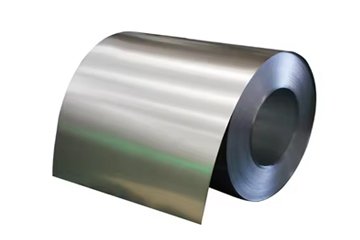
Every titanium coil undergoes automated surface preparation:
Corundum Abrasive Blasting: Standardizes macroscopic surface profiles, removing ambient oxide layers.
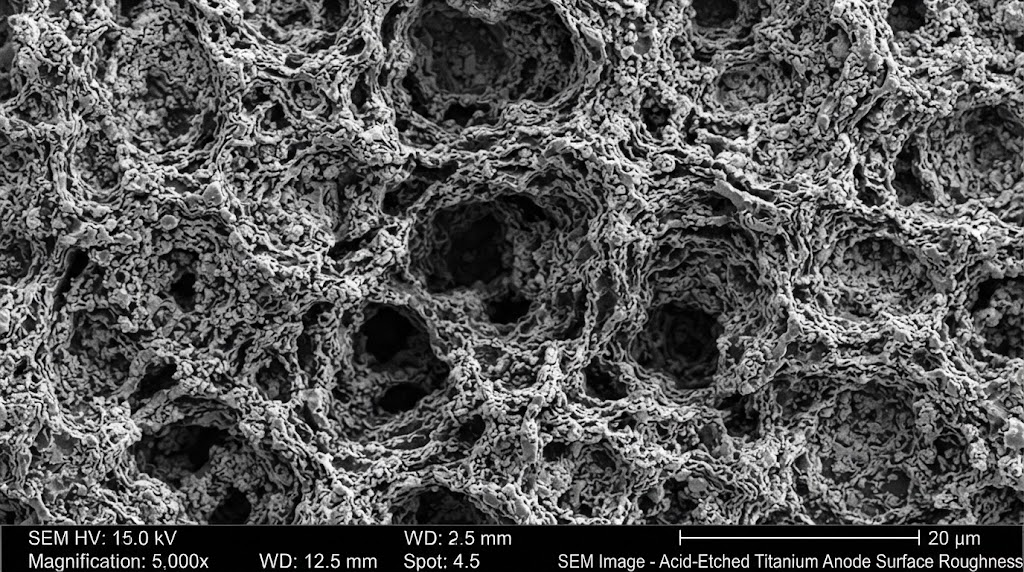
Reflux Oxalic Acid Etching: A heated multi-stage etch generates an open microporous surface with an average roughness of $Ra = 2.5\text{ to }4.0\text{ }\mu\text{m}$.
Interlocking Microstructure: This etched micro-roughness creates the mechanical anchor profile required to prevent coating delamination during gas evolution.
Noble Metal Loading vs. Operating Lifespan (6–12 g/m² Standards)
The lifespan of an electrolytic salt cell depends directly on its noble metal loading density ($\text{g/m}^2$). During chlorination, the mixed metal oxide matrix wears away at approximately $0.35\text{ to }0.55\text{ g/m}^2$ per 1,000 operational hours, depending on polarity cycle intervals, water hardness, and stabilizer levels.
We provide three standardized coating loading tiers to match OEM warranties and aftermarket service targets:
Tier 1: Standard Residential (6–8 g/m² Ru-Ir): Rated for 8,000 to 10,000 operational hours. Ideal for entry-level 3-year warranty aftermarket salt chlorinator replacement cells.
Tier 2: Premium Residential / Semi-Commercial (8–10 g/m² Ru-Ir): Engineered for 12,000 to 15,000 hours. Optimal for 5-year replacement cycles operating under variable salinity (2,800–3,500 ppm).
Tier 3: Heavy-Duty Commercial (10–12 g/m² Ru-Ir + Trace $\text{Ta}_2\text{O}_5$): Formulated for 15,000 to 18,000+ hours. Designed for resort, public aquatic center, and continuous run systems.
The CTF DuraChlor™ 6-Phase Electrochemical Sintering Protocol
Modern salt chlorinators use reverse polarity self-cleaning cycles to clear calcium carbonate ($\text{CaCO}_3$) scale. However, switching the plate polarity causes temporary anodic-to-cathodic phase shifts that generate internal shear stresses at the metal-to-oxide interface. Standard dip-coated anodes often fail via micro-cracking and catastrophic passivation.
To eliminate this failure mode, China Titanium Factory manufactures all pool electrodes under our proprietary CTF DuraChlor™ 6-Phase Sintering Protocol:
Surface Conditioning & Etch Passivation: ASTM B265 Grade 1 plates are etched in a boiling 10% oxalic acid bath until uniform titanium hydride ($\text{TiH}_2$) crystals form on the grain boundaries.
Stoichiometric Precursor Synthesis: $\text{RuCl}_3 \cdot x\text{H}_2\text{O}$, $\text{H}_2\text{IrCl}_6 \cdot 6\text{H}_2\text{O}$, and organic crystallization additives are mixed into high-purity isopropanol carriers at specified ionic molarities.
Automated Micro-Layer Deposition: Industrial robotic multi-axis spray systems deposit liquid precursor layers at a wet thickness of $4.5\pm0.5\text{ }\mu\text{m}$ per pass.
Controlled Evaporative Desolvation: Coated substrates undergo infrared drying at 110°C–130°C to slowly remove carrier solvents without bubble formation.
Stepped Thermal Sintering: Substrates are fired in a multi-zone oxygen-controlled furnace at 460°C–520°C for 15 to 22 minutes per layer, transforming metal salts into crystalline $\text{RuO}_2\text{-IrO}_2$ solid-solution oxides.
Multi-Cycle Annealing & Final Stabilization: Steps 3 through 5 are repeated across 18 to 26 individual coating passes, concluding with a 2-hour stress-relief anneal at 480°C. This eliminates internal lattice shear stress and provides reverse-polarity durability.
OEM Cross-Reference Compatibility Guide & Parametric Sizing Matrix
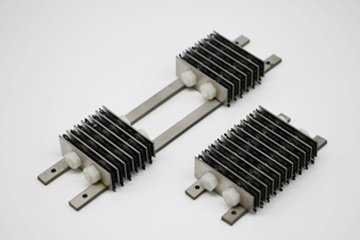
We manufacture direct-fit replacement plate stacks, monopolar assemblies, and bipolar mesh configurations compatible with global chlorinator systems. All plates are manufactured to original equipment dimensional tolerances ($\pm0.05\text{ mm}$).
| OEM Model / Footprint | Plate Configuration | Plate Dimensions (mm) | Chlorine Output | Recommended Loading |
|---|---|---|---|---|
| Hayward® T-CELL-15 Equivalent | 13 Plates (Monopolar / Solid) | 150 × 60 × 1.0 mm | 25–30 g/hr (1.47 lbs/day) | 8.0 – 10.0 g/m² |
| Hayward® T-CELL-3 Equivalent | 7 Plates (Monopolar / Solid) | 150 × 60 × 1.0 mm | 10–14 g/hr (0.53 lbs/day) | 6.0 – 8.0 g/m² |
| Pentair® IntelliChlor® IC40 | 11 Plates (Bipolar / Solid+Mesh) | 180 × 55 × 0.9 mm | 28–32 g/hr (1.40 lbs/day) | 8.5 – 10.5 g/m² |
| Pentair® IntelliChlor® IC20 | 7 Plates (Bipolar / Solid) | 180 × 55 × 0.9 mm | 15–18 g/hr (0.75 lbs/day) | 6.5 – 8.0 g/m² |
| AutoChlor® / Saltmaster Series | Expanded Mesh Stack (Mesh) | 200 × 50 × 1.5 mm (LWD/SWD) | 20–50 g/hr | 10.0 – 12.0 g/m² |
*Hayward, Pentair, and AutoChlor are registered trademarks of their respective owners. China Titanium Factory produces direct replacement parts engineered to match OEM functional specifications.
Custom Fabrication: CNC Laser Cutting, Expanded Mesh & Terminal Welding
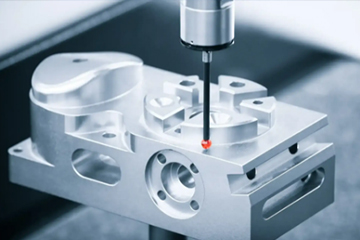
Different salt chlorinator flow paths demand specific structural designs. China Titanium Factory provides complete in-house fabrication for solid sheet electrodes and diamond expanded mesh screens via Custom CNC Titanium Machining & Welding.
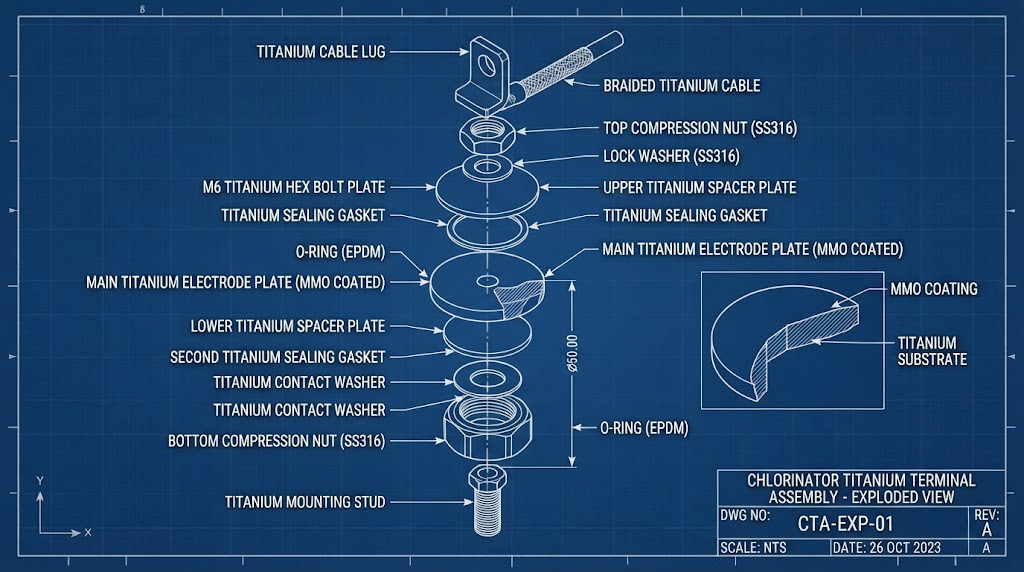
Solid Plate vs. Expanded Mesh Hydrodynamics
Solid Titanium Plates: Provide structural rigidity and high surface area per unit volume. Best suited for high-flow, inline linear cell housings where laminar electrolyte flow prevents localized gas blinding.
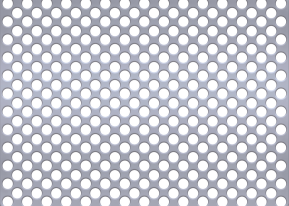
Titanium Expanded Mesh: Diamond mesh profiles (commonly $4.5\times2.5\text{ mm}$ to $6.0\times3.0\text{ mm}$ LW/SW) break boundary layer resistance. This design induces turbulent micro-mixing, which accelerates chloride ion delivery to catalytic sites and simplifies chlorine gas bubble release.
Electrode Terminal Integration & Sealing
Electrical failure in pool salt cells often stems from moisture ingress at the terminal post. We prevent this through specialized terminal manufacturing:
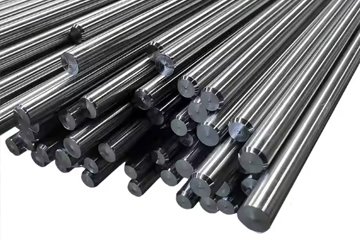
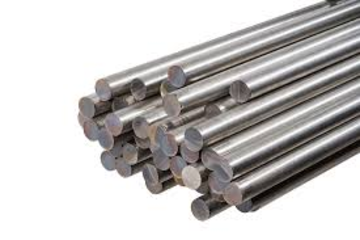
Precision CNC Turned Terminals: Machined from Grade 2 titanium bars with standard M6, M8, or 1/4"-20 UNC threading.
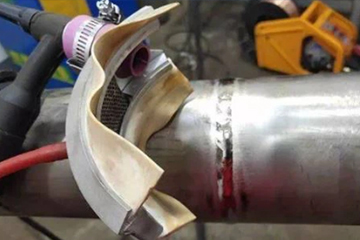
Automated Transverse TIG/Capacitor Discharge Welding: Direct titanium-to-titanium fusion without filler materials prevents localized galvanic corrosion cells at connection joints.
Hermetic Seal Provisioning: Terminals are configured with dual O-ring compression glands or molded fluoropolymer (PVDF) potting flanges to ensure watertight housing pass-throughs.
Quality Verification: NACE TM0108 Accelerated Life & Adhesion Testing
Every production run of titanium anodes undergoes strict quality assurance before export, certified through EN 10204 3.1 Material Test Certificates (MTC).
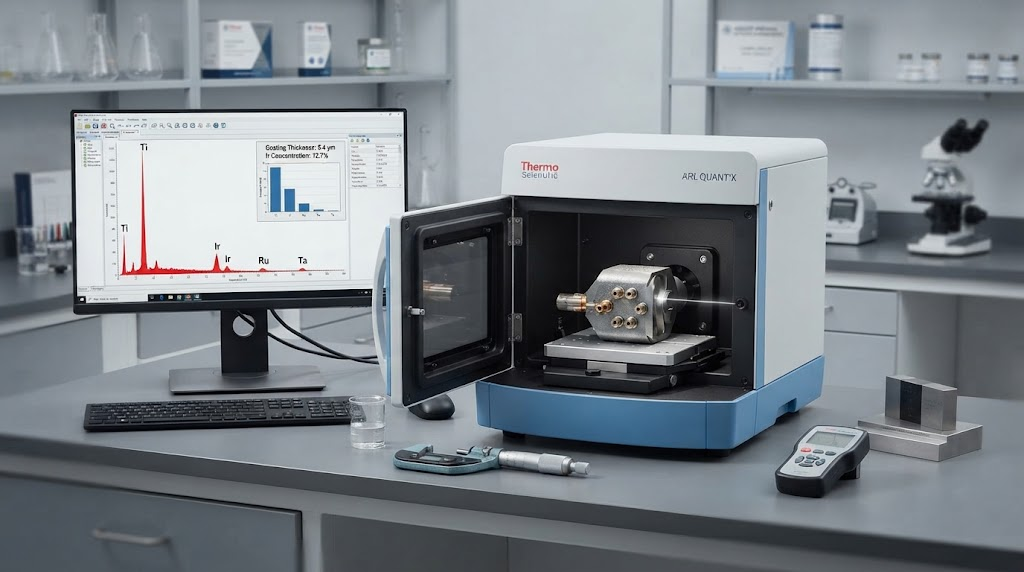
Our quality verification protocols include:
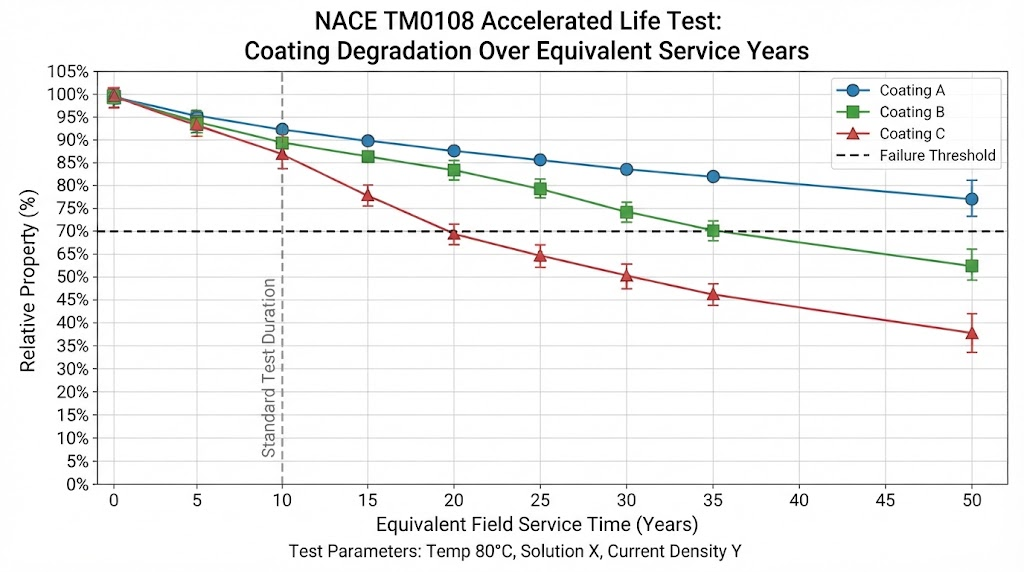
Accelerated Life Testing per NACE TM0108: Electrodes are tested in a $1.0\text{ M } \text{H}_2\text{SO}_4$ electrolyte solution under an accelerated current density of $10,000\text{ A/m}^2$ at $40^\circ\text{C}$. Our pool cell electrodes consistently maintain stable cell voltage for > 120 hours under these conditions, confirming field durability of over 15,000 hours in normal pool water.
XRF Spectrometric Composition Scans: Calibrated X-Ray Fluorescence gauges verify the noble metal surface loading ($\text{g/m}^2$) and confirm the exact $\text{RuO}_2:\text{IrO}_2$ weight ratios across the plate area.
Cross-Hatch & Bending Adhesion Testing: Substrates undergo 180° mandrel bending tests per ASTM B265 standards. Optical microscopy confirms zero coating flaking or inter-layer shear failure along the stress deformation axis.
Wholesale Procurement, OEM Private Labeling & Global Logistics
China Titanium Factory partners directly with chlorinator cell replacement brands, commercial pool service distributors, and municipal aquatic facilities. We support both high-volume standardized production and specialized custom assemblies.
Minimum Order Quantities (MOQ): Standard OEM replacement plate sizes start at 50 units. Custom stamped or welded sub-assemblies start at 100 units.
OEM Private Labeling: We provide fiber-laser marking for your custom part numbers, serial codes, tracking barcodes, and brand logos directly onto titanium plate flanges.
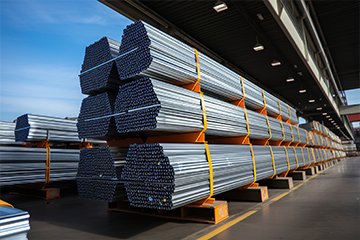
Packaging & Protection: All components are vacuum-sealed in nitrogen-flushed anti-static barrier film, isolated with EPE foam separators, and packed in export-grade reinforced plywood crates.
Logistics Terms: Flexible Incoterms including EXW, FOB Qingdao/Shanghai, CIF, and door-to-door DDP to major distribution hubs across North America, Europe, and Australasia.
Frequently Asked Questions
How often should reverse-polarity self-cleaning cycles occur to maximize anode life?
For standard pool chemistry (calcium hardness 200–400 ppm), we recommend setting reversing cycles to every 3 to 4 operating hours. Shorter cycles (e.g., every 30 minutes) unnecessarily accelerate noble metal dissolution without providing extra scaling protection.
Why does low salt concentration (< 2,000 ppm) damage MMO pool cell plates?
When salinity drops below the designed threshold, the electrolyte lacks sufficient chloride ions to sustain the primary current. This forces the electrode into the higher-potential Oxygen Evolution Reaction (OER), accelerating ruthenium dissolution and leading to premature plate passivation.
Can China Titanium Factory recoat depleted titanium salt cell blades?
Yes. Commercial aquatic facilities can return unbent, sound ASTM B265 Grade 1 titanium substrates to our facility. We chemically strip the spent oxide, re-etch the surface, and apply a fresh MMO coating layer at roughly 40% lower cost than purchasing brand-new replacement stacks.
What is the typical production lead time for custom OEM sample prototypes?
Custom laser-cut plate stacks or specialized terminal weld prototypes are typically completed and dispatched within 7 to 10 working days, backed by complete dimensional inspection reports and 3.1 MTC documentation.
Source Factory-Direct Titanium Anodes for Salt Chlorinators
Partner directly with an established metallurgical manufacturer. China Titanium Factory supplies engineered MMO Ru-Ir coated plates, custom mesh assemblies, and high-volume OEM replacement cells built to your precise dimensional and electrochemical specifications.
Request a Technical Quote & Sample Pack