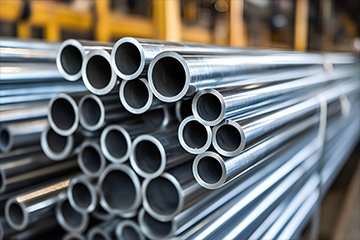
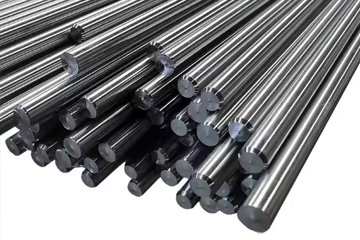
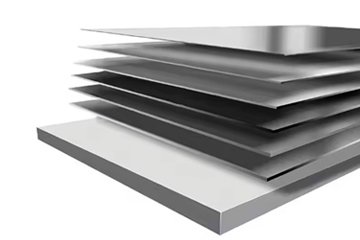
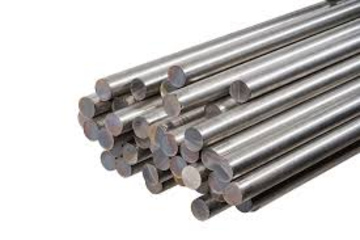
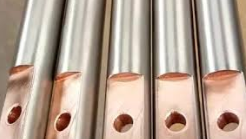
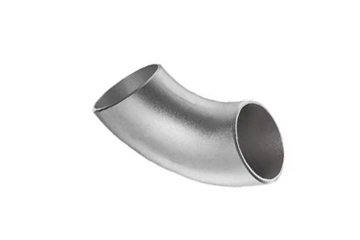
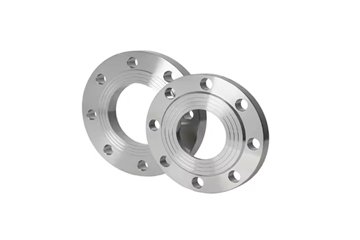
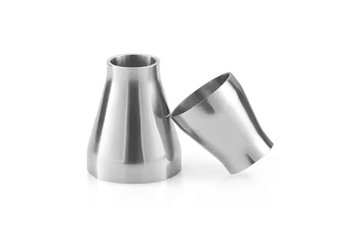
| Grade & Chemistry: | Commercially Pure Titanium Grade 2 (UNS R50400 / W.Nr. 3.7035) & Grade 9 (UNS R56320) |
| Key Standard Specs: | ASTM B338 / ASME SB-338, ASTM B861 / ASME SB-861, ASTM B862 / ASME SB-862, AMS 4943 / AMS 4944 / AMS 4945, DIN 17866 / EN ISO 10684 |
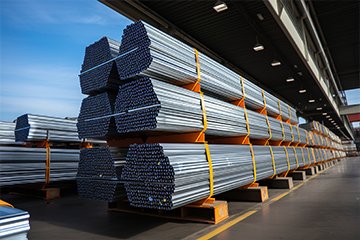
| Delivery Forms: | Seamless Cold-Pilgered and Annealed (Straight / U-Bend), Continuous High-Frequency / Gas Tungsten Arc Welded (GTAW) & Inline Eddy Current Tested, Cold-Worked and Stress-Relieved (CWSR) High-Pressure Aerospace Tubing |
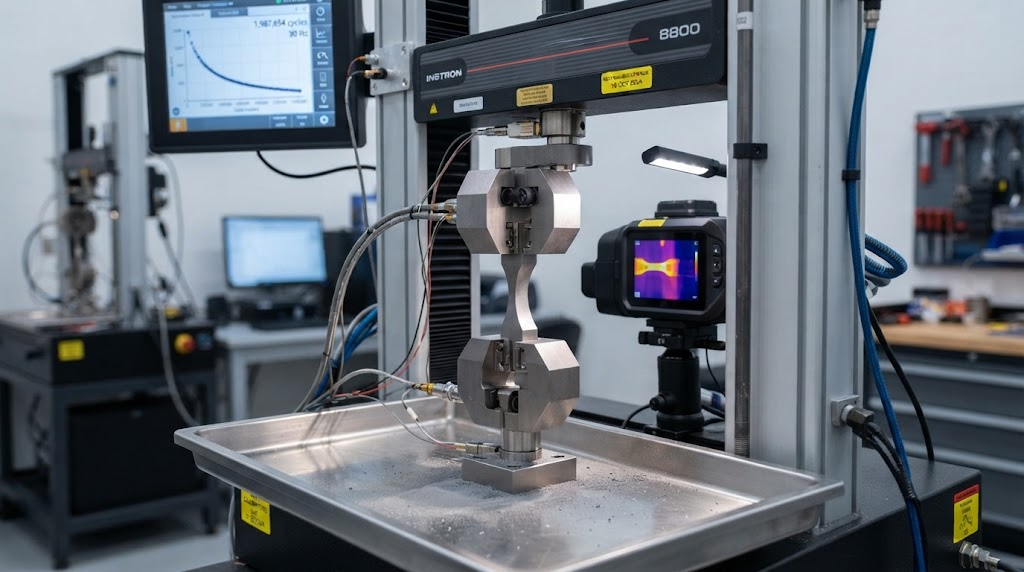
| Core Mechanical Benchmarks: | Tensile Strength (Rm): ≥ 345 MPa (Grade 2) / ≥ 620 MPa (Grade 9) | Yield Strength (Rp0.2): 275 to 450 MPa (Grade 2) / ≥ 483 MPa (Grade 9) | Elongation at Break (A5): ≥ 20% (Grade 2) / ≥ 15% (Grade 9) | Thermal Conductivity: 21.9 W/m·K at 20°C (Grade 2) / 8.3 W/m·K at 20°C (Grade 9) | Maximum Continuous Working Temperature: 300°C (Grade 2) / 400°C (Grade 9) |
| Machinability Profile: | Grade 2: 40% vs B1112; Grade 9: 25% vs B1112. Low thermal conductivity requires sulfur-free flood coolant, low cutting speeds (30–45 m/min), and positive rake micro-grain carbide tooling. |
Seamless titanium tubing produced via cold pilgering provides continuous grain flow and zero weld-joint derating for high-pressure cyclic systems, whereas continuous automated GTAW or plasma welded tubing offers superior wall concentricity and thermal transfer efficiency at lower unit cost for shell-and-tube heat exchangers. Selecting between seamless vs welded titanium tube requires balancing ASME Boiler and Pressure Vessel Code allowable stresses, dimensional tolerance variations, and operational corrosion regimes.
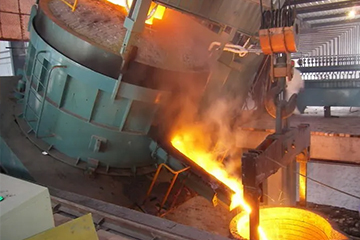
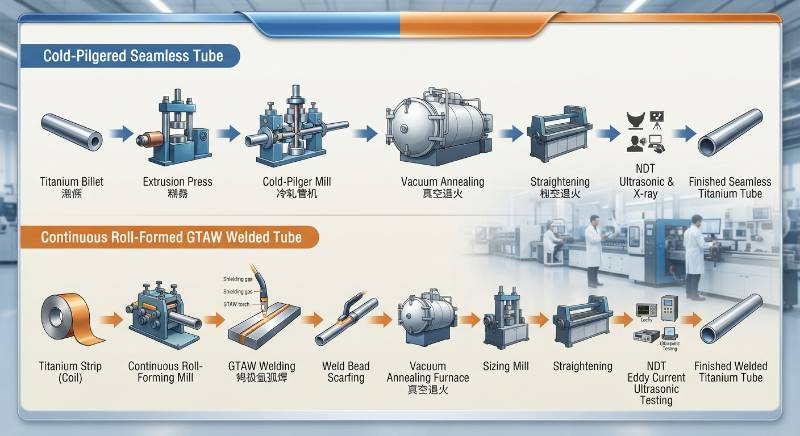
The manufacturing lineage defines the mechanical and chemical homogeneity of the final tubular product. Seamless titanium tubing originates from forged round billets produced via double or triple Vacuum Arc Remelting (VAR) or Electron Beam Cold Hearth Remelting (EB-CHR). These solid billets undergo rotary piercing or hot extrusion at temperatures within the beta or high alpha-beta phase field (850°C to 950°C) to form a heavy-walled hollow. The hollow is then reduced to final dimensions through multiple passes of cold pilgering (rocking) or multi-die cold drawing, interspersed with intermediate vacuum recrystallization anneals at 650°C to 700°C under vacuums lower than 10-4 mbar to maintain hydrogen concentrations below 80 ppm.
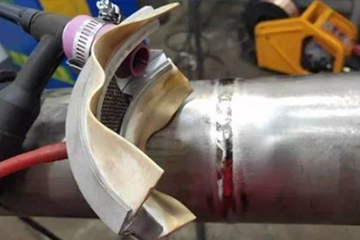
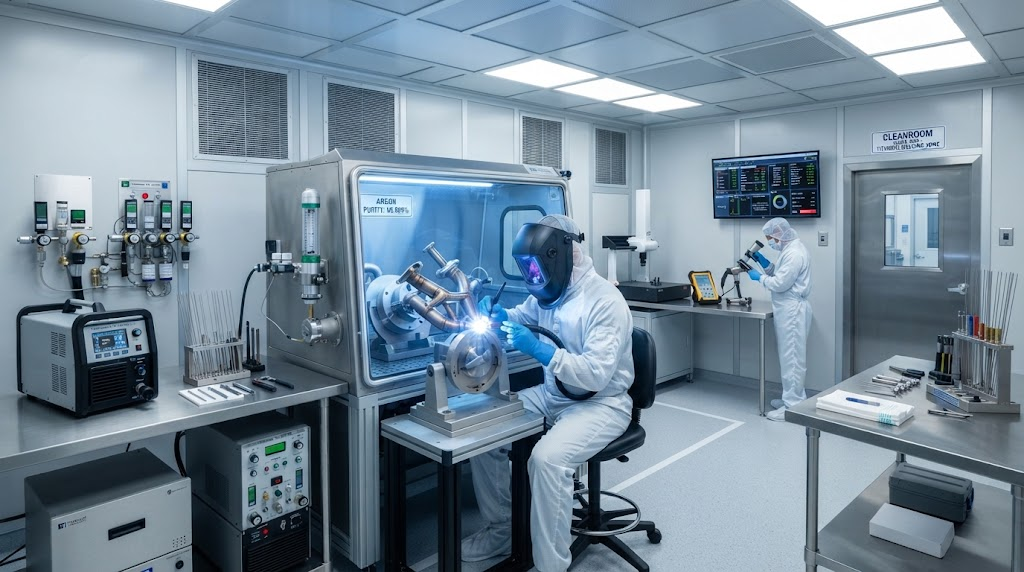
Welded titanium tubing begins as premium cold-rolled, precision-slit strip coil conforming to chemical composition limits governed by standards such as ASTM International standards. The strip is continuously shaped into a cylindrical profile via a progressive multi-station roll-forming line. Longitudinal seam closure is executed using automated Gas Tungsten Arc Welding (GTAW/TIG), plasma arc welding (PAW), or laser beam welding (LBW) without the addition of filler metal. The weld puddle, trailing zone, and inner diameter (ID) root require comprehensive inert gas shielding using ultra-pure argon (minimum 99.999% purity with a dew point at or below -50°C) to eliminate atmospheric interstitial contamination by oxygen, nitrogen, and hydrogen.
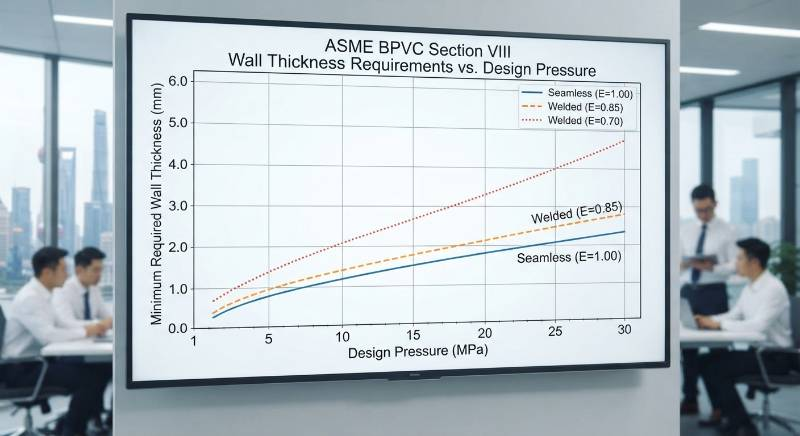
In pressure boundary calculations, the choice between seamless and welded product forms dictates the joint efficiency factor (E), which directly alters the calculated nominal wall thickness. Under the rules of the ASME Boiler and Pressure Vessel Code (BPVC) Section VIII, Division 1, Part UG-27 and Part UW-12, structural integrity calculations penalize welded joints that have not undergone 100% full volumetric radiographic examination.
For internal pressure design, the required minimum wall thickness t of a cylindrical shell or tube is calculated using the Barlow-derived ASME UG-27 formula:
t = (P × R) ÷ (S × E - 0.6 × P)
Where P represents the internal design pressure (MPa), R is the inside radius (mm), S is the maximum allowable stress value from ASME BPVC Section II, Part D (for Grade 2 titanium at 100°C, S = 92.4 MPa), and E is the weld joint efficiency factor.
Seamless Tubing (ASTM B338 / ASTM B861): Assigned a joint efficiency factor of E = 1.00 by default, representing uniform material across the circumferential boundary.
Welded Tubing with Spot NDT (ASTM B338 / ASTM B862): Assigned an efficiency factor of E = 0.85 per Table UW-12, Column (b).
Welded Tubing without NDT (Visual Only): Assigned an efficiency factor of E = 0.70 per Table UW-12, Column (c).
When designing high-pressure equipment, using a welded tube with E = 0.85 requires a nominal wall thickness increase of up to 17.6% over a seamless equivalent to satisfy identical Maximum Allowable Working Pressure (MAWP) requirements. For large installations, such as utility surface condensers or chemical reactors utilizing ASTM B338 titanium heat exchanger tubing, this wall thickness penalty increases total structural mass and raw material costs, shifting the financial advantage back toward seamless products.
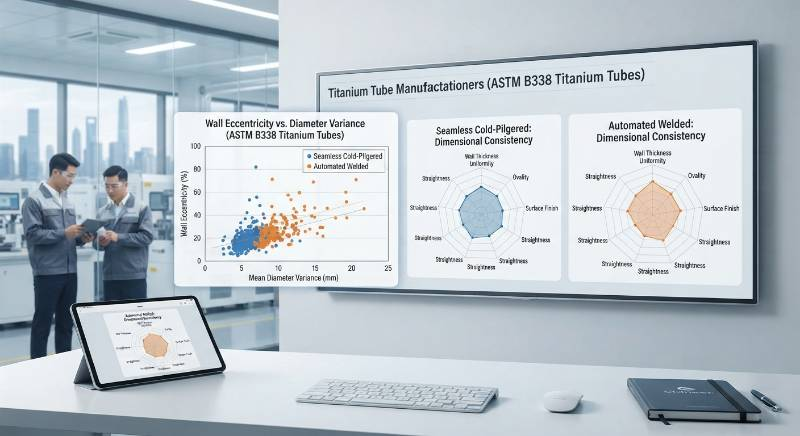
While seamless tubing excels under code-rated design stresses, welded titanium tubing maintains clear superiority in geometric concentricity and dimensional precision. Welded tubing is fabricated from cold-rolled strip produced via multi-stand continuous rolling mills equipped with automated hydraulic gauge control. The strip exhibits minimal cross-sectional thickness variance, restricting the final welded tube wall thickness tolerance to ±5% to ±7.5% of nominal.
In contrast, cold-pilgered seamless titanium tubing undergoes plastic flow over an internal tapered mandrel. The nature of rotary rocking causes inherent wall eccentricity, resulting in wall thickness variations of ±10% to ±12.5% under standard ASTM B338 tolerances. This geometric delta directly affects shell-and-tube heat exchanger design governed by Tubular Exchanger Manufacturers Association (TEMA) standards.
| Parameter | Seamless Cold-Pilgered Tube | Continuous GTAW Welded Tube | Operational Consequence |
|---|---|---|---|
| Wall Thickness Tolerance | ±10.0% to ±12.5% (±0.155 mm) | ±5.0% to ±7.5% (±0.093 mm) | Welded provides predictable thermal resistance and uniform boundary flux. |
| Ovality / Roundness | ≤ 0.38 mm total indicator reading | ≤ 0.15 mm total indicator reading | Welded simplifies robotic tube-sheet insertion and orbital weld alignment. |
| Eccentricity (Max - Min WT) | 8% to 15% across circumference | ≤ 3% (excluding controlled weld bead) | Seamless creates variable wall thinning during roller expansion. |
| Surface Roughness (ID / OD) | Ra 0.8 μm to 1.6 μm (pickled) | Ra 0.4 μm to 0.8 μm (as-rolled strip) | Smoother welded strip reduces boundary layer fouling in seawater condensers. |
Tube-to-tubesheet expansion integrity depends on this wall consistency. When mechanically rolling tubes into CNC-drilled tube sheets, high eccentricity in seamless tubes leads to uneven plastic deformation. The thin side of the tube wall experiences over-rolling and localized strain hardening, while the thick side can fail to achieve sufficient contact pressure, raising the probability of interstitial crevice leakage. Conversely, the high dimensional symmetry of welded tubes ensures uniform contact pressure around the circumference when analyzing Grade 2 commercially pure titanium properties.
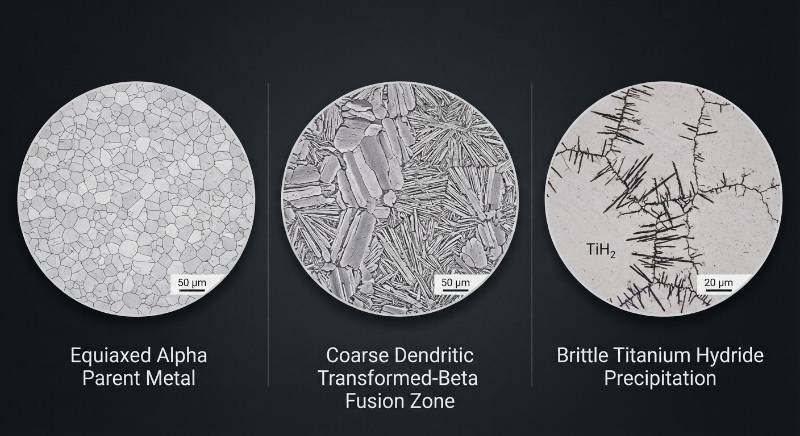
The critical technical difference between seamless and welded titanium tubes lies in their metallurgical phase morphology. Seamless tubing exhibits an entirely homogeneous, equiaxed alpha (α) grain structure throughout the wall cross-section, with an average grain size typically refined to ASTM 7 to 9 per ASTM E112 through successive reduction and annealing stages.
Welded tubing features three distinct metallurgical microstructures across its diameter: the un-altered parent metal, the heat-affected zone (HAZ), and the cast dendritic fusion zone. In the as-welded condition, the fusion zone consists of coarse, acicular alpha (transformed beta) plates formed during rapid solidification from temperatures exceeding the beta transus (882°C for Grade 2). This coarse lamellar structure has lower ductility (often exhibiting a 3% to 5% reduction in total elongation) and higher hardness than the parent matrix.
To eliminate this disparity, welded heat exchanger tubing must undergo inline or offline vacuum recrystallization annealing. Post-weld heat treatment at 680°C to 710°C dissolves localized residual stresses and promotes partial recrystallization of the HAZ. However, residual crystallographic orientation differences persist. In aggressive chemical environments containing concentrated, hot reducing acids or acidic fluorides, this dendritic weld boundary can experience selective preferential galvanic corrosion due to subtle segregation of trace iron (Fe) impurities at grain boundaries.
Hydrogen embrittlement presents another critical operational failure mode. Titanium readily absorbs nascent hydrogen at temperatures exceeding 80°C in the presence of cathodic over-protection (potentials more negative than -0.75 V versus saturated calomel electrode, SCE) or in active galvanic couples with zinc or aluminum. When hydrogen concentrations exceed the solid solubility limit (approximately 100 to 150 ppm at room temperature), brittle titanium hydride (TiH2) precipitates along the grain boundaries.
Because the weld fusion zone contains higher residual micro-strain and coarser grain boundaries, hydride platelets precipitate preferentially along the weld interface. Under cyclic thermal or mechanical stresses, these hydride needles act as internal stress concentrations, promoting sub-critical crack growth and catastrophic brittle spallation. For this reason, continuous hydrogen monitoring (maintaining total H ≤ 80 ppm) is mandatory during primary ingot melting and tube production.
Material selection between seamless and welded titanium tubing must align with operational variables: cyclic pressure fluctuations, media velocity, corrosive chemistry, external mechanical vibration, and temperature profiles. Standardizing on one form across all processes either introduces unacceptable structural risk or inflates procurement budgets.
| Service Environment | Operating Envelope | Mandated Form | Engineering Failure Prevention Rationale |
|---|---|---|---|
| Aerospace Hydraulic Systems | 21 to 35 MPa, -55°C to 135°C, high-frequency impulse cycling | Seamless (Grade 9 CWSR) | Eliminates longitudinal weld root notch-induced high-cycle fatigue (HCF) failure. Meets AMS 4944/4945 parameters. |
| Seawater Desalination Condensers | 0.2 to 0.8 MPa, 25°C to 45°C, 35,000 ppm chloride | Welded (Grade 2) | Superior wall concentricity ensures balanced heat transfer coefficients; 30% lower linear capital expenditure. |
| Tight-Radius U-Bend Heat Exchangers | Bending radius R < 2 × OD, high internal flow velocity | Seamless (Grade 2 Annealed) | Prevents outer-fiber tensile split along the HAZ. Eliminates cross-sectional flattening anomalies. |
| Chlor-Alkali Wet Chlorine Coolers | Wet Cl2 gas (> 1.5% H2O), 80°C to 105°C | Welded (Grade 2 / Grade 7) | Uniform passive TiO2 film stable in moist chlorine; welded form delivers optimal price-performance ratio. |
| Offshore Subsea Hydrocarbon Manifolds | > 45 MPa hydrostatic, multiphase flow with sand erosion | Seamless (Grade 5 / Grade 9) | Weld seams present severe erosion-corrosion vulnerability under turbulent particle impingement. |
For cyclic aerospace flight controls and deep-sea injection equipment, Grade 9 Ti-3Al-2.5V high-pressure hydraulic tubing is an industry benchmark. Cold-worked, stress-relieved (CWSR) seamless Grade 9 yields tensile strengths exceeding 620 MPa while maintaining over 15% elongation. This ductility allows tight-radius CNC mandrel bending without wall bucking or weld-seam ruptures.
Procuring titanium tubing for pressure boundary service requires a rigorous Non-Destructive Testing (NDT) protocol to catch internal and volumetric defects. Standard commercial tubes frequently skip secondary testing routines, leaving them vulnerable to sub-surface voids, hard-alpha inclusions, and weld-line micro-fissures.
The China Titanium Quality Protocol incorporates dual-stage volumetric screening across all seamless and welded production campaigns:
Inline Electromagnetic Eddy Current Testing (ASTM E426): 100% of finished welded and seamless tubing passes through an encircling coil eddy current scanner calibrated against artificial standard defects (transverse drilled holes ≤ 0.79 mm diameter or longitudinal EDM notches ≤ 5% of wall thickness). Any phase-angle or amplitude disruption triggers automated defect marking and pneumatic rejection.
Shear-Wave Ultrasonic Testing (ASTM E213 / AMS 2631 Class AA): Seamless tubes designed for high-pressure service undergo multi-channel shear-wave UT inspection. Four independent transducers (two clockwise, two counter-clockwise) scan for internal radial flaws, wall laminations, and sub-surface foreign metallic inclusions.
Hydrostatic Proof Testing: Every individual tube length is subjected to hydrostatic pressure calculated per ASTM B338 §13: P = (2 × S × t) ÷ D, with the fiber stress S set to 50% of the specified minimum yield strength. The pressure is held for a minimum dwell time of 5 seconds with zero allowable pressure decay. Alternatively, pneumatic testing under water at 1.0 to 1.7 MPa is utilized to detect micro-porosity in thin-wall condenser tubing.
Destructive Flattening and Reverse Flattening Tests: Samples cut from each heat-treatment lot are flattened between parallel plates to a specified distance H = (1 + e) × t ÷ (e + t/D). Welded samples are positioned with the weld seam oriented at 90° and 0° to the applied force to evaluate fusion boundary ductility without evidence of cracking.
Full Pickling for Alpha-Case Removal: Following final vacuum or atmospheric heat treatment, tubing is chemically pickled in an engineered nitric-hydrofluoric bath (15% to 20% HNO3 + 2% to 4% HF by volume at 40°C to 55°C). This process strips the brittle, oxygen-enriched surface alpha-case layer, ensuring an Ra ≤ 0.8 μm surface finish free of microscopic notch initiation sites.
Titanium provides corrosion resistance in oxidizing media by forming an adherent, self-healing titanium dioxide (TiO2) rutile/anatase passive film. However, exposing titanium to specific chemical environments will breach this barrier and cause rapid, catastrophic failure.
Absolute Environmental Exclusions:
Dry Chlorine Gas: Titanium must NEVER contact dry chlorine gas with less than 1.5% water content by weight at ambient temperature, or less than 2.0% water content at 100°C. The absence of sufficient moisture prevents passivating film regeneration, causing an exothermic, pyrophoric reaction that incinerates the tube wall.
Red Fuming Nitric Acid (RFNA): Exposing commercially pure titanium to RFNA containing less than 1.5% water and more than 2.5% nitrogen dioxide triggers rapid stress corrosion cracking and violent, explosive reactions when stressed.
Deaerated Mineral Acids: Pure hydrochloric, sulfuric, and hydrofluoric acids rapidly reduce the TiO2 film. Grade 2 must not be used in uninhibited HCl or H2SO4 at concentrations exceeding 3% to 5% without noble metal additions (Grade 7 with palladium or Grade 12 with molybdenum-nickel).
Temperature and Galvanic Isolation Limits: Under ASME Section VIII Div 1, the maximum design temperature ceiling for Grade 2 titanium is 315°C (600°F). Above this threshold, continuous creep deformation accelerates, and ambient oxygen diffusion permanently embrittles the outer wall. In addition, titanium sits at the noble end of the galvanic series. When rolled into carbon steel, stainless steel, or copper-nickel tube sheets in saline environments, direct metallic contact causes severe galvanic corrosion of the less-noble tube sheet. Dielectric insulating sleeves, heavy polymer coatings, or explosion-bonded titanium-clad steel tube sheets must be specified.
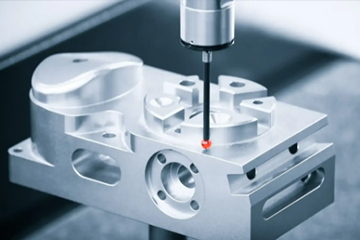
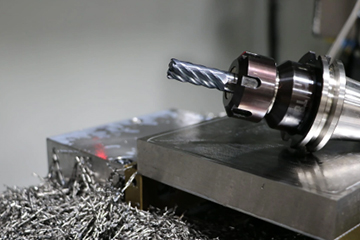
Machining and Tooling Considerations: Titanium's low modulus of elasticity (105 GPa for Grade 2 vs. 200 GPa for carbon steel) causes springback and chatter during end-facing, tube-to-tubesheet weld beveling, and flanging. Low thermal conductivity (21.9 W/m·K) concentrates heat directly at the cutting edge. Machining operations should use positive-rake micro-grain tungsten carbide tooling, rigid setups, and low surface speeds (30 to 45 m/min) combined with aggressive feed rates (0.10 to 0.20 mm/rev) to stay below the work-hardened layer. Always employ sulfur-free, chlorine-free flood coolant to prevent post-machining stress corrosion cracking. For complex assemblies, utilizing qualified precision titanium CNC machining and flanging services ensures tight dimensional tolerances on critical seals.
Material verification issues in global supply chains make auditing Mill Test Certificates (MTCs) per EN 10204 Type 3.1 a critical QA checkpoint. Fraudulent or non-compliant certifications often disguise unannealed welded tube as seamless, or supply reclaimed scrap heats that fail under operating pressures.
Quality assurance auditors must review the following four physical criteria on every mill dossier:
Melting Process Designation: The MTC must state the melt method as Vacuum Arc Remelt (VAR) double/triple melt, or Electron Beam Cold Hearth Remelt (EB-CHR). Any reference to induction melting or secondary open-air re-melting indicates non-compliant aerospace/pressure material.
Interstitial Chemical Ceilings: Review spectrographic batch analyses for interstitial gas content. For Grade 2, hydrogen must be ≤ 0.008% (80 ppm), oxygen ≤ 0.18%, nitrogen ≤ 0.03%, carbon ≤ 0.08%, and iron ≤ 0.20%. Iron content above 0.20% indicates high risk of secondary beta-phase precipitation, which creates galvanic cells across the grain boundaries.
Authentic Annealing Indicators: Unannealed welded tubing displays an artificially high yield strength (often exceeding 480 MPa for Grade 2) combined with low elongation (below 15%). Properly recrystallized, annealed Grade 2 tube shows a yield strength between 275 and 410 MPa with elongation ≥ 20%. The MTC must specify vacuum furnace pressure (≤ 10-4 mbar) and soak temperature (680°C to 710°C).
Traceable Heat Ingot-to-Tube Mapping: Ensure unbroken traceability between the heat melt number, intermediate hollow extrusion lot, and individual tube bundle stenciling. Every individual tube must be laser-marked or electro-chemically etched with the standard, grade, heat number, and manufacturing method (SML for Seamless, WLD for Welded).
Export Packaging Standards: Finished tubes are vulnerable to mechanical denting, bending, and coastal salt-spray contamination during transit. Export shipments must be packed in IPPC ISPM 15 heat-treated, fumigated timber boxes lined with moisture-barrier foil. Tubes must be separated using nested cardboard or plastic combs, wrapped in PVC protective sleeves, and packed with silica gel desiccant bags to maintain surface passivity throughout ocean transport.
Yes, provided the design pressure does not require wall thickness derating under ASME BPVC Section VIII, or the unit operates under 3.0 MPa with negligible cyclic fatigue. Welded ASTM B338 Grade 2 is preferred for surface condensers and low-pressure shell-and-tube exchangers due to its tighter wall tolerance (±5% vs ±12.5%), which delivers uniform heat transfer and more consistent tube-to-tubesheet roller expansion.
Bursting pressure is calculated via the Boardman-modified Barlow formula: Pburst = (2 × Rm × t) ÷ (D - 0.8 × t), where Rm is ultimate tensile strength (MPa), t is minimum wall thickness (mm), and D is outside diameter (mm). Seamless tubes with E = 1.00 reach full theoretical burst ratings, whereas welded tubes should include a joint efficiency factor (E = 0.85) to account for potential weld-fusion micro-voids.
ASTM B338 covers both seamless and welded titanium and titanium alloy tubes engineered specifically for condensers and heat exchangers, with strict eddy current, flattening, and flaring requirements. ASTM B861 applies exclusively to seamless titanium pipe intended for general industrial piping and corrosive fluid transfer. ASTM B862 applies exclusively to welded titanium pipe fabricated from rolled plate or sheet using automated welding procedures.
Although Grade 5 (Ti-6Al-4V) has higher nominal yield strength (~830 MPa), its limited cold ductility prevents cold pilgering into precision thin-wall tubing. Grade 9 (Ti-3Al-2.5V) is formulated specifically for cold processing; in the CWSR condition (AMS 4944), it provides yield strengths ≥ 483 MPa, elongation ≥ 15%, low notch sensitivity, and high resistance to impulse fatigue cycling up to 35 MPa.
Mechanical roller expansion should limit tube wall reduction to 5% to 8% for titanium Grade 2, and 4% to 6% for Grade 9. Exceeding 10% wall reduction causes severe work hardening, micro-cracking on the tube inner diameter, and excessive plastic extrusion that distorts adjacent tubesheet ligament holes.
To reduce technical risk and eliminate project delays, procurement managers and project engineers can follow this three-step technical evaluation workflow:
Step 1: Parametric RFQ & Drawing Submission: Submit design parameters (OD, minimum/nominal wall thickness, straight length, U-bend schedules, operating media, pressure, design codes: ASME Section VIII, ASTM B338/B861/B862, TEMA).
Step 2: 12-Hour DFM Assessment & Quality Dossier: Engineering teams review drawings for ASME thickness compliance, bend-radius limits (R ≥ 1.5 × OD), and tube sheet expansion clearances, providing a complete EN 10204 3.1 sample dossier with active VAR melt chemical ranges.
Step 3: Direct Metallurgical Consultation & Slot Allocation: Review inspection hold points (UT calibration standards, eddy current sensitivity, third-party SGS/Lloyd's witnessing), confirm packaging specifications, and finalize production scheduling.
Evaluating titanium grades for critical service conditions? Connect directly with our metallurgical and CNC engineering team to review 2D/3D part drawings, verify EN 10204 3.1 certification dossiers, or request ultrasonic testing records.
MTC 3.1 Verification: Full heat melt traceability & spectrographic chemical batch reports.
DFM & Tolerance Review: Precision centerless grinding (h7/h8/h9) & toolpath feasibility analysis.
NDT Compliance: AMS 2631 Class AA/A ultrasonic inspection and liquid penetrant testing certs.



Contact Us
Room 21003, 10th Floor, Unit 2, Building 1, Xianning International Plaza, No.29 Xianning West Road, Beilin District, Xi'an City
Copyright © Xi'an Shiguang Jingyan Technology Co., Ltd. All Rights Reserved.