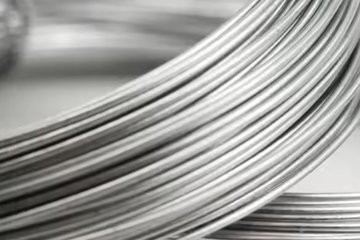
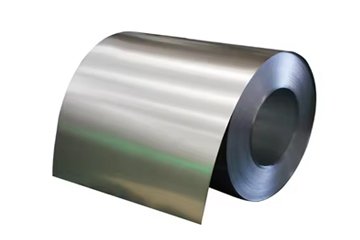
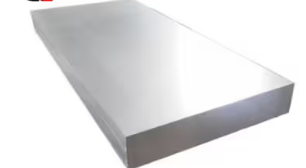
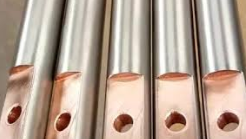
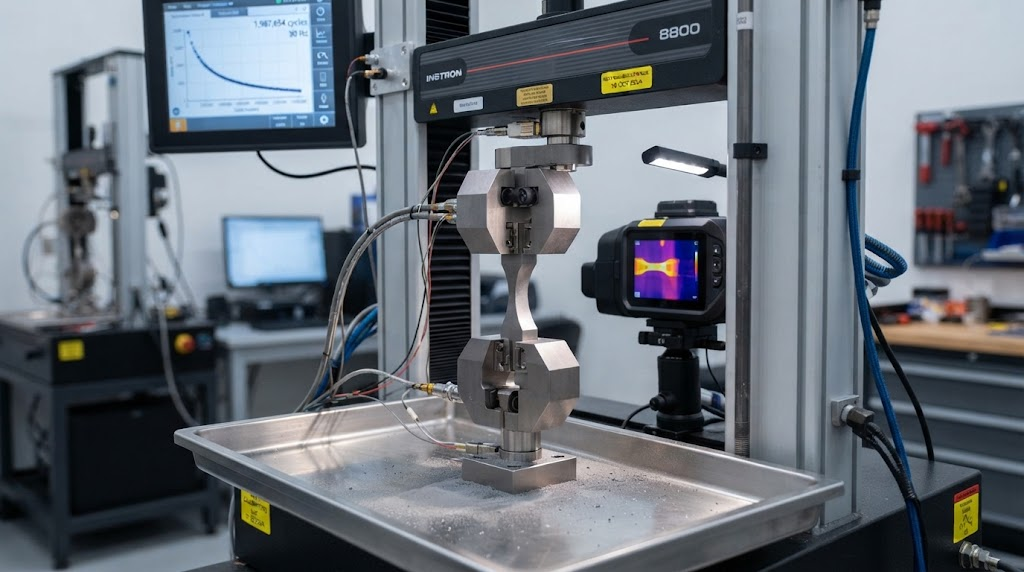
Raw titanium metal refers to primary, unworked, or semi-finished metallurgical feedstock extracted from mineral ores and consolidated into high-purity forms such as titanium sponge, melted ingots, forged billets, and rolling slabs. It serves as the base engineering material across aerospace, medical, marine, and chemical industries prior to secondary precision machining, stamping, or tube drawing.
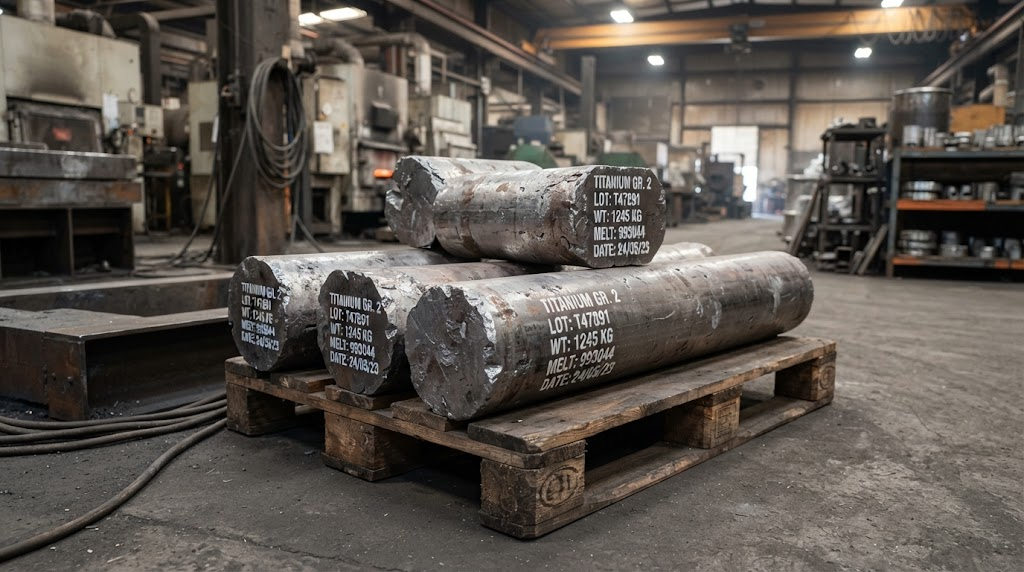
From an atomic and crystallographic standpoint, titanium (atomic number 22, atomic weight 47.87 g/mol) undergoes an allotropic transformation at 882°C (1620°F). Below this beta-transus temperature, pure titanium exhibits an alpha (α) phase characterized by a Hexagonal Close-Packed (HCP) crystal lattice. Above 882°C, the atomic matrix rearranges into a beta (β) phase with a Body-Centered Cubic (BCC) structure.
Metallurgical Definition: Raw titanium metal represents consolidated primary titanium possessing a density of 4.51 g/cm³, a melting point of 1668°C (3034°F), and an exceptional affinity for interstitial elements (O, N, H, C), necessitating vacuum or inert-gas melting environments.
In our manufacturing experience, maintaining strict control over interstitial elements during the raw consolidation phase determines whether the final product achieves high fracture toughness or suffers from brittle micro-cracking.
Titanium Sponge: The highly porous, un-melted primary metallic product derived directly from the chemical reduction of titanium tetrachloride (TiCl₄).
Titanium Ingot: The solid, cylindrical metallurgical product cast following primary Vacuum Arc Remelting (VAR) or Electron Beam Melting (EBM).
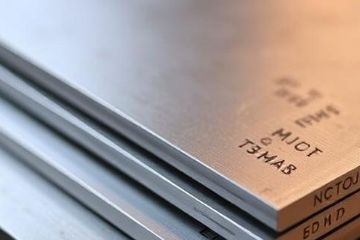
Forged Billets & Slabs: Intermediate mill conversion products mechanically worked to refine cast dendritic grain structures into uniform equiaxed grains.
Raw titanium falls into two primary metallurgical categories governed by global standards including ASTM International and AMS specifications: Commercially Pure (CP) grades and engineered Titanium Alloys.
CP titanium grades (Grades 1 through 4) consist of unalloyed alpha-phase titanium where mechanical strength scales directly with controlled oxygen and iron content. Grade 1 provides maximum ductility and formability, while Grade 4 provides the highest yield strength among unalloyed grades.
Alloyed raw titanium incorporates alpha stabilizers (such as Aluminum) and beta stabilizers (such as Vanadium, Molybdenum, or Iron). The benchmark structural alloy is Grade 5 (Ti-6Al-4V), offering a distinct tensile strength to weight ratio superior to standard structural steels and aluminum alloys. For demanding fatigue applications, Grade 23 (Ti-6Al-4V ELI) maintains extra-low interstitial gas levels to maximize fracture toughness at cryogenic and ambient temperatures.
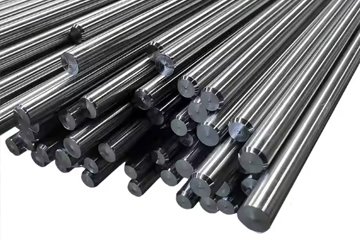
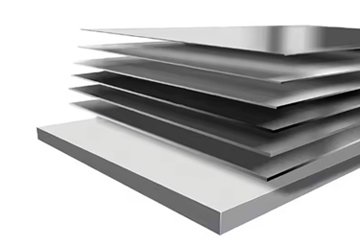
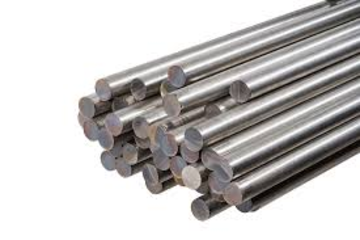
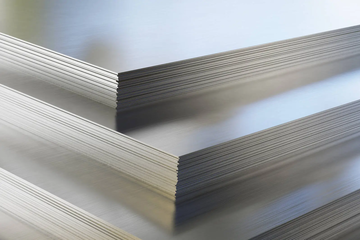
Engineers requiring high-strength intermediate bars can consult our Titanium Bars and Rods inventory, while projects requiring flat-rolled mill stock can review our Titanium Plates and Sheets offerings.
The following engineering matrix compares primary raw titanium grades in their typical annealed condition according to ASTM B265, ASTM B348, and ASTM B381 parameters.
| Grade & Unified Numbering System (UNS) | Nominal Composition | Tensile Strength Min (MPa) | Yield Strength (0.2% Offset) Min (MPa) | Elongation Min (%) | Chloride Corrosion Resistance Benchmark |
|---|---|---|---|---|---|
| Grade 1 (UNS R50250) | Unalloyed Ti (O ≤ 0.18%) | 240 | 170 | 24% | Excellent up to 80°C |
| Grade 2 (UNS R50400) | Unalloyed Ti (O ≤ 0.25%) | 345 | 275 | 20% | Industrial workhorse, active passive film |
| Grade 5 (UNS R56400) | Ti-6Al-4V | 895 | 828 | 10% | High resistance in ambient marine environments |
| Grade 7 (UNS R52400) | Ti-0.15Pd | 345 | 275 | 20% | Superior in reducing acids & boiling chlorides |
| Grade 9 (UNS R56320) | Ti-3Al-2.5V | 620 | 483 | 15% | High hydraulic pressure chloride resistance |
| Grade 12 (UNS R53400) | Ti-0.3Mo-0.8Ni | 483 | 345 | 18% | Enhanced crevice corrosion resistance >200°C |
| Grade 23 (UNS R56407) | Ti-6Al-4V ELI (O ≤ 0.13%) | 860 | 790 | 10% | Exceptional bio-fluid & saline resistance |
For complete chemical breakdowns and thermal processing characteristics of alpha-beta alloys, explore our dedicated Ti-6Al-4V Grade 5 Alloy Specs.
Primary titanium extraction relies on the carbothermal chlorination and metallothermic reduction sequence known as the Kroll Process.
Mined rutile (TiO₂) or ilmenite (FeTiO₃) ore undergoes high-temperature chlorination at ~900°C in the presence of petroleum coke, producing liquid titanium tetrachloride (TiCl₄). After fractional distillation eliminates impurities like silicon tetrachloride (SiCl₄) and vanadium oxychloride (VOCl₃), the purified TiCl₄ is injected into an inert argon-purged retort containing molten magnesium at 800°C–850°C:
Core Kroll Reduction Reaction: TiCl₄ (g) + 2 Mg (l) → Ti (s) + 2 MgCl₂ (l)
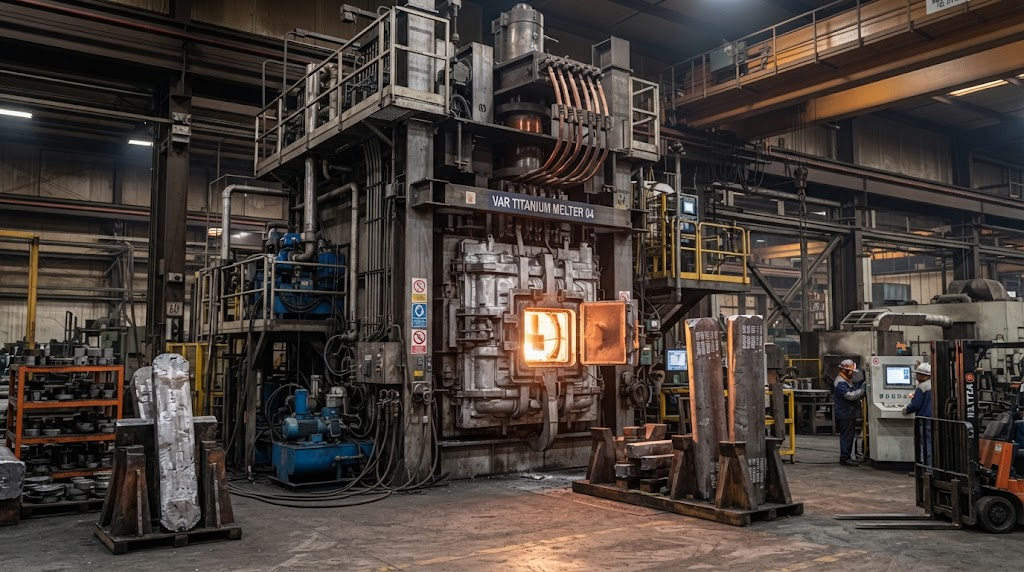
The resulting porous metallic sponge is separated from residual magnesium and magnesium chloride through high-temperature vacuum distillation. To convert this sponge into structural raw titanium metal ingots, the material undergoes consolidation melting:
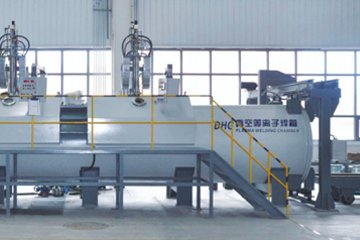
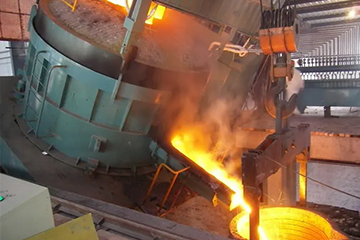
Vacuum Arc Remelting (VAR): The primary standard for structural titanium. Sponge, master alloys, and revert scrap are compacted into consumable electrodes and melted under deep vacuum (10⁻² to 10⁻⁴ mbar). Double-VAR (2X) or Triple-VAR (3X) is mandatory for rotating aerospace hardware to prevent High-Density Inclusions (HDIs) and Low-Density Inclusions (LDIs).
Electron Beam Cold Hearth Melting (EBM): High-energy electron guns sweep the melt pool in a water-cooled copper hearth. EBM provides superior dwell time, allowing dense inclusions (like tungsten carbide particles) to sink while high-vapor-pressure impurities volatilize.
Once cast, raw ingots undergo thermomechanical processing (TMP) to break down brittle coarse-grained as-cast microstructures. Cogging and forging are executed on high-tonnage hydraulic open-die presses at controlled temperatures in the beta and alpha-beta phase fields.
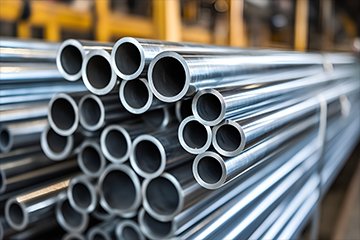
Intermediate blooms and slabs are subsequently rolled into structural plates or converted into hollow billets for extrusion. For fluid transportation and heat exchangers, these billets feed into our specialized Titanium Tube and Pipe Mill.
Modern engineering sectors select raw titanium metal configurations based on strict operating demands, thermal gradients, and chemical exposure risks.
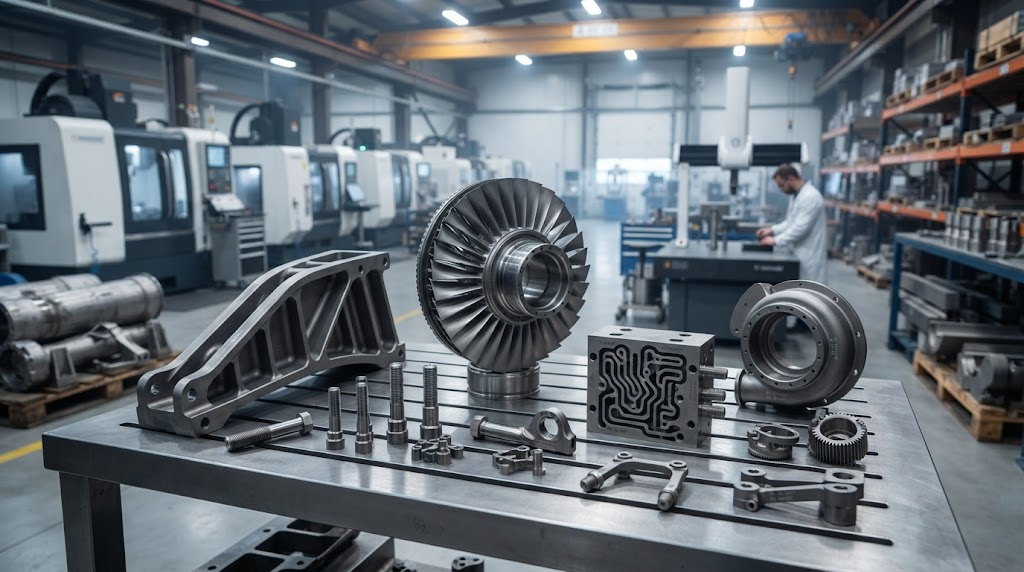
Aerospace Structures & Jet Propulsion: Requires Triple-VAR Ti-6Al-4V to AMS 4928 and AMS 4911 specifications for fuselage bulkheads, landing gear assemblies, wing spars, and compressor blades subjected to cyclic fatigue loads up to 400°C.
Medical Implants & Surgical Devices: Utilizes ASTM F67 (CP) and ASTM F136 (Grade 23 ELI). The low modulus of elasticity (105–115 GPa) minimizes stress shielding against human cortical bone while maintaining superior osseointegration.
Chemical Processing & Desalination: Employs ASTM B265 Grade 2, Grade 7 (Palladium-stabilized), and Grade 12 (Mo-Ni). These grades provide complete passivity in wet chlorine gas, chlorate solutions, and seawater environments due to a stable, self-healing TiO₂ oxide surface film.
Offshore Oil & Gas (Subsea): Leverages Grade 5 and Grade 9 alloy tubulars resistant to sulfide stress cracking (SSC) and stress corrosion cracking (SCC) under high pressure and temperature (HPHT) sour service according to NACE MR0175/ISO 15156.
To eliminate metallurgical failure risks in mission-critical applications, our mill operates under a standardized quality gate framework called The China Titanium 4-Tier Ingot Integrity Protocol (CT-IIP).
Engineering Insight: Based on our VAR melting production data, up to 92% of early cyclic fatigue failures in secondary machined titanium parts trace back to micro-segregation and high-density inclusions originating in the primary melt stage. The CT-IIP protocol mitigates these failure modes at the source.
Tier 1: High-Homogeneity VAR/EBM Melt Control: Every heat undergoes controlled multi-pass melting under strict vacuum (below 0.05 Pa) with continuous magnetic arc stirring to prevent beta-flecking and chemical banding.
Tier 2: Interstitial Gas Chromatography & ICP-OES: Precise quantification of interstitial oxygen, nitrogen, hydrogen, and carbon via inert gas fusion, along with trace element detection via Inductively Coupled Plasma Optical Emission Spectrometry.
Tier 3: AMS 2631 / SEP 1921 Class A Ultrasonic NDT: 100% volumetric immersion or contact ultrasonic scanning across billets and forged slabs to detect internal micro-voids, shrinkage cavities, and hard-alpha inclusions down to #1 flat bottom holes (0.4mm equivalent).
Tier 4: EN 10204 Type 3.1 Certified Heat Traceability: Every mill shipment includes comprehensive Mill Test Certificates (MTC) documenting melt method, heat number, chemistry, tensile properties, microstructure photomicrographs, and standard compliance.
Procuring raw titanium metal requires navigating distinct cost components across global supply chains. Sponge availability, magnesium reduction energy tariffs, alloying element market shifts (such as vanadium and palladium), and vacuum remelting capacity drive pricing structures.
Direct-from-Mill vs. Distributor Sourcing: Sourcing directly from integrated melt facilities eliminates third-party distributor markups of 15% to 35% while providing direct access to custom ingot diameters, tailored billet cuts, and master heat records.
Minimum Order Quantities (MOQs): Ingot and billet custom heats generally require minimum lots of 500 kg to 3,000 kg depending on furnace size, whereas standard CP and Ti-6Al-4V forged stock are available from stock program inventories with low MOQs.
Global Logistics & Packaging: Raw titanium ingots and conversion slabs require moisture-resistant, heavy-duty wooden crating complying with ISPM 15 standards, arranged under FOB, CIF, or DDP Incoterms with multimodal ocean or air freight.
China Titanium Factory is an integrated primary melting and mill conversion facility operating advanced VAR and vacuum induction furnaces. We supply global engineering clients with certified raw titanium metal in ingots, slabs, billets, bars, and wire rods engineered to ASTM, ASME, AMS, and DIN specifications.
Operating under certified ISO 9001 and AS9100D aerospace quality management systems, our facility maintains complete mechanical testing, ultrasonic NDT, and chemical analysis laboratories on-site. Whether you require small test ingots for alloy R&D or high-volume billet programs for drop forging, we deliver reliable tolerances, verified metallurgy, and stable lead times.
Titanium sponge is the porous, un-melted raw chemical product produced by the Kroll process. It cannot be machined or forged directly. A titanium ingot is the consolidated, solid cylindrical product formed by melting sponge along with required alloying elements inside a Vacuum Arc Remelting (VAR) or Electron Beam Melting (EBM) furnace.
Primary price drivers include raw titanium sponge production costs, industrial electricity rates for vacuum furnaces, alloying additive costs (such as high-purity vanadium-aluminum master alloys or palladium), stringent aerospace ultrasonic testing specifications, and total order volume.
Yes. We cast and forge raw titanium metal ingots and billets to custom dimensional requirements. Every production lot is accompanied by a mill-issued EN 10204 3.1 Mill Test Certificate containing complete chemical composition, mechanical test verification, and ultrasonic inspection data.
Partner directly with an AS9100D-certified melting facility. Inquire today for technical consultations, custom ingot specifications, or competitive mill pricing.
Contact Our Metallurgical Sourcing Team


Contact Us
Room 21003, 10th Floor, Unit 2, Building 1, Xianning International Plaza, No.29 Xianning West Road, Beilin District, Xi'an City
Copyright © Xi'an Shiguang Jingyan Technology Co., Ltd. All Rights Reserved.