




















Fundamentals of Fatigue Life in Aerospace Titanium Structures
The fatigue life of titanium alloys in aerospace structures is governed by cyclic slip reversibility, alpha/beta phase boundary shear, and resistance to sub-critical crack propagation under multi-axial load spectra. In airframe engineering, fatigue endurance determines the safe-life and damage-tolerant operating thresholds of mission-critical components subjected to Ground-Air-Ground (GAG) pressurization cycles, wing bending moments, and aeroelastic vibratory excitation.
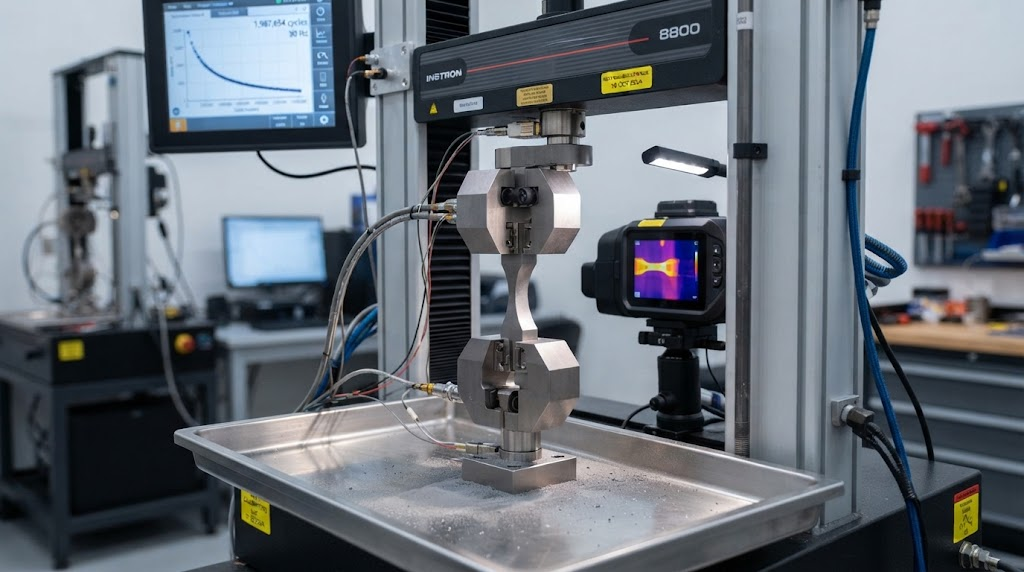
Aerospace structural design relies on strict Damage Tolerance principles mandated by FAA FAR 25.571. Titanium alloys are selected for their high strength-to-density ratio, corrosion immunity, and crack deceleration properties. Under cyclic stress, cumulative mechanical damage evolves through three distinct physical stages:
Stage I: Crack Initiation. Localized plastic deformation causes planar slip bands to form along primary alpha (αp) crystallographic basal planes.
Stage II: Stable Crack Propagation. Sub-critical crack extension governed by the Paris-Erdogan law: da/dN = C(ΔK)m.
Stage III: Fast Fracture. Terminal failure occurring when the stress intensity factor reaches the material's plain-strain fracture toughness (KIc).
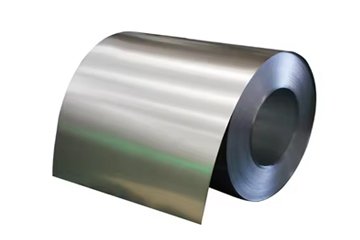
Integrating Aerospace Grade Titanium Alloys into airframes requires balancing high yield strength against critical defect tolerance across diverse flight envelopes.
Cyclic Fatigue Regimes: LCF, HCF, VHCF, and Cold Dwell Fatigue
Airframe and propulsion components operate across disparate cyclic fatigue regimes. Identifying the active fatigue regime dictates alloy selection, heat treatment, and inspection intervals.
Low Cycle Fatigue (LCF) vs. High Cycle Fatigue (HCF)
Low Cycle Fatigue (LCF) operates below 104 to 105 cycles at macroscopic plastic strains. It dominates primary airframe bulkheads, wing carry-through structures, and landing gear assemblies during takeoff and touchdown cycles.
High Cycle Fatigue (HCF) spans 105 to 107 cycles under elastic strain conditions. HCF is the primary failure mode for compressor blades, turbine disks, and aero-engine acoustic liners subject to aerodynamic flutter and rotational resonance.
Very High Cycle Fatigue (VHCF) and Cold Dwell Sensitivity
Very High Cycle Fatigue (VHCF) extends beyond 107 up to 109 cycles. In this regime, titanium alloys exhibit sub-surface internal crack initiation at microstructural inhomogeneities rather than surface slip steps, eliminating classical fatigue limits.
Cold Dwell Fatigue (CDF): A phenomenon in alpha and near-alpha titanium alloys where sustained load holds at ambient temperatures (<200°C) reduce cyclic life by up to an order of magnitude. CDF occurs when poorly oriented "soft" alpha grains slip, transferring load to adjacent "hard" alpha grains oriented with their c-axes parallel to the tensile axis, triggering quasi-cleavage facet nucleation.
For landing gear cylinders and heavy forgings, structural integrity engineers specify Ti-5553 High-Strength Structural Titanium to mitigate dwell sensitivity while maximizing high-strain LCF endurance.
Microstructural Influences on Fatigue Initiation and Crack Growth
The morphology, volume fraction, and spatial arrangement of alpha (α) and beta (β) phases dictate cyclic behavior. Heat treatment and thermomechanical processing (TMP) tailor these microstructural variations.
Equiaxed, Lamellar, and Bimodal (Duplex) Morphologies
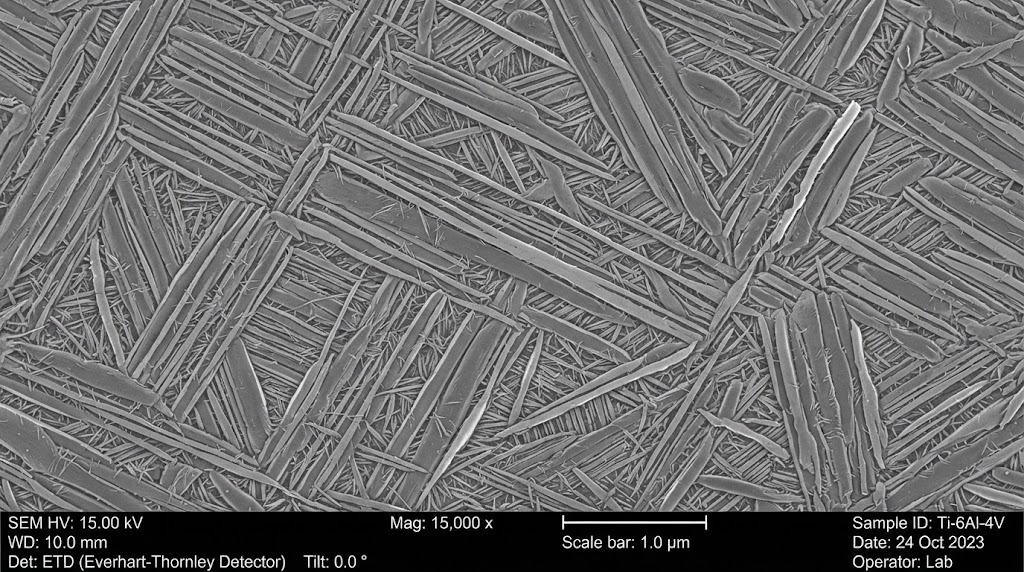
Bimodal (Duplex) Microstructure: Contains 50–60% globular primary alpha (αp) in a transformed β matrix with fine lamellar plates. This structure yields the highest HCF strength because small αp grains restrict the dislocation mean free path, delaying Stage I crack initiation.
Fully Lamellar (Widmanstätten / Beta-Annealed): Formed by cooling from above the β-transus temperature. Coarse lamellar colonies lower crack initiation resistance, but provide maximum fracture toughness (KIc) and lower Stage II fatigue crack growth rates (FCGR) by forcing crack-tip tortuosity, deflection, and secondary branching.
Equiaxed Alpha Structure: Provides high tensile ductility and excellent resistance to strain-controlled LCF, but exhibits lower threshold stress intensity (ΔKth).
Macro-zones—clusters of similarly oriented primary alpha grains sharing crystallographic c-axes—impair fatigue performance. They act as large pseudo-grains, enabling uninterrupted slip bands that trigger premature cleavage cracking.
Fatigue Endurance Benchmark: Comparative Alloy Performance Matrix
Based on our empirical fatigue test archives conforming to ASTM E466 (Axial Fatigue) and ASTM E647 (Crack Growth Rates), the table below summarizes fatigue performance metrics across standard aerospace titanium grades at R = 0.1 (room temperature).
| Alloy Grade & Condition | Tensile Yield (MPa) | Fatigue Limit @ 107 Cycles (R=0.1, MPa) | Fracture Toughness K1c (MPa√m) | Paris Law Constant m |
|---|---|---|---|---|
| Ti-6Al-4V Mill Annealed (AMS 4928) | 880 | 510 | 55–75 | 3.2 |
| Ti-6Al-4V Bimodal / STA | 990 | 620 | 45–60 | 3.5 |
| Ti-6Al-4V ELI (Grade 23 / AMS 4907) | 830 | 480 | 80–105 | 2.8 |
| Ti-5Al-5V-5Mo-3Cr (Ti-5553 STA) | 1160 | 710 | 50–70 | 3.1 |
| Ti-6Al-2Sn-4Zr-2Mo (Ti-6242 Annealed) | 900 | 540 | 60–75 | 3.0 |
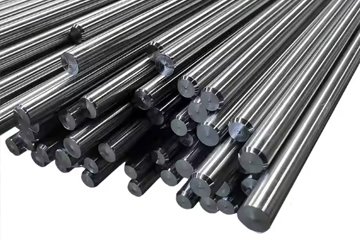
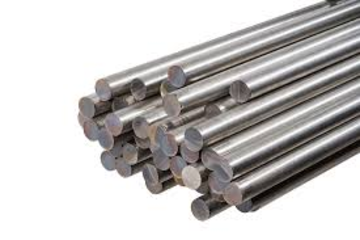
For applications demanding high-cycle baseline compliance, certified Ti-6Al-4V Grade 5 Forgings & Bars maintain balanced damage tolerance, making them an industry standard for structural airframe fittings.
Manufacturing Methods & Surface Engineering: Maximizing Cyclic Endurance
Surface condition directly affects cyclic fatigue life. Because over 85% of aerospace fatigue failures initiate at free surfaces, machining integrity and post-process surface enhancements are critical design factors.
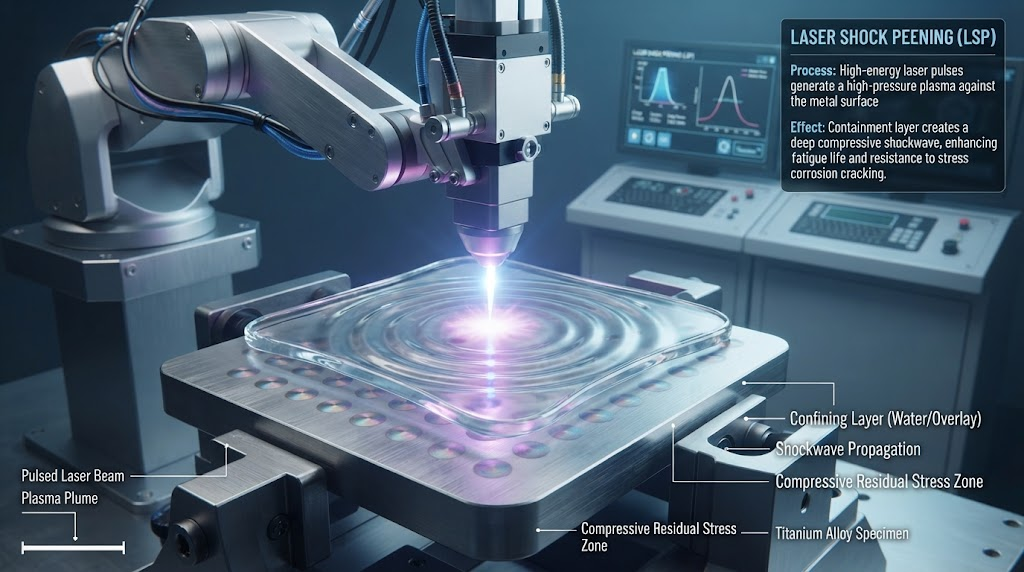
Mechanical Surface Enhancement Technologies
Laser Shock Peening (LSP): Produces deep compressive residual stress profiles reaching up to 1.5–2.0 mm below the surface. This deep compressive layer delays crack initiation and arrests early Stage I micro-cracks under foreign object damage (FOD) conditions.
Ultrasonic Shot Peening (USP): Delivers uniform surface peening with low surface roughness (Ra < 0.4 µm), reducing notch stress concentrations compared to conventional cast steel shot blasting.
Controlled Shot Peening (AMS 2430): Generates surface compressive stresses reaching 60–70% of the alloy's yield strength, typically concentrated in the first 150–300 µm depth.
Machining Integrity and Additive Manufacturing Considerations
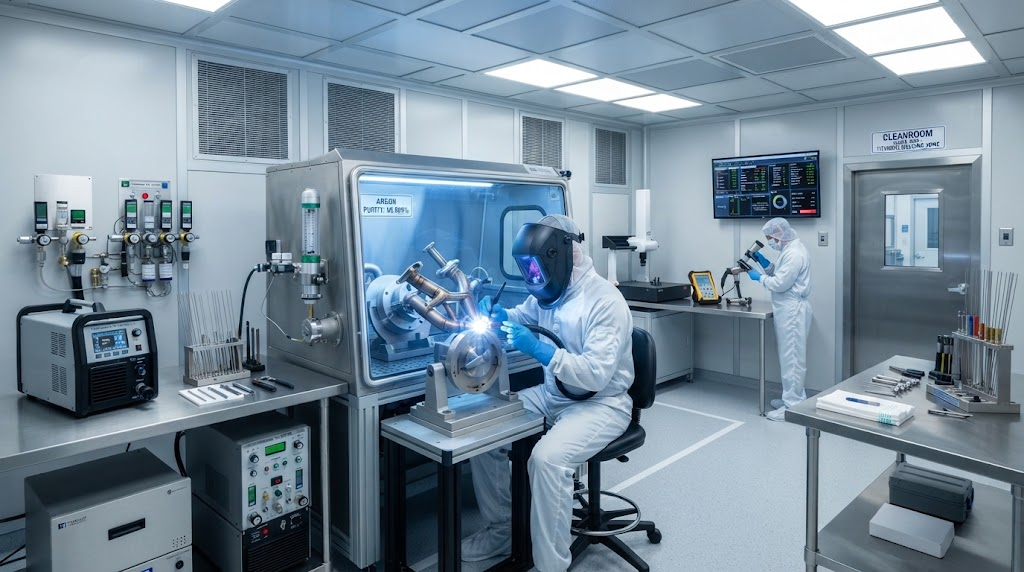
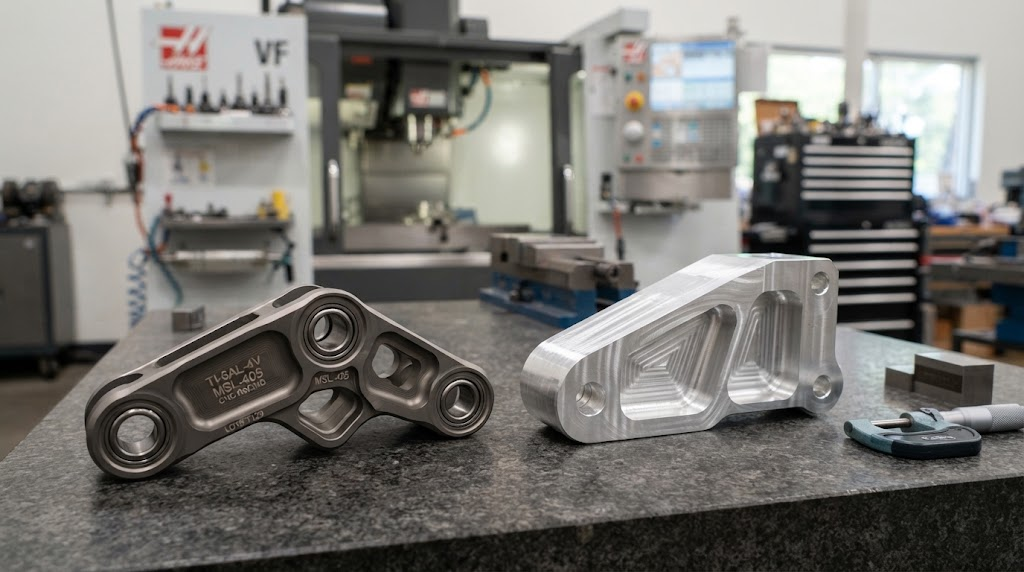
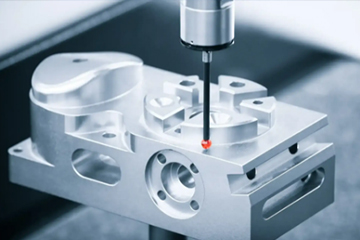
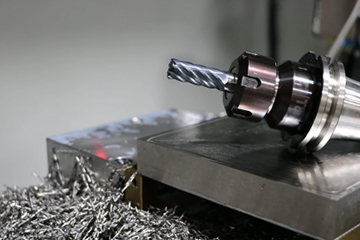
Electrical Discharge Machining (EDM) generates a brittle recast layer that reduces HCF endurance by up to 40% if not chemically milled. Machined aerospace surfaces require finish milling with Ra ≤ 0.8 µm, validated through rigorous Precision CNC Machining of Titanium Components.
Additive titanium parts (LPBF/EBM) require post-process Hot Isostatic Pressing (HIP) at 920°C / 100 MPa / 2h to close gas pores and unbonded regions. Without HIP, unhealed internal defects act as micro-notches, substantially lowering fatigue limits.
The China Titanium Factory ZeroDefect-VAR™ Quality Protocol
Sub-surface micro-inclusions severely reduce titanium cyclic fatigue life. Hard alpha (interstitial nitrogen-stabilized inclusions) and High-Density Inclusions (HDIs, such as tool-drop tungsten/tantalum particles) act as non-yielding crack nucleation sites under cyclic load.
China Titanium Factory operates under the proprietary ZeroDefect-VAR™ Quality Protocol to produce aerospace-grade titanium:
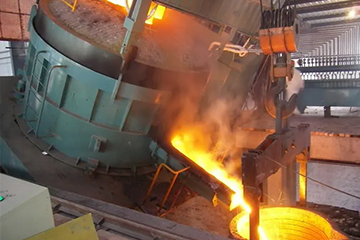
Multi-Melting Sequence: Initial Electron Beam Cold Hearth Remelting (EBCHR) to dissolve and gravity-separate HDIs/LDIs, followed by double or triple Vacuum Arc Remelting (VAR) under high vacuum (<0.01 Pa) to ensure chemical homogeneity.
Precision Thermomechanical Processing (TMP): Tight window control during final beta and alpha-beta forging reduction (>4:1 ratio) to eliminate macro-zones and generate uniform, equiaxed or bimodal microstructures.
Total Surface Alpha-Case Removal: Mechanical peeling followed by controlled chemical pickling (HF/HNO3) to remove oxygen-enriched brittle surface layers.
100% AMS 2631 Class AA Ultrasonic Non-Destructive Testing: Automated multi-channel immersion ultrasonic scanning to detect flat-bottom hole equivalent defects down to 0.8 mm (3/64").
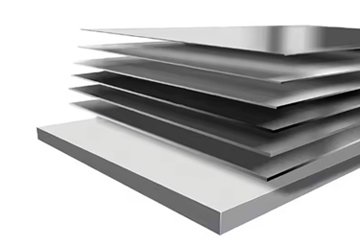
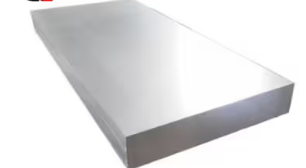
Our products, including AMS Certified Titanium Plate and Sheet, comply with these clean-melt parameters, satisfying the requirements of AS9100D certified airframe manufacturers.
Aerospace Fatigue Troubleshooting and Best Practice Design Guidelines
Stress analysts and structural design engineers can apply several established design practices to extend the fatigue life of titanium aerospace assemblies.
Stress Concentration (Kt) and Fastener Hole Cold Expansion
Fastener holes represent critical locations for fatigue initiation due to geometric stress concentration (Kt ≥ 3.0). Implementing split-sleeve cold expansion creates a ring of residual compressive stress around the hole perimeter, extending fastener joint fatigue life by 300% to 500%.
Mitigating Fretting Fatigue and Galvanic Corrosion
Titanium interfaces contacting aluminum or steel in high-vibration locations are prone to fretting fatigue. Fretting degrades surface passivity and accelerates micro-crack nucleation under small-amplitude oscillating slip (<50 µm).
Engineers mitigate fretting through anti-friction solid film lubricants, thermal-sprayed copper-nickel-indium coatings, or thin PVD coatings. When pairing titanium with carbon-fiber-reinforced polymers (CFRP), an isolation ply (such as fiberglass) prevents galvanic coupling and subsequent hydrogen uptake at fastener holes.
Academic Citations, Key Standards, and Reference Research
Structural validation and damage tolerance modeling of titanium alloy components rely on the following international standards and references:
MMPDS-14 (Metallic Materials Properties Development and Standardization): Standard handbook for A- and B-basis statistical design values for aerospace titanium alloys.
ASTM E466-21: Standard Practice for Conducting Force Controlled Constant Amplitude Axial Fatigue Tests of Metallic Materials.
ASTM E606/E606M: Standard Test Method for Strain-Controlled Low-Cycle Fatigue Testing.
ASTM E647: Standard Test Method for Measurement of Fatigue Crack Growth Rates.
AMS 4928 / AMS 4911 / AMS 4907: Material specifications for Ti-6Al-4V structural forgings, sheets, and extra-low interstitial (ELI) grades.
AMS 2631: Ultrasonic Inspection of Titanium and Titanium Alloy Billets, Bars, and Forgings (Class AA / Class A acceptance).
Frequently Asked Questions (FAQ) on Aerospace Titanium Fatigue
What is the typical endurance limit ratio for aerospace titanium alloys?
For smooth, unnotched Ti-6Al-4V specimens tested at R = -1 or R = 0.1, the fatigue endurance ratio (Fatigue Strength @ 107 cycles / Ultimate Tensile Strength) typically ranges between 0.50 and 0.60. However, surface roughness, geometric notches (Kt), and macrozones can reduce this ratio below 0.30.
Why does Ti-6Al-4V ELI exhibit higher damage tolerance than standard Grade 5?
Ti-6Al-4V ELI (Grade 23) features reduced interstitial elements (oxygen ≤ 0.13 wt%, iron ≤ 0.25 wt%). Lower oxygen content minimizes planar slip localization and slip-band pile-up, resulting in higher fracture toughness (K1c > 80 MPa√m) and lower fatigue crack propagation rates at low to intermediate ΔK levels.
How is Cold Dwell Fatigue identified and mitigated?
Cold Dwell Fatigue manifests as flat, quasi-cleavage facet fracture surfaces near sub-surface initiation zones. It is mitigated by controlling thermomechanical processing below the β-transus to refine alpha grains, break up macrozones, and select alloys with beta additions (like Ti-5553 or Ti-10-2-3) that prevent aligned basal orientations.
What peening method produces the deepest residual stress profile in titanium?
Laser Shock Peening (LSP) generates the deepest compressive residual stress profile (1.0 mm to >2.0 mm), compared to 0.15–0.35 mm for conventional shot peening. This depth provides protection against surface gouges, scratches, and FOD-induced cyclic crack initiation.
Procure Certified Aerospace Titanium from China Titanium Factory
Order High-Endurance Aerospace Titanium Forgings, Bars, and Plates
China Titanium Factory delivers high-integrity titanium mill products certified to AS9100D, AMS 4928, AMS 4911, and customer-specific airframe fatigue specs. Mill test reports (EN 10204 3.1/3.2), full ultrasonic tracing, and metallurgical test datasets are included with every shipment.