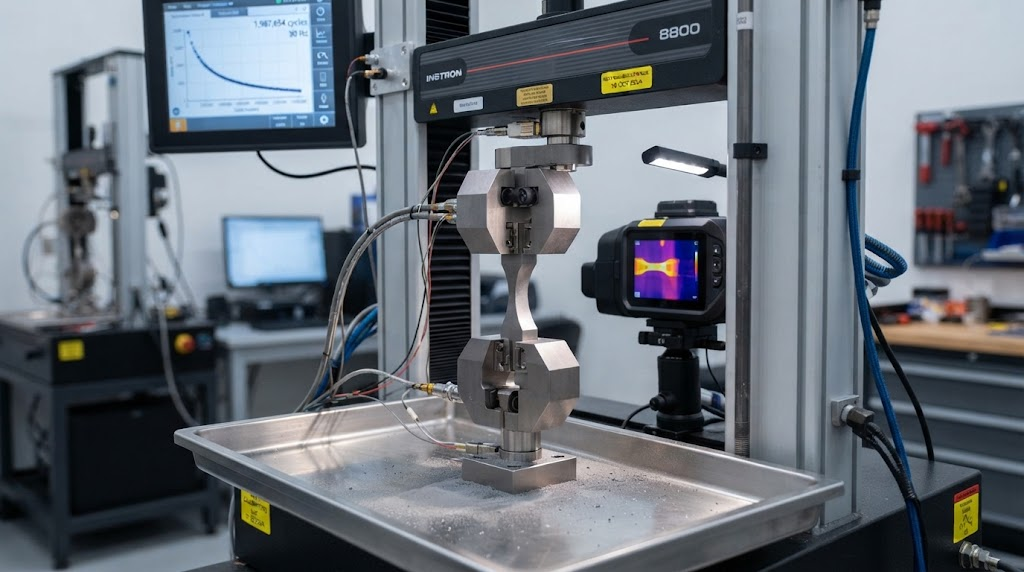
The cost-benefit of titanium pipe fittings in pulp and paper industry applications centers on eliminating unscheduled line downtime and repetitive capital reinvestment in corrosive bleaching circuits. While titanium presents an initial procurement premium over standard stainless steels, its virtually zero corrosion rate in chlorine dioxide (ClO2) environments yields a complete capital payback within 18 to 36 months.
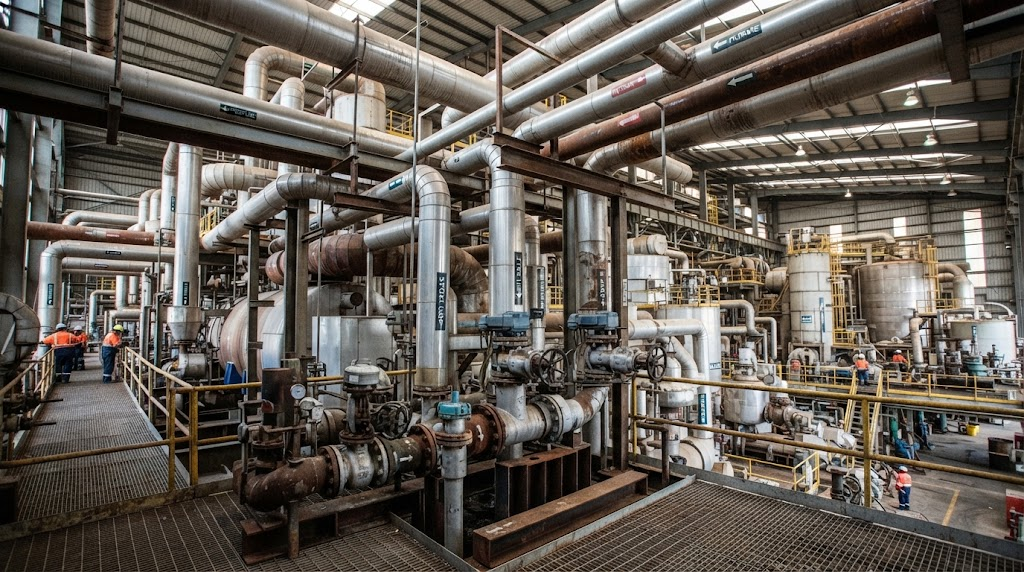
Modern chemical recovery and elemental chlorine-free (ECF) / total chlorine-free (TCF) bleach plants push piping systems to aggressive limits. Process streams operate at elevated temperatures (60°C to 90°C), low pH levels (1.5 to 3.5), and severe oxidizer concentrations.
According to technical surveys published by TAPPI (Technical Association of the Pulp and Paper Industry), unplanned mill downtime costs kraft pulp operators between $15,000 and $45,000 per hour in lost throughput and chemical surging. Specifying standard austenitic or low-grade duplex stainless steels often leads to severe localized attack, pinhole leaks, and emergency outages within 12 to 24 months of operation.
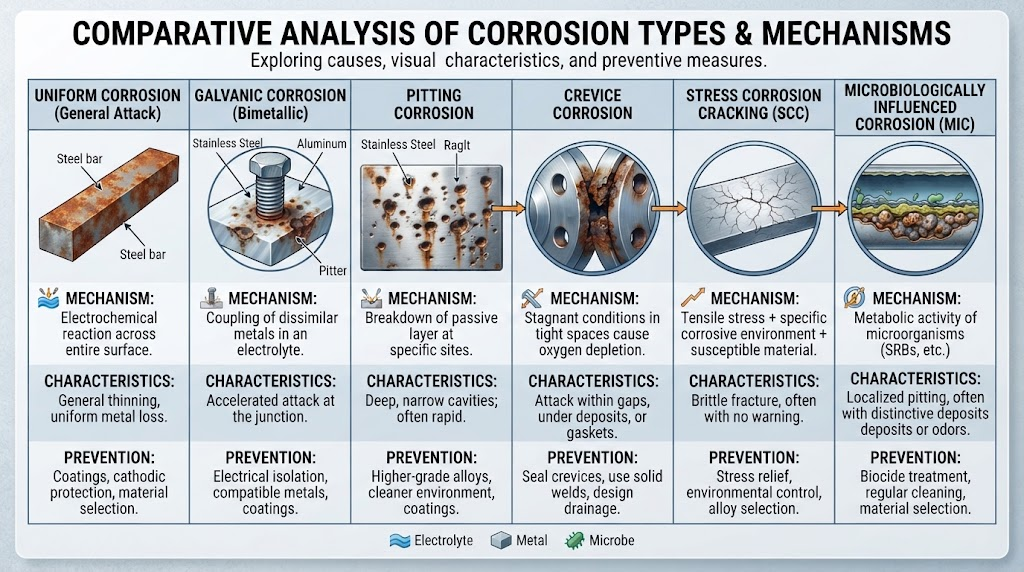
In bleach plant environments—specifically D0, D1, and D2 chlorine dioxide stages—corrosion mechanisms are driven by high oxidation-reduction potentials (ORP > 800 mV) and concentrated residual chlorides. These conditions rapidly destabilize the chromium-oxide passive film found on standard steels.
Passive Film Formation: Titanium develops an instantaneous, highly stable, continuous titanium dioxide (TiO2 / rutile and anatase) ceramic surface layer upon exposure to oxygen or moisture. This oxide film repairs itself instantaneously in oxidizing acidic media, providing near-total immunity to wet chlorine and ClO2 attack.
Conventional alloys display distinct, costly failure modes in pulp bleaching circuits:
316L / 317L Stainless Steel: Rapid pitting and stress corrosion cracking (SCC). Critical Pitting Temperature (CPT) is frequently exceeded below 20°C in standard ClO2 environments.
254SMO (6% Molybdenum Super Austenitic): Susceptible to severe crevice corrosion underneath flange gaskets, butt-weld heat-affected zones (HAZ), and scale deposits when chlorite residuals spike.
Hastelloy C-276 (Nickel Alloy): Provides robust corrosion resistance but carries severe cost volatility and density penalties (8.89 g/cm³ vs. 4.51 g/cm³ for Titanium Grade 2), drastically escalating structural support requirements and overall CAPEX.
Selecting appropriate alloys for pulp process loops requires balancing metallurgical resilience against upfront capital expenditures. The following matrix contrasts primary mechanical and corrosion metrics across industrial standard piping materials.
| Alloy / Grade | UNS Number | Density (g/cm³) | PREN | Corrosion Rate in ClO2 (mm/yr) | Relative Material Cost Multiplier |
|---|---|---|---|---|---|
| Titanium Grade 2 | UNS R50400 | 4.51 | N/A (Immune) | < 0.005 | 2.2x |
| Titanium Grade 7 (Ti-Pd) | UNS R52400 | 4.51 | N/A (Immune) | < 0.001 | 3.8x |
| Titanium Grade 12 | UNS R53400 | 4.54 | N/A (Immune) | < 0.005 | 2.5x |
| 316L Stainless | UNS S31603 | 8.00 | ~23-25 | > 1.25 (Severe Pitting) | 1.0x (Base) |
| 254SMO (6Mo) | UNS S31254 | 8.00 | ≥ 42 | 0.15 - 0.40 | 2.1x |
| Hastelloy C-276 | UNS N10276 | 8.89 | ≥ 68 | < 0.010 | 4.5x |
To view dimensional specs and tolerances for commercial piping spools, explore our comprehensive Titanium Pipe Fittings Catalog.
Traditional piping procurement evaluates initial CapEx, overlooking that installation labor, downtime, and recurring maintenance constitute over 70% of total lifetime costs. A 20-Year Net Present Value (NPV) Life Cycle Cost Analysis reveals that titanium is consistently the lowest-cost alternative for critical bleaching lines.
The standard industrial LCCA model follows this governing equation:
LCC = C_cap + C_inst + ∑ [ (C_maint + C_downtime + C_repl) / (1 + r)^t ] - S / (1 + r)^N
Where: C_cap = Initial Procurement, C_inst = Installation, C_maint = Routine Maintenance, C_downtime = Outage Losses, C_repl = Replacement Spools, S = Scrap/Salvage Value, r = Discount Rate (6%), N = Asset Lifecycle Horizon (20 Years).
When running a comparison for a 1,000-foot, 6-inch Schedule 40S bleach line installation:
316L Stainless System: Requires replacement every 2 to 3 years. Over 20 years, cumulative replacements, scaffolding, welding labor, and production losses push the NPV beyond $1.4M.
254SMO System: Experiences crevice corrosion at flange connections, necessitating partial spools and gasket replacements every 4 to 6 years, driving a 20-year NPV of roughly $680,000.
Titanium Grade 2 System: Operates maintenance-free with zero corrosion degradation across the full 20-year period, resulting in a total NPV under $290,000.
Calculate your mill's exact payback period and financial savings using our interactive Industrial Corrosion Life Cycle Calculator.
Unlike lined carbon steel (PTFE/FRP) or degraded stainless steels, titanium retains substantial scrap commodity equity. Upon plant decommissioning or process line redesign, Grade 2 and Grade 7 butt-weld fittings and pipes are 100% recyclable.
In current metallurgical recycling markets, clean titanium scrap reliably yields 15% to 25% of virgin ingot value. This end-of-life residual equity directly reduces the net capital investment on asset balance sheets.
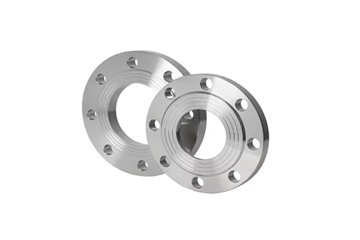
A primary method for optimizing CapEx in titanium piping design is eliminating solid titanium forged flanges. Process media only contacts the interior wet wall, making full-body titanium flanges financially inefficient.
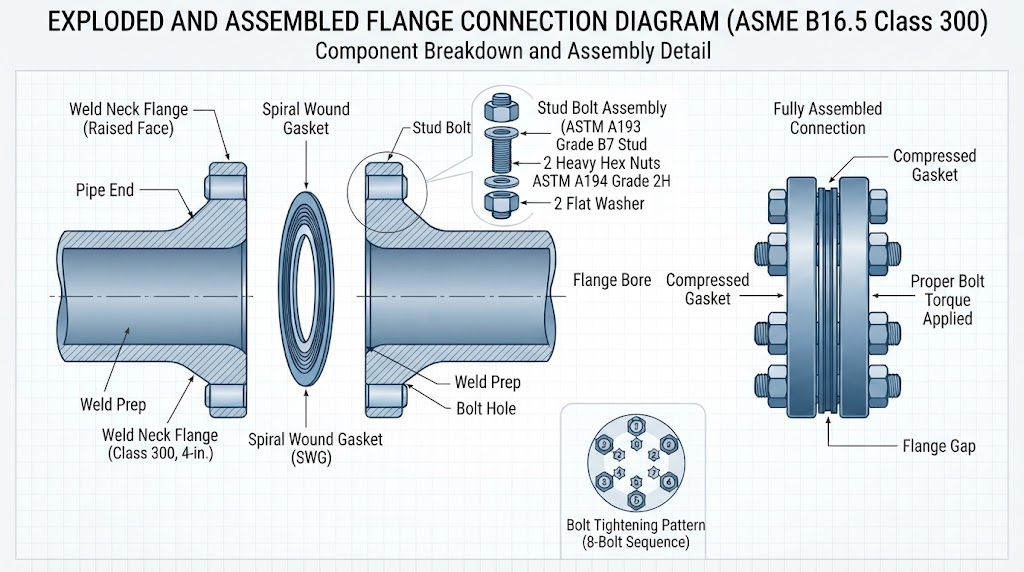
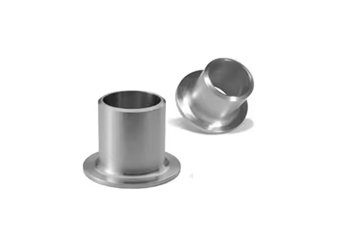
By implementing ASME B16.9 and MSS SP-43 Type A/B titanium stub ends paired with loose backing flanges (lap joint rings), mills reduce joint assembly hardware costs by 35% to 45%:
Wetted Contact Face: High-purity, mill-certified Titanium Grade 2 Stub Ends & Flanges maintain metallurgical corrosion immunity.
Rotating Backing Rings: Epoxy-coated ductile iron, carbon steel, or 304 stainless steel backing rings supply the required mechanical bolt load without contacting the corrosive stream.
Installation Velocity: Rotating backing flanges eliminate bolt-hole misalignment challenges in tight pipe racks, reducing field installation labor by up to 20%.
To assist chemical process piping metallurgists and EPC engineering teams in selecting the optimal, most cost-effective grade, we utilize our standardized selection matrix.
The China Titanium Factory Bleaching Piping Decision Framework™ Protocol:
Operating Temp < 75°C, pH > 2.5, Residual ClO2: Specify Titanium Grade 2 (UNS R50400 / WPT2). Delivers standard cost-performance for the vast majority of D0, D1, D2 bleach towers and washer filtrate lines.
Operating Temp ≥ 75°C, pH ≤ 2.0, Extreme Crevices / Flange Gasket Risk: Specify Titanium Grade 7 (Ti-Pd) Corrosion Solutions (UNS R52400 / WPT7). The 0.15% Palladium addition shifts the open-circuit corrosion potential electrochemically positive, preventing under-deposit acid attack.
Intermediate Crevice Risk (Moderate Chlorides, Temp 70°C–90°C): Specify Titanium Grade 12 (UNS R53400 / WPT12). A cost-balanced Mo-Ni alloy engineered for intermediate crevice protection without the full cost of palladium.
Industrial reliability in bleach plant service demands strict compliance with international manufacturing codes. Butt-weld fittings must comply with ASTM B363 / ASME SB363 (Seamless and Welded Unalloyed Titanium and Titanium Alloy Welding Fittings).
At China Titanium Factory, our production and non-destructive testing (NDT) workflows include:
Starting Materials: ASTM B861 (Seamless Tube) and ASTM B862 (Welded Pipe) feedstock sourced exclusively from premium sponge titanium.
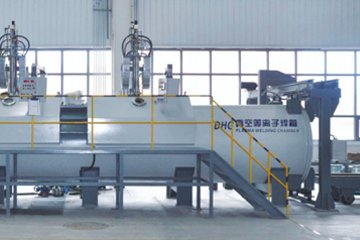
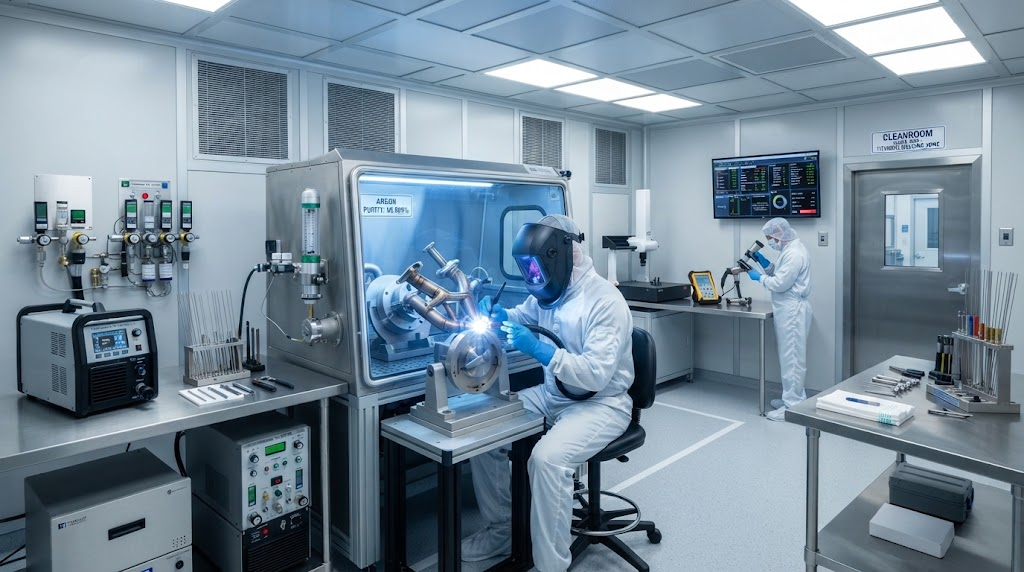
Welding Quality: Mechanized Gas Tungsten Arc Welding (GTAW/TIG) inside ultra-pure argon chambers (99.999% purity) with continuous trailing gas shields to prevent interstitial atmospheric contamination (O2, N2, H2 pickup).
Volumetric Testing: 100% X-ray Radiographic Testing (RT) on all welded seams according to ASME Section VIII, Division 1, UW-51.
Traceability: Full EN 10204 3.1 Mill Test Reports (MTR) detailing chemical analysis, tensile yield, elongation, and hydrostatic test verifications. Certified under ISO 9001 and European Pressure Equipment Directive (PED 2014/68/EU).
Verify our global supply standards by visiting China Titanium Factory Quality Certifications.
A major softwood kraft pulp mill in North America experienced persistent pitting failures along an 8-inch D0 stage ClO2 transfer spool constructed from 254SMO. Pinhole leaks developed every 14 to 18 months at the heat-affected zones adjacent to 90° elbows, each costing approximately $85,000 in lost pulp production and rapid patch repairs.
The Solution: During a scheduled 5-day annual maintenance shutdown, the engineering team executed a complete retrofit using China Titanium Factory ASTM B363 Grade 2 seamless butt-weld elbows, equal tees, and MSS SP-43 stub ends with 304SS loose backing flanges.
The Results:
Zero Wall Thinning: Ultrasonic thickness testing during follow-up turnaround inspections recorded 0.00 mm metal loss.
Full Financial Payback: The total capital conversion cost was fully recovered within 14.2 months by eliminating emergency downtime and recurring patch repairs.
Lifecycle Projection: The piping loop is projected to operate trouble-free for over 25 years without maintenance intervention.
Procuring pulp mill titanium piping components through intermediaries adds unnecessary margin and extends critical-path lead times. Partnering directly with China Titanium Factory provides tangible operational advantages for capital projects and emergency turnarounds:
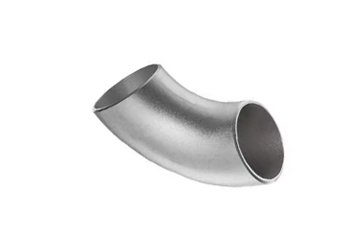
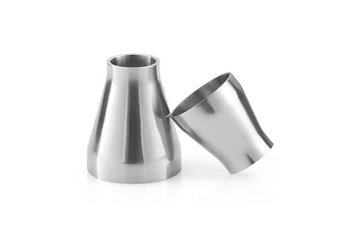
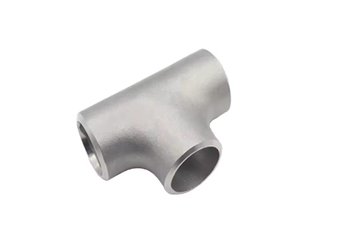
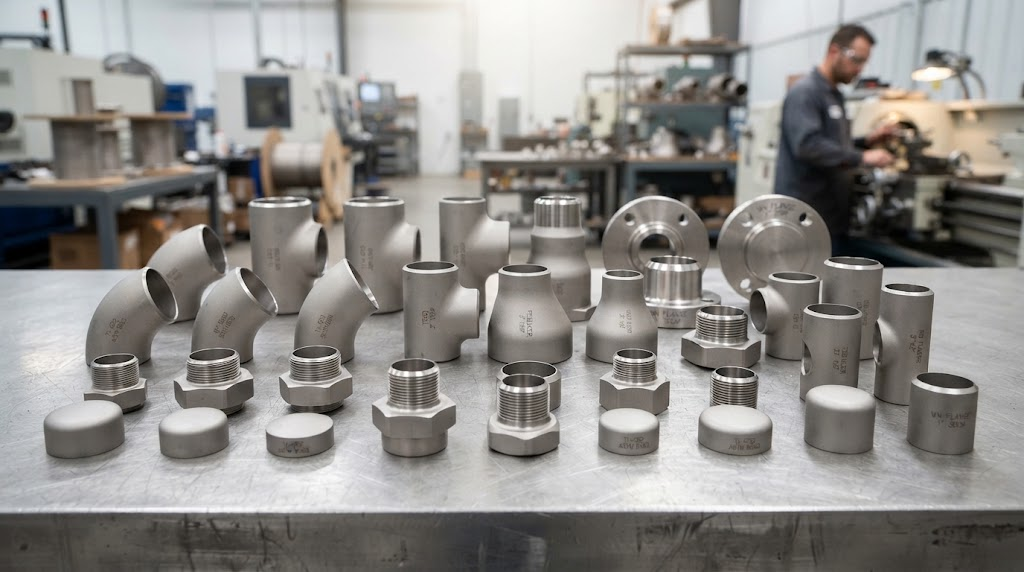
Complete Dimensional Capability: Seamless and welded elbows (45°, 90°, 180° LR/SR), concentric/eccentric reducers, equal/reducing tees, caps, and MSS SP-43 stub ends from 1/2" NPS through 48" NPS.
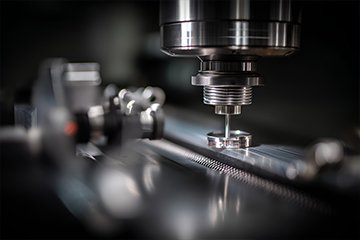
Precision CNC Machining: Automated beveling (ASME B16.25 standard) ensures clean root pass fusion and rapid fit-up during field welding.
Economies of Scale: Direct access to mill sponge melting, forging, cold-drawing, and hydro-forming reduces unit acquisition costs by 20% to 35% relative to Western stockists.
Export Compliance: Robust ocean/air export crating with protective end caps, fully compliant with global shipping standards.
Welding titanium requires strict cleanliness and adequate inert gas shielding, but it does not require complex post-weld heat treatment. By ensuring clean joints, pure argon backing (99.999%), and trailing shields, certified pipe welders routinely achieve high-integrity field welds faster than with high-moly nickel alloys.
When connecting titanium stub ends with carbon steel or stainless backing flanges, non-conductive insulating gasket kits (dielectric sleeves, washers, and PTFE/Neoprene isolators) are used. This breaks electrical continuity and completely prevents galvanic acceleration.
Titanium Grade 7 contains 0.12%–0.25% palladium, increasing raw fitting costs by roughly 50% to 75% over Grade 2. Consequently, Grade 7 is strategically reserved for severe, low-pH crevice zones, while Grade 2 handles general process piping.
Stop absorbing unscheduled downtime and recurring piping replacement expenses. Connect directly with our process metallurgists to review your bleach plant isometric drawings, request custom alloy quotes, or obtain certified technical data sheets.
Request a Custom Quote & Mill Consultation


Contact Us
Room 21003, 10th Floor, Unit 2, Building 1, Xianning International Plaza, No.29 Xianning West Road, Beilin District, Xi'an City
Copyright © Xi'an Shiguang Jingyan Technology Co., Ltd. All Rights Reserved.