























Strategic Titanium Kanban Inventory Management
Supply chain volatility in the titanium sector demands a shift from reactive procurement to synchronized inventory architecture. At China Titanium Factory, we recognize that traditional "Push" systems often lead to excessive capital tied up in slow-moving raw materials or, conversely, production stoppages due to shortages of critical Aerospace Titanium Forgings.
In 2026, the global titanium market requires more than just high-quality metal; it requires a logistics framework that matches the precision of the alloys themselves. By integrating Kanban principles into the titanium supply chain, manufacturers can achieve a leaner, more resilient production flow that responds to real-time demand signals.
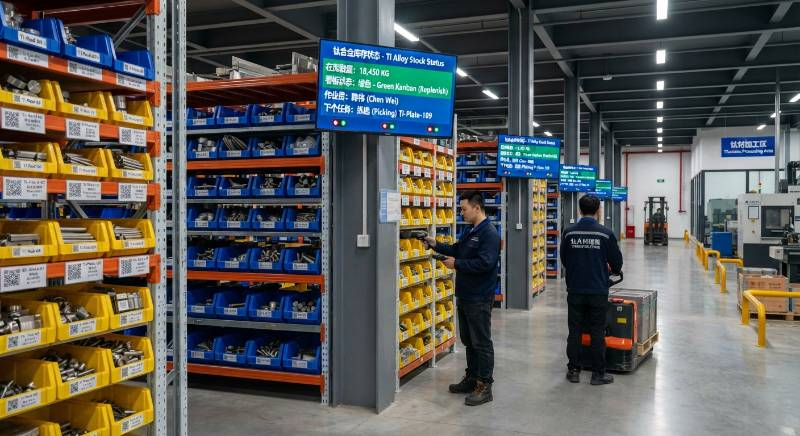
Defining Kanban in High-Performance Metallurgy
Titanium Kanban is a visual replenishment system that triggers the production or shipment of material only when a specific "signal" is received from the downstream process. This "Pull" mechanism ensures that high-value assets—such as Grade 2 sheets or Titanium Grade 5 Ti-6Al-4V—are replenished exactly as they are consumed.
"In our manufacturing experience, the primary failure in titanium procurement isn't material quality, but the 'Bullwhip Effect' caused by poor inventory visibility. Kanban acts as the nervous system of our facility, ensuring raw material flow matches CNC spindle time with millisecond precision." — Chief Supply Chain Officer, China Titanium Factory
By utilizing physical or digital Kanban cards, we maintain a specific number of bins for each SKU. When a bin is emptied, the card is sent back to our production department, initiating the immediate replenishment of that specific alloy grade and dimension.
The China Titanium Precision-Flow Protocol
To go beyond standard lean practices, we have developed the Precision-Flow Protocol. This proprietary methodology integrates material science with advanced inventory logistics to eliminate the 15-20% waste typically found in standard titanium procurement cycles.
Phase 1: Consumption Profiling
We analyze your historical usage data for Custom CNC Machined Parts to determine the optimal bin size and signal frequency. This prevents the "over-stocking" trap that plagues many aerospace subcontractors.
Phase 2: Digital MTR Synchronization
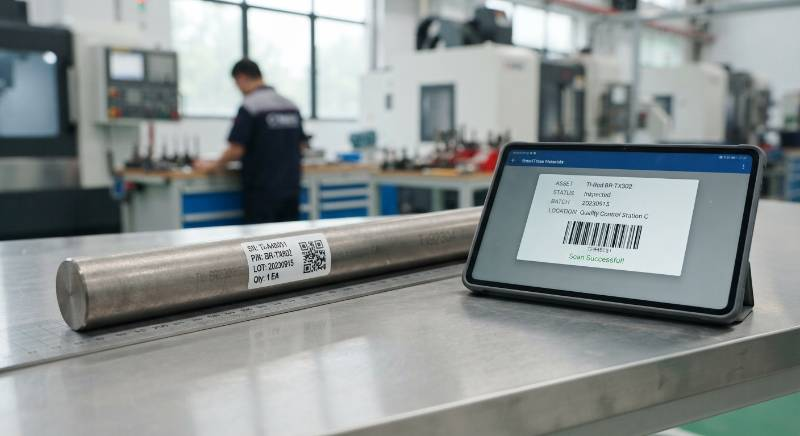
Unlike standard hardware, titanium requires strict traceability. Our protocol links every Kanban signal to a digital Mill Test Report (MTR). This ensures that by the time the material arrives at your station, the compliance documentation is already in your ERP system.
Phase 3: Automated Replenishment
Using barcode-driven automation, the signal moves from your shop floor to our warehouse in milliseconds. This reduces administrative "friction" and eliminates the risk of human error in ordering the wrong alloy grade or thickness.
Safety Stock Calculation for Titanium Alloys
Calculating safety stock for titanium is complex due to the volatility of sponge prices and long lead times for specific Aerospace Titanium Forgings. We utilize a data-heavy approach to ensure your buffer is sufficient but not bloated.
The Precision-Flow Safety Stock Formula:
SS = (Z × σLT) + (Davg × σd)
Z: Service level factor (typically 1.65 for 95% availability).
σLT: Standard deviation of lead time (critical for trans-Pacific shipping).
Davg: Average daily demand for the specific titanium grade.
σd: Standard deviation of demand.
Manufacturing Insight: Based on our 2026 production data, clients using our Kanban system have seen a 22% reduction in Work-In-Progress (WIP) capital while maintaining a 99.8% material availability rate. This is particularly vital for Grade 5 (Ti-6Al-4V) which remains the industry benchmark for strength-to-weight performance.
Comparison: Kanban vs. VMI vs. Spot Buying
Choosing the right inventory model depends on your production volume and the criticality of the parts. Below is a comparison based on industry standards set by ASTM International and ISO 9001 quality frameworks.
| Feature | Spot Buying | Vendor Managed (VMI) | Precision Kanban |
|---|---|---|---|
| Lead Time | High / Unpredictable | Moderate | Minimal / Instant |
| Inventory Cost | Variable | High (Safety Stock) | Optimized / Low |
| Traceability | Manual / Fragmented | System Integrated | Real-time / Digital |
| Market Risk | High Exposure | Mitigated | Locked-in Continuity |
Global Logistics Transparency and Replenishment
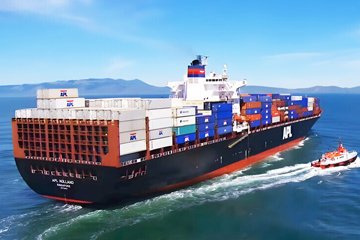
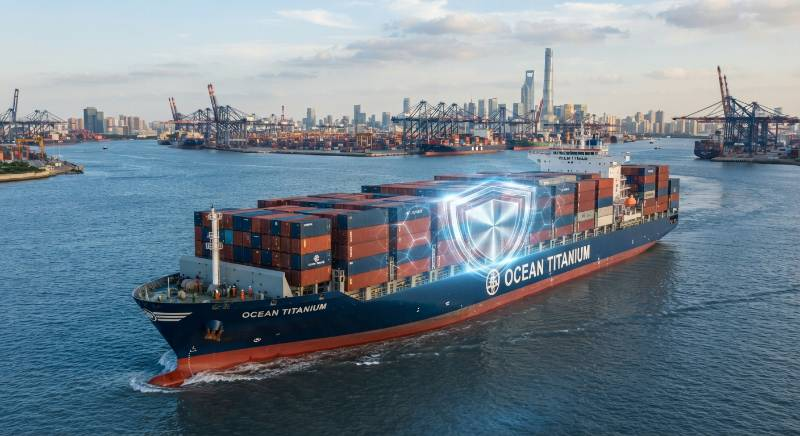
Managing the trans-Pacific replenishment cycle requires more than just a shipping label. For our global clients, China Titanium Factory utilizes strategic warehousing and real-time tracking to bridge the gap between our manufacturing hub and your facility.
When your Kanban system triggers a replenishment order for Custom CNC Machined Parts, our ERP system calculates the optimal shipping route based on current global logistics data. We maintain buffer stocks in key regional hubs to ensure that even during peak demand periods, your replenishment cycle remains uninterrupted.
Compliance, Traceability, and AS9100 Standards
Inventory management for aerospace-grade titanium is inseparable from quality assurance. Every item in our Kanban program adheres to AS9100 Rev D and ISO 9001:2015 standards.
We verify inventory integrity through:
Batch Isolation: Preventing cross-contamination between different heats of the same alloy.
First-In, First-Out (FIFO): Ensuring that material properties remain consistent and within shelf-life parameters where applicable.
Point-of-Use Verification: Every Kanban bin is labeled with grade, heat number, and ASTM specifications (e.g., ASTM B265 or B348).
This level of clinical precision ensures that when you pull a piece of titanium from the bin, you are not just getting metal—you are getting a fully compliant, high-performance engineering solution.
Titanium Inventory Management FAQ
What is the typical MOQ for a Titanium Kanban program?
While standard orders vary, our Kanban programs are typically designed for clients with a recurring annual consumption of at least 500kg of a specific grade. However, we offer flexible arrangements for specialized high-value alloys.
How do you handle material certification (MTR) in a Kanban system?
Each Kanban bin or shipment is accompanied by a unique QR code. Scanning this code provides immediate access to the full metallurgical traceability and mill test reports, ensuring seamless compliance audits.
Can Kanban be used for complex aerospace forgings?
Yes. Although forgings have longer primary lead times, we maintain a "semi-finished" inventory in our facility. This allows the Kanban signal to trigger the final machining or finishing stage, drastically reducing the time-to-delivery.
Optimize Your Titanium Supply Chain Today
Stop reacting to shortages and start predicting success with China Titanium Factory's Precision-Flow Protocol. Our engineering team is ready to design a custom Kanban solution for your Grade 5, Grade 2, or aerospace components.
Request a Supply Chain Audit