





















What is Niobium-Titanium (NbTi) Superconducting Wire?
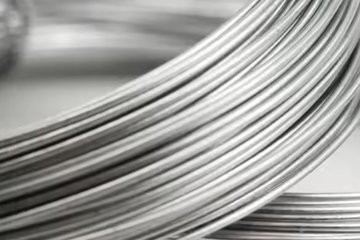
Niobium-Titanium (NbTi) superconducting wire is the foundational material for modern high-field magnets. Unlike brittle alternatives, this alloy is highly ductile, allowing it to be drawn into incredibly fine filaments and coiled into complex geometries.
Niobium-Titanium (NbTi) is a Type II alloy superconductor typically composed of approximately 47% titanium by weight. It exhibits zero electrical resistance when cooled below its critical temperature of 9.2 Kelvin, making it indispensable for generating the intense, stable magnetic fields required in medical diagnostics and particle physics.
At ChinaTitaniumFactory, we focus on the metallurgical precision required to ensure these alloys perform under extreme cryogenic stress. Our data shows that the purity of the starting high-purity niobium directly correlates to the wire's eventual current-carrying capacity.
The Architecture of NbTi: Copper Matrix and Fine Filaments
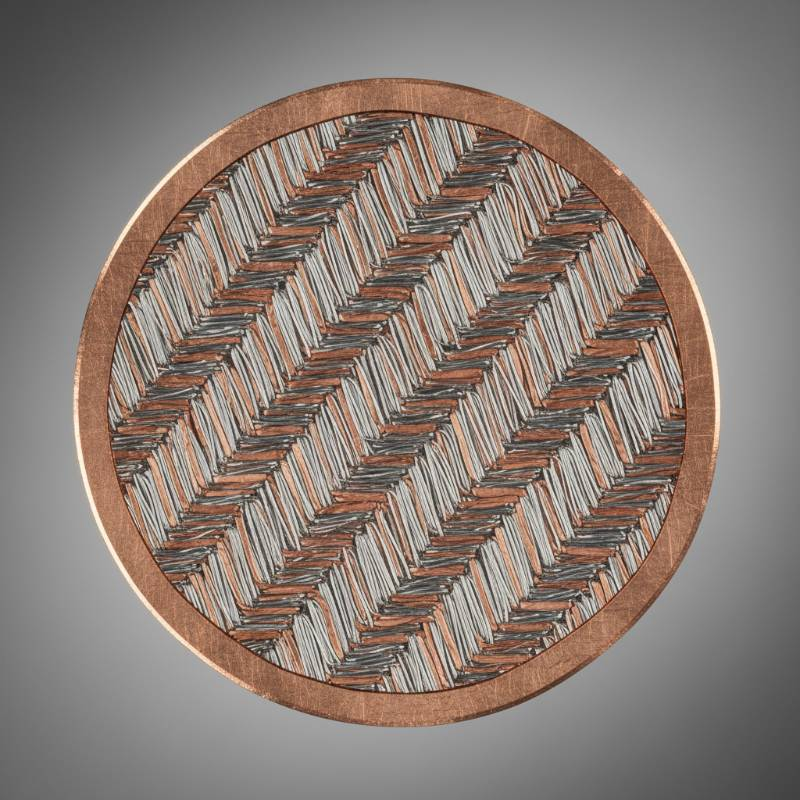
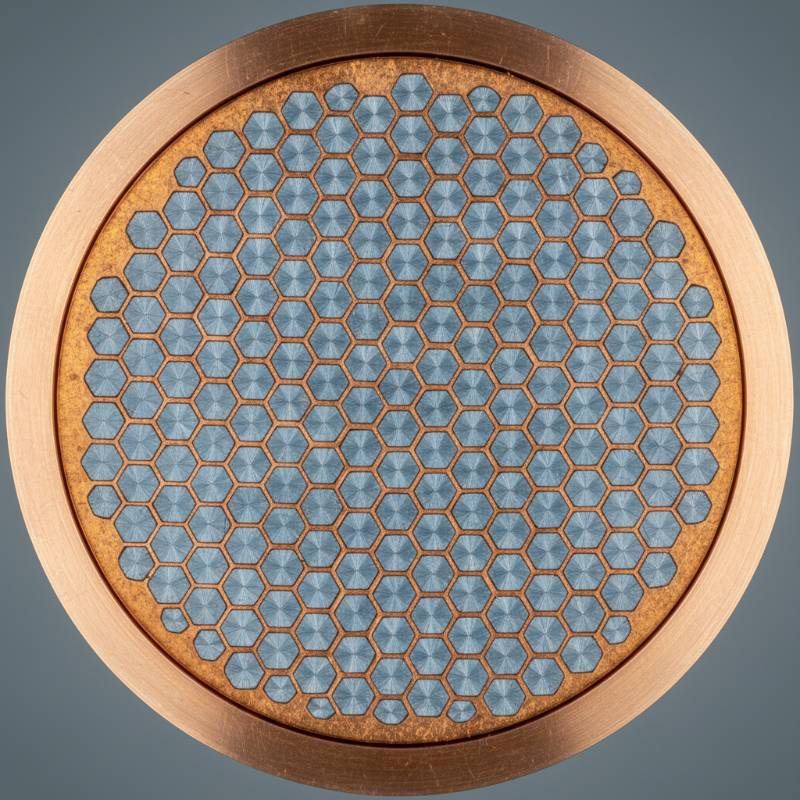
A standard NbTi Superconductor is not a solid rod of alloy. Instead, it is a sophisticated composite. Thousands of NbTi filaments, often as small as 5 to 50 micrometers in diameter, are embedded in a high-purity copper matrix.
This architecture serves two vital purposes. First, the copper acts as a thermal "shunt." If a small section of the superconductor loses its properties (a quench), the copper provides a low-resistance path for the current, preventing the wire from melting. Second, the fine filaments minimize AC losses and magnetic instability.
"The copper-to-superconductor ratio (Cu/Sc) is the defining variable for magnet safety. In MRI applications, we typically see ratios between 1.0 and 2.0 to balance current density with quench protection."
Key Material Properties and Performance Metrics
Engineers selecting MRI Magnet Wire must look beyond simple conductivity. The performance of NbTi is governed by the relationship between temperature, magnetic field, and current density.
| Property | Value |
|---|---|
| Critical Temperature (Tc) | 9.2 K |
| Upper Critical Field (Bc2) at 4.2K | ~10.5 Tesla |
| Critical Current Density (Jc) @ 5T, 4.2K | > 3,000 A/mm² |
| Filament Diameter Range | 5 µm - 100 µm |
In our internal testing, we've found that the mechanical ductility of niobium-titanium alloys allows for a tighter bending radius than Nb3Sn, which is essential for compact medical imaging units.
The Ultra-Stable Flux (USF) Protocol
We define the Ultra-Stable Flux (USF) Protocol as our proprietary three-step manufacturing framework designed to maximize flux pinning. Flux pinning is what prevents magnetic "vortices" from moving within the wire, which would otherwise cause heat and loss of superconductivity.
Step 1: Nano-Inclusion Dispersion – We introduce precise alpha-titanium precipitates during the cold-working phase to serve as pinning centers.
Step 2: Isostatic Matrix Bonding – Using high-pressure consolidation to ensure zero voids between the NbTi filaments and the copper matrix.
Step 3: Continuous Length Integrity – A specialized drawing process that eliminates internal microscopic fractures over distances exceeding 5 kilometers.
MRI Magnet Wire: Why Joint-Free Kilometers Matter
Modern MRI scanners operate in "persistent mode." Once the magnet is energized, the power supply is disconnected, and the current circulates indefinitely. Any resistance in the circuit—even a microscopic amount at a wire joint—will cause the magnetic field to decay over time.
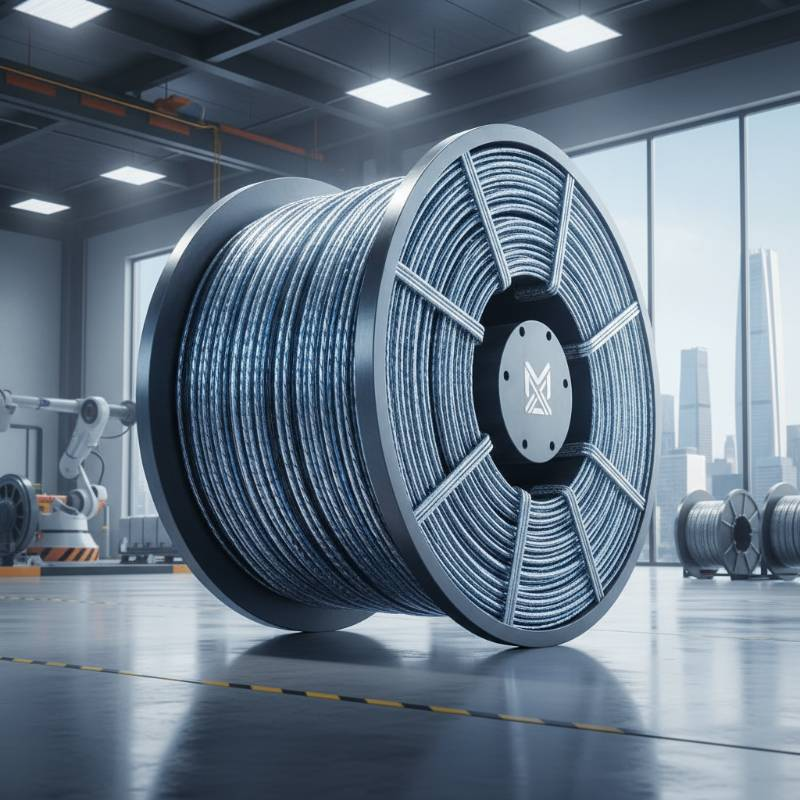
This is why joint-less superconducting wire is the gold standard. A typical 3.0T MRI scanner requires several kilometers of wire. If this wire has joints, the field homogeneity drops, leading to blurred medical images. Our facility is engineered to produce single, continuous spools of superconducting wire specifications that meet these rigorous 2026 clinical standards.
Applications in Fusion Energy and High-Energy Physics
Beyond the hospital, NbTi is the backbone of the ITER project and the Large Hadron Collider at CERN. In fusion reactors, NbTi is used for the Poloidal Field (PF) coils, which provide plasma shape and stability control.
While newer materials like HTS (High-Temperature Superconductors) are gaining ground, NbTi remains the choice for large-scale projects due to its proven reliability and lower cost per Ampere-meter. The 2026 energy landscape increasingly relies on these "legacy" superconductors to provide the massive magnetic containment needed for viable fusion power.
Comparative Analysis: NbTi vs. Nb3Sn Superconductors
When should you choose NbTi over Niobium-Tin (Nb3Sn)? The decision usually comes down to the required magnetic field strength and budget.
Magnetic Field: NbTi is limited to about 9-10 Tesla. For fields up to 20 Tesla, Nb3Sn is required.
Mechanical Handling: NbTi is "wind-and-react" friendly; you can wind the magnet and it's ready. Nb3Sn is brittle and usually requires a complex heat treatment after winding.
Cost: NbTi is significantly more affordable and has a more mature supply chain for titanium manufacturing.
Sustainability and ESG in Superconductor Production
In 2026, the environmental impact of material sourcing is a primary concern for global procurement teams. Niobium mining, primarily centered in Brazil and Canada, has seen a shift toward more transparent, ESG-compliant practices.
Superconducting systems are inherently "green" because they eliminate energy loss. By switching to high-efficiency NbTi-based power cables or industrial motors, global grids could reduce energy waste by up to 10%. We prioritize sourcing advanced metal manufacturing inputs from mines that utilize carbon-neutral extraction methods.
Frequently Asked Questions about NbTi Wire
What is the typical bending radius for NbTi wire?
Unlike brittle superconductors, NbTi can typically be wound around a mandrel with a radius as small as 10-20 times the wire diameter without degrading its critical current, making it ideal for compact magnet designs.
Can NbTi work without liquid helium?
While NbTi is traditionally cooled with liquid helium (4.2K), modern "cryogen-free" systems use high-capacity cryocoolers to reach the necessary temperatures, reducing the reliance on volatile helium supplies.
How long can a single piece of NbTi wire be?
Through our refined drawing processes, we can produce continuous lengths of up to 10 kilometers. This is essential for MRI manufacturers to avoid the resistive losses associated with splicing.
Precision Superconducting Solutions
Need technical specs for your next MRI or fusion project? Our engineering team provides custom NbTi wire configurations with industry-leading Cu/Sc ratios and continuous lengths.
Request a Technical Quote