




















MMO vs. Platinum Coated Titanium Mesh: Choosing the Right Anode for Your Process
Selecting the correct electrode material determines the success or failure of industrial electrochemical systems. In 2026, the demand for higher electrochemical efficiency has forced engineers to look beyond standard specs.
Choosing between an MMO titanium mesh anode and a Platinum plated titanium mesh involves balancing initial investment against long-term operational stability. This guide breaks down the technical data you need for informed industrial procurement.
Defining the Core Technologies: MMO and Platinum Plating
In industrial wastewater electrooxidation, MMO titanium mesh anodes generally outperform platinum-plated options due to their superior oxygen evolution reaction (OER) activity and significantly lower overpotential (250-350mV) in acidic environments. While platinum is more chemically inert in specific brine treatments, MMO provides a better lifespan-to-cost ratio for high-COD removal.
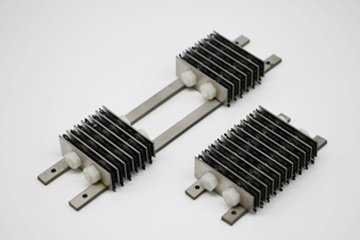
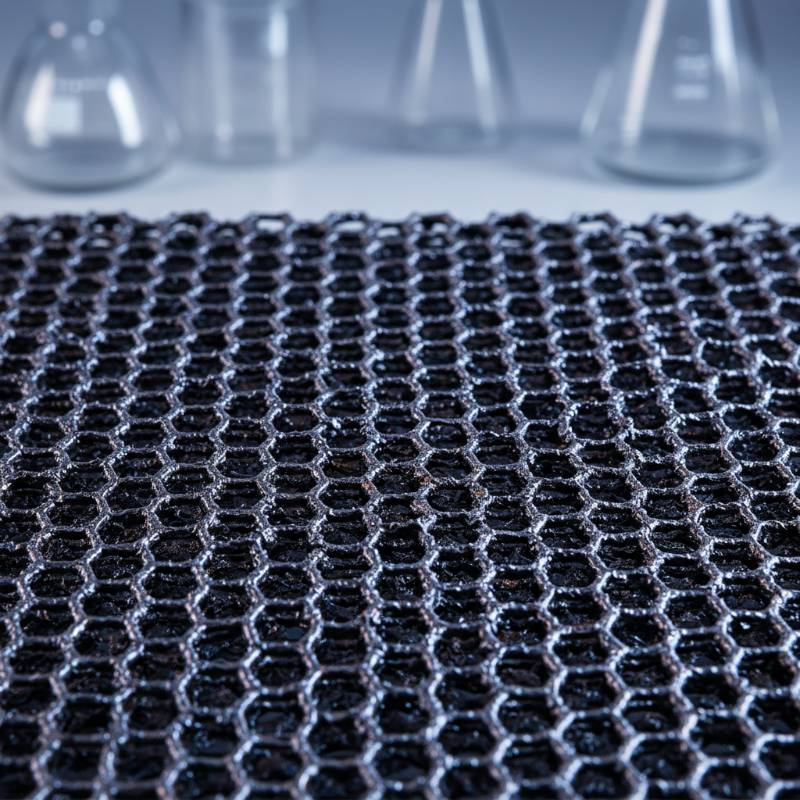
MMO (Mixed Metal Oxide): A substrate of pure titanium coated with rare earth metal oxides, primarily an Iridium oxide coating or Ruthenium oxide, applied through thermal decomposition.
While Platinum plated titanium mesh relies on a layer of pure precious metal applied via electroplating, MMO creates a catalytic surface designed for specific gas evolution. Our data at China Titanium Factory shows that substrate durability is largely dependent on the pre-treatment etching process, which ensures the coating anchors deeply into the mesh grain.
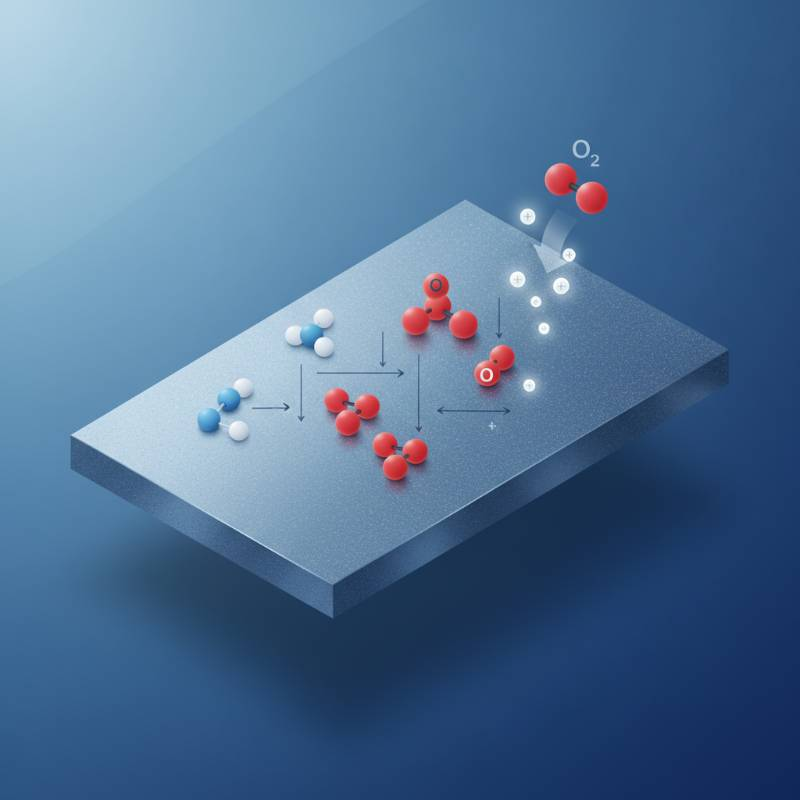
Electrochemical Performance: Oxygen Evolution Reaction (OER) Activity
The efficiency of wastewater treatment is measured by how easily the anode facilitates the Oxygen Evolution Reaction (OER). Lower overpotential means less energy is wasted as heat.
| Metric | MMO (IrO2 Base) | Platinum Plated |
|---|---|---|
| OER Overpotential | 250 - 350 mV | > 450 mV |
| Stability (pH 1-3) | Excellent | Moderate |
| Stability in Brine | Good (CER focus) | Superior |
In acidic wastewater treatment, MMO's lower overpotential leads to significant electricity savings. However, Platinum remains the gold standard for specific brine electrolysis where chlorine evolution must be minimized in favor of high-purity oxygen output.
Mechanical Integrity: Coating Adhesion and Current Density Stability
In high-flow industrial reactors, physical wear is as dangerous as chemical corrosion. We define high-performance mesh by two non-negotiable metrics: coating adhesion and current density tolerance.
Adhesion Strength: Must be ≥15MPa. Anything less risks "peeling" under the turbulent conditions of Electrochemical Advanced Oxidation Processes (EAOPs).
Current Density: Modern industrial mesh must remain stable at loads up to 2000A/m².
Platinum coatings tend to be thinner (0.5 to 5 microns) compared to the multi-layered thermal applications of MMO. This makes MMO more resilient against mechanical abrasion from suspended solids in wastewater.
The "Anode Lifecycle Optimization" (ALO) Protocol
To maximize your investment, we utilize our proprietary ALO Protocol. This is a 4-step framework we use to predict anode degradation before it leads to system failure:
Electrolyte Chemistry Profiling: We analyze chloride, sulfate, and organic loading.
Current Load Mapping: Determining the optimal A/m² to prevent "hot spots" on the mesh.
Degradation Modeling: Calculating the wear rate of the Iridium oxide coating.
Predictive Replacement Scheduling: Aligning maintenance with planned facility shutdowns to minimize downtime.
Operational Economics: Initial CAPEX vs. Long-Term ROI
Procurement teams often focus on the initial capital expenditure (CAPEX). Platinum has a high entry cost due to the market price of the metal. However, its ROI is found in high-value applications where product purity is paramount.
For wastewater, MMO is the clear winner. The energy efficiency gained from the 250-350mV overpotential reduces monthly utility bills. Furthermore, the ability to recoat MMO mesh substrates at our titanium factory lowers the total cost of ownership (TCO) over a 10-year period.

Application Silos: Wastewater Treatment vs. PCB Plating
The choice is often industry-specific. According to recent studies in the Journal of Electroanalytical Chemistry, the surface morphology of MMO is better suited for generating hydroxyl radicals (·OH).
Wastewater Electrooxidation: MMO is preferred for COD removal and breaking down complex organics.
PCB Plating: Platinum mesh is preferred for copper plating in electronics because it ensures a consistent, contaminant-free deposit.
Cathodic Protection: MMO is the standard for protecting buried pipelines and marine structures.
Frequently Asked Questions about Titanium Mesh Anodes
How many hours will an MMO titanium mesh last?
The lifespan of an MMO titanium mesh depends heavily on the current density and water quality. Under standard operating conditions (e.g., <1000 A/m²), these anodes typically last between 40,000 to 80,000 hours. High acidity or extreme current densities (up to 2000A/m²) will shorten this window.
Can I recoat a platinum-plated anode?
Yes, but it is often more cost-effective to strip and recoat MMO. Platinum recoating requires precise electroplating conditions that can be expensive compared to the thermal decomposition methods used for MMO.
Which coating is better for saltwater?
If you are generating chlorine (hypochlorite), a Ruthenium-Iridium MMO coating is best. If you are working in a system where oxygen evolution is the goal in a saline environment, Platinum is often more stable against the corrosive effects of chlorides.
Ready to Optimize Your Electrochemical Cell?
Stop guessing which coating suits your wastewater or plating process. Contact the engineers at China Titanium Factory for a custom quote and technical consultation on your next anode project.
Get a Technical Quote Today