Titanium anodizing produces minimal external dimensional change compared to aluminum anodizing, typically adding between 0.01 µm to 2.5 µm per surface depending entirely on the bath chemistry and process classification. While aluminum anodizing creates a thick, porous oxide build-up measuring 25 µm to 50 µm (0.001 to 0.002 in), titanium anodization is an electrochemical conversion coating where the barrier oxide layer consumes native substrate material at an approximate 50:50 growth-to-penetration ratio.
Engineers transitioning from aluminum surface treatments often miscalculate titanium machining offsets. Aluminum anodizing relies on porous aluminum oxide (Al₂O₃) growth that builds outwardly by 50% of the total layer thickness, requiring heavy pre-machining allowances.
In contrast, titanium anodizing converts metallic titanium into a dense titanium dioxide (TiO₂) film. The resulting dielectric barrier limits further current transmission, self-terminating film growth at sub-micron levels unless high-voltage alkaline sparking or prolonged conversion chemistries are intentionally maintained.
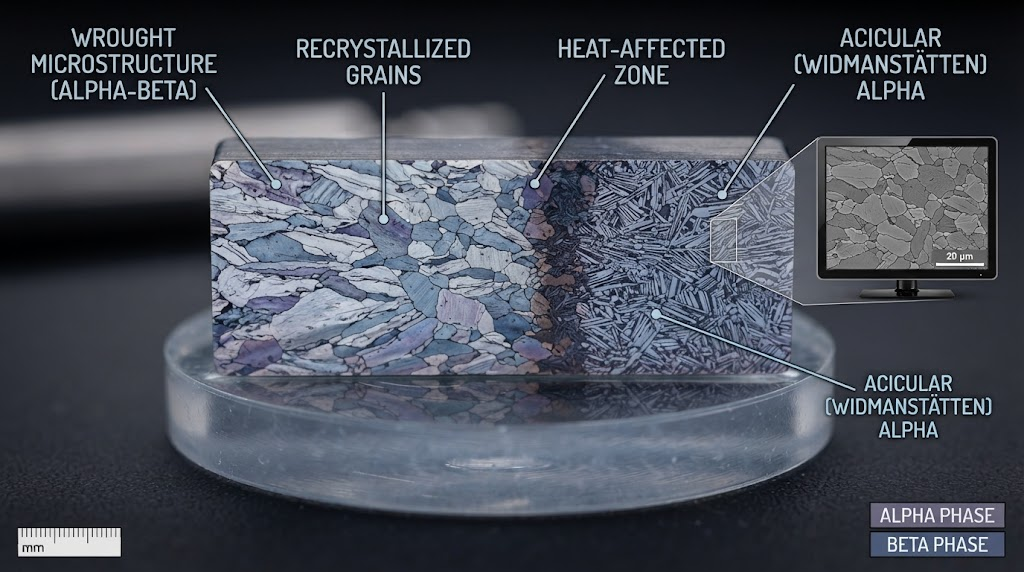
Electrochemical Conversion Layer: A surface modification process where the base metal reacts electrochemically with the electrolyte to form an adherent, protective oxide compound, consuming substrate metal rather than purely depositing external coating material.
For precision CNC machinists, this means that standard color-coding anodization requires zero pre-machining dimensional compensation. However, wear-resistant anti-galling treatments do alter tight micrometer-level fits, demanding rigorous tolerance stack-up analysis.
Surface finishing standards recognize three distinct forms of titanium anodizing governed by aerospace and medical specifications such as SAE AMS 2488 and ASTM F86. Each classification functions under unique voltage regimes, electrolytes, and growth kinetics.
| Anodize Type | Applicable Spec | Oxide Thickness | Substrate Penetration | Net Diametrical Delta |
|---|---|---|---|---|
| Type I (Spark/High-V) | Proprietary / High Temp | 0.5 – 2.0 µm | ~50% | +0.5 to +2.0 µm |
| Type II (Anti-Galling) | AMS 2488 Type II | 1.0 – 5.0 µm | ~50% | +1.0 to +5.0 µm |
| Type III (Color Anodize) | AMS 2487 / ASTM F86 | 10 – 200 nm | ~50% | < 0.2 µm (Negligible) |
Type III color anodizing does not use organic dyes or pigments. The perceived hue results entirely from thin-film optical interference generated by a transparent titanium dioxide oxide layer.
When light hits the anodized surface, a portion reflects off the outer oxide boundary, while the remainder refracts through the film and reflects off the underlying metal substrate. The phase difference between these light waves cancels specific wavelengths, producing vivid colors across the spectrum from 12V (bronze, ~20 nm) to 110V (green, ~160 nm).
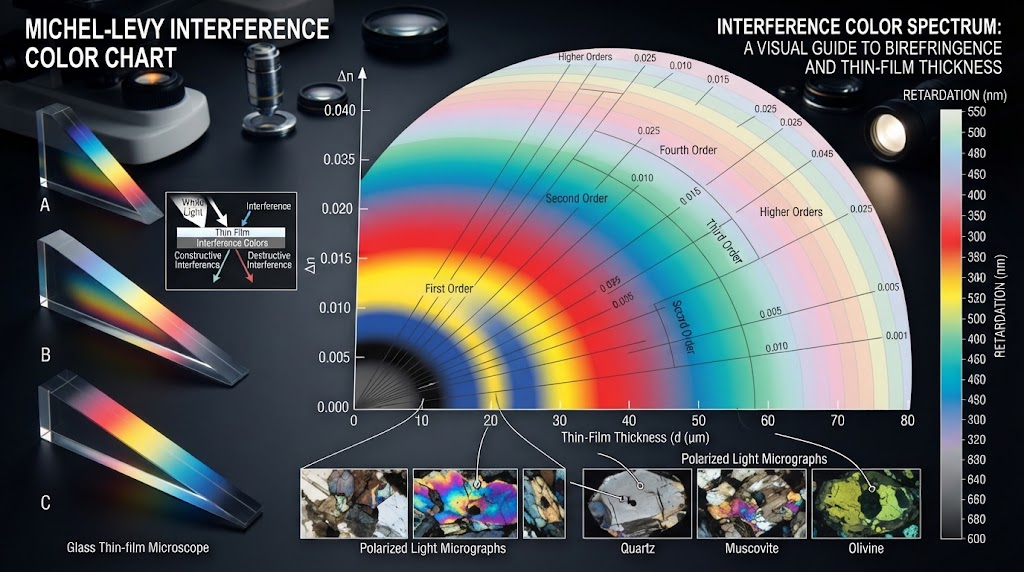
Because the resulting oxide layer measures between 0.01 µm and 0.20 µm, the external dimensional growth is less than 0.0001 mm (0.000004 in). This makes Type III anodizing ideal for color-coding Medical Grade 5 (Ti-6Al-4V ELI) Titanium implants and instruments without affecting surgical fit.
Type II anti-galling anodizing runs in an alkaline bath (typically pH > 12) under strictly controlled current density. This treatment forms a distinct grey-to-charcoal conversion layer engineered to mitigate severe galling and fretting wear in sliding contact applications.
Unlike Type III, AMS 2488 Type II produces a measurable coating thickness between 1.0 µm and 5.0 µm (0.00004 to 0.00020 in). Approximately 50% of this thickness penetrates into the titanium matrix, while the remaining 50% builds outward as an external dimension increase.
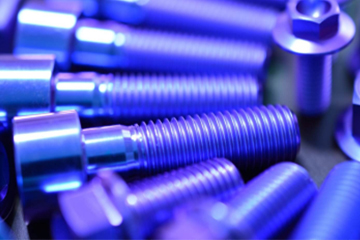
For high-performance components such as Titanium Fasteners & Aerospace Hardware, an external growth of 1.5 µm per surface translates directly to a 3.0 µm (0.00012 in) increase on outside diameters and a 3.0 µm reduction on internal bore diameters.
A common failure in tolerance stack-up analysis is ignoring chemical pre-treatment. Anodizing titanium requires aggressive chemical cleaning to strip native oxides, machining residues, and alpha-case contamination.
This surface preparation stage involves acid pickling in a concentrated nitric-hydrofluoric acid bath (typically 15–30% HNO₃ and 1–5% HF by volume). In our manufacturing experience at China Titanium Factory, standard immersion cycles remove between 1.0 µm and 3.0 µm (0.00004 to 0.00012 in) of base titanium per surface before electrical current is ever applied.
ΔD_net = 2 × [ (T_oxide × P_growth) - E_etch ]
Where: ΔD_net = Total change in outer diameter; T_oxide = Total oxide thickness; P_growth = Outward growth fraction (~0.50); E_etch = Substrate thickness removed during acid pickling.
If an aggressive acid pickling cycle removes 2.0 µm of substrate and the subsequent Type II process builds 2.5 µm of total oxide (1.25 µm outward growth), the net per-surface change is 1.25 µm - 2.0 µm = -0.75 µm. Consequently, the component exits the anodizing tank smaller than its pre-treatment CNC dimensions.
Precision finishing requires integrating verified chemical etch rate metrics into your Titanium Chemical Etching & Surface Finishing procedures.
Alloy microstructure significantly impacts oxide conversion kinetics, growth rates, and final layer density. Commercially Pure (CP) titanium grades (such as Grade 2) react faster than two-phase alpha-beta alloys.
CP Titanium (Grade 1 & Grade 2): Consists of single-phase alpha grain structure. Exhibits uniform electrical conductivity across the surface, generating smooth, dense TiO₂ barrier layers at lower voltages with rapid conversion rates.
Alpha-Beta Alloys (Grade 5 / Ti-6Al-4V & Grade 23 / Ti-6Al-4V ELI): The aluminum stabilizes the alpha phase while vanadium stabilizes the beta phase. Vanadium pentoxide (V₂O₅) co-forms within the anodic film, creating local dielectric variations that require 10–15% higher drive voltages to match CP oxide thickness.
Near-Beta and Beta Alloys (e.g., Ti-15V-3Cr-3Sn-3Al, Ti-5553): High concentrations of molybdenum, chromium, and vanadium alter anodic film resistivity. Oxide coatings on beta alloys tend to be slightly more porous and exhibit higher growth rate variance during Type II processing.
Engineering Insight: When switching a precision part from CP Grade 2 to Ti-6Al-4V Grade 5, maintain separate anodizing tank calibration curves. Using identical rectifier profiles on Grade 5 will produce a thinner oxide film (and less dimensional buildup) due to alloy resistivity.
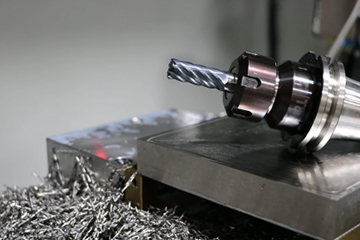
Machining components destined for AMS 2488 Type II anodizing demands precise tool offsets during final turning and milling operations. When producing Precision CNC Machined Titanium Parts, apply specific compensations across all mating features.
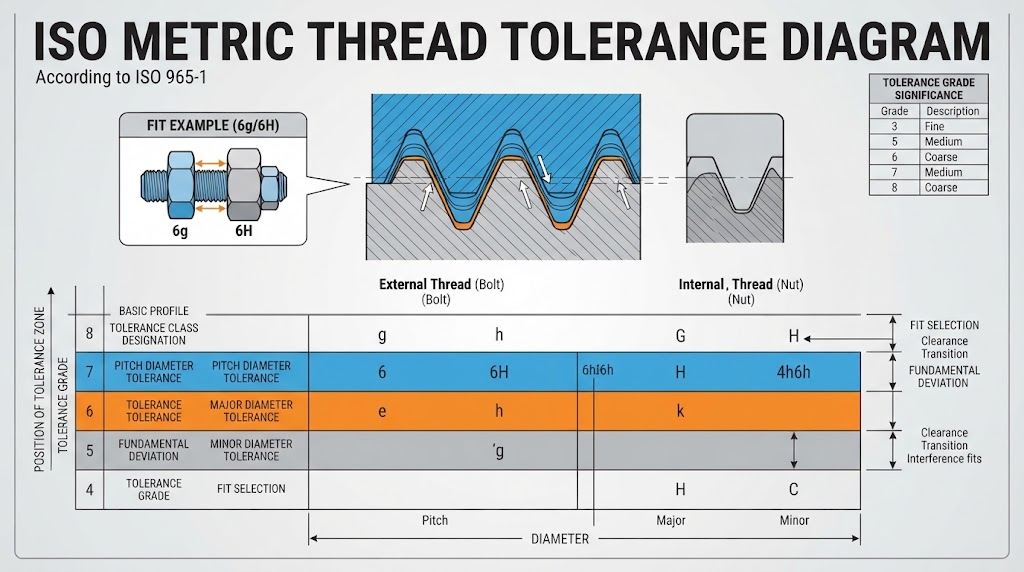
Thread geometry multiplies dimensional growth effects due to the 60-degree flank angle. Any perpendicular surface buildup (t_growth) increases external pitch diameter (PD) by a factor of 4:
ΔPitch_Diameter = 2 × t_growth / sin(30°) = 4 × t_growth
For an external UNJ thread receiving 2.0 µm of outward oxide growth per flank, the effective pitch diameter increases by 8.0 µm (0.00031 in). For Class 3A external threads with total PD tolerances as tight as 25 µm (0.0010 in), this growth consumes over 30% of the entire allowable manufacturing band.
External Threads (Class 3A / 4h): Machine the pitch diameter toward the lower 25% of the tolerance window prior to Type II anodizing.
Internal Threads (Class 3B / 6H): Tap or thread-mill pitch diameters toward the upper 25% of the tolerance window to prevent post-anodize thread plug gage lock-up.
Tight cylindrical fits require direct compensation for both diametrical growth and micro-roughness increases. Type II anodization chemically alters surface topography, typically increasing surface roughness (Ra) by 0.1 µm to 0.3 µm (4 to 12 µin).
For an ISO h6 precision pin (e.g., Ø10.000 +0/-0.009 mm), machine the pre-anodized OD to 9.994 mm to 9.996 mm. Post-treatment Type II growth of 1.5 µm per side (+3.0 µm on diameter) brings final finished parts to Ø9.997 to Ø9.999 mm, perfectly centered within tolerance.
China Titanium Factory controls sub-micron tolerances through our standardized four-stage manufacturing methodology: The CTF Precision-Delta Protocol™. This closed-loop quality system prevents dimensional drift across critical production runs.
Pre-Machining Offset Calculation: We determine the exact net shift (ΔD_net) for the specific alloy batch, adjusting CNC programming tool wear offsets prior to cutting metal.
Stabilized Chemical Processing: Automated rectifiers control voltage ramps within ±0.2V, and electrolyte bath temperatures are held strictly within ±1.0°C to maintain consistent oxide film density.
In-Situ Spectrophotometric Monitoring: Real-time thin-film measurement ensures uniform barrier layer growth throughout the run.
Sub-Micron Metrology Verification: 100% of critical aerospace mating dimensions undergo automated CMM and laser micrometer validation.
Accurate verification of sub-micron coatings requires non-destructive and contact metrology instruments configured specifically for titanium alloys.
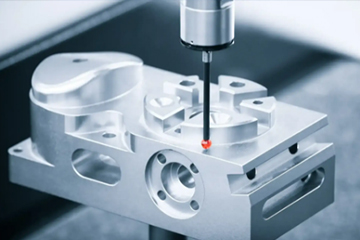
Coordinate Measuring Machines (CMM): High-precision CMMs equipped with low-force scanning probes (0.05 N contact force) and sub-micron ruby styli prevent surface penetration of thin conversion coatings during measurement.
Eddy Current Coating Gauges: Calibrated according to ISO 2360. Standard non-conductive coating gauges must use alloy-specific calibration standards (e.g., Ti-6Al-4V calibration blocks) to eliminate base-metal conductivity errors.
Optical Laser Interferometry: Non-contact 3D surface profilometers quantify both oxide thickness and pre/post-treatment Ra surface roughness without physical contact.
No. Type III color anodizing creates an oxide layer between 10 and 200 nanometers (0.00001 to 0.0002 mm) thick. This is negligible for precision engineering and requires zero pre-machining compensation.
AMS 2488 Type II anodizing produces an oxide layer measuring 1.0 to 5.0 µm thick. Since approximately 50% penetrates into the base metal, the net external growth is 0.5 to 2.5 µm (0.00002 to 0.00010 in) per surface, or 1.0 to 5.0 µm on a cylindrical diameter.
No. Stripping titanium anodize requires chemical solutions containing hydrofluoric acid or mechanical abrasive blasting. Both methods consume base metal, typically causing a loss of 2.0 to 5.0 µm per surface. Stripping and re-anodizing high-tolerance features often takes parts out of print tolerance.
Type III color anodizing causes zero measurable reduction in fatigue performance. However, Type II anodizing (AMS 2488) can introduce a minor fatigue life debit (typically 5–15%) under high-cycle fatigue conditions due to surface micro-cracking in the conversion layer. Compressive pre-treatments like precision shot peening are often specified in aerospace designs to counteract this effect.
China Titanium Factory delivers precision CNC machining, custom mill products, and surface finishing backed by complete metallurgical lab certification and CMM inspection reports.
Request a Technical Consultation


Contact Us
Room 21003, 10th Floor, Unit 2, Building 1, Xianning International Plaza, No.29 Xianning West Road, Beilin District, Xi'an City
Copyright © Xi'an Shiguang Jingyan Technology Co., Ltd. All Rights Reserved.