

















The Evolution of High-Performance Metallurgy: Defining the VAR Process
In the high-stakes world of aerospace engineering, material failure is not an option. This demand for perfection led to the development of the Vacuum Arc Remelting (VAR) process. VAR is a secondary melting technique used to refine reactive metals like titanium and various superalloys.
"We define the Vacuum Arc Remelting (VAR) process as a continuous melting of a consumable electrode using an electric arc under a high vacuum. It is the primary defense against inclusions that cause fatigue failure in turbine blades and airframes."
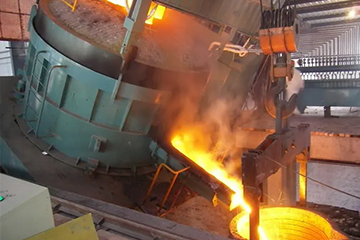
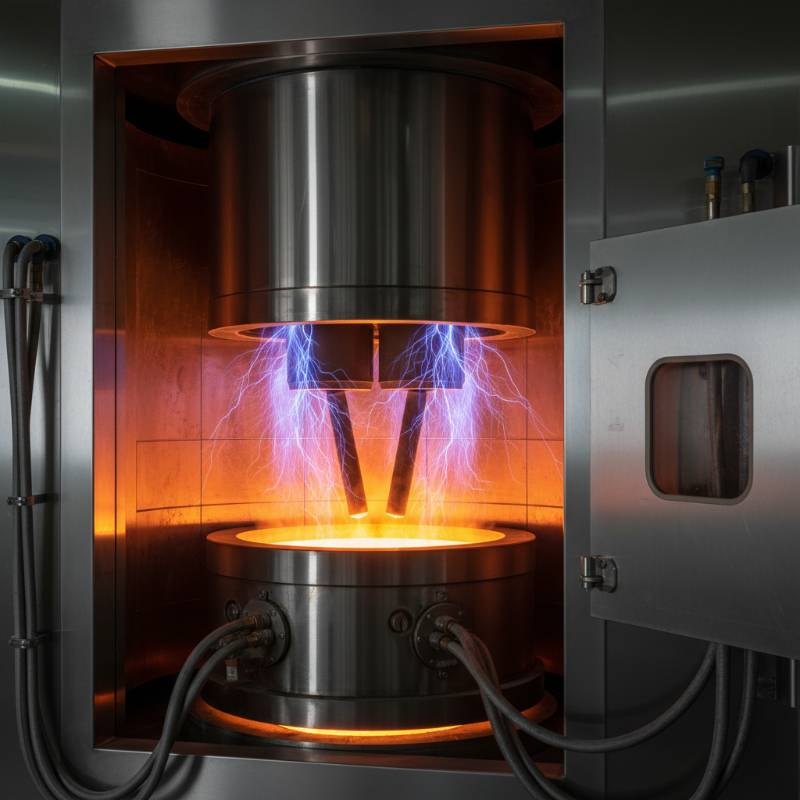
The physics are straightforward yet demanding. An electric current passes through a titanium electrode, striking an arc against a baseplate. The metal melts, droplets fall through the vacuum, and a pristine ingot solidifies in a water-cooled copper mold. This vacuum environment is non-negotiable. Without it, titanium would react violently with oxygen and nitrogen, becoming brittle and useless.
1. Ore Extraction: From Ilmenite to TiCl4
Titanium doesn't exist in nature as a pure metal. It hides in ores like ilmenite (FeTiO3) and rutile (TiO2). The first step in our production cycle involves extracting these minerals and converting them into a workable chemical intermediate.
Through the chlorination process, the ore is mixed with coke and treated with chlorine gas at temperatures exceeding 1,000°C. This creates Titanium Tetrachloride (TiCl4), a volatile liquid. We then purify the TiCl4 through fractional distillation. This removes iron, silicon, and vanadium impurities. At China Titanium Factory, we maintain strict control over this stage to ensure the feedstock for the next phase is 99.9% pure.
2. Kroll Reduction: Creating the Titanium Sponge
The transformation from liquid chemical to solid metal happens during the Kroll Process. This is a batch reduction method that remains the industry benchmark. In a sealed stainless steel retort, purified TiCl4 is introduced to molten magnesium.
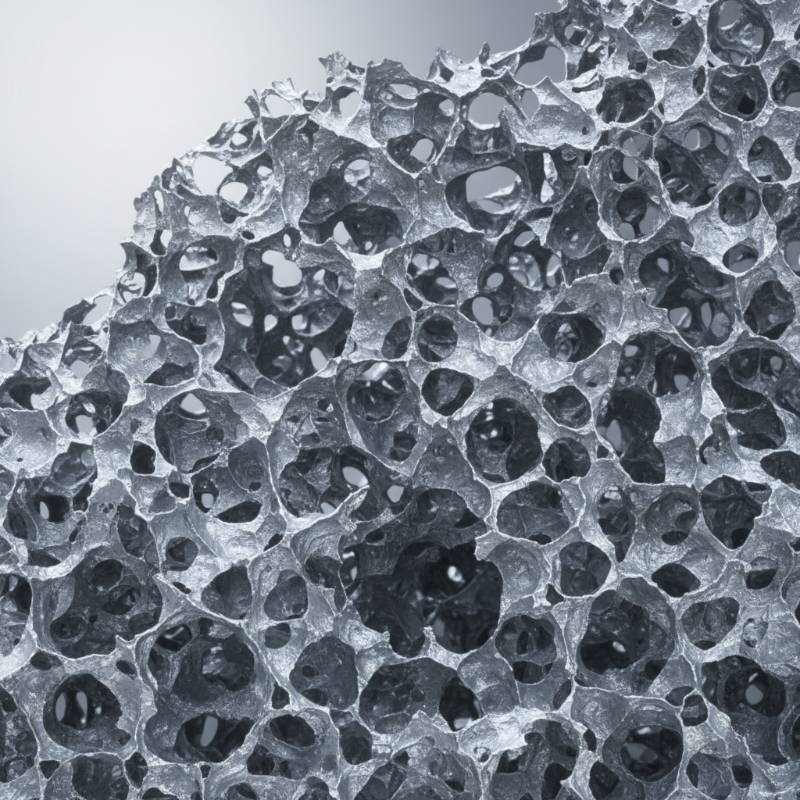
The chemical reaction is intense: TiCl4 + 2Mg → Ti + 2MgCl2. The result is a porous, metallic mass known as titanium sponge. After the reaction, we use vacuum distillation to pull away any residual magnesium and magnesium chloride. What remains is a high-purity metal ready for consolidation. According to research from the ASM International materials database, the efficiency of this vacuum distillation directly correlates to the final ductility of the titanium alloy.
3. VAR Melting: The 15T Furnace Standard
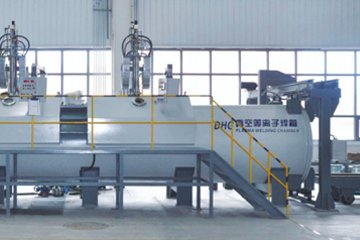
The sponge is not yet an ingot. To achieve the structural integrity required for aerospace-grade titanium, we employ secondary melting using a 15T VAR furnace. "15T" refers to the capacity, allowing for massive ingots that offer superior chemical consistency across their entire volume.
The process begins by compacting the sponge (and any alloying elements) into a "consumable electrode." This electrode is suspended in the VAR furnace. As the arc melts the electrode, the vacuum environment performs two critical tasks:
Degassing: It pulls out hydrogen and other volatile gases.
Inclusion Removal: High-Density Inclusions (HDI) like tungsten sink to the bottom, while Low-Density Inclusions (LDI) are broken down or floated to the surface.
The 15T furnace allows for a controlled solidification rate. This prevents solute segregation—the uneven distribution of alloying elements. Our Golden Rule of Metallurgy: Purity is a function of vacuum stability. If the vacuum fluctuates, the ingot's micro-cleanliness is compromised.
4. Forging and Heat Treatment
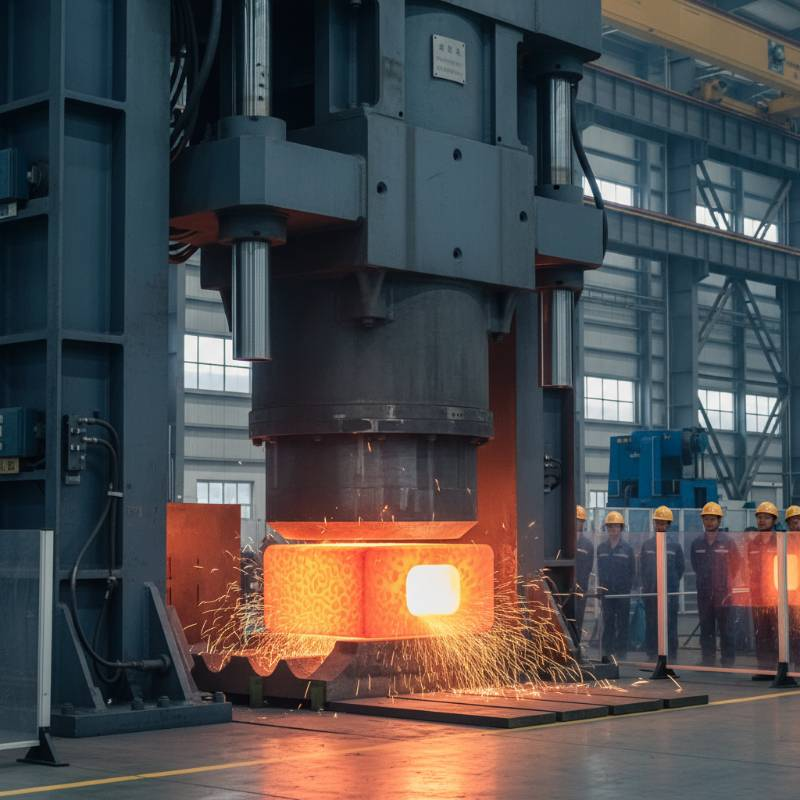
A VAR ingot is a raw casting. It lacks the refined grain structure needed for high-stress applications. We move the ingot to the forging stage, where massive hydraulic presses break down the coarse "as-cast" structure. This thermo-mechanical processing transforms the metal into a fine-grained, high-strength titanium alloy.
Following forging, specific heat treatment cycles are applied. Whether it is solution treating or aging, these cycles determine the final balance between tensile strength and fracture toughness. We meticulously monitor the alpha-beta phase distribution to ensure the material meets AMS or ASTM specifications.
The Triple-Phase Homogenization Protocol
At China Titanium Factory, we don't just follow standard procedures. We have developed The Triple-Phase Homogenization Protocol to guarantee zero-defect manufacturing. This proprietary framework synchronizes three critical variables during the VAR process:
Arc Current Modulation: Precise control of the amperage to maintain a constant melt rate, preventing "freckles" or solidification defects.
Cooling Water Differential: Managing the temperature of the copper crucible to force a directional solidification from bottom to top.
Atmospheric Pressure Locking: Maintaining a vacuum level below 10-3 mbar throughout the entire 24-48 hour melt cycle.
According to our internal analysis, this protocol reduces chemical variance by 15% compared to standard VAR methods.
Comparative Analysis: VAR vs. ESR
Engineers often ask whether to use VAR or Electroslag Refining (ESR). While both are refining processes, their applications differ significantly.
| Feature | VAR (Vacuum Arc) | ESR (Electroslag) |
|---|---|---|
| Environment | High Vacuum | Molten Slag / Inert Gas |
| Primary Use | Titanium, Superalloys | Tool Steels, Stainless |
| Degassing | Excellent (H, O, N removal) | Limited |
| Inclusion Removal | Density-based separation | Chemical reaction with slag |
For reactive metals like titanium, VAR is the only choice. The lack of slag prevents contamination, and the vacuum is essential for removing hydrogen. You can learn more about metal selection in the The Minerals, Metals & Materials Society technical library.
Frequently Asked Questions
Why is the 15T VAR furnace preferred over smaller units?
Larger furnaces like the 15T allow for greater thermal mass and more stable solidification. This results in larger ingots with fewer "start-stop" defects, which is vital for large-scale aerospace forgings.
Can VAR remove all impurities from titanium?
VAR is highly effective at removing volatile impurities and managing inclusions. However, it cannot compensate for poor quality titanium sponge. The purity of the feedstock remains the foundation of the final product.
How many times is titanium remelted?
For standard applications, "Double VAR" (two melts) is common. For critical rotating parts in jet engines, "Triple VAR" is often required to ensure absolute chemical homogeneity.
Ready to Source Aerospace-Grade Titanium?
Our 15T VAR technology and Triple-Phase Homogenization Protocol ensure your project meets the highest global standards.
Request a Technical Quote