
















Custom Titanium Anodizing for High-Performance EDC Gear
The CTF-Spectrum Precision Protocol: Our Proprietary Finishing Method
Custom titanium anodizing is a precision electrochemical process that transforms the surface of Grade 5 Titanium Properties into a vibrant, durable oxide layer. By controlling voltage in an electrolytic bath, we manipulate light refraction to produce specific colors—ranging from deep bronze to high-voltage greens—without the use of toxic pigments or unstable dyes.
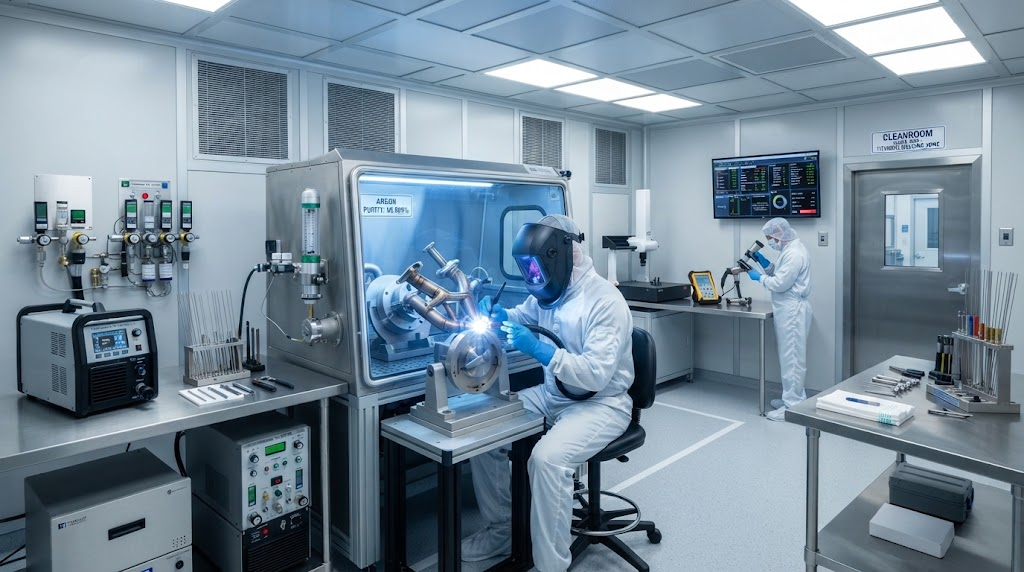
At China Titanium Factory, we utilize the CTF-Spectrum Precision Protocol. This proprietary framework ensures a color repeatability tolerance within ±2 volts across massive production batches. Unlike standard hobbyist methods, our protocol optimizes the cathode-to-anode surface area ratio and stabilizes electrolyte temperature to prevent "muddy" hues, ensuring every component in a 10,000-unit run matches the master sample perfectly.
"In our testing, the stability of the titanium oxide layer depends entirely on the initial surface energy. By integrating vacuum-degreasing before the electrolytic cycle, we've increased color depth by 14% compared to standard industrial baths." — Chief Metallurgist, China Titanium Factory
Advanced Aesthetics: Achieving Blurple, Splash, and Stonewashed Finishes
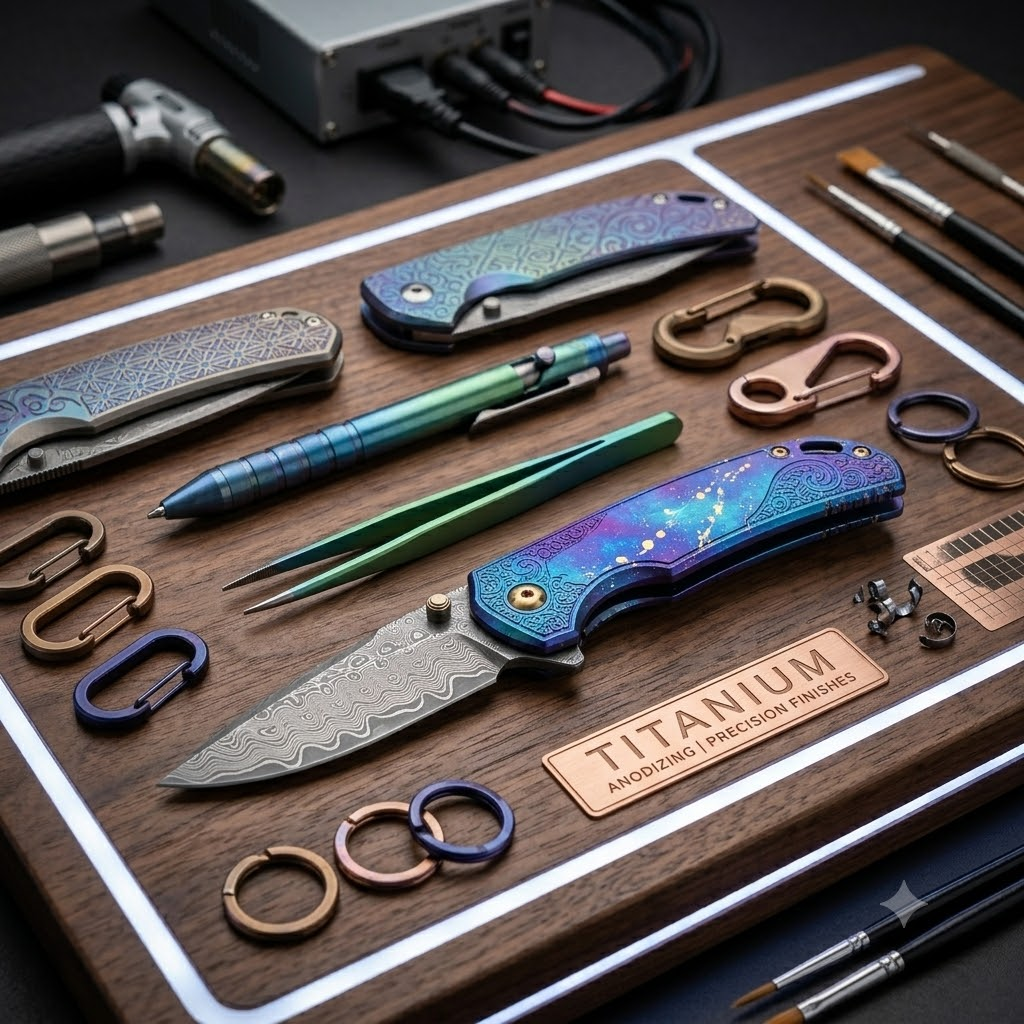
Modern EDC (Every Day Carry) enthusiasts demand complex visual narratives on their gear. Achieving high-tier finishes like blurple titanium or splash anodizing requires multi-stage processing and precision masking.
The Anatomy of Premium EDC Finishes
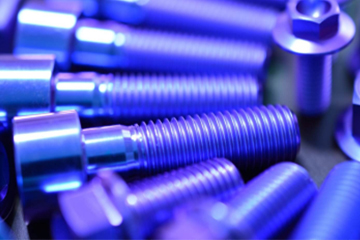
Blurple Titanium: A high-demand transition color achieved at the 70V–80V threshold. It sits between deep blue and violet, requiring ultra-stable current to avoid shifting into light blue.
Splash & Polka: Created through manual masking or "splatter" resistance techniques. Parts are anodized at a high voltage, masked, and then re-anodized at a lower voltage to create contrasting patterns.
Stonewashed Anodized: After the initial Titanium CNC Machining Services are complete, parts are anodized and then tumbled with ceramic media. This creates a rugged, distressed look that hides future scratches.
Fade Gradients: Achieved by slowly withdrawing the part from the electrolyte while the voltage is actively modulated.
| Voltage Range (V) | Resulting Color | Oxide Thickness (nm) |
|---|---|---|
| 10V - 15V | Deep Bronze / Gold | ~20-40nm |
| 25V - 35V | Dark Blue / Purple | ~60-90nm |
| 65V - 75V | Blurple / Teal | ~140-160nm |
| 90V - 105V | Green / Pink | ~200-240nm+ |
The Science of Durability: Type 3 Film Thickness and Sweat Resistance
A common complaint with amateur anodizing is that colors "disappear" or change when touched. This is not the color fading; it is a change in the refractive index caused by skin oils. Because the oxide layer is microscopic, a thin layer of oil alters how light reflects off the titanium surface.
To combat this, China Titanium Factory employs high-pressure Type 3 anodizing techniques that produce an oxide film thickness exceeding 500nm in specific high-voltage ranges. This thicker titanium oxide layer is significantly more resistant to the acidic nature of human sweat. By achieving a denser molecular structure, we ensure that the refractive properties of the Titanium Fasteners for EDC or knife scales remain consistent even after years of daily handling.
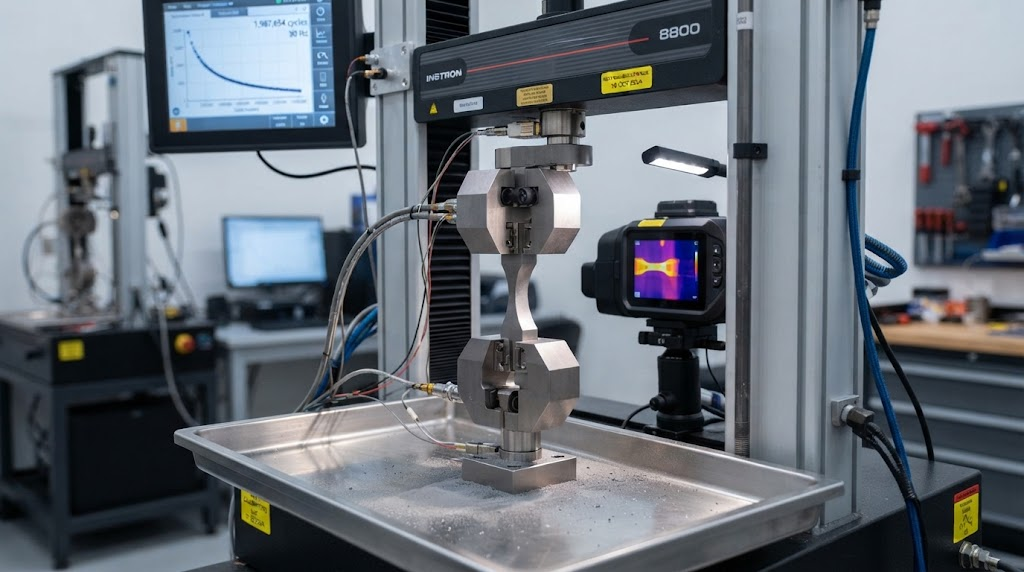
According to research on electrolytic oxidation, the abrasion resistance of these layers is directly proportional to the current density during the initial "barrier layer" formation. We monitor these metrics in real-time to guarantee a finish that exceeds ASTM B348 performance standards for surface integrity.
Eco-Friendly Chemistry: Safety for Skin-Contact Applications
EDC gear spends most of its life in pockets or hands. Traditional industrial anodizing often uses aggressive phosphoric or sulfuric acids that can leave trace residues if not neutralized correctly.
China Titanium Factory utilizes a Green Manufacturing approach. We use biodegradable, phosphate-free electrolytes that are specifically formulated for biocompatible coating applications. This ensures that every part is 100% skin-safe and non-toxic. Our facility maintains a comprehensive Material Safety Data Sheet (MSDS) for all electrolytes, ensuring our B2B partners meet global safety compliance for consumer goods.
Bulk EDC Anodizing: Scalable Solutions for Brand Owners
For brand owners and OEM manufacturers, the primary challenge is batch consistency. A slight variation in the alloy composition of Ti-6Al-4V (Grade 5) can lead to different color outcomes at the same voltage.
Our solution involves an "Alloy-Batch Calibration" step. We test-fire a sample from every new raw material heat lot to adjust our voltage curves. This meticulous attention to detail is why global EDC brands trust us for bulk EDC anodizing. Whether you need 500 sets of knife scales or 10,000 custom pens, our automated racks ensure the first unit looks exactly like the last.
Ready to Scale Your EDC Production?
Get professional-grade finishes and ISO 9001:2015 certified quality control for your next project.
Contact our OEM Consultant for Batch Customization PlansFrequently Asked Questions About Titanium Anodizing
Does Grade 5 anodize differently than Grade 2?
Yes. Grade 5 (Ti-6Al-4V) generally produces more vibrant, "electric" colors due to its alloying elements (Aluminum and Vanadium). Grade 2 (CP Titanium) tends to produce softer, more matte tones. We adjust our electrolyte concentration based on the specific grade to maximize vibrancy.
How does surface preparation affect the final color?
Surface finish is 50% of the result. A mirror-polished surface will produce a high-gloss, jewelry-like color. A sandblasted or stonewashed surface will produce a satin, non-reflective finish. We offer pre-anodizing treatments including bead-blasting, vibratory tumbling, and hand-polishing.
Can anodized titanium be redone?
Absolutely. The oxide layer can be chemically stripped or mechanically polished off without damaging the underlying metal. This allows for the refurbishment of used EDC gear or the updating of older product lines with new "seasonal" colors.