

















ASTM F136 vs. AMS 4928: Decoding Titanium Specifications for Critical Applications
Choosing the right titanium alloy is not just a matter of "Grade 5." In 2026, the global supply chain demands hyper-specific compliance to ensure safety in human bodies and at 35,000 feet.
While both ASTM F136 titanium and AMS 4928 share the same base chemistry (Ti-6Al-4V), their mechanical and chemical differences determine whether a component passes FDA inspection or aerospace certification.
Defining the Standards: Medical Grade vs. Aerospace Grade Titanium
ASTM F136 (Grade 23 ELI) and AMS 4928 (Grade 5) are the workhorses of high-performance engineering. However, they serve two distinct regulatory masters.
ASTM F136 defines the requirements for wrought Ti-6Al-4V ELI alloy to be used in surgical implants. AMS 4928, conversely, covers the standard Ti-6Al-4V grade for aerospace bars, wire, and forgings where high strength-to-weight ratios are the priority.
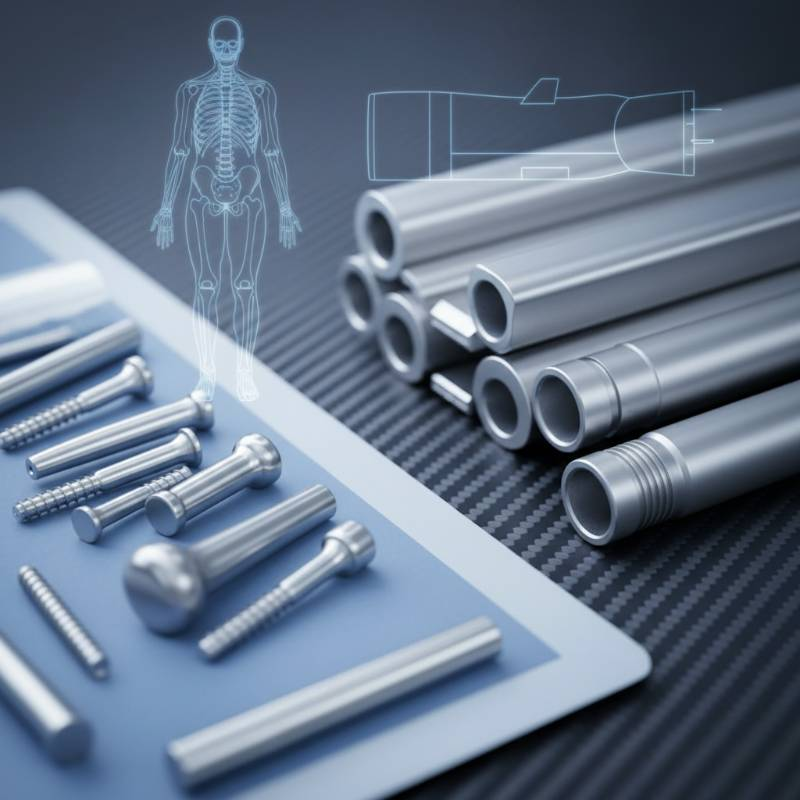
ASTM F136: The standard specification for wrought Titanium-6Aluminum-4Vanadium ELI (Extra Low Interstitial) Alloy for surgical implant applications.
AMS 4928: The aerospace material specification for Ti-6Al-4V bars, wire, forgings, rings, and drawn shapes in the annealed condition.
The Science of ELI: Why Extra Low Interstitials are Vital for Biocompatibility
The "ELI" designation in ASTM F136 stands for "Extra Low Interstitial." This refers to the reduction of elements like oxygen, nitrogen, carbon, and iron that occupy spaces between the metal atoms.
In our experience at China Titanium Factory, reducing oxygen from the typical 0.20% (AMS 4928) to 0.13% (ASTM F136) significantly changes the material's behavior.
Lower oxygen levels increase fracture toughness and ductility. For a medical grade titanium rod used in a hip replacement or dental implant, this prevents micro-cracks from propagating under the repetitive stress of human movement.
Iron content is also strictly limited in F136 to 0.25%, compared to 0.40% in 4928. This chemical purity ensures the alloy remains inert and highly biocompatible within the human body for decades.
Comparative Data: Tensile Strength and Elongation of Grade 5 vs. Grade 23
Engineers often assume Grade 5 is always stronger. While AMS 4928 can reach slightly higher peak hardness, ASTM F136 offers a more balanced mechanical profile for critical safety parts.
| Property | AMS 4928 (Grade 5) | ASTM F136 (Grade 23 ELI) |
|---|---|---|
| Tensile Strength (min) | 895 MPa (130 ksi) | 860-895 MPa (125-130 ksi) |
| Yield Strength (min) | 825 MPa (120 ksi) | 795-825 MPa (115-120 ksi) |
| Elongation (min) | 10% | 10% - 15% |
| Max Oxygen | 0.20% | 0.13% |
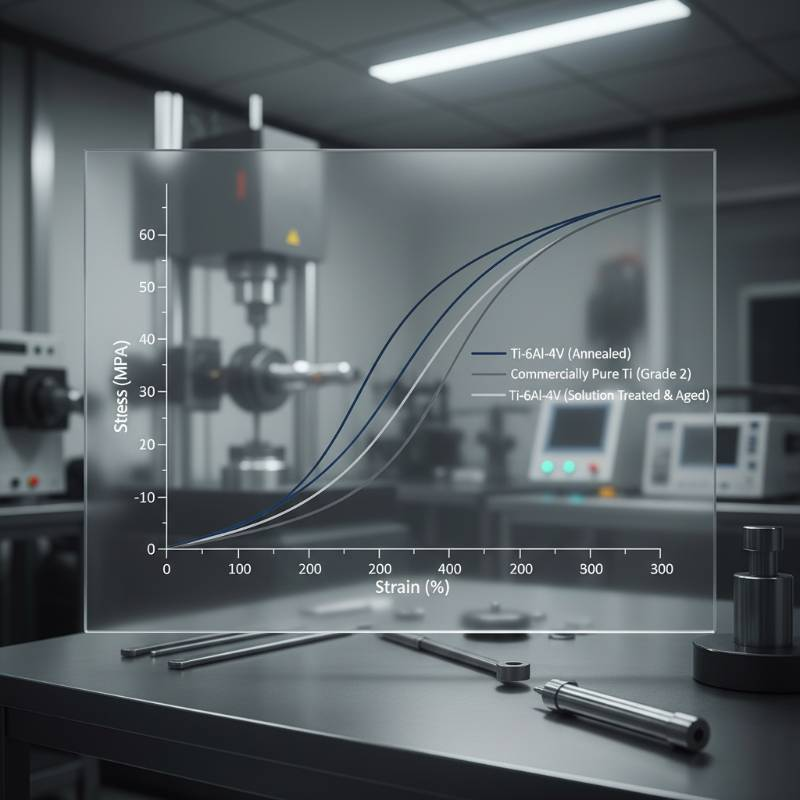
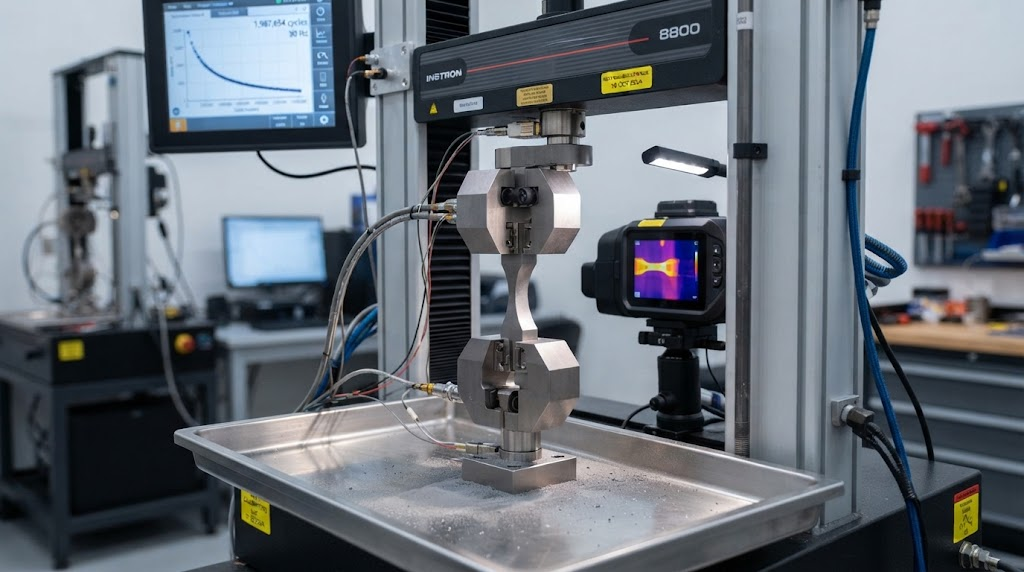
Both materials hover around the 895MPa tensile mark. However, ASTM F136 consistently performs better in fatigue resistance tests, a crucial metric for spinal rods and orthopedic screws.
The 'Dual-Spec Integrity Protocol' (DSIP): Our Proprietary Material Validation Method
To bridge the gap between these standards, we developed the Dual-Spec Integrity Protocol (DSIP). This framework ensures that any titanium rod leaving our facility meets the most stringent overlap of both standards.
The DSIP involves three stages:
Chemical Ultra-Purification: Refining the melt to ensure oxygen and iron levels are well below the F136 maximums, even if the order is for AMS 4928.
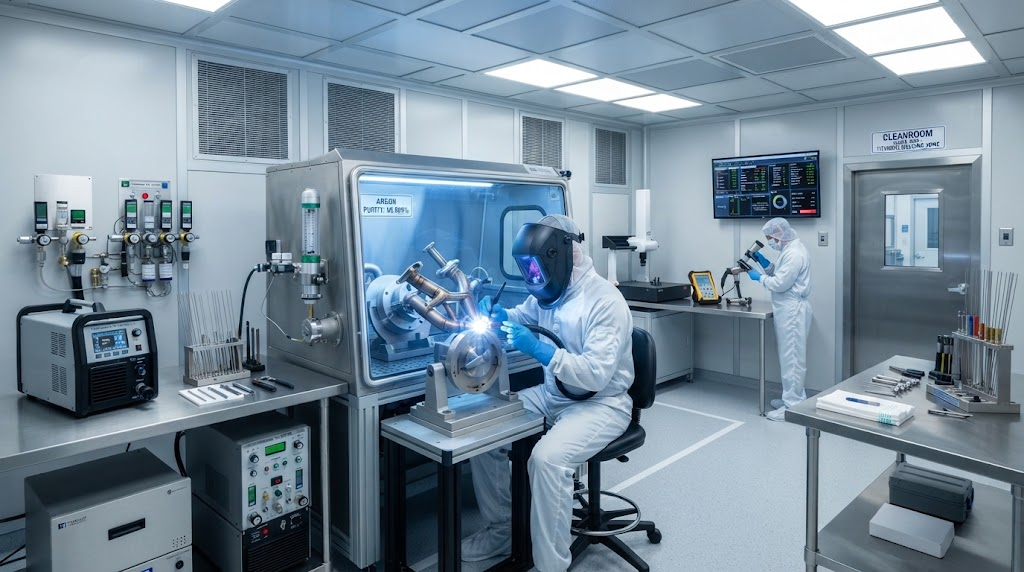
Stress-Profile Mapping: Ultrasonic testing to detect internal voids that could cause failure in high-altitude or high-activity environments.
Traceability Locking: Every batch is issued a Material Test Report (MTR) that links the raw ingot to the final rod via a digital twin.
By using DSIP, we provide clients with AMS 4928 specifications that actually exceed medical-grade purity, offering a safety margin that standard suppliers cannot match.
Regulatory Compliance: Navigating FDA, ISO 13485, and AS9100 Standards
For medical device manufacturers, material selection is a legal requirement. The FDA and international bodies like the ISO (International Organization for Standardization) require proof of material origin.
Operating under ISO 13485 certification means our factory maintains a quality management system specifically for medical devices. When you order ASTM F136, you receive a full chemical and mechanical breakdown.
In aerospace, AS9100 is the benchmark. AMS 4928 compliance requires rigorous reporting on grain size and heat treatment cycles to ensure structural integrity in jet engines and structural airframes.
Machinability and Production Economics: Factoring in Tool Wear and Feed Rates
The lower interstitial content in ASTM F136 doesn't just benefit the patient; it changes the economics of the machine shop. In 2026, high-speed machining is the only way to remain competitive.
Because F136 is slightly softer and more ductile than standard Grade 5, it tends to be less abrasive on carbide tools. This results in:
Reduced Tool Wear: Longer tool life when milling complex orthopedic geometries.
Improved Surface Finish: Lower oxygen levels reduce the "spring-back" effect during precision turning.
Consistent Feed Rates: The chemical uniformity of ELI grades allows for more predictable CNC programming.
While the raw material cost for ASTM F136 is typically 10-15% higher than AMS 4928, the Total Cost of Ownership (TCO) often equalizes due to faster cycle times and fewer tool changes.
Frequently Asked Questions
Can I use AMS 4928 for medical implants?
Technically, no. AMS 4928 allows for higher levels of oxygen and iron, which can compromise the long-term biocompatibility and fracture toughness required for permanent implants under ASTM F136 or ISO 5832-3 standards.
What is the main difference between Grade 5 and Grade 23?
The primary difference is the interstitial content. Grade 23 (ASTM F136) is the ELI version of Grade 5 (AMS 4928), meaning it has lower oxygen, nitrogen, and iron for improved ductility and toughness.
Does your factory provide Material Test Reports (MTRs)?
Yes. Every batch of titanium rods we ship, whether for medical or aerospace use, includes a comprehensive MTR detailing chemical composition, mechanical properties, and heat treatment history.