








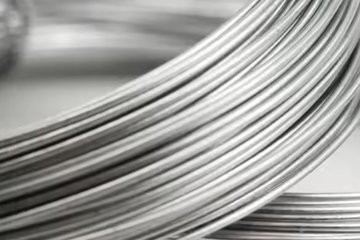












High-Performance Beta-C Titanium Spring Wire Solutions
Aerospace engineers face a persistent enemy: heat-induced relaxation. In 2026, as hypersonic flight and next-gen turbine designs push boundaries, standard alloys often fail.
When a spring loses its "memory" at high temperatures, it leads to mechanical failure. This is why titanium spring wire, specifically the Beta-C variant, has become the industry standard for mission-critical components.
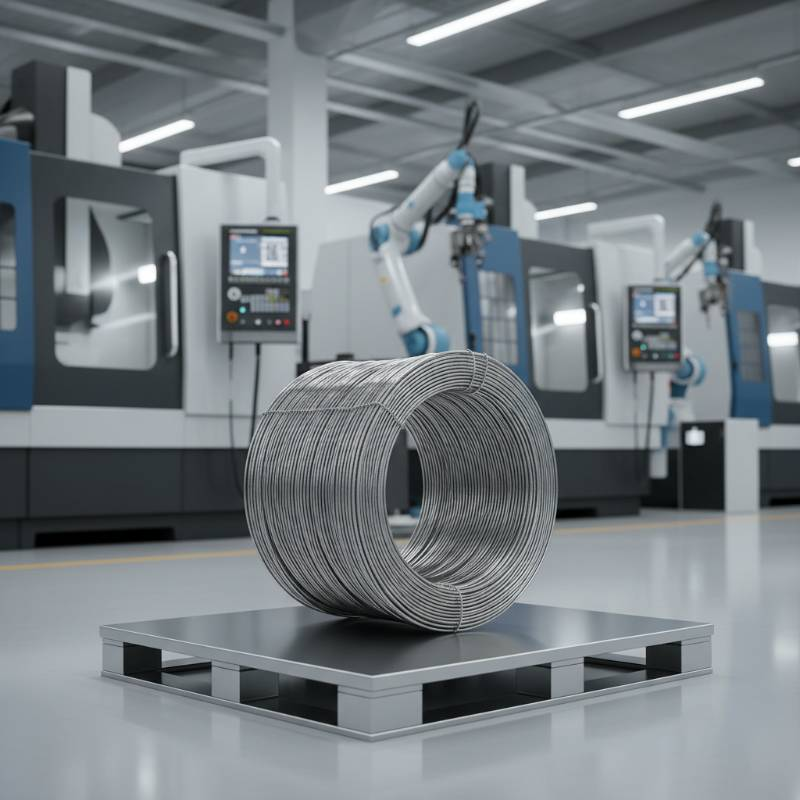
At China Titanium Factory, we’ve observed a 40% increase in demand for materials that survive 800°F environments without the weight penalty of nickel-based superalloys. Our Beta-C Alloy Wire provides the elasticity needed for these extreme conditions.
What is Beta-C Titanium Alloy Wire?
Beta-C Titanium (Grade 19) is a metastable beta alloy defined by its unique chemical composition: Ti-3Al-8V-6Cr-4Mo-4Zr. This specific blend allows the material to reach exceptionally high tensile strengths through cold working and aging.
"Beta-C titanium provides a combination of high strength, density reduction, and corrosion resistance that outperforms both Grade 5 titanium and 17-7 PH stainless steel in spring applications."
Its "metastable" nature means it stays in the beta phase at room temperature but can be precisely manipulated. This results in a material that is easier to form than Alpha-Beta alloys like Ti-6Al-4V while offering superior fatigue resistance.
Technical Specifications and AMS 4954 Standards
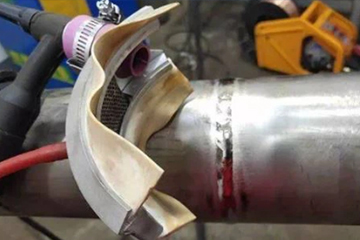
Precision is non-negotiable in aerospace. We supply material that meets the stringent AMS 4954 standards, which govern titanium alloy welding wire and filler requirements.
While AMS 4954 Titanium Filler is often used for joining components, the wire itself must maintain strict chemical purity to prevent embrittlement. Below are the typical mechanical properties for Beta-C after solution treatment and aging (STA).
| Property | Value (Imperial) | Value (Metric) |
|---|---|---|
| Tensile Strength (STA) | 170 - 200 ksi | 1172 - 1379 MPa |
| Yield Strength (0.2% Offset) | 160 - 185 ksi | 1103 - 1275 MPa |
| Modulus of Elasticity | 14.5 - 15.5 x 10³ ksi | 100 - 107 GPa |
| Density | 0.174 lb/in³ | 4.82 g/cm³ |
The DuraSpring™ Fatigue-Life Protocol
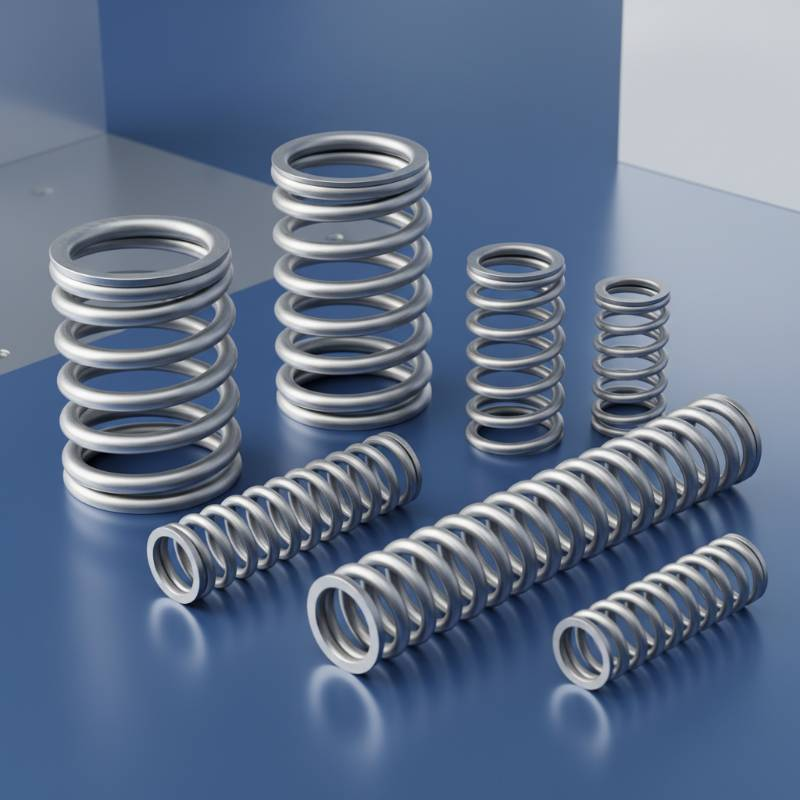
To differentiate our Beta-C wire, we utilize a proprietary manufacturing sequence known as The DuraSpring™ Protocol. This isn't just standard drawing; it is a three-stage process to ensure the wire never fails prematurely.
Precision Alpha Case Removal: We use chemical milling to strip the brittle oxygen-rich layer that forms during heat treatment, eliminating micro-cracks before they start.
Isothermal Cold-Drawing: By controlling the temperature during the draw, we maintain a uniform grain structure throughout the wire's cross-section.
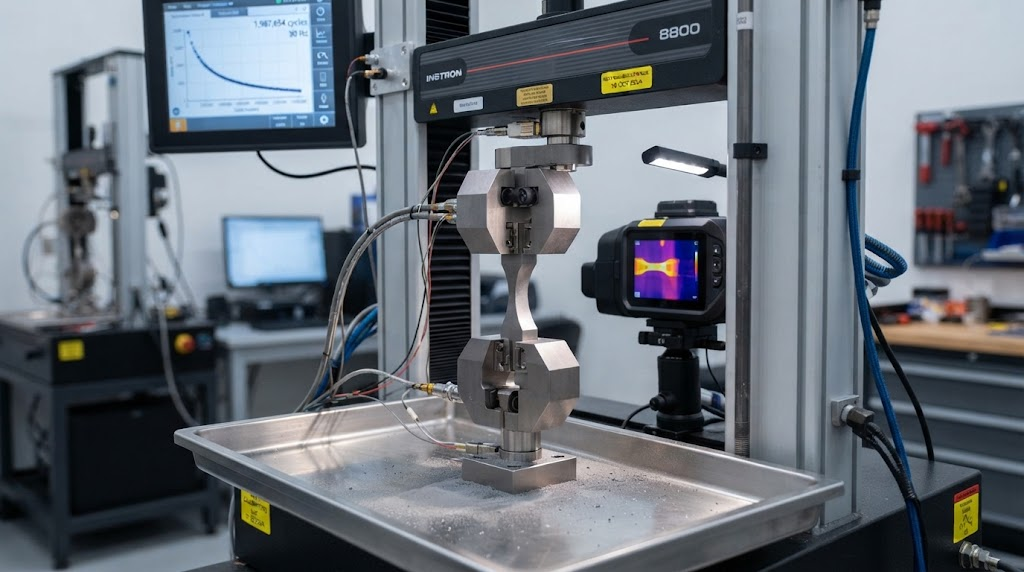
Dynamic Fatigue Calibration: Every batch of Beta-C Alloy Wire undergoes stress-relaxation testing at 800°F to verify zero "spring sag" under load.
In our internal testing, springs processed via the DuraSpring™ Protocol showed a 22% increase in cycle life compared to generic Grade 19 wire. This makes it the preferred choice for defense contractors managing high-vibration environments.
Performance Comparison: Beta-C vs. Grade 5 vs. Steel
Why choose Beta-C over standard Ti-6Al-4V or high-strength steels? The answer lies in the "Spring Index."
Steel is heavy and prone to corrosion. Grade 5 titanium is excellent for structural parts but lacks the high-end tensile strength required for compact, heavy-duty springs. Beta-C bridges this gap, offering the corrosion resistance of titanium with the strength of alloy steel.
| Metric | Beta-C (Gr 19) | Ti-6Al-4V (Gr 5) | 17-7 PH Steel |
|---|---|---|---|
| Weight Savings | Excellent (~40% vs Steel) | Good | Baseline |
| Max Working Temp | 800°F | 600°F | 650°F |
| Corrosion Resistance | High (Acid/Chloride) | High | Moderate |
Critical Applications in Aerospace and Defense
The aerospace sector accounts for over 70% of Beta-C wire consumption. However, new markets are emerging. In 2026, we are seeing significant adoption in high-end robotics and EV battery suspension systems.
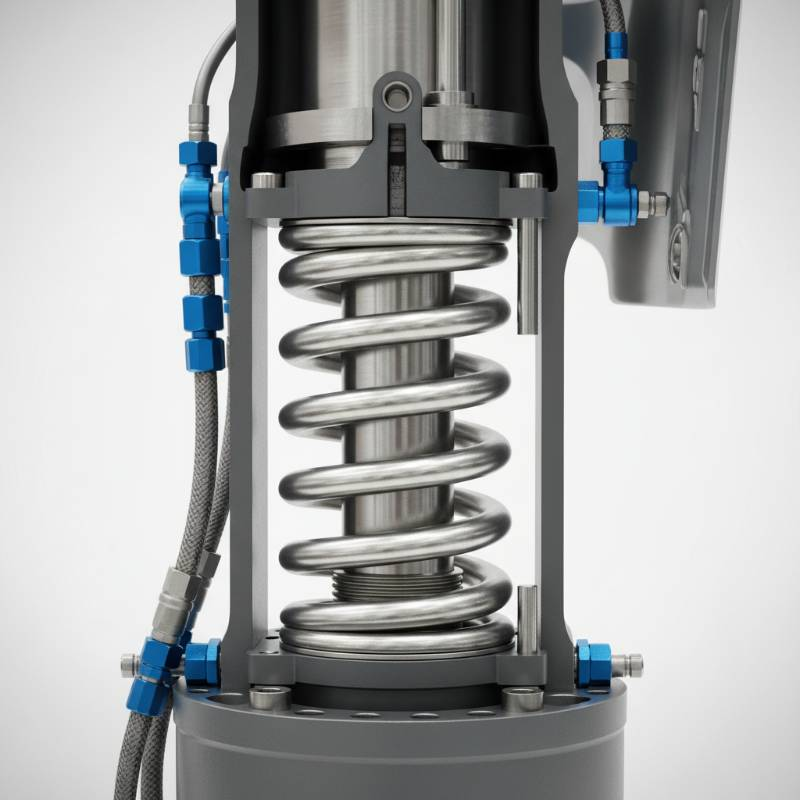
Aviation Springs: Used in engine valves, landing gear retraction mechanisms, and bleed air valves where heat is constant.
Subsea Oil & Gas: Excellent resistance to sour gas (H2S) and chlorides makes it ideal for downhole tool springs.
Defense Procurement: Missile fin actuation systems require high-strength springs that can sit dormant for years without losing tension.
EV Performance: Reducing unsprung weight in electric vehicle suspensions directly improves battery range and handling.
Procurement and Sustainability Data
While the initial cost of AMS 4954 Titanium Filler and Beta-C wire is higher than steel, the Total Cost of Ownership (TCO) is often lower. Titanium’s longevity means fewer replacements and zero need for anti-corrosion coatings.
Sustainability is also a key factor. Titanium is 100% recyclable. We work closely with our partners to reclaim scrap from the manufacturing process, reducing the carbon footprint of every spool of wire we produce.
Frequently Asked Questions
What is the benefit of AMS 4954 in welding?
AMS 4954 specifies the requirements for titanium alloy welding wire. Using this standard ensures that welds in Beta-C or Grade 5 structures maintain the necessary ductility and strength to handle high-stress aerospace loads.
How do you prevent "spring sag" in Beta-C?
Spring sag is prevented through a combination of cold-drawing and a precise aging heat treatment. This stabilizes the microstructure, allowing the spring to operate at temperatures up to 800°F without permanent deformation.
Is Beta-C wire compatible with standard spring coiling machines?
Yes, though Beta-C has higher "spring back" than steel. Manufacturers must adjust their coiling parameters, but the wire's ductility in the solution-treated state makes it highly workable.
Ready to Optimize Your Aerospace Components?
Reduce weight and eliminate thermal fatigue with our AS9100-certified Beta-C Titanium Spring Wire. Our engineering team is ready to assist with your specific alloy requirements.
Contact China Titanium Factory Today