



















The Evolution of Marine Grade Titanium Rods in 2026
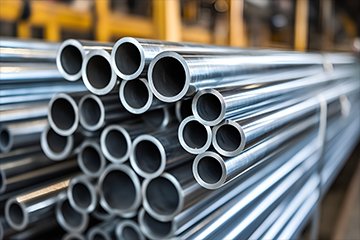
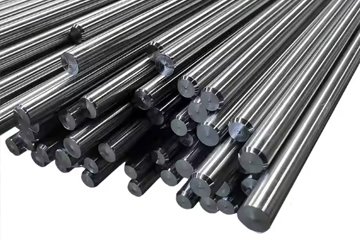
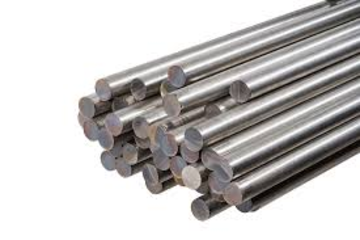
Modern offshore engineering no longer views titanium as a "luxury metal." In 2026, the push for deeper exploration and carbon-neutral subsea infrastructure has made the Marine Grade Titanium Rod a fundamental requirement.
Traditional alloys fail when pushed to the 20,000 PSI limits of the ultra-deepwater frontier. Titanium’s unique ability to regenerate its protective oxide layer instantly in the presence of oxygen—even in salt water—sets it apart from nickel alloys and stainless steels.
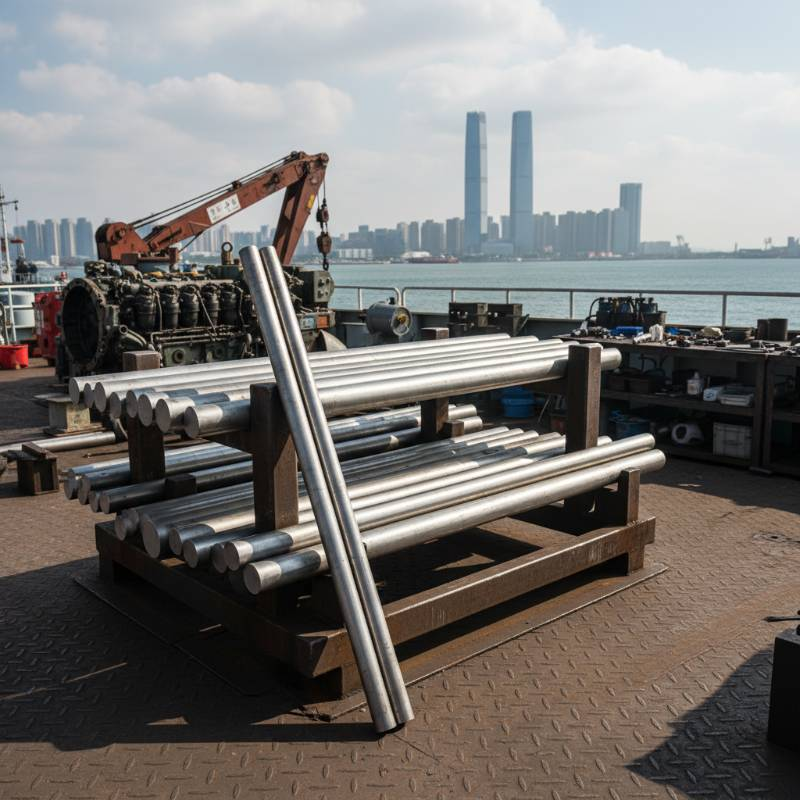
At China Titanium Factory, we have observed a 40% shift in procurement toward high-strength titanium alloys for critical subsea fasteners and structural members.
Technical Benchmarks: Zero Corrosion and Thermal Extremes
Marine grade titanium is defined by its virtual immunity to the typical "killers" of offshore metals: impingement, cavitation, and erosion-corrosion.
Titanium rods demonstrate zero corrosion rates in seawater moving at velocities as high as 40m/s. This makes them indispensable for high-pressure pump shafts and intake valves where high-speed fluid friction would strip the protective layer off other materials.
"Marine Grade Titanium" refers to alloys (primarily Grade 2, 5, and 23) that maintain a stable TiO2 (Titanium Dioxide) film, providing total resistance to chloride-induced pitting in temperatures ranging from Arctic sub-zero to geothermal heat.
Mechanically, these rods remain stable from -320°F to 1000°F. This thermal range allows a single component to function in both cryogenic fluid transport and high-heat energy recovery systems without losing yield strength or becoming brittle.
Grade 2 vs. Grade 5: Choosing the Right Alloy for Offshore Drilling Components
Selecting the right material for Offshore Drilling Components requires balancing ductility with raw tensile strength. While Grade 2 is the standard for corrosion resistance, Grade 5 (Ti-6Al-4V) is the workhorse for high-load applications.
| Property | Grade 2 (CP) | Grade 5 (Ti-6Al-4V) |
|---|---|---|
| Yield Strength (MPa) | 275 - 410 | 825 - 900 |
| Corrosion Resistance | Excellent (Highest) | Very Good |
| Fatigue Life in Seawater | Moderate | High (Critical for Riser Bolts) |
| Common Use Case | Heat Exchangers | Subsea Fasteners / AUV Frames |
In our experience at the factory, we recommend Gr5 titanium rods for any component subjected to cyclic loading at depths exceeding 3,000 meters.
The Deep-Sea Durability Matrix (DSDM)
To assist engineers in 2026, we utilize a proprietary selection protocol called the Deep-Sea Durability Matrix (DSDM). This framework ensures that material choice accounts for more than just depth.
Pressure Profile: Evaluating if the component must handle 20,000 PSI static pressure or dynamic pressure changes.
Electrochemical Potential: Mapping the "Galvanic Compatibility" to ensure the titanium rod doesn't cause accelerated corrosion in neighboring steel structures.
Oxygen Availability: Assessing the deep-sea oxygen levels to ensure the TiO2 layer remains self-healing.
Lifecycle Velocity: Determining if the fluid flow exceeds 3m/s, where most copper-nickel alloys begin to fail.
Combating Stress Corrosion Cracking Resistance
Stress Corrosion Cracking Resistance is the primary reason engineers switch from Super Duplex stainless steel to titanium. In high-salinity, high-temperature environments, even the best steels can develop microscopic cracks that lead to catastrophic failure.
Titanium is essentially immune to SCC in seawater at temperatures below 250°F. Even above this threshold, specialized alloys like Grade 23 (ELI) provide a safety margin that steel cannot match.
Pitting and crevice corrosion—often found under O-rings or in threaded joints—are virtually non-existent with titanium. This allows for tighter tolerances in subsea valve designs and longer service intervals for offshore rigs.
Primary Applications: Desalination to Submersibles
The versatility of titanium rods allows them to serve in diverse marine environments. Here is where they are currently dominating the 2026 market:
Desalination Systems: Titanium rods are machined into high-efficiency heat exchanger tubes and support structures, resisting the aggressive brine concentrates that eat through copper-nickel.
Submersible Frames: For Autonomous Underwater Vehicles (AUVs), the high strength-to-weight ratio of titanium allows for deeper dives without increasing the vehicle's footprint.
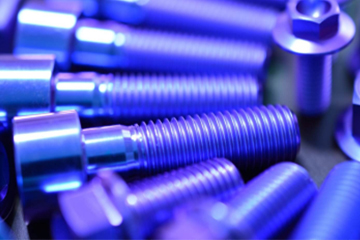
Subsea Cable Fasteners: High-tension fasteners made from titanium ensure that fiber optic and power cables remain secured for 30+ years without risk of hydrogen embrittlement.
According to research from the Association for Materials Protection and Performance (AMPP), titanium remains the gold standard for long-term subsea immersion.
The Economics of Green Titanium: Life-Cycle Cost (LCC) Analysis
The initial price of a titanium rod is higher than steel, but the Life-Cycle Cost (LCC) paints a different picture. In 2026, the industry is moving toward "Green Titanium"—metal produced using closed-loop recycling and renewable energy.
When you factor in zero maintenance, zero replacement parts, and the fact that titanium is 100% recyclable at the end of a project’s life, the ROI is significantly higher. In a 20-year offshore wind project, titanium components can reduce total operational expenditure by up to 15%.
We define sustainable marine engineering as the intersection of material longevity and minimal environmental impact.
Frequently Asked Questions
Can titanium rods be welded directly to steel in marine environments?
No. Direct welding causes brittle intermetallic compounds. We recommend using transition joints or mechanical fasteners (bolts/studs) made of titanium to join dissimilar metals safely.
What is the maximum depth for titanium components?
There is no theoretical depth limit. Titanium has been used successfully in the Mariana Trench (approx. 11,000 meters). The limit is defined by the wall thickness and geometry of the part, not the material’s pressure resistance.
Does titanium suffer from biofouling in the ocean?
While titanium doesn't corrode from biofouling, marine life (like barnacles) can still attach to it. However, unlike steel, the removal of biofouling does not damage the underlying metal or its protective oxide layer.
Ready for 20,000 PSI Challenges?
Don't let corrosion compromise your subsea integrity. Our engineers specialize in high-precision titanium rods for the world's most demanding marine projects.