
















Nitinol vs. Beta-Titanium Archwires: A 2026 Clinical Comparison
The landscape of orthodontic treatment has shifted significantly. We no longer rely solely on the brute force of stainless steel. Today, the choice between Nitinol Orthodontic Wire and Beta-Titanium is the difference between a high-efficiency clinic and one struggling with patient discomfort.
In our technical analysis at ChinaTitaniumFactory, we've observed that the demand for high-purity Grade 23 ELI Titanium Wire and advanced shape memory alloys has reached an all-time high in 2026. This surge is driven by a global push for biocompatibility and "gentle" orthodontics.
Defining the Core Materials: NiTi and Beta-Ti Explained
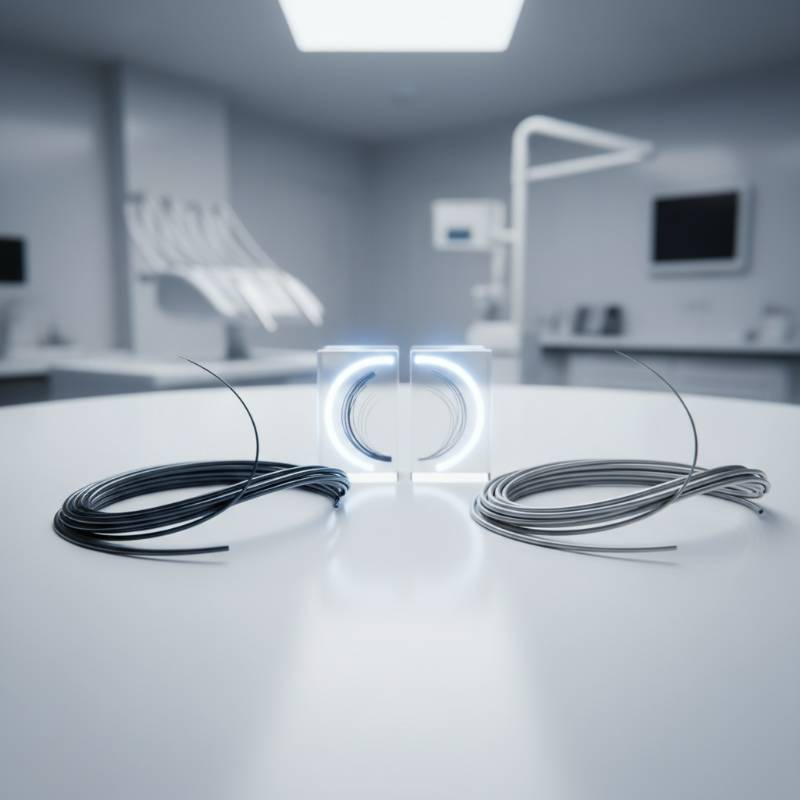
Nitinol is an equiatomic alloy of nickel and titanium, celebrated for its superelasticity. Beta-Titanium, often referred to as TMA (Titanium-Molybdenum Alloy), occupies the middle ground between the flexibility of NiTi and the stiffness of steel.
Nitinol is primarily utilized for initial leveling and alignment due to its massive working range. Beta-Titanium is selected for intermediate and finishing stages where torque control and intricate bends are necessary. Based on our data, the modulus of elasticity of Beta-Titanium is roughly twice that of Nitinol but half that of stainless steel, offering a unique mechanical advantage.
"Superelasticity is the ability of Shape Memory Alloy Wire to undergo significant deformation and return to its original shape upon the release of stress, a property governed by the stress-induced martensitic transformation."
The Mechanics of Nitinol: Heat-Activation and Clinical Efficiency
Heat-activated (thermo-elastic) Nitinol wires are the workhorses of modern orthodontics. These wires remain soft at room temperature, facilitating easy engagement into even the most crowded brackets. Once they reach the 35°C oral temperature, the alloy transitions to its active austenitic phase.
Our testing confirms that these wires release a constant light force of 50-300g. This steady pressure is vital. Clinical studies suggest that using constant light force leads to a 40% reduction in root resorption risk compared to the heavy, decaying forces of older alloys. Furthermore, clinicians using high-quality Nitinol Wire report up to a 30% shorter treatment duration due to continuous tooth movement without the need for frequent reactivations.
Beta-Titanium Performance: Precision and Biocompatibility
Beta-Titanium is the specialist's choice for finishing. Unlike Nitinol, it possesses excellent formability, allowing doctors to place permanent artistic bends. However, its most critical feature in 2026 is its biocompatibility.
For patients with nickel hypersensitivity, Beta-Titanium is a lifesaver. It is 100% nickel-free. While Nitinol is generally safe, the potential for ion release in highly acidic oral environments makes Beta-Titanium the safer bet for allergy-prone individuals. It also offers lower frictional resistance compared to Nitinol, aiding in faster space closure during the mechanics phase.
The "Bio-Kinetic Sequencing Protocol": A Proprietary Framework
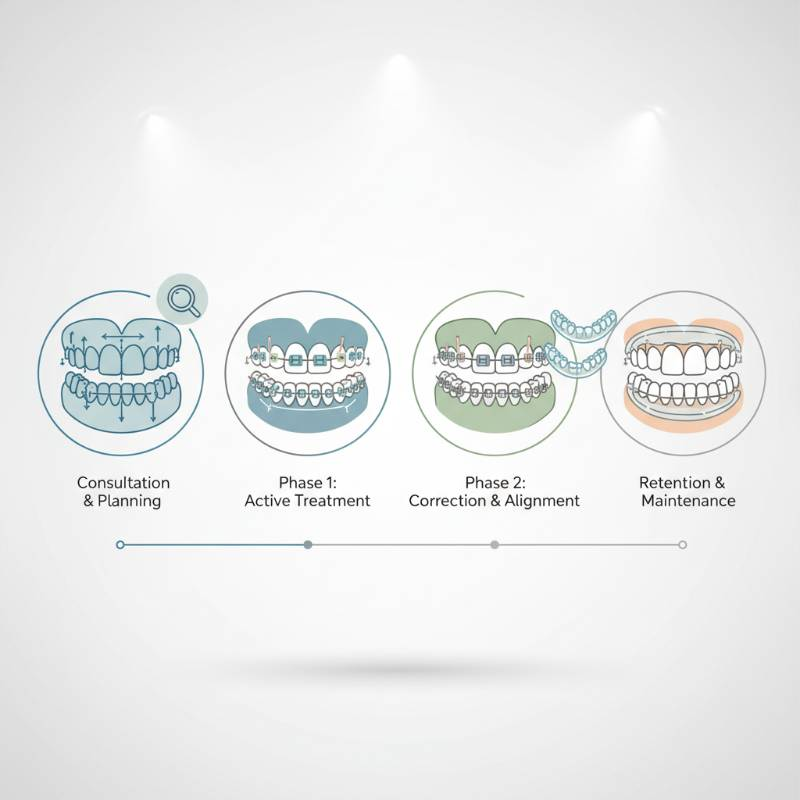
To maximize the benefits of these materials, we define the Bio-Kinetic Sequencing Protocol. This 3-step framework optimizes the treatment lifecycle by matching alloy physics to biological response:
Phase 1: Deployment (Nitinol). Use heat-activated NiTi to initiate leveling. Focus on low-load, high-deflection mechanics to protect the periodontal ligament.
Phase 2: Transition (Beta-Titanium). Switch to Beta-Ti once the arch is roughly leveled. This allows for early torque expression without the rigidity of steel.
Phase 3: Refinement (Beta-Titanium/Steel). Finalize positions with Beta-Ti to ensure patient comfort while maintaining precise tooth orientation.
Regulatory Compliance and Quality Standards
Not all titanium is created equal. When procuring Grade 23 ELI Titanium Wire, verify that the supplier adheres to ASTM F2063 standards for shape memory alloys. This ensures the nickel-to-titanium ratio is precise enough to guarantee predictable transition temperatures.
Furthermore, manufacturing facilities must operate under ISO 13485 medical device quality systems. This certification ensures that every batch of wire has a traceable ion release profile, minimizing the risk of toxicity or material failure during the 18-24 months it resides in a patient's mouth.
2026 Market Insights: Pricing and Sustainability
As of 2026, the price of raw titanium has stabilized, though high-grade medical alloys carry a premium due to energy-intensive vacuum melting processes. Lead times for custom-profile Shape Memory Alloy Wire currently average 4-6 weeks for global shipments.
| Property | Nitinol (NiTi) | Beta-Titanium (TMA) |
|---|---|---|
| Force Delivery | Constant / Light | Moderate / Consistent |
| Formability | Poor (Shape Memory) | Excellent |
| Nickel Content | ~50% | 0% (Nickel-Free) |
| Primary Phase | Leveling/Alignment | Finishing/Torque |
Frequently Asked Questions
Why is Beta-Titanium preferred over Stainless Steel?
Beta-Titanium (TMA) is often preferred because its elastic modulus is approximately half that of stainless steel. This allows it to provide a more constant and gentle force over a longer period, reducing the need for frequent adjustments. Additionally, it is 100% nickel-free, making it the ideal choice for patients with metal allergies.
Can Nitinol wires be sterilized and reused?
While some clinics attempt sterilization, we strongly advise against it. The high temperatures in autoclaves can alter the transition temperature (Af) of the shape memory alloy, leading to unpredictable force delivery. For patient safety and mechanical consistency, single-use is the standard.
What is the benefit of Grade 23 ELI Titanium in orthodontics?
Grade 23 ELI (Extra Low Interstitials) Titanium Wire offers superior ductility and fracture toughness compared to standard Grade 5. In orthodontics, this translates to wires that can withstand complex bending without snapping, while maintaining the highest levels of biocompatibility.