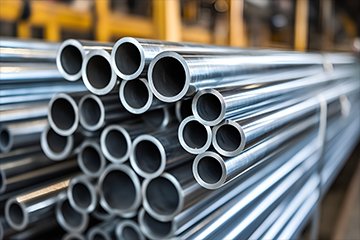
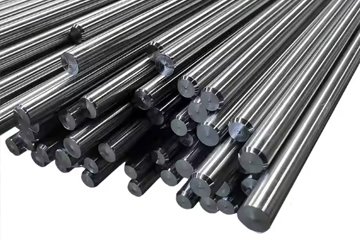
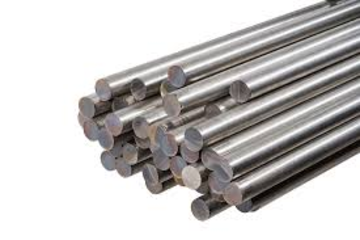
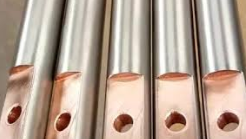
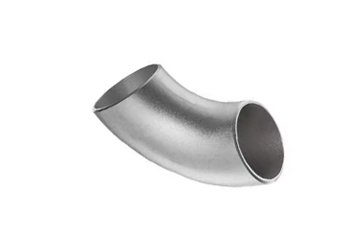
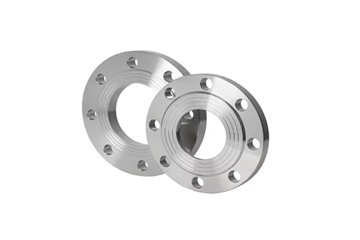
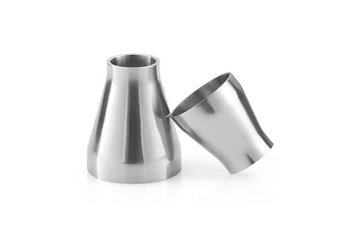
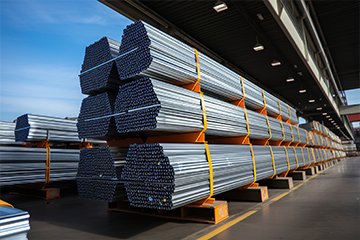
Seamless titanium tubes are monolithic hollow sections manufactured without a longitudinal seam through hot extrusion and cold pilgering, delivering isotropic mechanical properties for severe dynamic stress. Welded titanium tubes are formed by continuously roll-forming precision cold-rolled strip and joining the longitudinal seam via automated gas tungsten arc welding (GTAW) or plasma arc welding (PAW), maximizing wall concentricity and thermal efficiency.
Seamless Titanium Tube: A continuous hollow metallic cylinder produced from solid billet stock via rotary piercing or hot extrusion followed by cold reduction, exhibiting no metallurgical discontinuity or heat-affected zone across its 360-degree circumference.
Welded Titanium Tube: A tubular product fabricated from flat-rolled strip or sheet formed into a cylindrical profile, fusion-welded along its longitudinal seam under inert gas shielding, and mechanically conditioned to achieve final dimensional tolerance.
Selecting between these two product forms dictates the pressure boundary rating, thermal transfer efficiency, fatigue endurance, and procurement budget of industrial piping systems. Engineers must balance the weld joint efficiency factors mandated by pressure vessel design codes against the tighter dimensional tolerances inherent to strip-formed welded tubulars.
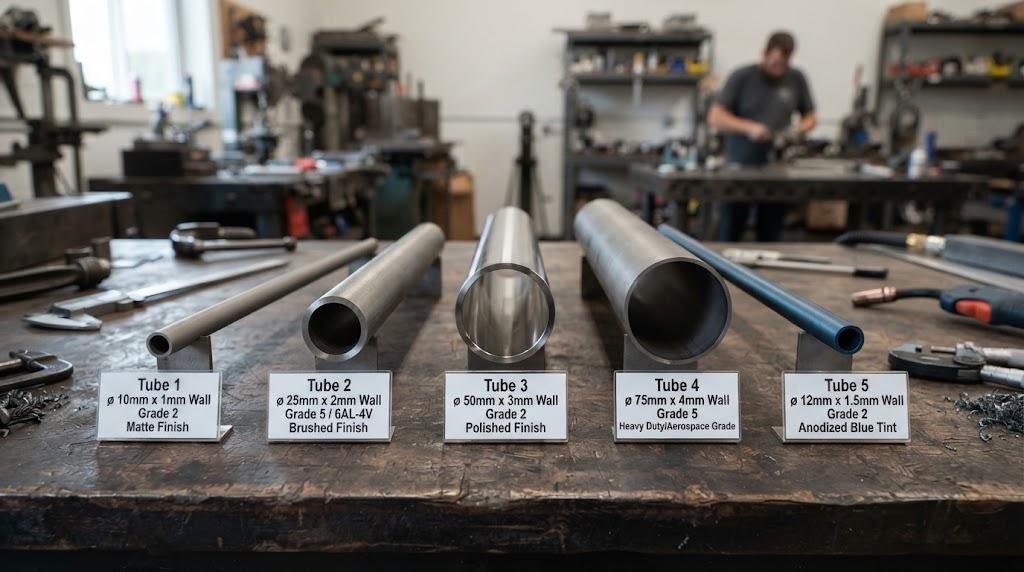
| Engineering Parameter | Seamless Titanium Tubes | Welded Titanium Tubes |
|---|---|---|
| Primary Manufacturing Route | Hot Extrusion + Multi-Pass Cold Pilgering / Drawing | Continuous Roll-Forming + GTAW / Plasma / Laser Welding |
| Standard Specifications | ASTM B861, ASTM B338, AMS 4943, AMS 4944, ASME SB861 | ASTM B862, ASTM B338, ASME SB862, ASME SB338 |
| Wall Thickness Variation | ±10% to ±12.5% (pilgering drift) | ±5% (controlled by parent strip rolling) |
| ASME Joint Efficiency Factor (E) | E = 1.0 (Full base metal strength) | E = 0.85 (Standard) to E = 1.0 (100% Radiography/UT) |
| Standard Size Availability | OD 3.0 mm to 219.0 mm; WT 0.5 mm to 20.0 mm | OD 12.7 mm to 2000+ mm; WT 0.4 mm to 12.0 mm |
| Fatigue & Dynamic Shock Rating | Exceptional; zero metallurgical discontinuity | Moderate to High; dependent on weld seam planishing |
| Relative Cost Baseline | 1.3x – 1.6x baseline (higher yield loss) | 1.0x baseline (optimized strip raw material) |
The metallurgical distinction between seamless and welded titanium products originates in their primary breakdown processes. Each conversion method induces unique crystal lattice orientations and strain histories into the titanium matrix.
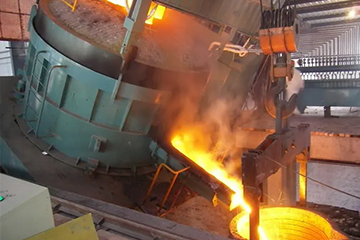
Seamless manufacturing begins with a vacuum arc remelted (VAR) or electron-beam (EB) melted cylindrical ingot. The billet is precision-machined, induction-heated to the beta or high alpha-beta phase field (typically 850°C to 950°C for Grade 2 and Grade 5), and driven through a horizontal extrusion press over an internal mandrel to produce a heavy-walled tube hollow.
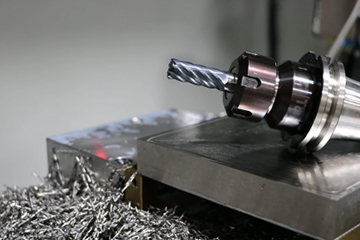
To reduce the extruded hollow to precision dimensions, our facility employs multi-pass cold pilgering (cold rocking). In this process, a pair of variable-groove ring dies rolls back and forth over a tapered stationary mandrel, compressing the tube along its longitudinal and radial axes.
Cross-Section Reduction: Up to 50% to 75% cross-sectional area reduction per pass without thermal tearing.
Intermediate Annealing: High-vacuum thermal treatment at 650°C to 720°C below 10⁻⁴ mbar prevents interstitial absorption while relieving residual strain.
Final Sizing: Cold drawing through carbide dies standardizes outer diameter and wall thickness. Explore our mill-tested stock of Titanium Seamless Pipes & Tubes for critical process systems.
Welded titanium tubing begins with cold-rolled coil strip processed to tight gauge tolerances (±0.015 mm). The strip passes through continuous breakdown and fin-pass forming rolls to progressively shape the profile into an open cylindrical shell.
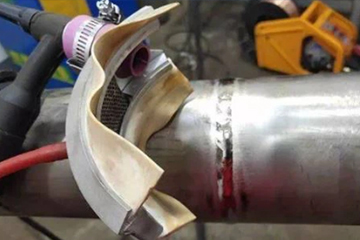
Welding occurs under strict atmospheric isolation using automated Gas Tungsten Arc Welding (GTAW), Plasma Arc Welding (PAW), or high-frequency Laser Beam Welding (LBW). Because molten titanium aggressively absorbs atmospheric gases above 400°C, the weld puddle, trailing zone, and inner diameter are protected with ultra-pure Grade 5.0 argon (99.999% purity) with oxygen levels maintained below 5 ppm.
Inline Weld Planishing: The as-welded cast crown is cold-forged and rolled inline against an internal mandrel to flatten the bead flush with the parent metal.
Inline Recrystallization: Induction or vacuum furnace annealing homogenizes the weld microstructure, transforming columnar cast grains into recrystallized alpha grains.
Size Range Capability: Welded production efficiently yields thin-wall geometries impossible to pilger economically. Review our precision-rolled Titanium Welded Tubes for Heat Exchangers for power generation cooling circuits.
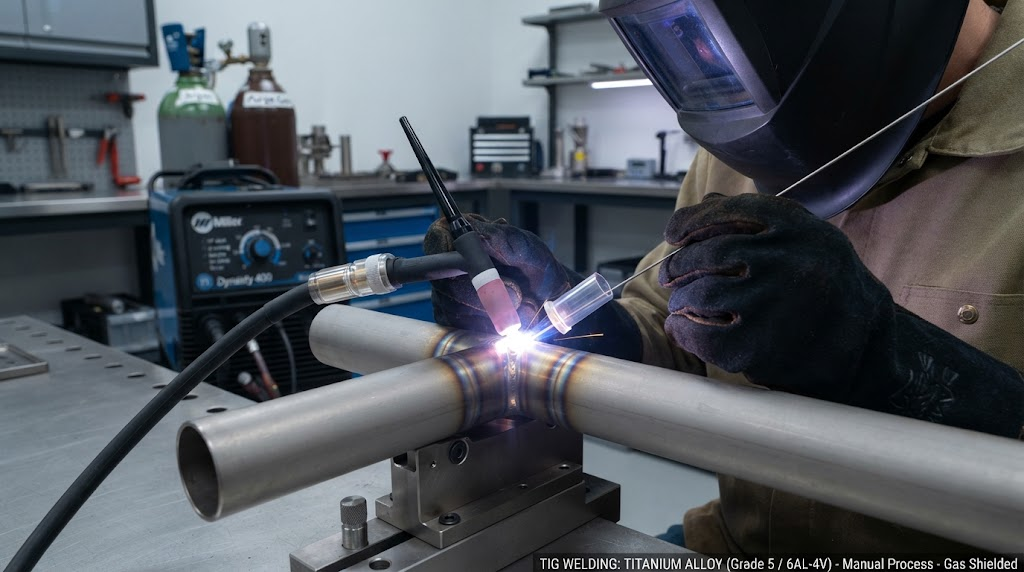
The mechanical performance divergence between seamless and welded titanium tubes stems directly from grain morphology differences across the cross-section.
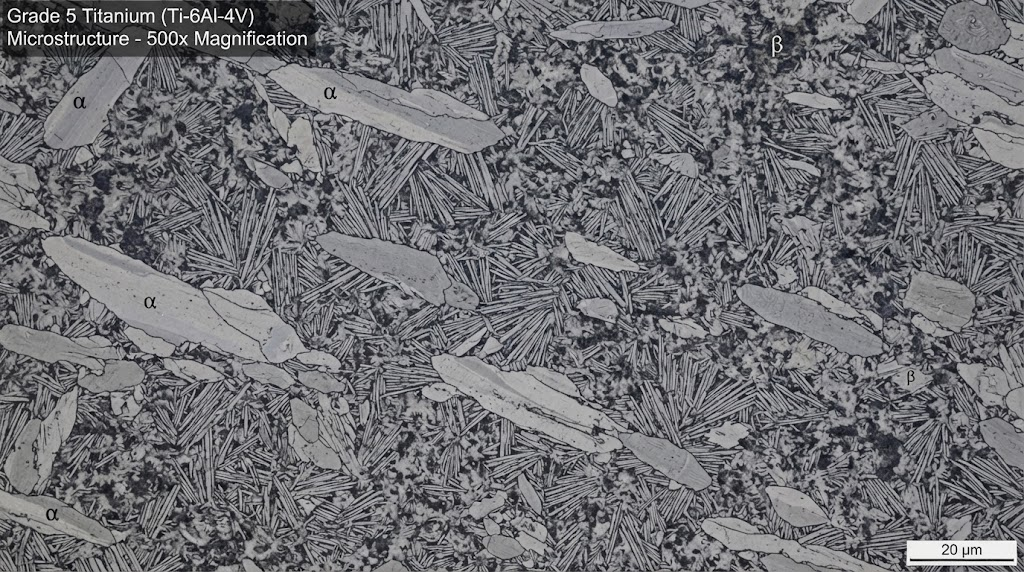
Seamless tubes exhibit an isotropic, fully recrystallized, equiaxed alpha grain structure (or alpha-beta matrix in Ti-6Al-4V) across the entire 360-degree circumference. This structural uniformity guarantees identical tensile strength, yield strength, and elongation regardless of stress vector orientation.
Welded tubes contain three distinct metallurgical zones:
Fusion Zone (FZ): Cast dendritic microstructure featuring transformed beta phase with acicular (martensitic or Widmanstätten) alpha needles prior to heat treatment.
Heat-Affected Zone (HAZ): Parent metal adjacent to the melt pool that experienced peak temperatures below the melting point, exhibiting localized grain coarsening.
Parent Base Metal: Unaltered, fine-grained equiaxed alpha microstructures maintaining the mechanical baseline of the original strip.
Through comprehensive Post-Weld Heat Treatment (PWHT) and cold reduction, modern automated welding reduces the hardness differential between the fusion zone and parent metal to less than 10-15 HV (Vickers Hardness), virtually eliminating preferential corrosion pathways.
Dimensional consistency directly impacts hydraulic pressure drops, roller expansion into tube sheets, and automated orbital welding integrity during field installation.
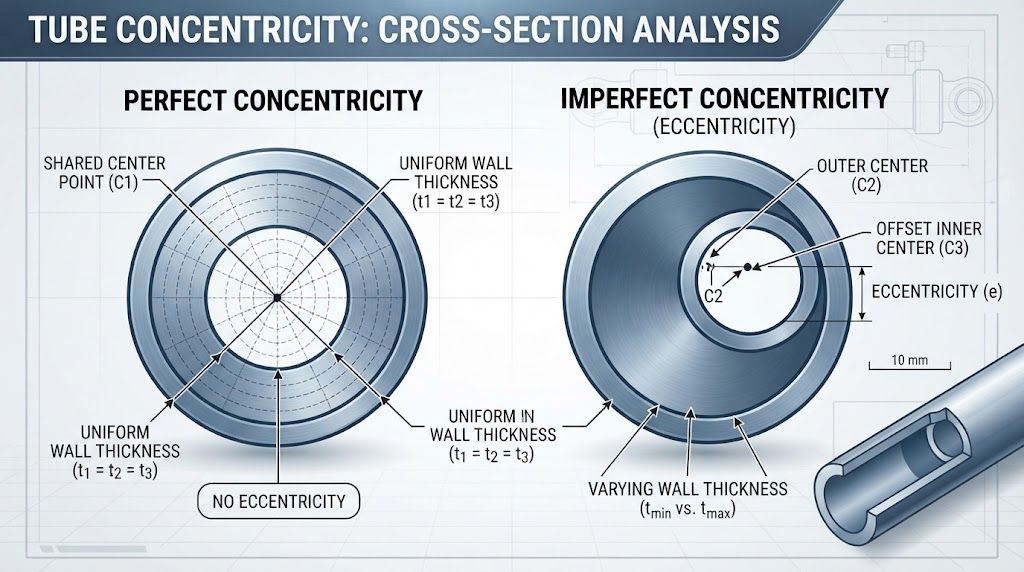
Welded titanium tubing delivers superior wall thickness concentricity. Because the wall is defined by precision cold-rolled flat strip, the total wall variation rarely exceeds ±5% of nominal thickness.
Seamless tubing is subject to cross-roll drift and mandrel deflection during extrusion and cold pilgering. Consequently, seamless tolerances typically range from ±10% to ±12.5% according to ASTM B861 standards, creating measurable wall eccentricity.
| Tolerance Parameter | Welded Tube (ASTM B338) | Seamless Tube (ASTM B338 / B861) |
|---|---|---|
| Outside Diameter (OD) Tolerance | ±0.10 mm (±0.004 in) | ±0.10 mm (±0.004 in) |
| Wall Thickness (WT) Tolerance | ±5% to ±7.5% | ±10% to ±12.5% |
| Internal Surface Roughness (Ra) | 0.4 µm to 0.8 µm (16 to 32 µin) | 0.8 µm to 1.6 µm (32 to 63 µin) |
| Ovality / Out-of-Roundness | Max 0.25 mm | Max 0.50 mm |
| Straightness Deviation | 1.0 mm per 1000 mm length | 1.5 mm per 1000 mm length |
The smooth surface finish of cold-rolled strip translates into lower internal roughness ($R_a$) for welded tubes. This low micro-roughness minimizes boundary layer turbulence and fouling in high-velocity brine service.
Furthermore, uniform wall thickness ensures consistent radial expansion forces when mechanically rolling tubes into heat exchanger tube sheets. Highly eccentric seamless tubes can cause localized over-thinning or tube sheet ligament distortion during rolling.
Calculating the maximum allowable working pressure (MAWP) and ultimate burst pressure of titanium piping requires strict adherence to international pressure vessel codes, such as the ASME Boiler and Pressure Vessel Code (BPVC).
For thin-walled tubular components where outer diameter to wall thickness ratio exceeds 10:1, Barlow's equation establishes the theoretical burst limit:
P = (2 × S × t × E) / Do
Where:
P: Internal Burst Pressure (MPa or psi)
S: Minimum Specified Tensile Strength of the Titanium Grade (MPa or psi)
t: Nominal Wall Thickness (mm or in)
Do: Outside Diameter of the Tube (mm or in)
E: Weld Joint Efficiency Factor
Under ASME Section VIII Division 1 (Part UW-12), seamless pipe and tube are designated a joint efficiency factor of E = 1.00, reflecting a solid metal boundary. Welded titanium products are assigned efficiency factors based on testing rigor:
E = 0.85: Standard automated longitudinally welded tube subjected to non-destructive eddy current or spot radiographic examination.
E = 1.00: Fully radiographed (100% RT) or 100% ultrasonic (UT) examined welded pipe per ASME Section VIII rules.
Consider a 25.4 mm (1.0 in) Outer Diameter tube with a 0.889 mm (0.035 in / 20 BWG) wall thickness operating at room temperature:
Grade 2 Welded Tube (E = 0.85): Tensile Strength $S = 345\text{ MPa}$ (50.0 ksi).
$P = (2 \times 345 \times 0.889 \times 0.85) / 25.4 = 20.52\text{ MPa}$ (2,976 psi Burst Limit).
Grade 2 Seamless Tube (E = 1.00): Tensile Strength $S = 345\text{ MPa}$ (50.0 ksi).
$P = (2 \times 345 \times 0.889 \times 1.00) / 25.4 = 24.15\text{ MPa}$ (3,502 psi Burst Limit).
Grade 9 (Ti-3Al-2.5V) Seamless Tube (E = 1.00): Cold-Worked Stress-Relieved Tensile Strength $S = 620\text{ MPa}$ (90.0 ksi).
$P = (2 \times 620 \times 0.889 \times 1.00) / 25.4 = 43.40\text{ MPa}$ (6,294 psi Burst Limit).
For high-pressure aviation hydraulic lines, specify our cold-pilgered Grade 9 Ti-3Al-2.5V Hydraulic Tubing to withstand operational pressures exceeding 3,000 to 5,000 psi.
Titanium piping procurement requires cross-referencing industry standards to align material grade, inspection level, and product form.
| Standard | Scope & Product Form | Mandatory Testing Protocols | Target Applications |
|---|---|---|---|
| ASTM B338 / ASME SB338 | Seamless and Welded Titanium Tubes (Grades 1, 2, 3, 7, 9, 12, 16, 28) | Eddy Current or Ultrasonic, Hydrostatic or Pneumatic, Flaring, Flattening, Reverse Bend | Condensers, Shell & Tube Heat Exchangers, Evaporators |
| ASTM B861 / ASME SB861 | Seamless Titanium and Titanium Alloy Pipe (Schedule sizes 5S to 80S) | Hydrostatic Test, Flattening Test, Ultrasonic / Eddy Current inspection | Chemical Process Piping, Subsea Manifolds, High-Pressure Fluid Lines |
| ASTM B862 / ASME SB862 | Welded Titanium and Titanium Alloy Pipe (Sizes up to 48" NB) | Radiographic (RT) or Ultrasonic (UT), Hydrostatic, Guided Bend, Flattening | Large-Diameter Desalination Headers, Flue Gas Scrubbers, Chlorine Ducts |
| AMS 4943 / AMS 4944 | Seamless Grade 9 (Ti-3Al-2.5V) Hydraulic Tubing (CWSR Condition) | 100% Ultrasonic Testing, High-Pressure Proof Hydrostatic, Burst Testing, Flaring | Aerospace Hydraulic Return & Delivery Lines, Missile Actuation Lines |
To ensure 100% defect-free delivery for critical process and aerospace duties, China Titanium Factory enforces a proprietary QA methodology across our seamless and welded lines.
Every melt lot undergoes optical emission spectrometry (OES) and inert gas fusion (LECO analysis) to quantify interstitial oxygen ($O_2 \le 0.18\%$), nitrogen ($N_2 \le 0.03\%$), carbon, and hydrogen ($H_2 \le 0.015\%$). This prevents embrittlement before forming begins.
Each tube length undergoes dual electronic screening:
High-Frequency Eddy Current Testing: Executed per ASTM E426 with encircling coil systems calibrated against drilled artificial notch standards to detect longitudinal defects.
Ultrasonic Immersion Testing: Executed per ASTM E213 with shear-wave multi-transducers to detect subsurface inclusions, lamination, and wall thickness variations.
Tubes are tested on our automated multi-station hydrostatic testing bench at pressures up to 100 MPa (14,500 psi). Pressure is held for a minimum of 5 to 10 seconds to verify structural integrity and joint hermeticity.
Test coupons extracted from the lead and tail of each manufacturing lot undergo standardized physical testing:
Flaring Test: Expanded over a 60° cone until the OD expands by a minimum of 20% to 30% without radial micro-cracking.
Flattening Test: Compressed between parallel plates to a specified distance $H$ per ASTM B338 without sidewall or weld seam separation.
Reverse Bend Test: Welded coupons are bent 180 degrees backwards over a mandrel to test root penetration and fusion ductileness.
Final inspection includes cross-sectional microstructural verification via metallurgical microscopy (at 100x and 500x magnification) and stylus profilometer surface roughness checks. Review our complete quality assurance infrastructure via our Titanium Material Test Certificates & MTRs page.
Selecting the optimal tube configuration requires matching process conditions with the appropriate alloy chemistry and manufacturing method.
For low-pressure cooling systems utilizing raw seawater or brackish river water, ASTM B338 Grade 2 Welded Tubing is the global benchmark. Welded tubing provides excellent wall uniformity, smooth inner surfaces to minimize bio-fouling, and superior heat transfer characteristics over heavy-wall seamless alternatives. Procure high-volume runs through our dedicated Grade 2 Pure Titanium Condenser Tubing inventory.
Commercial and military aircraft hydraulic circuits operate under cyclic pressures up to 3,000 to 5,000 psi and severe airframe vibration. AMS 4943 / 4944 Seamless Grade 9 (Ti-3Al-2.5V) in the cold-worked, stress-relieved (CWSR) condition is mandatory here. The lack of a weld seam eliminates fatigue crack initiation sites along the tube profile.
Under boiling hydrochloric acid, wet chlorine gas, or reducing brine environments where crevice corrosion is a concern, Grade 7 (Ti-0.15Pd) and Grade 12 (Ti-0.3Mo-0.8Ni) are specified. Seamless pipe is preferred for thick-walled piping manifolds (ASTM B861), while welded pipe (ASTM B862) is standard for large-diameter low-pressure ducting.
Deepwater exploration exposes flowlines to high internal pressures, sour gas ($H_2S$), and dynamic wave loading. ASTM B861 Grade 5 (Ti-6Al-4V) Seamless Heavy-Wall Pipe offers the required tensile strength ($R_m \ge 895\text{ MPa}$) and stress corrosion cracking (SCC) resistance.
Evaluating tube procurement strictly by weight-based unit price neglects long-term installation and operational life cycle factors.
Raw Material Yield: The welded process utilizes continuous coil slitting with material yields exceeding 90%. Seamless extrusion and pilgering generate billet crop ends and machining scrap, lowering yield to 60%-70% and increasing raw material cost.
Wall Thickness Sizing: Welded tubing allows engineers to specify lighter wall gauges (such as 0.5 mm or 0.7 mm / 22-24 BWG) that cannot be cold-pilgered reliably, saving 15% to 30% in direct material mass.
Fabrication & Installation: High concentricity in welded tubes accelerates automated orbital TIG welding and eliminates fit-up grinding in the field.
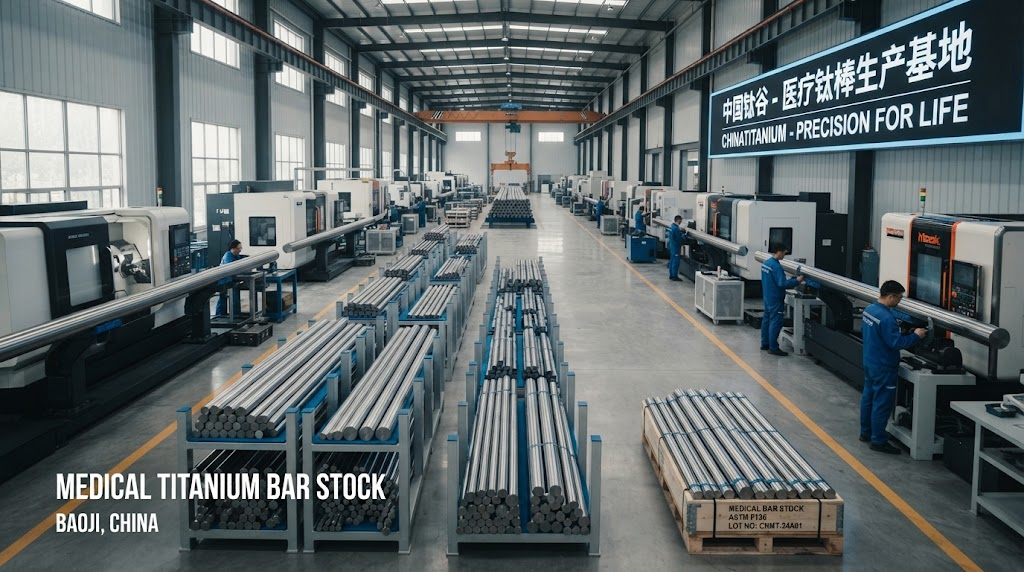
China Titanium Factory operates dedicated extrusion, pilgering, and continuous automated TIG/plasma welding lines. This integrated setup allows us to supply both product forms with mill-direct pricing, custom outer diameters, tailored wall thicknesses, and complete EN 10204 3.1 Material Test Reports.
Yes. Fully annealed and inline-planished welded titanium tubing (ASTM B338 Grade 2) exhibits parent metal elongation properties ($\ge 20\%$). It can be bent on rotary draw benders to center-line radii ($CLR$) of $2D$ to $3D$ and flared up to 30% without seam splitting, provided the tooling is properly lubricated and positioned.
Seamless titanium is strictly mandated in high-pressure aerospace hydraulic lines (AMS 4943), severe sour gas downhole strings where cyclic fatigue can initiate stress corrosion cracking at weld boundaries, and ASME Section VIII vessels where lethal process fluid design codes prohibit a joint efficiency factor below $E = 1.0$ without non-destructive radiography.
No. Titanium does not suffer from chromium carbide sensitization or intergranular chromium depletion common to austenitic stainless steels. Properly shielded titanium welds maintain base metal corrosion resistance across nitric acid, chlorine, and seawater environments without requiring post-weld solution pickling.
Select Grade 2 welded tubing for atmospheric or moderate pressure heat transfer systems (≤ 150 psi / 10 bar) where cost and wall concentricity take priority. Choose Grade 9 seamless tubing for high-pressure fluid power lines (≥ 3,000 psi), high-stress structural airframes, or dynamic subsea umbilical cores requiring maximum strength-to-weight performance.
China Titanium Factory provides fully certified seamless (ASTM B861/AMS 4943) and welded (ASTM B338/B862) titanium tubes in Grade 1, Grade 2, Grade 5, Grade 7, Grade 9, and Grade 12. Receive precision tolerances, complete EN 10204 3.1 MTRs, and direct factory pricing.
Request a Mill Quote


Contact Us
No. 26 Baoti Road, Maying Town, High-tech Development Zone, Baoji, Shaanxi, China
Copyright © 2026 Baoji Gloritime Titanium Co., Ltd. All Rights Reserved.