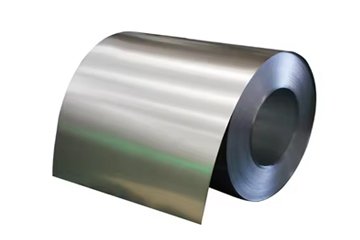
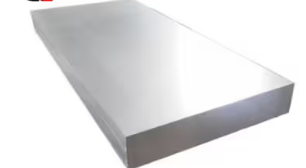
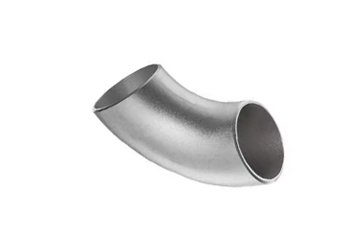
Medical-grade titanium alloys like Grade 5 (Ti-6Al-4V ELI) Material Specifications are the optimal material choice for handheld surgical instruments due to their high strength-to-weight ratio, spring resilience, and low density of 4.43 g/cm³. Unalloyed medical tantalum (ASTM F560 / UNS R05200) excels in permanent bone-interfacing implants requiring trabecular osseointegration, but its excessive density (16.65 g/cm³) and low yield strength make it unviable for general surgical instrument bodies.
Medical device engineers must distinguish between the metallurgical requirements of internal implants and manual surgical instrumentation. Implants require active cellular adhesion, low shear modulus matching cancellous bone, and deep porosity. In contrast, reusable surgical instruments demand high flexural yield strength, structural mass reduction, high-cycle fatigue resistance, and absolute surface bio-inertness.
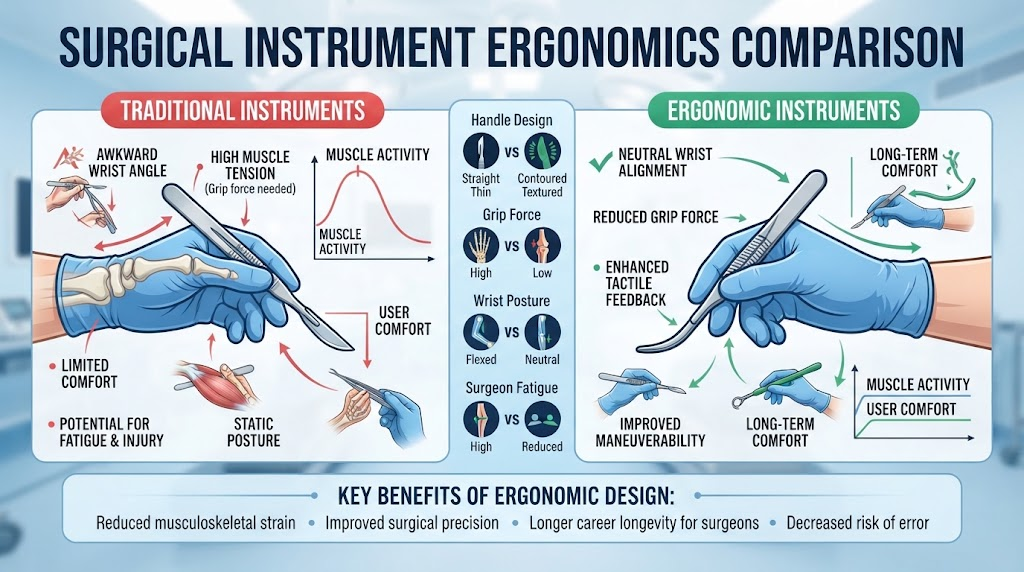
When selecting raw stock for Class I and Class II surgical tools, allocating dense refractory metals where lightweight titanium alloys excel compromises ergonomic efficiency and inflates manufacturing overhead.
Evaluating physical metallurgy demonstrates the stark divergence between titanium alloys and pure tantalum. Handheld tooling performance depends on structural rigidity, tactile sensitivity, and weight distribution.
| Property / Metric | Ti-6Al-4V ELI (Grade 23 / ASTM F136) | CP Titanium (Grade 2 / ASTM F67) | Unalloyed Tantalum (ASTM F560 / R05200) |
|---|---|---|---|
| Density (g/cm³) | 4.43 | 4.51 | 16.65 |
| Ultimate Tensile Strength (MPa) | 860 - 965 | 345 - 450 | 205 - 480 (Annealed vs CW) |
| 0.2% Yield Strength (MPa) | 790 - 880 | 275 - 350 | 140 - 345 |
| Modulus of Elasticity (GPa) | 110 - 114 | 103 - 107 | 186 |
| Hardness (Rockwell / Vickers) | 32 - 36 HRC (310 - 350 HV) | 80 - 85 HRB (145 - 180 HV) | 80 - 120 HV (Annealed) |
| Thermal Conductivity (W/m·K) | 6.7 | 16.4 | 57.5 |
Instrument weight directly impacts surgical precision during microsurgical, neurological, and cardiovascular procedures lasting four to twelve hours. Consider the mass of a standard 180 mm micro-vascular needle holder with a metallic volume of 9.2 cm³:
ASTM F136 Grade 5 ELI Titanium: 9.2 cm³ × 4.43 g/cm³ = 40.75 grams
ASTM F560 Tantalum: 9.2 cm³ × 16.65 g/cm³ = 153.18 grams
316L Stainless Steel Reference: 9.2 cm³ × 8.00 g/cm³ = 73.60 grams
Tantalum creates an instrument 275% heavier than Grade 5 titanium. In a full surgical tray containing 35 specialized instruments, a titanium setup weighs roughly 1.42 kg, compared to 5.36 kg in tantalum, mitigating cumulative musculoskeletal fatigue for surgical teams.
Surgical micro-forceps, spring scissors, and hemostatic clamps require elastic deflection without permanent plastic deformation. Grade 5 titanium demonstrates a high yield-to-modulus ratio ($R_{elastic} = \sigma_y / E$), allowing spring-action instruments to cycle over 100,000 actuations without zero-point drift.
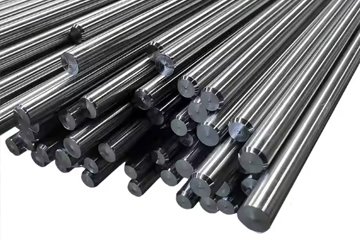
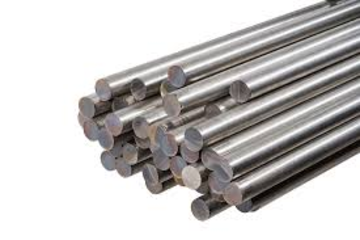
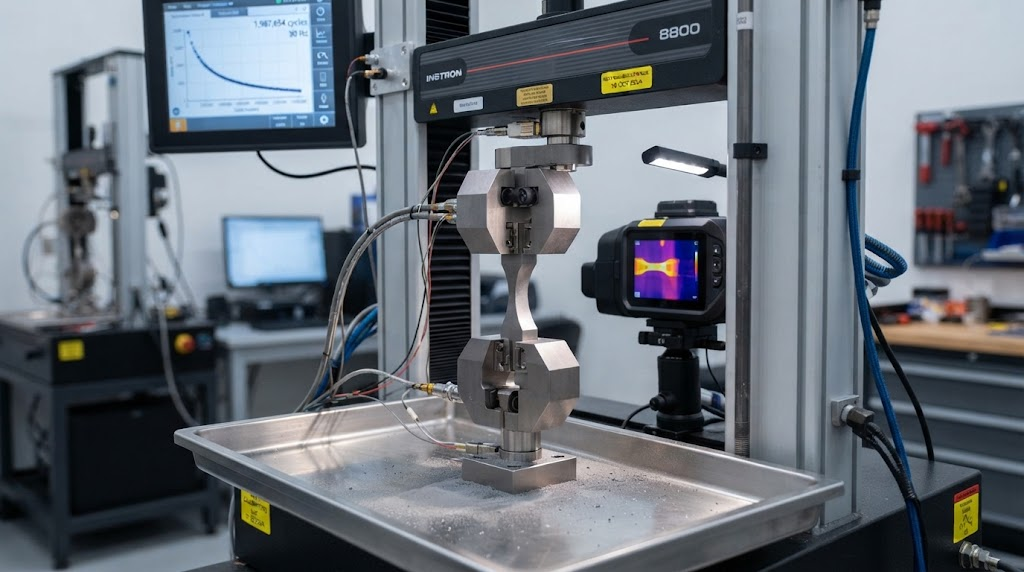
Engineering Data Point: Laboratory tensile pull tests at China Titanium Factory show cold-worked, stress-relieved Medical Grade Titanium Rods & Bars (ASTM F136) maintain an elastic recovery threshold of 860 MPa, whereas annealed tantalum yields plastically at approximately 180–240 MPa under identical cantilever loading.
Surgeons rely on micro-vibrations and tactile resistance transmitted through tool tips to distinguish between cortical bone, calcified tissue, soft tissue, and nerve sheaths. Titanium's elastic modulus (110 GPa) is closer to dense cortical bone (18–22 GPa) than tantalum (186 GPa).
This balanced flexural modulus prevents extreme tool flex while damping acoustic shock during ultrasonic bone cutting and micro-drilling.
Both titanium and tantalum feature bio-inert surface characteristics due to instantaneous chemical oxidation upon atmospheric exposure. Titanium forms an adherent titanium dioxide (TiO₂) film, while tantalum forms a stable tantalum pentoxide (Ta₂O₅) passive barrier.
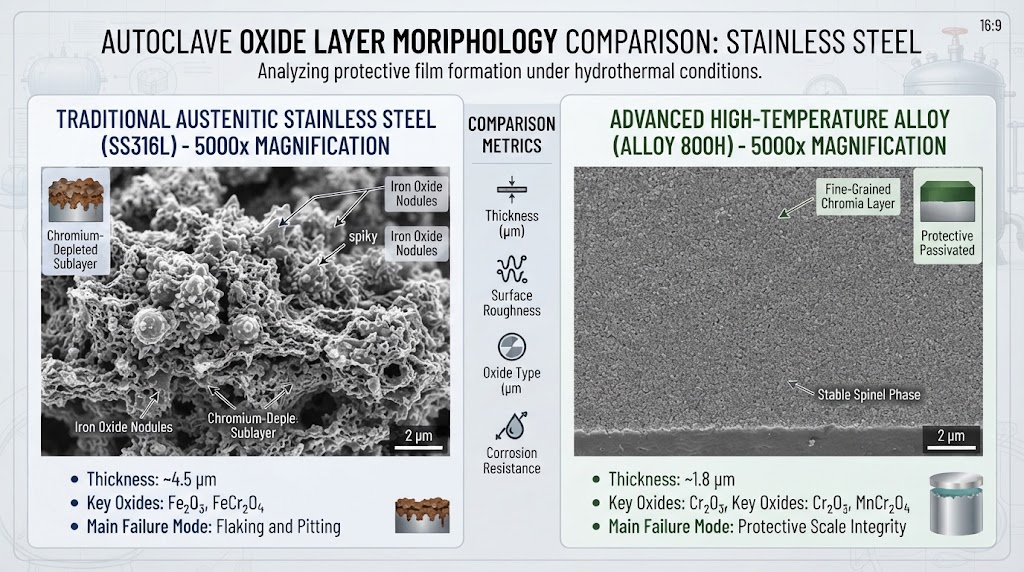
Surgical instruments must withstand intense hospital reprocessing protocols without degrading. These include:
High-pH automated alkaline enzymatic detergent washes (pH 10.5–12.0)
High-pressure saturated steam autoclaving (134°C at 3.1 bar for 18-minute cycles according to ISO 17665)
Peracetic acid and hydrogen peroxide plasma sterilization
Autoclave corrosion tests run in our metallurgy facility confirm that electropolished Grade 5 ELI titanium specimens subjected to 2,500 continuous steam cycles exhibited zero measurable mass loss (Δm < 0.001 mg/cm²) and zero pitting corrosion. Tantalum offers comparable chemical resistance but provides no functional reprocessing advantage over titanium for external tooling.
Tantalum possesses an atomic number ($Z=73$) and density that make it radiopaque under standard intraoperative fluoroscopy and X-ray imaging. While this is beneficial for vascular markers and embolization coils, a solid tantalum handheld surgical instrument causes severe image blooming and beam-hardening streaks across fluoroscopy screens.
Grade 5 Titanium ($Z=22$, effective $Z \approx 20.4$) is non-ferromagnetic (magnetic susceptibility $\chi_m \approx 3.2 \times 10^{-6}\text{ cm}^3/\text{g}$) and produces minimal MRI susceptibility artifacts. This radiolucent balance allows surgeons to verify surgical margins and implant positioning around active instruments under intraoperative CT and fluoroscopic guidance.
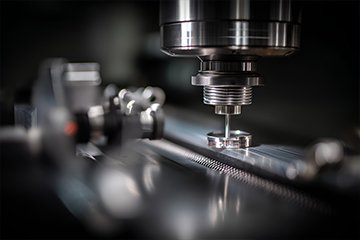
From an OEM production perspective, machinability differences between titanium and tantalum dictate manufacturing lead times, tool wear, and unit costs. High-precision instruments like articulated micro-forceps require 5-axis micro-milling, precision Swiss turning, and wire EDM operations.
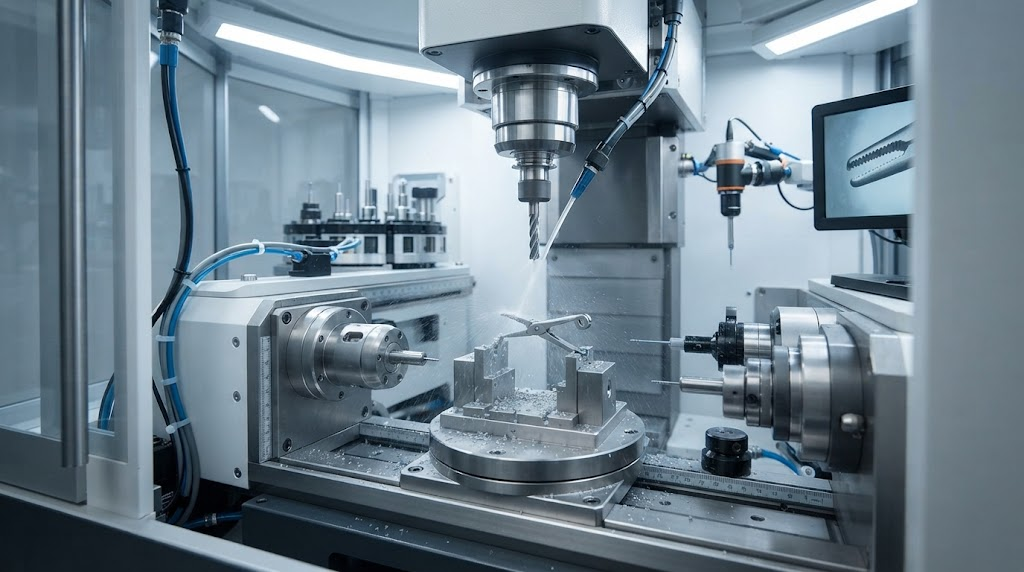
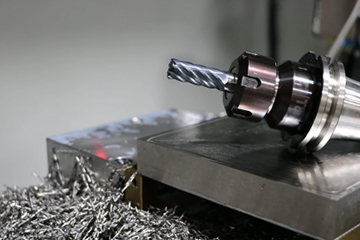
Tantalum is notoriously difficult to machine due to its extreme ductility, high melting point (3,017°C), low thermal conductivity, and severe tendency to gall and seize to cutting tool flutes. Machining tantalum creates a gummy, continuous chip that quickly forms a built-up edge (BUE) on solid carbide endmills.
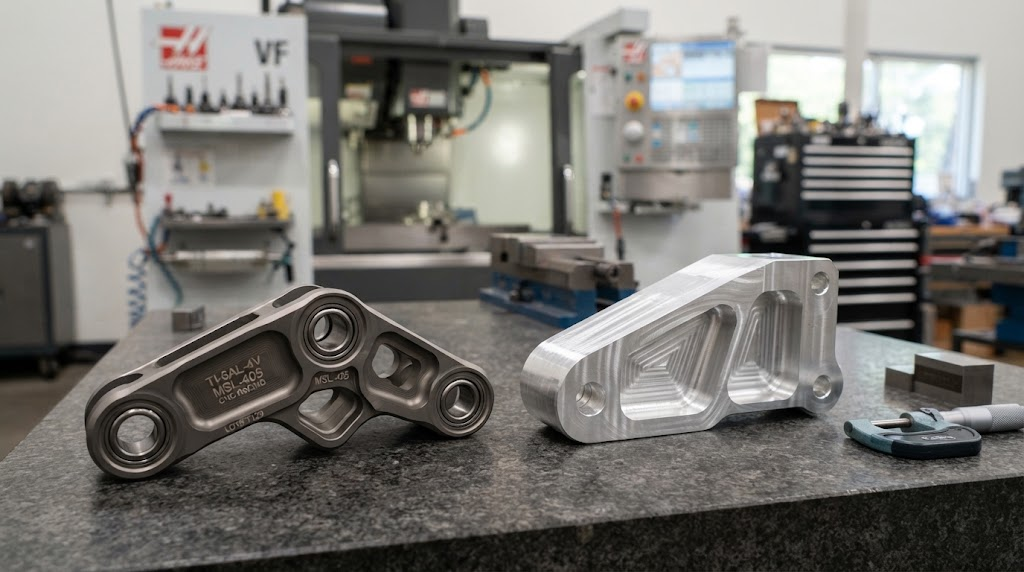
Empirical CNC Benchmarks: In China Titanium Factory production trials milling 1.5 mm joint slots for surgical forceps, standard TiAlN-coated micro-carbide tools machining ASTM F560 Tantalum experienced micro-chipping within 8 minutes at $V_c = 35\text{ m/min}$. In contrast, machining Precision CNC Titanium Machined Medical Parts in Grade 5 ELI sustained cutting speeds of $V_c = 75–90\text{ m/min}$ with tool lives exceeding 90 minutes per cutter edge.
Finished surgical instruments must meet an arithmetic mean surface roughness of $R_a \le 0.2\ \mu\text{m}$ to inhibit bacterial adherence and bio-burden accumulation. Titanium components achieve this via standardized chemical electropolishing and nitric/citric acid passivation under ASTM F86.
Laser marking for Unique Device Identification (UDI) compliance, required by FDA Class I/II medical device regulations, produces high-contrast, corrosion-resistant dark oxide markings on titanium without damaging the base metal matrix.
To assist OEM engineering teams in selecting optimal materials for custom surgical instrument designs, China Titanium Factory applies the 5-step Bio-Instrument Selection Protocol (BISP):
Kinematic Load & Spring Indexing: Evaluate dynamic mechanical stress. Components requiring elastic spring-back (such as forceps jaws or micro-scissors) default to ASTM F136 Grade 5 ELI titanium.
Ergonomic Mass Profiling: Calculate the cumulative mass of the tool assembly. If the tool volume exceeds 5 cm³ and is handheld for >15 continuous minutes, heavy refractory metals like tantalum are ruled out.
Imaging Artifact Assessment: Determine if the instrument operates under continuous intraoperative X-ray or MRI guidance. Titanium is specified for minimal scatter; tantalum is selected exclusively for millimeter-scale radiopaque tip inserts.
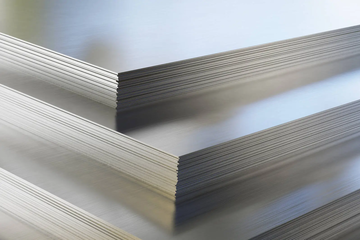
Blank Pre-Forming & Near-Net Strategy: Select either cold-drawn precision rod or Custom Medical Titanium Forgings and Blanks to optimize grain flow, reduce raw stock removal, and accelerate machining cycles.
Regulatory & Traceability Validation: Match every material lot to mill certification standards (ISO 13485, ASTM F136, ASTM F67, DFARS compliant) with complete ultrasonic testing (UT) and chemical ingot melt traceability.
Material costs and manufacturing throughput define OEM production viability. High-purity medical-grade tantalum raw bar stock sells at 8 to 15 times the price per kilogram of certified medical Grade 5 ELI titanium bar stock.
| Cost Driver / Metric | ASTM F136 Ti-6Al-4V ELI | ASTM F560 Medical Tantalum |
|---|---|---|
| Relative Raw Material Cost Factor | 1.0x (Baseline Reference) | 8.0x – 15.0x per kg |
| Density Multiplier on Part Mass | 1.0x (4.43 g/cm³) | 3.76x (Requires 3.76x weight per volume) |
| Machining Cycle Time Multiplier | 1.0x | 2.4x – 3.2x longer cycle times |
| Cutting Tool Consumption Rate | Low to Moderate (Predictable wear) | Extreme (Galling, rapid insert chipping) |
| Total OEM Component Cost Index | Baseline ($) | 6.5x – 12.0x Higher ($$$$) |
Because tantalum's density requires roughly 3.76 times more raw material mass per volume than titanium, combined with high raw material pricing and increased CNC cycle times, tantalum is cost-prohibitive for entire surgical instrument assemblies.
To contextualize titanium and tantalum within the broader surgical tooling landscape, engineers must compare them against conventional medical alloys: 316L stainless steel (ASTM F138), 17-4 PH martensitic stainless steel, and cast/wrought Cobalt-Chromium-Molybdenum alloys (ASTM F75 / ASTM F1537).
| Material Classification | Strength-to-Weight | Autoclave Corrosion | Spring Flexibility | Machinability Index | Primary Instrument Roles |
|---|---|---|---|---|---|
| Ti-6Al-4V ELI (Grade 5) | Exceptional | Immune to pitting | Superior | Moderate (Well-defined) | Micro-scissors, forceps, retractor blades, spinal distractors |
| Pure Tantalum (R05200) | Poor (Very heavy) | Immune to attack | Poor (Ductile yield) | Extremely Difficult | Radiopaque tip inserts, vascular clip tips |
| 316L Stainless Steel | Moderate | Susceptible to chlorides | Moderate | High | General scalpels, basic speculums, standard clamps |
| 17-4 PH Stainless | High | Moderate (Stress cracks) | High (Rigid) | Moderate | Rongeurs, bone cutters, heavy-duty needle holders |
| Cobalt-Chromium (CoCr) | Moderate | High | Low (Brittle) | Difficult (Abrasive) | High-wear bone drills, orthopedic trial heads |
China Titanium Factory supplies medical device OEMs, precision machine shops, and contract manufacturers with fully certified medical-grade titanium stock. Our quality management systems operate in strict compliance with ISO 13485 and AS9100D medical manufacturing standards.
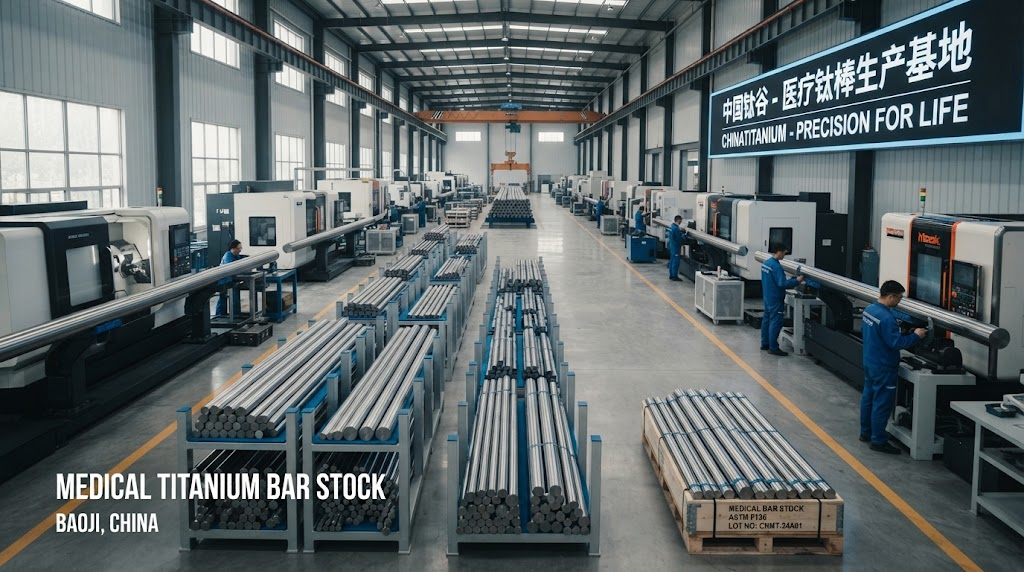
Our specialized medical stock inventory and engineering capabilities include:
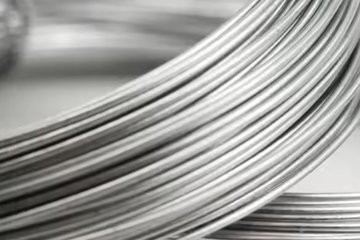
Certified ASTM F136 Ti-6Al-4V ELI & ASTM F67 CP-Ti: Diameter ranging from 1.5 mm micro-wire to 120 mm forging bar, with complete ultrasonic inspection (AMS 2631 Class A1) and mill test certificates (MTCs).
Precision Centerless Grinding: Tight diameter tolerances down to h6/h7 and surface finishes up to $R_a < 0.4\ \mu\text{m}$, optimized for direct feeding into high-speed Swiss-style CNC lathes.
Custom Medical Forgings: Near-net-shape drop forgings for scissor handles, forcep arms, and orthopedic retractor frames to minimize scrap rates and shorten machining cycles.
Integrated CNC Machining Services: 5-axis micro-milling, precision wire EDM, passivation, and cleanroom packaging support.
Grade 5 titanium is over 73% lighter than tantalum, reducing surgeon hand fatigue during lengthy procedures. It also offers a higher flexural yield strength (860+ MPa vs. 180–240 MPa), providing the spring-back required for precision forceps tips without permanent bending.
Yes. Tantalum forms a chemically stable tantalum pentoxide (Ta₂O₅) passive surface film that resists repeated steam autoclaving, enzymatic detergents, and chemical sterilants. However, titanium’s TiO₂ passive film provides the same level of chemical protection at a fraction of the weight and cost.
Tantalum is dense and radiopaque, which creates severe visual artifacts and shadows under fluoroscopy and X-ray imaging. Titanium is partially radiolucent and non-ferromagnetic, allowing clear visualization of operative sites and adjacent implants without imaging obstruction or MRI interference.
Tantalum is soft, ductile, and prone to galling, quickly adhering to cutting tool surfaces and causing built-up edges (BUE) and rapid carbide chipping. Titanium, while work-hardening, exhibits predictable chip shear mechanics and supports higher surface cutting speeds when run with proper high-pressure coolant.



Contact Us
Room 21003, 10th Floor, Unit 2, Building 1, Xianning International Plaza, No.29 Xianning West Road, Beilin District, Xi'an City
Copyright © Xi'an Shiguang Jingyan Technology Co., Ltd. All Rights Reserved.