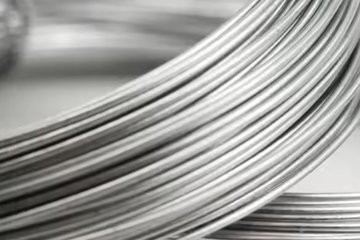
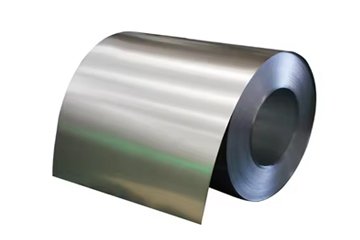
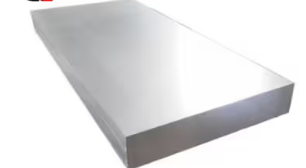
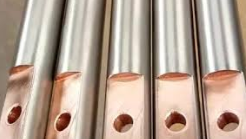
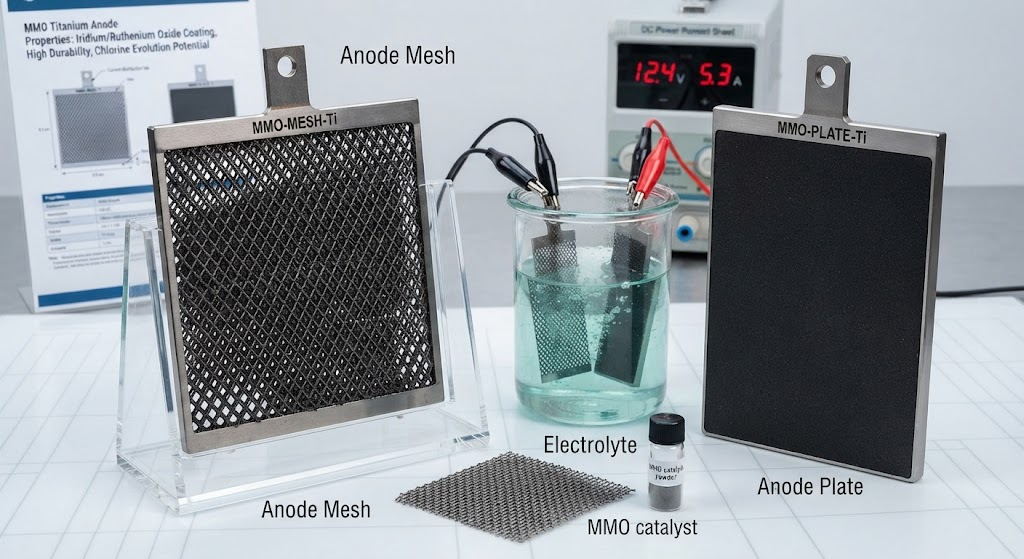
Dimensionally Stable Anodes (DSA) utilizing Mixed Metal Oxide (MMO) electrocatalytic coatings on commercial pure titanium substrates deliver the highest energy efficiency and chemical stability for industrial effluent remediation. Modern electrochemical advanced oxidation processes (EAOPs), electrocoagulation, and electro-chlorination demand robust catalytic substrates that resist extreme polarization, acidic pH swings, and high current densities.
China Titanium Factory manufactures high-integrity titanium anodes tailored to severe industrial operating envelopes. By combining precision metallurgy, controlled thermal decomposition, and nanoscale oxide formulation, our electrodes achieve high Chemical Oxygen Demand (COD) removal rates, low cell voltages, and extended operational lifecycles across diverse industrial sectors.
Electrochemical wastewater treatment relies on two primary anodic reaction mechanisms: the Chlorine Evolution Reaction (CER) and the Oxygen Evolution Reaction (OER). Selecting an improper catalytic oxide layer leads to rapid anode passivation, micro-cracking, and premature dissolution of noble metal catalysts.
To establish a predictable operational benchmark, our engineering team utilizes the 4-Dimensional Anode Selection Index (CTF-ASI). This framework evaluates electrocatalytic overpotential, substrate interfacial adhesion, nanocrystalline grain microstructure, and dynamic current efficiency to specify the exact catalyst composition.
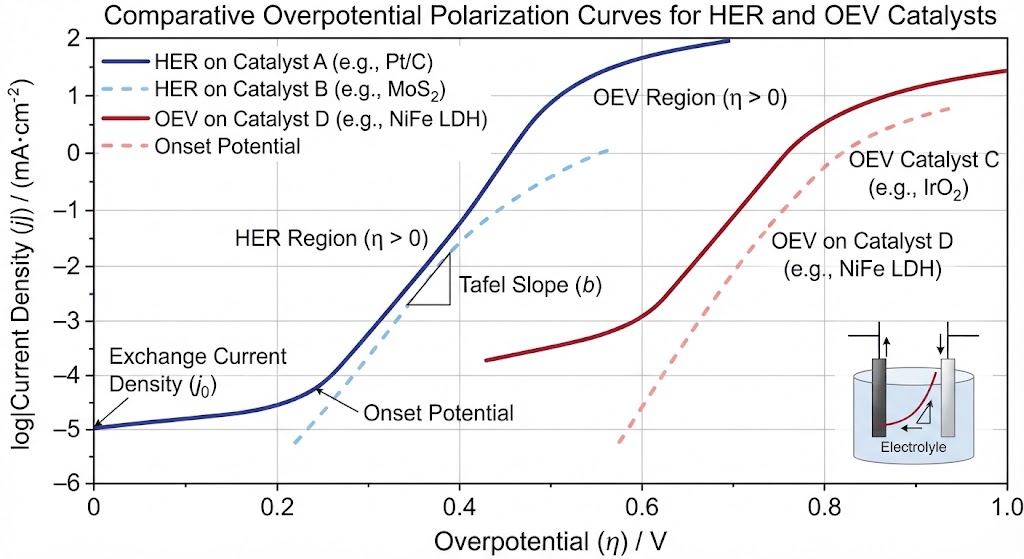
| Coating Formulation | Dominant Reaction | Overpotential (V vs. SHE) | Target Wastewater Stream | Current Density Limit |
|---|---|---|---|---|
| RuO2-IrO2-TiO2 | Chlorine Evolution (CER) | Low (1.13 V - 1.18 V) | High-chloride effluents, brine, textile dye baths | ≤ 1,500 A/m2 |
| IrO2-Ta2O5 | Oxygen Evolution (OER) | Medium (1.45 V - 1.60 V) | Acidic, low-chloride, sulfate-dominant, electroplating rinse | ≤ 3,000 A/m2 |
| Ti/SnO2-Sb2O3 / PbO2 | Direct Hydroxyl Radical (•OH) | High (1.80 V - 2.00 V) | Refractory organics, pharmaceutical, pesticide residues | ≤ 2,000 A/m2 |
| Platinum (Pt) Clad/Plated | Mixed CER/OER | Medium (1.50 V - 1.65 V) | Fluoride-containing baths, electro-dialysis reversal | ≤ 5,000 A/m2 |
When the electrolyte contains Cl- > 1,500 mg/L, Ru-Ir mixed metal oxide promotes indirect oxidation through generation of active chlorine (HClO/ClO-). In acidic, low-chloride media (SO42- > 10,000 mg/L, pH < 3), Ir-Ta formulations inhibit rapid titanium matrix oxidation by generating a stable, passivating protective valve metal oxide lattice.
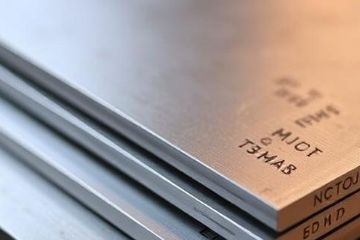
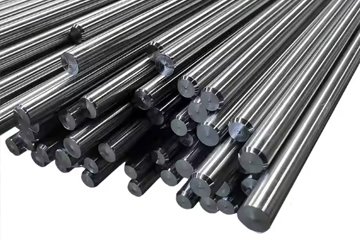
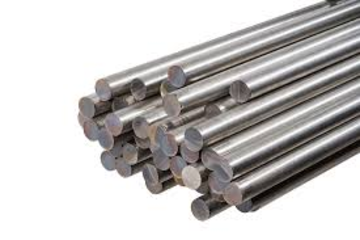
The structural backbone of high-performance Dimensionally Stable Anodes requires 100% virgin Grade 1 and Grade 2 commercial pure titanium conforming to ASTM B265 specifications. High interstitial purity ensures minimal electrical resistance and prevents internal hydride embrittlement under continuous anodic current.
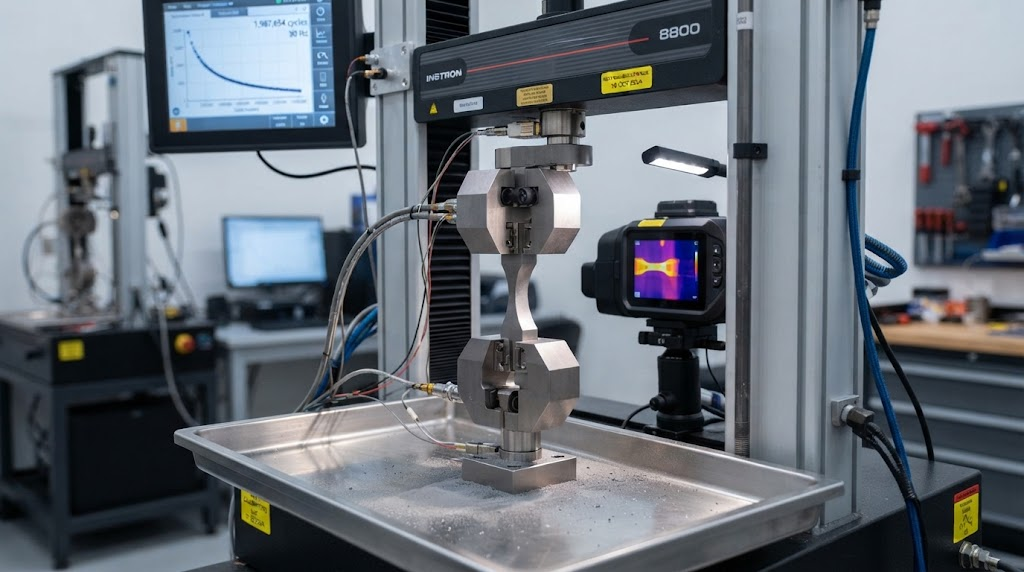
Electrochemical Adhesion Benchmark: Thermal oxidation coating layers must maintain mechanical adhesion exceeding 20 MPa. China Titanium Factory verifies adhesion via cross-hatch tape testing per ASTM D3359 and high-frequency ultrasonic fatigue immersion.
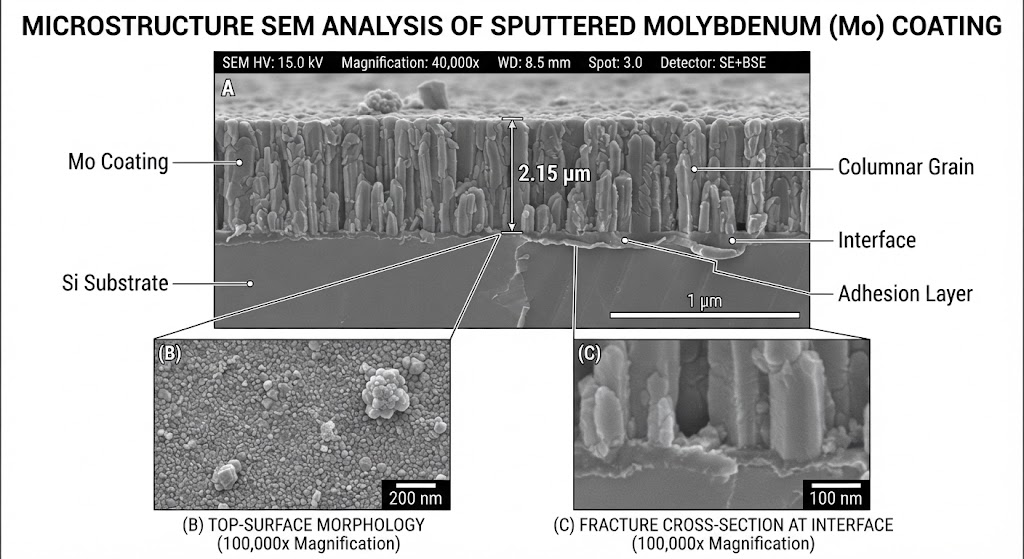
Substrate preparation includes controlled blasting with high-purity corundum (Al2O3) to achieve a surface roughness (Ra) of 3.5 μm to 5.0 μm, followed by chemical etching in boiling 10% oxalic acid (H2C2O4) at 95°C to 100°C for 2 hours. This process dissolves the passivated TiO2 film, creating a microporous, etched titanium hydride (TiHx) layer that anchors subsequent precursor layers.
Noble metal precursors are applied through a multi-pass thermal decomposition cycle. Each coat undergoes low-temperature drying at 120°C, followed by oxidation pyrolysis in an oxygen-rich atmosphere at 450°C to 520°C, repeated 18 to 26 times to achieve the target loading (≥ 12 g/m2 noble metal).
Conventional MMO coatings fail rapidly under extreme operating conditions such as polarity reversal, aggressive fluoride ion contamination, or complex organic fouling. China Titanium Factory engineers application-specific electrode modifications designed for these harsh chemical environments.
Electrochemical hardness mitigation and electro-flotation cells suffer from severe cathode scaling (CaCO3, Mg(OH)2). Periodic polarity reversal clears deposits but subjects conventional anodes to severe cathodic hydrogen absorption, destroying the oxide bond.
Interlayer Technology: Dual-direction Ru-Ir-Pt matrix with a conductive tantalum intermediate buffer layer.
Operating Tolerance: Reversal intervals from 15 to 120 minutes without delamination.
Cycle Life: Verified for over 50,000 polarity reversal cycles under industrial operational loads.
Trace fluorides attack the titanium base through the micro-pores of catalytic coatings, forming soluble titanium fluoride complexes (TiF62-) that strip the catalytic layer. For Zero Liquid Discharge (ZLD) crystallizer effluents containing trace fluorides, we apply a high-density, nano-amorphous Platinum-Iridium-Tantalum barrier that seals base metal grain boundaries.
Landfill leachate presents high chemical oxygen demand (COD > 15,000 mg/L) and high ammonia nitrogen (NH3-N > 2,500 mg/L). We utilize a quaternary doped Ti/IrO2-Ta2O5-SnO2-Sb2O3 formulation that provides elevated oxygen overpotential (1.75 V) alongside active chlorine production, enabling simultaneous organic mineralization and ammonia breakpoint chlorination.
Electrochemical cells must balance fluid dynamics, inter-electrode spacing, and mass transfer rates depending on target pollutants.
Textile Dye Wastewater Decolorization: Uses expanded RuO2-IrO2 mesh anodes paired with stainless steel or titanium cathodes. Operating at current densities of 400 A/m2 to 600 A/m2, reactive azo dyes achieve 98% chromacity reduction within 25 minutes via active chlorine shearing.
Electroplating Heavy Metal Recovery (Cu2+, Ni2+, Zn2+): Utilizes slotted custom titanium plate manufacturing coated with IrO2-Ta2O5. Operates in sulfate baths (pH 1.5 - 2.5) to recover pure metallic copper cathodes while the anode drives oxygen evolution without sludge generation.
Hospital Sewage & Pathogen Disinfection: Employs on-site electro-chlorination utilizing tubular Grade 1 anodes. Generates 8,000 mg/L active sodium hypochlorite (NaOCl) from 3% NaCl brine, eliminating dangerous bulk chemical storage.
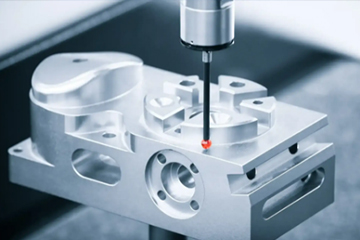
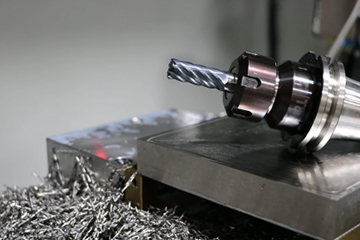
Electrode geometry directly affects gas-bubble release velocity, electrolyte turbulence, and cell voltage drops. Our in-house engineering and precision CNC titanium machining services deliver tight mechanical tolerances for every industrial reactor configuration.
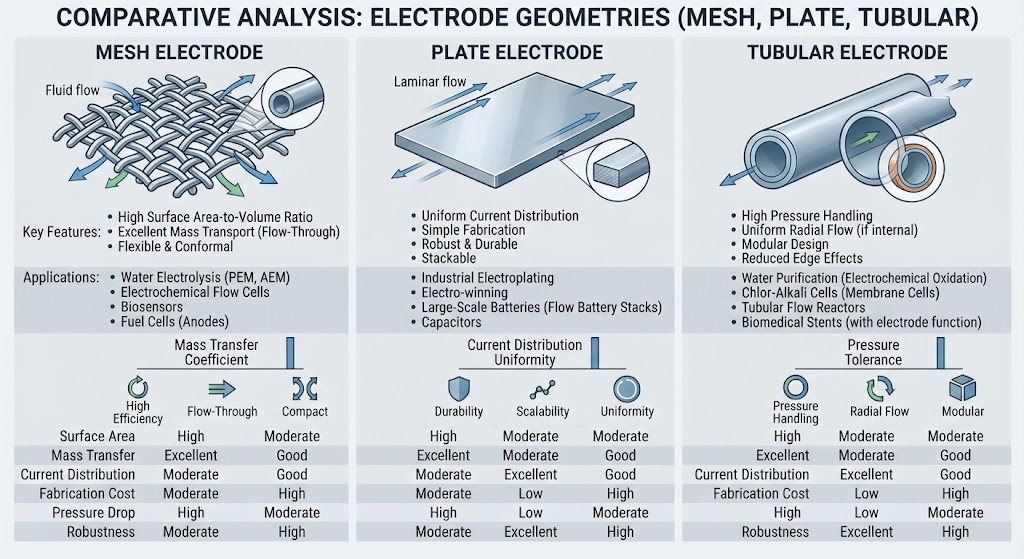
| Electrode Geometry | Standard Dimensions | Active Area Multiplier | Primary Application | Tolerance |
|---|---|---|---|---|
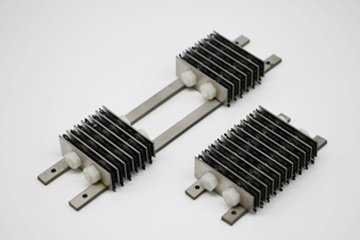
| Expanded Mesh (Diamond) | LWD: 6 - 12 mm SWD: 3 - 6 mm | 1.8× to 2.4× planar area | High-rate electro-oxidation, electrocoagulation cells | ± 0.2 mm |
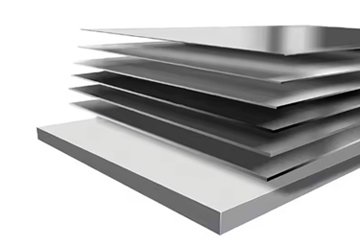
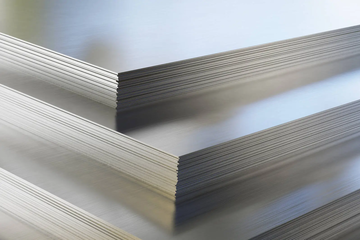
| Solid / Slotted Plates | Thickness: 1.0 - 6.0 mm Length: Up to 2,500 mm | 1.0× (Single / Double side) | Filter-press electro-reactors, electro-winning | ± 0.1 mm |
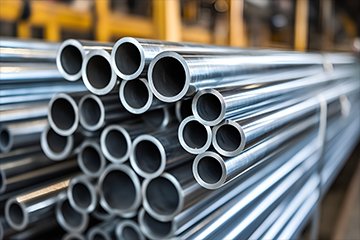
| Seamless Tubular | OD: 19 - 76 mm Wall: 1.0 - 2.5 mm | 3.14× nominal circumference | Concentric electro-chlorinators, tubular flow cells | ± 0.15 mm |
| Continuous Ribbon | Width: 6.35 - 25.4 mm Thickness: 0.6 - 1.2 mm | 2.0× strip footprint | Cathodic protection (ICCP) for clarifier tanks | ± 0.05 mm |
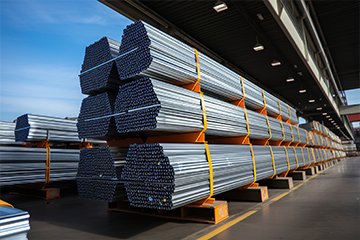
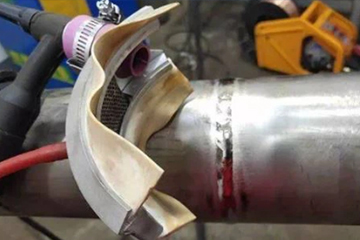
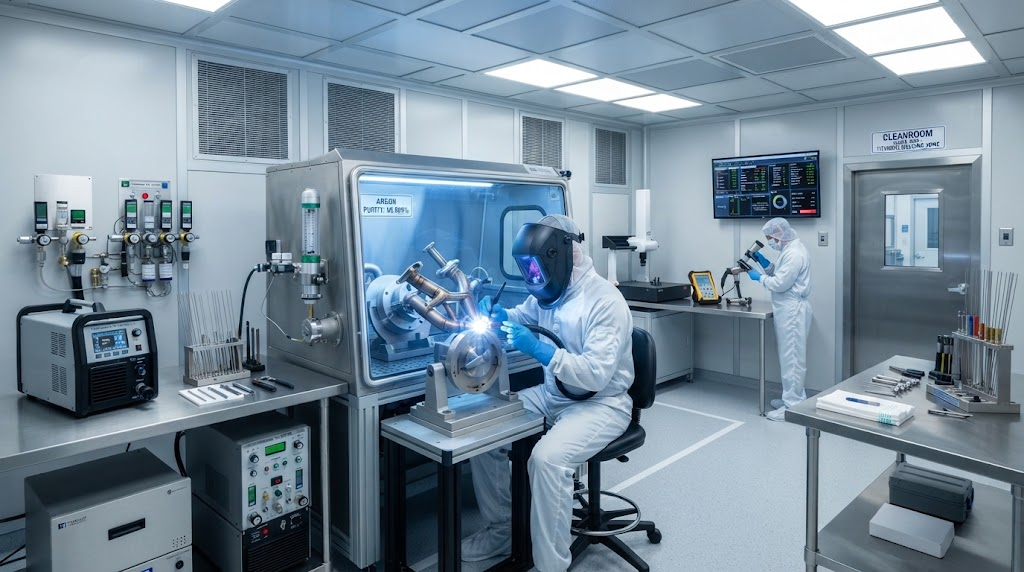
For high-capacity modular systems, we source ASTM B338 corrosion resistant titanium seamless tubes to fabricate tubular anodes. Current distributor busbars (pure Grade 1 Ti or Ti-clad Copper) undergo precision pulsed TIG or fiber laser welding to limit heat-affected zone (HAZ) oxidation and maintain connection resistance under 100 μΩ.
To ensure high operational reliability, China Titanium Factory executes a four-stage quality assurance protocol on every production batch.
Raw Material Spectroscopy: Substrates are verified against ASTM B265 Grade 1 chemical composition limits (Fe ≤ 0.20%, O ≤ 0.18%, C ≤ 0.08%, N ≤ 0.03%, H ≤ 0.015%) accompanied by EN 10204 3.1 Mill Test Certification.
Automated Thermal Synthesis: Clean-room robotic dip and spray coating eliminates human handling errors, maintaining consistent coating wetness across full production batches.
XRF Noble Metal Assay: Non-destructive X-ray fluorescence mapping verifies noble metal loadings across the active surface area (minimum loading: 10 g/m2 to 35 g/m2 depending on design life).
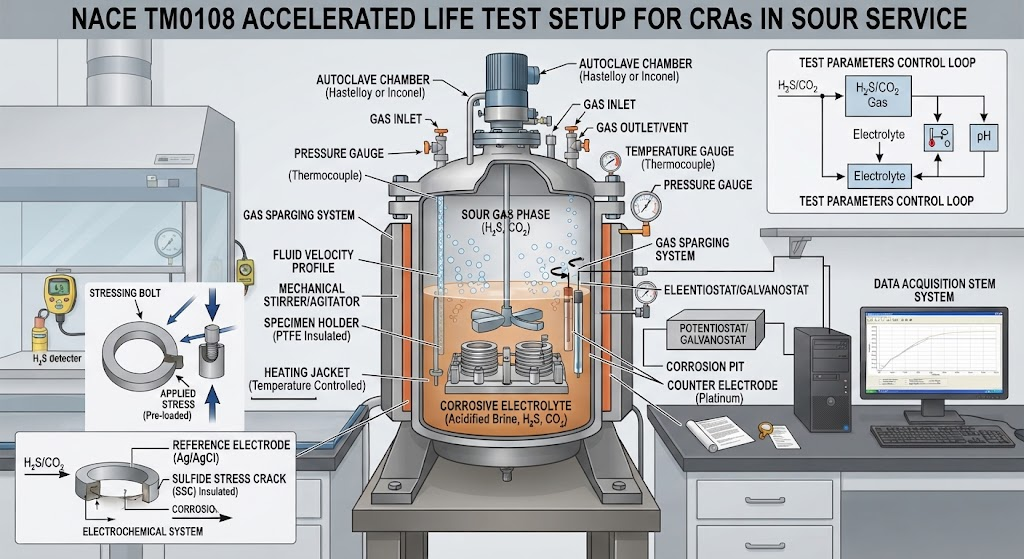
Accelerated Life Testing (ALT): Batch coupons undergo destructive testing according to NACE TM0108 and NACE TM0294 standards under extreme electrical stress.
ALT Testing Benchmark (NACE TM0108 Standard):
Electrolyte: 1.0 mol/L H2SO4 | Current Density: 20,000 A/m2 | Temperature: 40°C ± 2°C.
Failure Criterion: Cell voltage rise of > 5.0 V above initial steady-state level.
China Titanium Factory Ir-Ta standard anodes achieve ALT runtimes exceeding 200 to 350 continuous hours, correlating to over 5 to 8 years of field performance at typical industrial current densities (800 - 1,200 A/m2).
The primary titanium substrate represents 50% to 65% of the total raw material capital cost in a large industrial electrode pack. Because the commercial pure titanium core remains mechanically intact when operated within design current densities, purchasing new assemblies for every replacement cycle causes unnecessary capital expenditure.
China Titanium Factory operates a professional chemical stripping and recoating service that allows operators to reuse existing titanium frameworks up to 3 to 5 times.
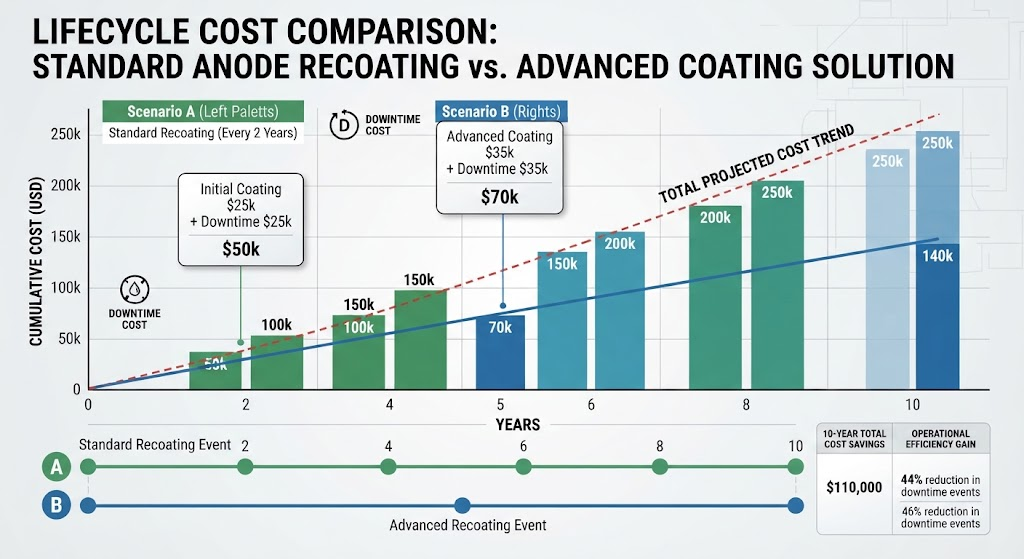
| Cost Driver | New Replacement Cycle | Factory Recoating Cycle | Cost Savings (%) |
|---|---|---|---|
| Base Titanium Substrate (ASTM B265) | 100% (New procurement) | 0% (Preserved existing base) | 100% Saved |
| CNC Machining & Busbar TIG Welding | 100% (Fabrication required) | 0% (Maintained structure) | 100% Saved |
| Chemical Stripping & Re-activation | 0% (Not applicable) | 8% - 12% of new cost | Operating process |
| Noble Metal Coating (Ru/Ir/Ta/Pt) | 100% | 100% | Parity |
| Net Operational CapEx per Cycle | 100% Basis | 38% - 45% Basis | 55% - 62% Total Savings |
Spent anodes are stripped using non-destructive, molten salt or specialized acid baths that remove residual catalyst without reducing substrate wall thickness. After etching and surface re-profiling, a fresh MMO coating layer is applied, restoring full electrochemical activity matching original factory specifications.
Selection depends directly on the active halide concentration in your stream. Choose Ruthenium-Iridium (RuO2-IrO2) if chloride content exceeds 1,500 mg/L; this coating minimizes cell voltage during the Chlorine Evolution Reaction (CER) to generate active chlorine for organic degradation. Choose Iridium-Tantalum (IrO2-Ta2O5) if your wastewater is sulfate-dominant, low-chloride (< 500 mg/L), or highly acidic (pH < 4), as Ir-Ta resists passivating oxygen evolution stress.
China Titanium Factory recommends a three-point verification methodology: first, evaluate the supplier's EN 10204 3.1 Mill Test Certificate indicating verified chemical loadings; second, perform non-destructive multi-point handheld or benchtop X-ray Fluorescence (XRF) spectrometry across the surface plane; and third, perform gravimetric delta analysis before and after thermal precursor decomposition.
Premature anode passivation occurs when the substrate develops an insulating TiO2 dielectric layer beneath the catalyst. Primary root causes include: excessive current density beyond design limits, operating in fluoride-contaminated streams without a barrier layer, electrolyte starvation causing localized over-polarization, and unmanaged polarity reversals on non-bipolar rated coatings.
Standard pilot samples and customized sheet/mesh geometries require 3 to 5 business days for precision CNC fabrication and multi-pass coating. Full industrial production runs and stripping/recoating cycles typically dispatch within 10 to 14 business days, complete with full XRF and ALT quality documentation.
China Titanium Factory operates a streamlined production protocol to accelerate procurement cycles for plant operators, EPC contractors, and electrochemical system OEMs.
Send your 2D/3D CAD drawings (.DWG, .DXF, .STEP) or provide your process parameters: effluent composition, Cl-/SO42- concentration, operating pH, target current density (A/m2), and design service life.
Our Senior Electrochemical Engineers generate a comprehensive DFM assessment within 12 hours, specifying optimal titanium geometry, precious metal catalyst loading (g/m2), operating cell voltage curves, and cost projections.
Pilot samples or full production batches are fabricated under ISO 9001 quality systems and dispatched directly with EN 10204 3.1 material certificates and complete XRF coating thickness verification.



Contact Us
Room 21003, 10th Floor, Unit 2, Building 1, Xianning International Plaza, No.29 Xianning West Road, Beilin District, Xi'an City
Copyright © Xi'an Shiguang Jingyan Technology Co., Ltd. All Rights Reserved.