



















Fundamentals of Titanium Anodizing in Medical Device Manufacturing
Titanium anodizing for medical implants is an electrolytic passivation process that deliberately thickens the naturally occurring amorphous titanium dioxide (TiO2) surface film into a controlled, highly stable barrier layer. By serving as the anode in an engineered electrolyte bath under exact current and voltage parameters, the substrate metal undergoes controlled oxidation, yielding precise oxide thicknesses ranging from 10 nanometers to over 5 microns. This electrochemical modification enhances wear resistance, prevents galvanic corrosion, accelerates bone osseointegration, and enables permanent color coding without introducing toxic dyes or foreign chemistries.
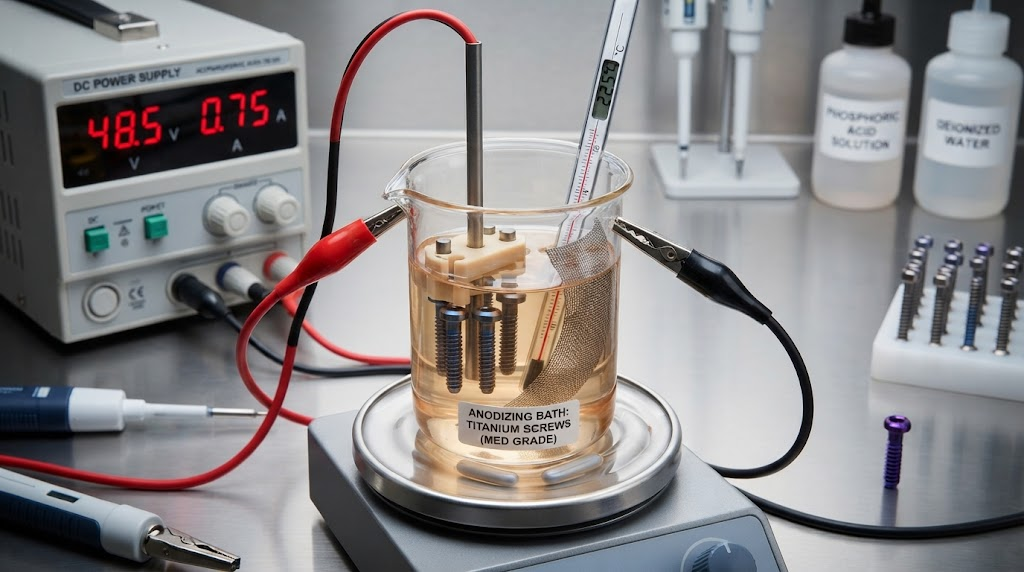
In medical implant manufacturing, surface integrity directly governs clinical outcomes. When raw titanium is exposed to atmospheric oxygen, it spontaneously develops an uncontrolled native oxide layer measuring only 1.5 to 5 nanometers (15 to 50 Ångströms). While this passive film provides basic corrosion resistance, it is mechanically fragile, chemically heterogeneous, and inadequate for dynamic physiological loads.
Through controlled electrochemical oxidation governed by ASTM F86 protocols, medical device engineers can deliberately manipulate both the thickness and the crystalline phase morphology of the oxide. The anodic reaction proceeds according to the primary oxidation mechanism:
Anodic Oxidation Reaction:
Ti + 2H2O → TiO2 + 4H+ + 4e−
Depending on bath potential and temperature, this conversion generates varying ratios of amorphous titanium dioxide, anatase, and rutile crystal structures. For orthopedics and dental osteosyntheses, tailoring this oxide boundary is necessary to eliminate ion release (such as aluminum and vanadium leaching), reduce friction coefficients during surgical seating, and ensure absolute biocompatibility under dynamic physiological conditions.
Electrochemical Classifications: Type I, Type II, and Type III Anodizing
Surface finishing standards establish three distinct classifications for titanium anodizing. Understanding the mechanical and chemical differences between these types is essential for proper component specification.
| Specification | Electrolyte Chemistry | Oxide Thickness | Primary Clinical Purpose | Standard Specification |
|---|---|---|---|---|
| Type I | Chromic / High-temp acid | > 2.5 µm | High-temperature aerospace masking (Rarely medical) | AMS 2487 |
| Type II | Saturated Alkaline Bath | 1.0 – 5.0 µm | Anti-galling, wear resistance, fretting fatigue reduction | AMS 2488 / ISO 16438 |
| Type III | Dilute Acid / Neutral Salts | 15 – 300 nm | Color coding, sizing identification, passive barrier | ASTM F86 / ISO 13485 |
Type II Anodizing (AMS 2488) for Anti-Galling and Load-Bearing Implants
Type II anodization, governed strictly by AMS 2488, is a heavy-duty alkaline electro-conversion process designed to mitigate titanium's inherent susceptibility to galling and fretting wear. When two unlubricated titanium components articulate under load, adhesive micro-welding occurs, rapidly destroying thread integrity or joint mating surfaces.
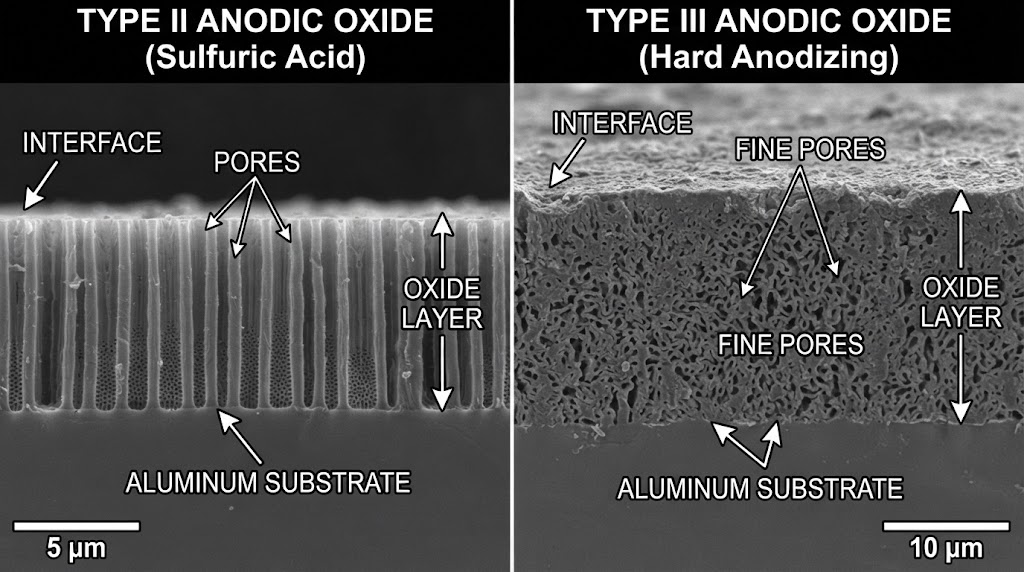
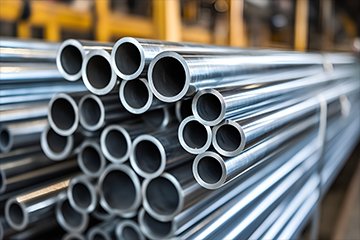
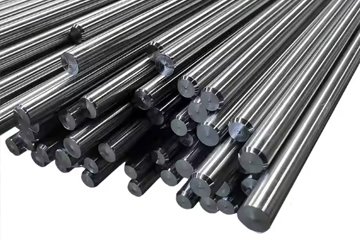
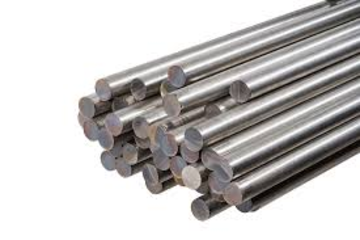
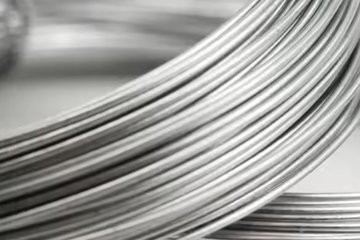
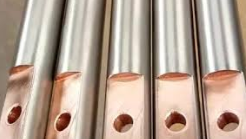
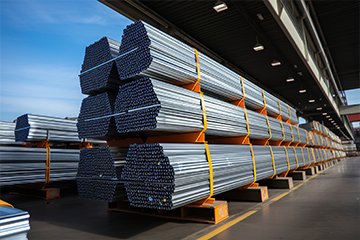
In our CNC production data, treating Medical Grade Titanium Bars & Rods with a Type II conversion creates a 1 to 5 μm thick, micro-porous grey conversion matrix. This crystalline layer reduces the dry sliding coefficient of friction from approximately 0.65 down to 0.15–0.22.
Orthopedic assemblies rely on this mechanism for critical contact zones:
Intramedullary Nails & Cross-Locking Screws: Prevents cold-welding during intraoperative insertion and extraction.
Spinal Rod & Polyaxial Pedicle Screw Clamps: Eliminates fretting debris release within dynamic vertebral segments.
Trauma Bone Plates: Prevents screw head jamming into plate holes during high-torque tightening.
Type III Color Anodizing: Structural Light Interference Without Dyes
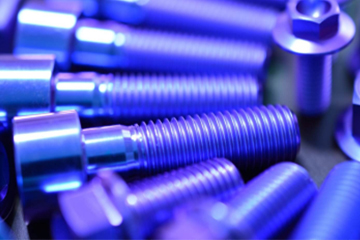
Type III color anodizing does not use dyes, pigments, or organic coatings. The observed colors are entirely structural, resulting from thin-film optical interference identical to the light dispersion seen on soap bubbles.
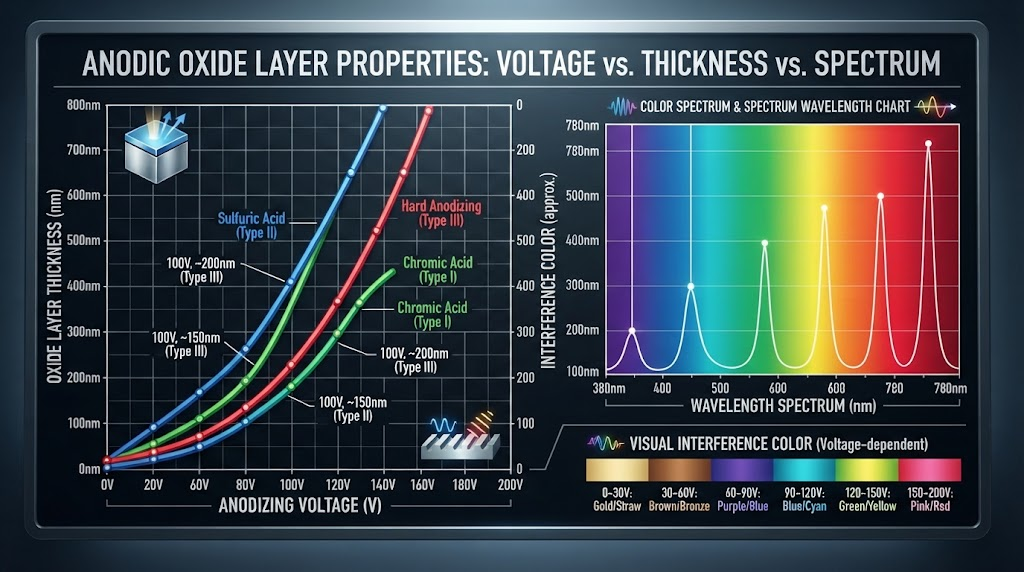
When incident light strikes an anodized titanium surface, a portion of the light reflects off the exterior surface of the TiO2 film, while the remainder penetrates the optically transparent dielectric layer and reflects off the base metal interface below. Depending on the exact nanometer thickness of the oxide, specific light wavelengths experience constructive interference while others undergo destructive cancellation.
| Terminal Voltage (V) | Target Oxide Thickness (nm) | Constructive Wavelength (λ) | Observed Interference Color |
|---|---|---|---|
| 12 – 15 V | 25 – 35 nm | 420 nm | Light Bronze / Gold |
| 25 – 30 V | 55 – 70 nm | 470 nm | Deep Purple / Violet |
| 45 – 50 V | 90 – 110 nm | 500 nm | Royal Blue / Sky Blue |
| 65 – 75 V | 140 – 165 nm | 580 nm | Bright Yellow / Gold |
| 85 – 95 V | 200 – 230 nm | 640 nm | Magenta / Rose Pink |
| 100 – 115 V | 250 – 280 nm | 530 nm | High-Order Emerald Green |
Because Type III colorization requires no organic colorants, it carries zero risk of pigment degradation, systemic toxicity, or tissue discoloration. This clean optical mechanism allows surgical teams to rapidly identify screw diameters, plate geometries, and drill guide dimensions in the operating room.
Substrate Grade Variations: CP-Ti vs. Ti-6Al-4V ELI (Grade 23) Response
The metallurgical microstructure of the titanium substrate heavily influences its electrochemical anodization kinetics. Medical implant manufacturing primarily utilizes Commercially Pure Titanium (Grades 1 through 4) or Alpha-Beta alloys, most notably Ti-6Al-4V ELI (Grade 23) Raw Materials matching ASTM F136 specifications.
Pure alpha-phase CP-Ti features a single-phase hexagonal close-packed (HCP) grain structure. It allows uniform, steady-state barrier film growth across the entire exposed surface area, yielding vibrant, highly saturated interference colors at standard bath voltages.
In contrast, Ti-6Al-4V ELI contains a dual-phase microstructure: an HCP alpha phase stabilized by aluminum and a Body-Centered Cubic (BCC) beta phase stabilized by vanadium:
Differential Growth Rates: The beta phase oxidizes faster and has higher electrical conductivity than the alpha phase, causing slight microstructural variations in film thickness.
Dielectric Breakdown Voltage: Grade 23 exhibits dielectric breakdown at lower applied potentials (~110V) compared to CP-Ti (~130V). Exceeding these limits leads to spark discharge, localized pit burning, and degraded surface finish.
Color Shift Adjustments: Generating identical color metrics (e.g., Royal Blue) on Ti-6Al-4V ELI typically requires 3V to 6V higher potential than CP Grade 2 to achieve the same optical target.
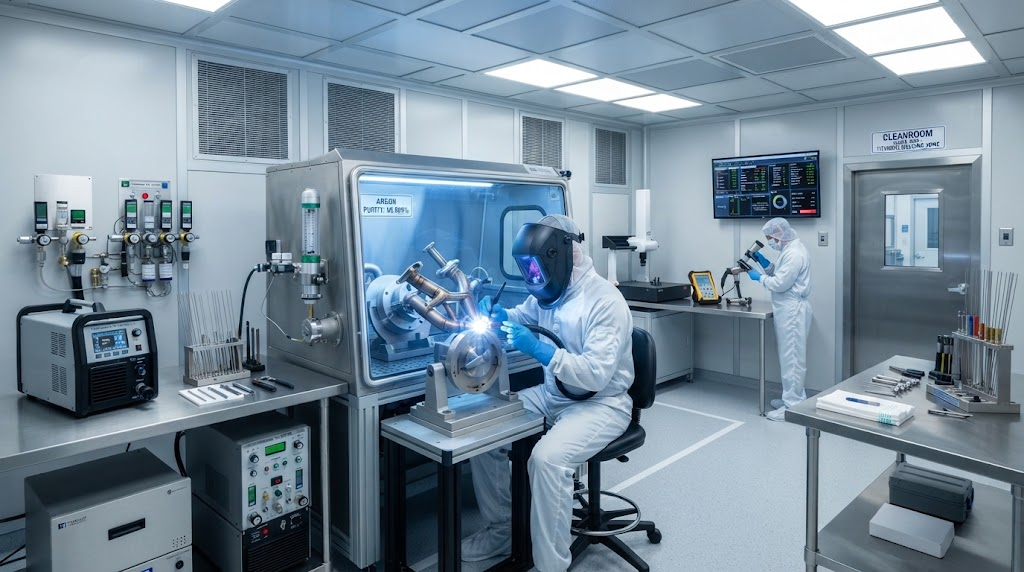
Our cleanroom anodizing lines use dedicated DC rectification profiles calibrated for specific alloy microstructures to ensure batch-to-batch color repeatability.
Dimensional Tolerances and Coating Build-Up on Precision Micro-Threads
A common engineering concern when anodizing high-precision medical components is dimensional change. Because anodization is a substrate-conversion reaction, part growth differs significantly from additive plating processes such as electroplating or physical vapor deposition (PVD).
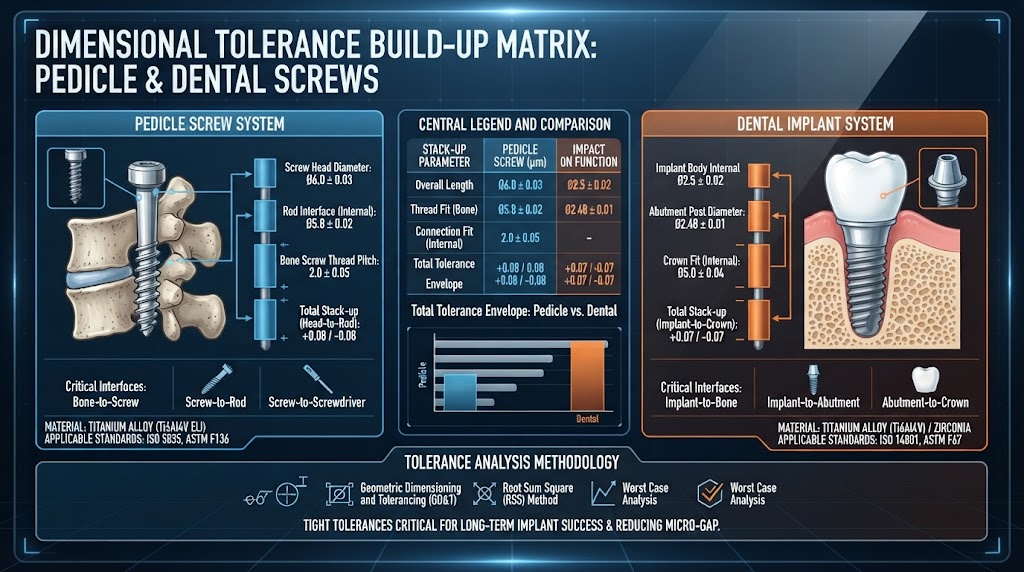
During the conversion reaction, approximately 50% of the total oxide layer thickness penetrates downward into the bulk substrate, while the remaining 50% expands outward past the original component boundary:
Dimensional Growth Formula:
ΔDimensional Growth per Surface = 0.50 × Total Oxide Thickness (Tox)
For Type III color anodizing, where the maximum oxide thickness rarely exceeds 300 nanometers (0.3 μm), the dimensional increase is less than 0.15 μm per face (<0.000006 inches). This negligible change allows Type III finishing on high-precision micro-threads, such as M1.5 to M3.0 craniomaxillofacial screws and dental abutments, without requiring pre-machining dimensional offsets.
For Type II AMS 2488 anodizing, the oxide layer reaches 1.0 to 5.0 μm, resulting in a per-side dimensional increase of 0.5 to 2.5 μm (0.00002 to 0.0001 inches). On external screw threads, this produces a pitch diameter build-up of up to 5.0 μm. Our Precision Medical CNC Machining Services explicitly incorporate these pre-anodize thread pitch compensation matrices during CNC programming to ensure finished components meet Class 3A thread tolerances.
Anodizing Additively Manufactured (3D-Printed) Titanium Implants
Selective Laser Melting (SLM) and Direct Metal Laser Sintering (DMLS) are widely used to manufacture complex, porous orthopedic cages and acetabular cups that promote osseointegration. Anodizing these additively manufactured porous matrices introduces unique process challenges that do not occur with solid machined forgings.
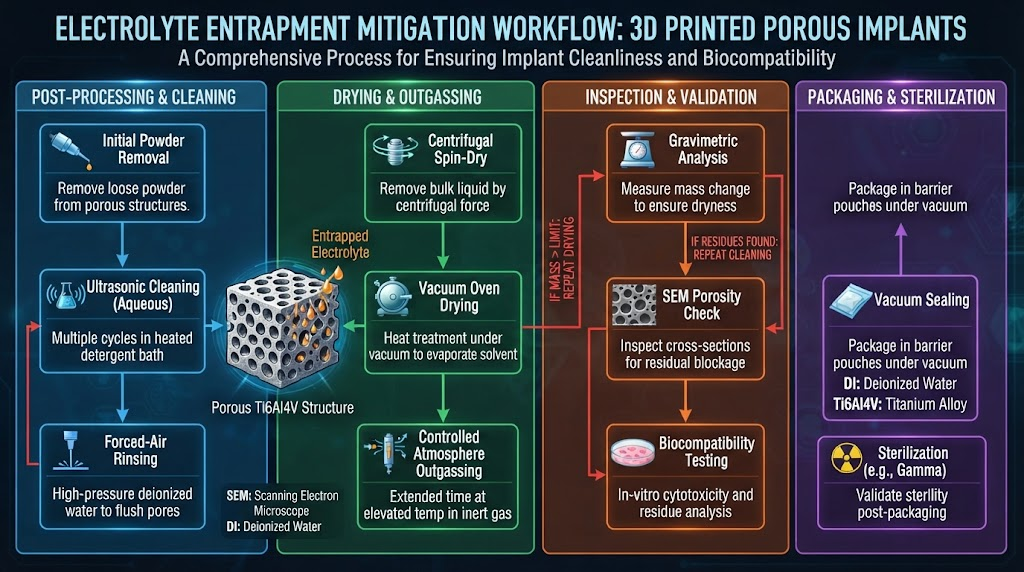
The primary manufacturing risk is capillary electrolyte entrapment. The open trabecular pores (typically 300 to 700 μm in diameter) trap chemical solutions from acid deoxidizing and alkaline anodizing baths. Standard submersion washing fails to overcome surface tension within these micro-channels, leading to post-processing chemical leaching, biological cytotoxicity, and surface spotting.
To address this risk, we utilize a multi-stage de-entrapment and vacuum neutralization protocol:
Ultrasonic Agitation Degreasing: High-frequency (40 kHz to 132 kHz) multi-transducer baths remove micro-sintered satellite particles and loose residual powder.
Current Density Compensation: The expanded real surface area of porous lattice structures requires higher total amperage to maintain the target current density (A/dm2) across the internal struts.
Pulsed-Vacuum Ultrasonic Cascade Rinsing: Components undergo cyclic vacuum reduction (down to 50 mbar) while submerged in heated, deionized water. This pulls trapped bath chemicals out of deep pores, guaranteeing residue-free lattice interiors.
Biocompatibility, Hemocompatibility, and Regulatory Standards
Every surface modification performed on an implantable medical device must meet international biocompatibility regulations. Medical titanium anodizing undergoes rigorous qualification testing under the ISO 10993 Biological Evaluation series.
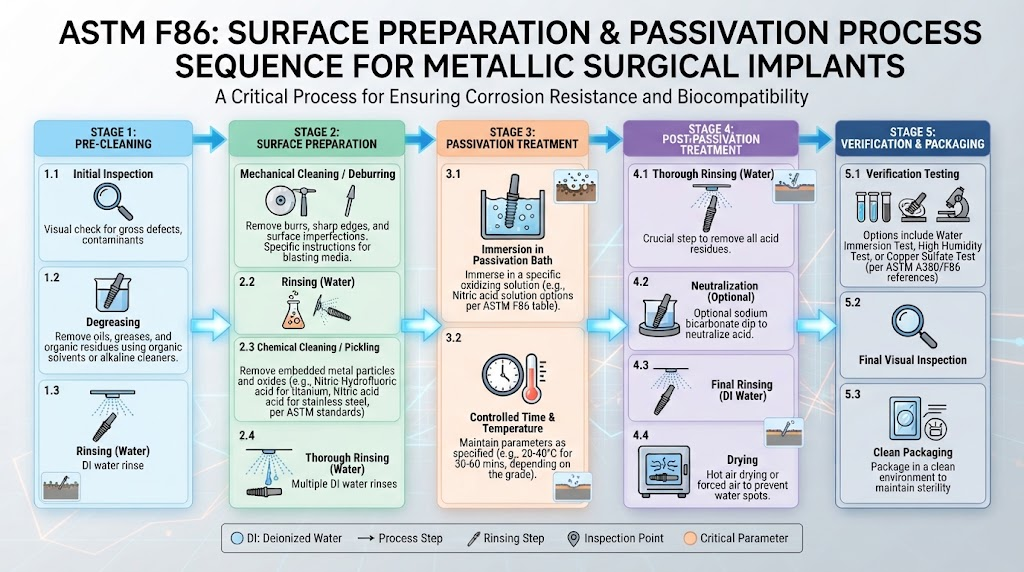
Adherence to Titanium Passivation & Surface Treatment Standards ensures the resulting oxide remains electrochemically stable when exposed to aggressive human bodily fluids:
Cytotoxicity (ISO 10993-5): MEM elution and MTT assay testing confirm zero cellular lysis or morphological disruption in murine L929 fibroblasts exposed to anodized extracts.
Systemic Toxicity & Pyrogenicity (ISO 10993-11): Ensures zero pyrogenic reactions or acute systemic responses from processing chemicals.
Hemocompatibility (ISO 10993-4): Evaluates blood-contacting safety, verifying low hemolysis indices (<2%) and minimal thrombogenicity for cardiovascular and orthopedic applications.
Corrosion Breakdown Potential: Potentiodynamic polarization tests in Simulated Body Fluid (Ringer's solution, pH 7.4 at 37°C) show pitting potentials exceeding +1.2V vs. SCE, confirming a stable passive boundary that prevents localized in-vivo corrosion.
The China Titanium Clean-Anodize Six-Stage Quality Protocol
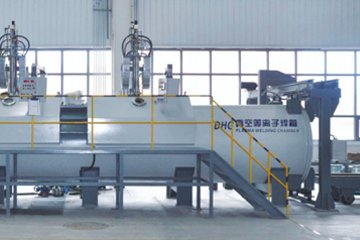
To eliminate cross-contamination and maintain tight color and thickness tolerances across production lots, China Titanium Factory uses a standardized six-stage process methodology:
The Clean-Anodize Six-Stage Process Architecture:
Precision Machining → Multi-Stage Degreasing → Acid Pickling → Closed-Loop Anodizing → Cascading DI Rinsing → Cleanroom Metrology & Packaging
Multi-Stage Ultrasonic Degreasing: Removes all residual machining fluids, hydrocarbon films, and particulate contamination using aqueous alkaline cleaners.
Controlled Chemical Acid Pickling (Deoxidizing): A brief, tightly monitored immersion in a nitric-hydrofluoric acid bath (HNO3/HF) removes native non-uniform oxides and activates the titanium substrate.
Automated Closed-Loop Anodizing: Components are transferred to an automated bath where high-precision DC power supplies apply custom current-ramp profiles with ±0.2V resolution.
Four-Stage Cascading Deionized Water Rinse: Continuous cascade immersion ensures conductivity measurements in the final rinse bath remain below 1.0 μS/cm, preventing surface residue formation.
ISO Class 7 / Class 10,000 Cleanroom Drying: Parts undergo HEPA-filtered hot-air convection drying to eliminate airborne particulate adhesion.
Microstructural and Spectrophotometric Metrology: Finished lots undergo optical spectrophotometry (CIE Lab* color space verification) and non-contact profilometry to confirm uniform surface roughness (Ra) targets.
End-to-End OEM Sourcing: Certified Mill Products to Finished Medical Components
Fragmented supply chains introduce production risks, compounding costs, and extending lead times. Sourcing raw titanium bar stock from one distributor, shipping parts to a contract CNC machine shop, and managing a separate outside anodizing vendor creates trace-log vulnerabilities and potential contamination risks.
China Titanium Factory eliminates these vulnerabilities through our vertically integrated manufacturing ecosystem:
Fully Traceable Raw Material: We melt, forge, and roll our own certified medical titanium stock, providing comprehensive Material Test Reports (MTR) meeting ASTM F136 and ASTM F67 specifications.
High-Precision Swiss CNC Machining: Multi-axis CNC machining, sliding-head turning, and 5-axis milling centers deliver precision implants with complex geometries and micro-machined features.
Validated Cleanroom Anodizing: In-house Type II and Type III anodizing lines operate under ISO 13485 quality systems, providing complete lot validation and regulatory compliance from raw sponge to finished, packaged components.
Frequently Asked Questions About Medical Titanium Anodizing
Does Type II or Type III anodizing degrade the fatigue strength of titanium implants?
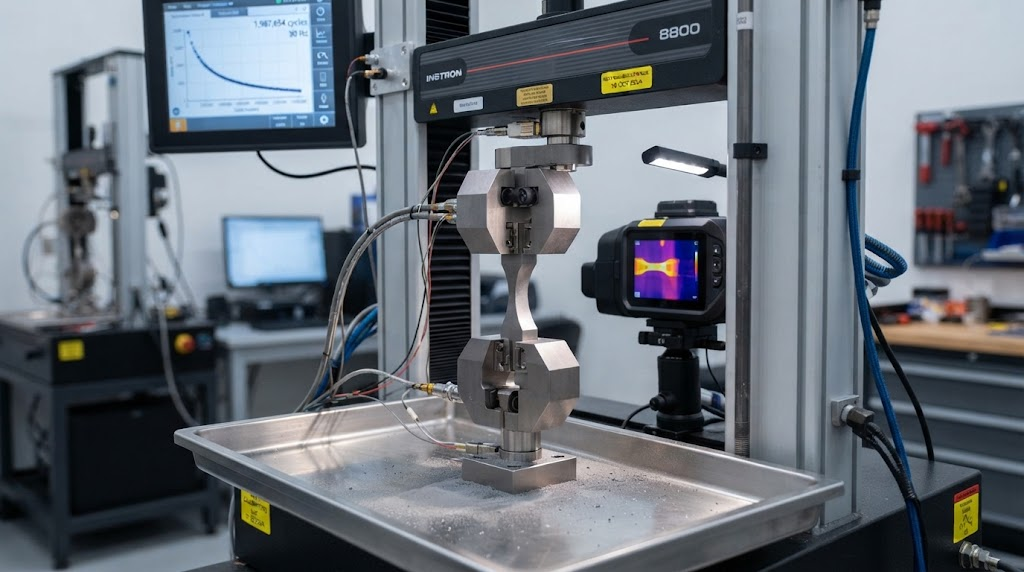
Type III anodizing produces an oxide layer only 15 to 300 nm thick and has no measurable impact on the high-cycle fatigue life of Ti-6Al-4V ELI. In contrast, heavy-layer Type II anodizing (AMS 2488) can reduce rotary beam fatigue strength by 10% to 20% due to micro-porosity at the conversion boundary. For high-stress dynamic components like spinal fixation rods, engineering teams should factor this reduction into their finite element and endurance limit calculations.
Are Type III color-anodized surfaces stable through repeated hospital autoclave cycles?
Yes. The titanium dioxide film generated during Type III anodization is chemically stable and resists standard hospital steam sterilization (134°C / 273°F at 30 psi). However, exposure to aggressive cleaning agents with pH values above 10.5 or hydrofluoric acid formulations can thin the oxide film over time, shifting the perceived interference color.
Can out-of-spec anodized medical components be safely stripped and re-anodized?
Type III films can be safely stripped using chemical baths without measurable substrate loss, allowing re-anodization to the correct color band. Type II layers, however, penetrate several microns into the substrate. Chemical stripping of Type II coatings removes a small amount of parent material, which may compromise critical sub-millimeter thread tolerances and requires careful dimensional verification before rework.
How does titanium anodizing influence bone-to-implant osseointegration?
Controlled anodic oxidation improves osseointegration compared to unpassivated, raw-machined titanium. Thickening the protective TiO2 dielectric layer minimizes metal ion egress into surrounding tissue beds. Furthermore, tailored electrolyte chemistries can introduce crystalline anatase/rutile phases that enhance osteoblast adhesion and accelerate bone remodeling along the implant interface.
Partner with a Fully Certified Medical Titanium Manufacturer
From ASTM F136 ELI raw mill products to multi-axis precision CNC machining and Class 10,000 cleanroom anodization, China Titanium Factory provides complete, traceable medical manufacturing solutions.
Request a Technical Quote