















The Critical Role of Pre-treatment in Titanium Anodizing
Titanium anodizing preparation is the foundational pillar of electrochemical surface engineering. Without rigorous cleaning and etching, the resulting oxide layer will suffer from poor adhesion, localized spotting, and chromatic instability.
Effective pre-treatment ensures the removal of the "natural" oxide layer—a chaotic, thin film that forms spontaneously upon exposure to air. By stripping this layer and neutralizing surface energy, we create a pristine metallic canvas for controlled Type II or Type III anodic oxidation.
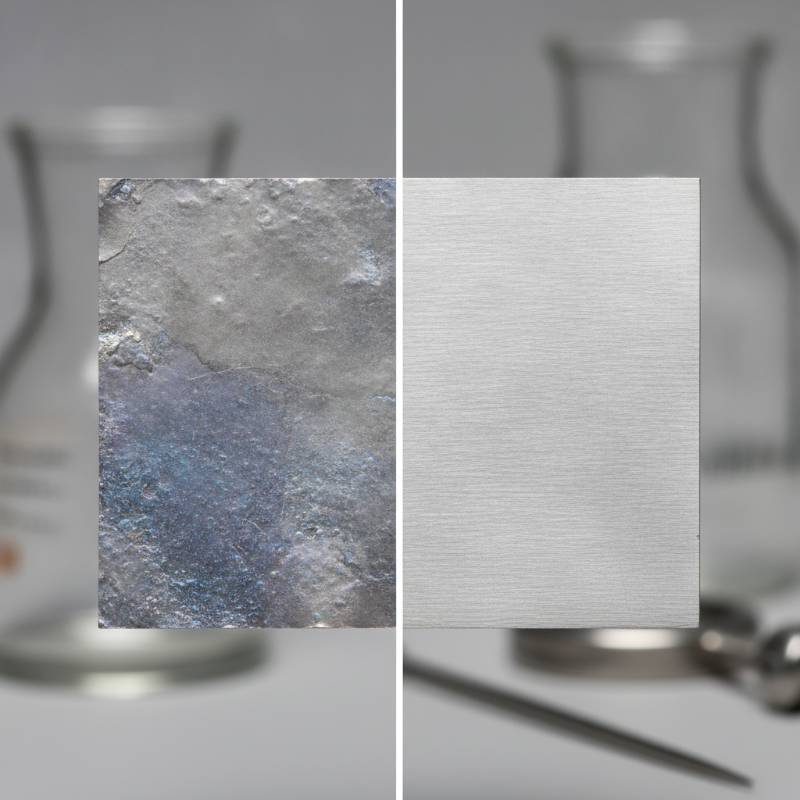
At China Titanium Factory, our data indicates that 95% of anodizing failures in aerospace and medical sectors stem from inadequate substrate preparation. Achieving a high-yield production run requires a clinical approach to surface morphology and chemical purity.
The CTF Triple-Phase Preparation Protocol: A Proprietary Framework
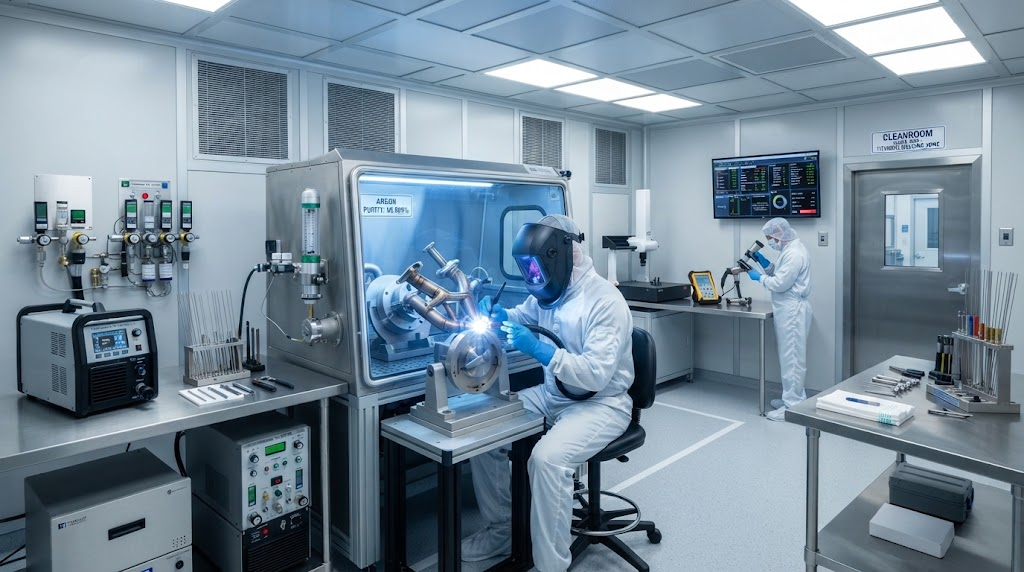
Successful titanium surface finishing requires more than a simple solvent wipe. We utilize the CTF Triple-Phase Preparation Protocol, a proprietary sequence engineered to eliminate microscopic variables that compromise anodic film integrity.
This framework integrates mechanical refinement, ultrasonic decontamination, and chemical activation. It is specifically designed to meet the rigorous tolerances required for Precision Titanium CNC Machining projects where dimensional accuracy and aesthetic uniformity are non-negotiable.
Phase 1: Mechanical Polishing for Ra < 0.4μm Mirror Finishes
The first phase focuses on surface roughness (Ra). For Type III (Color) anodizing, the brilliance of the color is directly proportional to the smoothness of the substrate. Light must reflect off the titanium-oxide interface with minimal scattering.
We target a surface roughness Ra of less than 0.4 microns. This often involves multi-stage abrasive grit blasting or mechanical polishing using alumina or diamond suspensions. Reducing peak-to-valley height ensures that the electrolyte bath interacts uniformly with the surface, preventing "shadowing" or matte patches in high-voltage applications.
Phase 2: Ultrasonic Degreasing and CNC Residual Removal
Mechanical polishing often leaves behind non-polar contaminants, such as CNC cutting fluids, lubricants, and polishing pastes. If these remain, they act as localized insulators, preventing the electrolyte from reaching the metal.
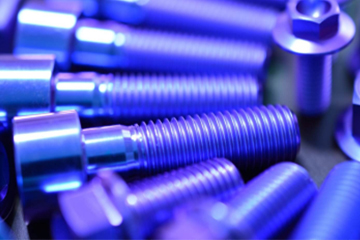
Ultrasonic degreasing uses high-frequency sound waves to create cavitation bubbles. These bubbles implode on the surface, mechanically stripping away oils from complex geometries, such as the threads on Aerospace Titanium Fasteners. We typically use alkaline cleaning agents heated to 50-70°C to maximize efficiency.
Phase 3: Precision Acid Pickling with HF/HNO3 Chemistry
The most critical step is titanium etching with hydrofluoric acid (HF) mixed with nitric acid (HNO3). This chemical pickling removes the "messy" natural oxide layer and any embedded metallic iron particles (low-potential sites) that could cause pitting.
"The chemical balance in the pickling bath is vital. A standard ratio of 1:10 (HF to HNO3) is used to ensure the nitric acid suppresses the absorption of hydrogen into the titanium lattice, which prevents hydrogen embrittlement." — Chief Metallurgist, China Titanium Factory
Strict Parameter Control: Immersion time must be limited to 5-15 seconds. Excessive etching leads to over-corrosion and increased surface roughness, while insufficient etching leaves the passive oxide layer intact, resulting in uneven anodizing colors.
Adherence to ASTM B892-14 and Global Quality Standards
Our protocols are benchmarked against ASTM B892-14, the standard for AC-anodizing of magnesium alloys, often adapted for specialized titanium surface preparation. For aerospace applications, we strictly follow AMS 2488 specifications for Type II anti-galling coatings.
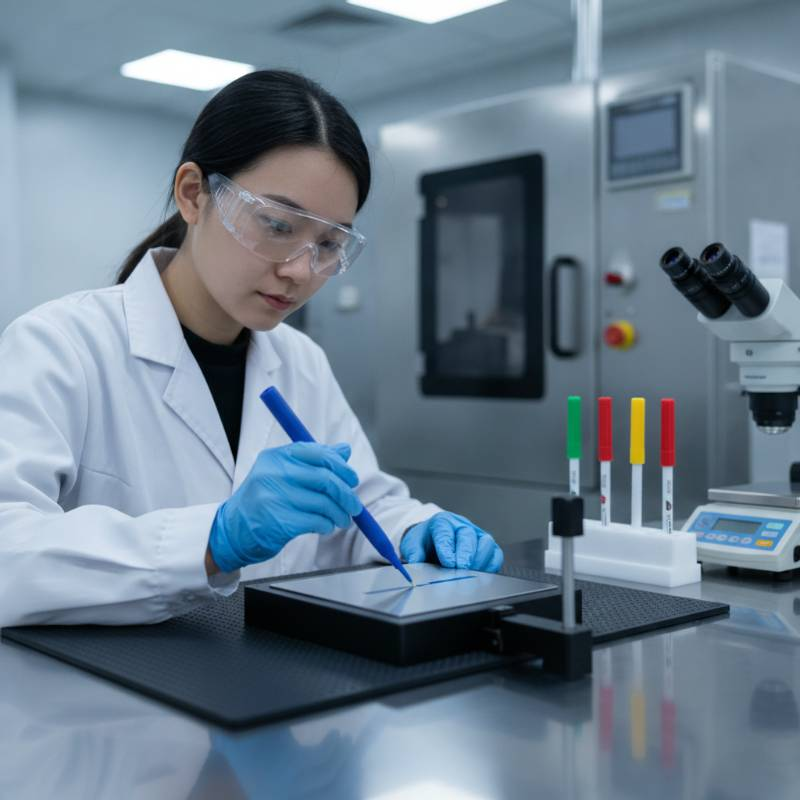
To verify readiness, we utilize surface energy measurements (dyne pens). A surface energy above 70 dynes/cm indicates a high-wettability state, ensuring that the electrolyte bath will achieve 100% surface contact during the oxidation phase.
Troubleshooting Uneven Anodizing Colors and Alpha Case
In aerospace forgings, the "alpha case"—a brittle, oxygen-rich surface layer—must be completely removed via chemical milling before anodizing. Failure to do so results in a brittle anodic film that cracks under stress.
| Symptom | Likely Pre-treatment Cause | Corrective Action |
|---|---|---|
| Iridescent Spotting | Residual CNC cutting fluid | Extend ultrasonic degreasing cycle |
| Dull/Matte Color | Surface roughness Ra > 0.6μm | Re-polish with finer grit alumina |
| Film Flaking | Incomplete oxide layer removal | Refresh HF/HNO3 acid bath concentration |
Grade-Specific Etching: Grade 5 vs. Grade 23 (ELI)
Alloy composition significantly influences etch rates. Titanium Grade 5 (Ti-6Al-4V) contains vanadium, which can lead to preferential etching if the acid concentration is not balanced. In contrast, Medical Grade Titanium 23 (ELI) requires a gentler approach.
Because Grade 23 is used for orthopedic implants, the pre-treatment must maintain biocompatibility. We use high-purity nitric acid passivation after the HF etch to ensure no fluoride residues remain, satisfying ISO 13485 requirements for medical device manufacturing.
Sustainable Surface Finishing: HF-Free Solutions for 2026
As we move through 2026, the industry is shifting toward sustainable surface treatments. Hydrofluoric acid, while effective, poses significant environmental and safety risks. China Titanium Factory is currently pioneering HF-free titanium etching solutions using organic acid blends and ammonium fluoride salts.
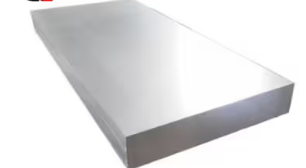
These eco-friendly alternatives offer a more controlled etch rate, reducing the risk of over-processing Industrial Titanium Plate Solutions. Closed-loop chemical recycling systems are also being implemented to minimize hazardous waste discharge in our finishing facilities.
Frequently Asked Questions
How do I prevent hydrogen embrittlement during pickling?
Maintain a nitric acid concentration of at least 30% by weight. The nitric acid acts as an oxidizing agent that prevents the formation of monatomic hydrogen, which would otherwise diffuse into the metal lattice.
Why is my anodizing color inconsistent across a large batch?
Inconsistent color usually indicates temperature variations in the degreasing bath or exhausted chemical potential in the etching tank. Ensure constant agitation and monitor bath pH and metal ion concentration regularly.
Can I use steel wool for mechanical pre-treatment?
Absolutely not. Steel wool leaves iron particles embedded in the titanium surface. These particles will create galvanic cells during anodizing, leading to catastrophic pitting and localized burning of the anodic film.
Optimize Your Component Yield Today
Struggling with uneven colors or film adhesion issues? Request a consultation with our surface treatment experts at China Titanium Factory to diagnose your finishing protocol.
Get a Technical Consultation