














The Physics of Color: Why Titanium Anodizing Fails
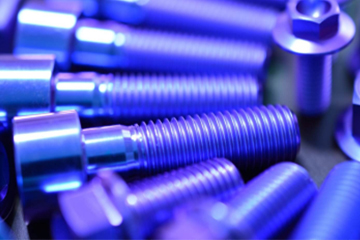
Titanium anodizing is an electrochemical process that creates a transparent titanium oxide layer on the surface. Unlike painting, the colors perceived are the result of light interference, where light waves reflect off both the oxide surface and the underlying metal.
Effective titanium anodizing troubleshooting requires understanding that color is a function of thickness. Inconsistent titanium voltage directly leads to thickness variations, causing the part to shift through the spectrum—from bronze to blue, gold, or pink—unintentionally.
"Anodic oxidation on titanium creates a 'dielectric' film. The perceived color is determined by the phase shift of light as it travels through this oxide layer, a phenomenon governed by the Bragg equation." — Lead Surface Engineer, China Titanium Factory.
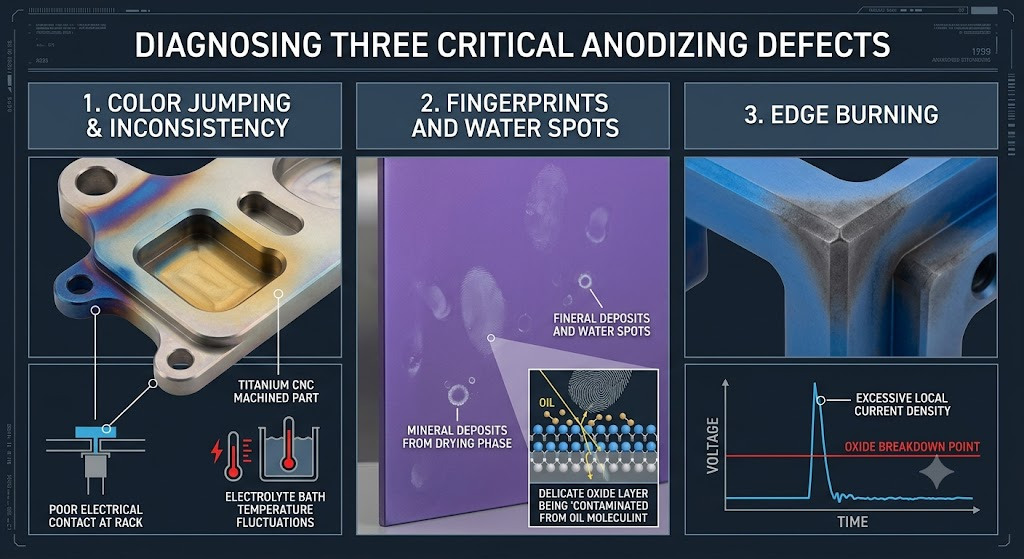
Diagnosing the Three Critical Anodizing Defects
Most failures in high-volume production, such as Titanium CNC Machining Services, stem from three primary root causes. Identifying these early is critical for maintaining yield.
1. Color Jumping & Inconsistency
Color jumping occurs when different areas of the same part—or different parts in the same batch—exhibit different colors despite being set to the same voltage. This is usually caused by poor electrical contact at the titanium rack points or fluctuations in the electrolyte bath temperature.
2. Fingerprints and Water Spots
Water spots on anodized titanium are often mineral deposits left behind during the drying phase. Because the interference film is highly sensitive to oils, a single fingerprint can change the refractive index, making the color look "faded" or "smudged" when it is actually just contaminated.
3. Edge Burning
Edge burning appears as a gray, charred, or dull finish on sharp corners. This is caused by excessive local current density. When the voltage is pushed too high too quickly, the oxide layer "breaks down" rather than growing uniformly.
Technical Specifications for Process Stability
To achieve a perfect titanium anodizing color match, your equipment must meet stringent 2026 industry benchmarks. Precision starts with the power supply and the purity of the chemistry.
| Parameter | Requirement | Impact of Deviation |
|---|---|---|
| Rectifier Ripple Factor | < 5% | Color muddiness, poor film density |
| Rinse Water Conductivity | < 5 µS/cm | Mineral staining, water spots |
| Electrolyte Temperature | ± 2°C | Voltage-to-color shift |
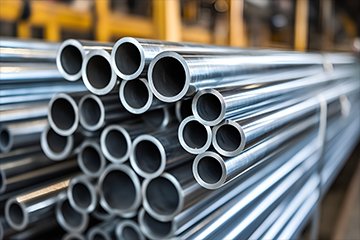
We recommend sourcing components that adhere to ASTM B348 standards to ensure the substrate chemistry is consistent before it ever enters the bath.
The CTF Precision Anodizing Protocol
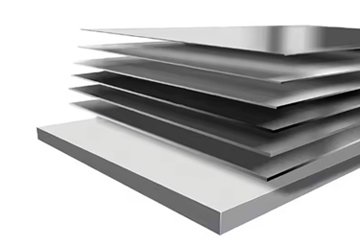
At China Titanium Factory, we utilize a proprietary methodology known as the CTF Precision Anodizing Protocol. This framework ensures that every part, from Medical Grade Titanium Plates to micro-fasteners, meets AMS 2488 Type II specifications.
Alkaline Degreasing: Removal of all organic oils using ultrasonic agitation.
Chemical Etching: A controlled hydrofluoric/nitric acid dip to remove the "alpha case" and create a uniform surface energy.
Controlled Desmutting: Ensuring no residual metallic particles remain on the surface which could cause spotting.
Ramp-Voltage Anodizing: Slowly increasing voltage to prevent current spikes and edge burning.
Deionized (DI) Final Rinse: A multi-stage cascade rinse to ensure 0.0% mineral residue.
Grade-Specific Troubleshooting: CP vs. Grade 5
Not all titanium reacts the same to anodic oxidation. CP Grade 2 (Pure) anodizes predictably, but Aerospace Titanium Forgings made of Grade 5 (Ti-6Al-4V) contain Aluminum and Vanadium.
Vanadium, in particular, can inhibit oxide growth. If you are experiencing "dull" colors on Grade 5, you may need to increase your phosphoric acid concentration or slightly raise the voltage by 2-5V compared to the settings used for CP grades to achieve the same hue.
Six Sigma Quality Control and Yield Commitment
Our facility operates under a strict Six Sigma quality control mandate. In the world of titanium surface finishing, a "90% yield" is often considered acceptable, but for mission-critical medical and aerospace components, we target 99.8%.
We verify every batch through spectrophotometer analysis to ensure the Delta E (color variance) remains within the tightest tolerances required by AMS 2488. This clinical approach reduces rework costs and ensures that our clients receive parts that are both aesthetically perfect and functionally superior.
Expert Troubleshooting FAQ
Why is my titanium anodizing turning gray instead of colorful?
This is usually due to "breakdown voltage." If the electrolyte concentration is too high or the voltage is applied too aggressively, the oxide layer collapses. Ensure your current density is distributed evenly and check for electrolyte bath contamination.
How do I remove water spots on anodized titanium?
Once dried, mineral spots are difficult to remove without damaging the oxide layer. Prevention is the only industrial solution. Use deionized water with a conductivity of < 5 µS/cm and implement a forced-air drying system to prevent "pooling."
Does the surface finish affect the anodized color?
Absolutely. A polished surface produces vibrant, jewel-like colors, while a sandblasted or matte surface produces "satin" or muted tones. For a consistent color match across different batches, the initial surface roughness (Ra) must be identical.
Optimize Your Anodizing Yield with China Titanium Factory
Struggling with inconsistent colors or surface defects in your titanium production? Our engineers provide the precision you need for high-stakes applications.
Request a Free Process Diagnosis