





















Industrial Titanium Bars: Engineering Overview, Supply Standards, and Sourcing Guide
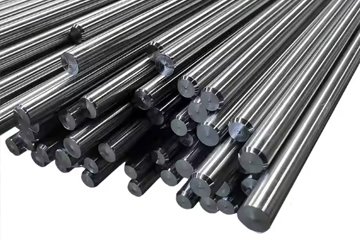
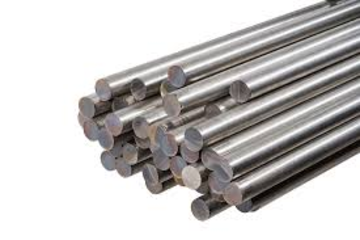
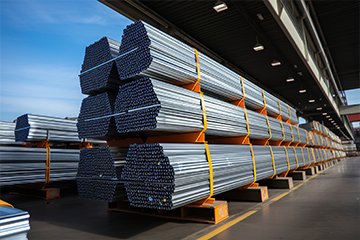
Industrial titanium bars serve as the structural backbone for critical components operating under extreme mechanical stress, elevated temperatures, and aggressive chemical environments. Sourced primarily in round, rectangular, and hexagonal cross-sections, these bars bridge raw titanium sponge production and precision finished parts. Their technical viability relies on low density (4.51 g/cm3 for commercially pure, 4.43 g/cm3 for Ti-6Al-4V), an exceptional strength-to-weight ratio, and immediate formation of a self-passivating titanium dioxide (TiO2) protective layer.
Procuring raw bar stock requires matching international material standards directly to structural requirements. High-integrity manufacturing demands adherence to standard specifications such as ASTM B348 titanium round bar stock for industrial, marine, and chemical plant use, AMS 4928 for aerospace hardware, and ASTM F136 for surgical implants. Depending on downstream machining demands, bar stock is supplied in hot-rolled, warm-drawn, forged, peeled, or precision centerless ground states.
Critical Evaluation Framework: The 3-Pillar Sourcing Standard (OTU)
To eliminate procurement errors and downstream machining scrap, design engineers and sourcing managers must assess titanium bar procurement through an objective metallurgical framework. China Titanium Factory implements the OTU Industrial Bar Evaluation Standard across all production batches:
1. Operating Media Compatibility (O): Material selection starts with the chemical and thermal operating environment. Commercially Pure (CP) Grade 2 suits mild oxidizing acids, while hot brine, low-pH solutions, and crevice-prone environments require palladium- or molybdenum-stabilized alloys like Grade 7 or Grade 12. Structural flight loads require alpha-beta alloys like aerospace-grade Ti-6Al-4V Grade 5 bars.
2. Tolerance & Spindle Stability (T): Automated Swiss-type and multi-axis CNC lathes require strict dimensional control. Sourcing peeled or rough-turned bars often causes bar-feeder vibrations, tool chatter, and premature carbide insert failure. Using precision centerless ground bars with h7 to h8 diameter tolerances, straightness within 0.3 mm/m, and roundness runout below 0.01 mm ensures spindle equilibrium during lights-out operations.
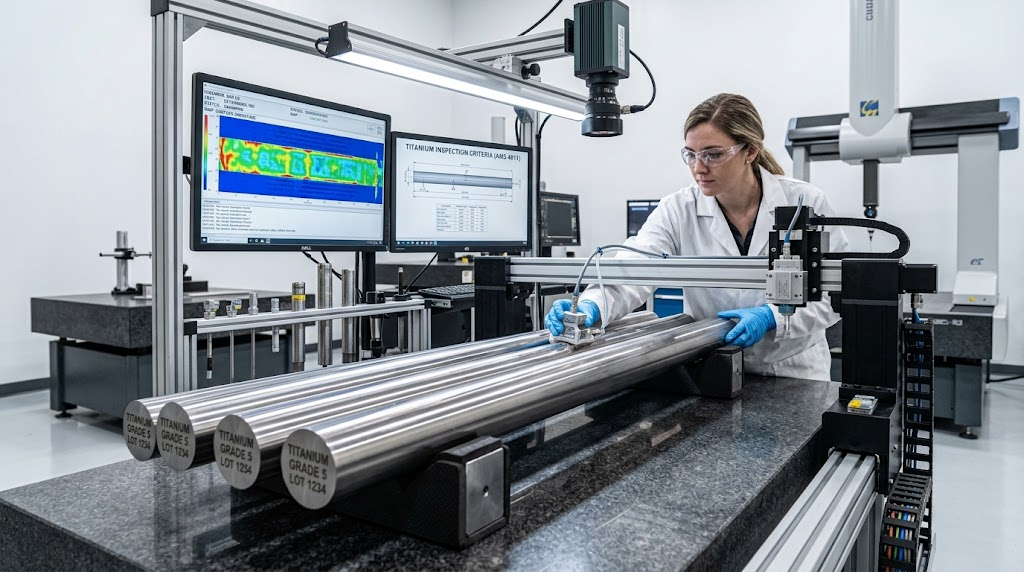
3. Ultrasonic & Microstructural Purity (U): Titanium is susceptible to interstitial segregation, Hard Alpha (high nitrogen), and High Density Inclusions (HDI). Quality assurance demands double or triple Vacuum Arc Remelting (VAR), full compliance with AMS 2631 Class AA or ASTM E2375 ultrasonic flaw detection standards, and strict interstitial gas verification via LECO combustion analysis.
Engineering Rule of Thumb: In high-speed CNC turning, diameter variation of ±0.05 mm increases cutting chatter by up to 35% compared to an h7 tolerance bar (±0.012 mm at Ø25 mm). This difference directly degrades surface finish and cuts carbide tool edge life in half.
Material Grade Comparison: Mechanical Properties, Chemistry, and Severe-Environment Performance
Selecting the right alloy balance avoids component failure from hydrogen embrittlement, chloride crevice corrosion, or fatigue overload. The table below details primary chemical limits and minimum mechanical benchmarks for industrial titanium bar grades according to ASTM B348 standard specifications.
| Grade (UNS) | Nominal Composition | Tensile Yield (min, MPa) | Tensile Ultimate (min, MPa) | Elongation (% min) | Key Operational Envelope |
|---|---|---|---|---|---|
| Grade 2 (R50400) | CP Titanium (Unalloyed) | 275 | 345 | 20 | Oxidizing media, marine heat exchangers, chemical storage < 80°C. |
| Grade 5 (R56400) | Ti-6Al-4V (Alpha-Beta) | 828 | 895 | 10 | High-load aerospace frames, marine shafts, downhole tools, pressure housings. |
| Grade 7 (R52400) | Ti-0.15Pd (Alpha) | 275 | 345 | 20 | Boiling acids, aggressive chloride brines, chlor-alkali cells (pH < 2). |
| Grade 12 (R53400) | Ti-0.3Mo-0.8Ni (Near-Alpha) | 345 | 485 | 18 | High-temperature brine, petrochemical crevice corrosion prevention up to 260°C. |
| Grade 23 (R56407) | Ti-6Al-4V ELI (Alpha-Beta) | 795 | 860 | 10 | Cryogenic vessels (-250°C), medical bone screws, dynamic orthopedic implants. |
When selecting raw materials, compare lifecycle costs alongside initial purchase price. In boiling 10% hydrochloric acid (HCl), Grade 2 corrodes at over 5.0 mm/year, causing rapid joint failure. In contrast, corrosion-resistant Grade 7 titanium rods maintain a rate below 0.01 mm/year under identical conditions. The 0.15% palladium addition acts as an efficient cathode site, raising the electrochemical potential into titanium's stable passive zone.
Tolerance Class Engineering: Precision Centerless Ground vs. Peeled Black Bar for CNC Machining
Raw bar surface finish and dimensional tolerances determine automated lathe efficiency. Commercial stock generally splits into peeled (rough-turned) bars and precision centerless ground stock:
Peeled / Rough Turned (ISO h11–h12): Sized with coarse passes, leaving distinct feed grooves (Ra 3.2 to 6.3 μm). This surface suits general forgings, rough billets, and simple structural ties where dimensional accuracy is secondary.
Precision Centerless Ground (ISO h7–h8): Multi-stage abrasive wheel passes produce tight cylindrical tolerances, minimal ovality, and mirror-like finishes (Ra < 0.4 μm). This stock is necessary for high-speed automated CNC turning, guide-bushing interfaces, and medical components.
| Tolerance Metric | Peeled / Turned Bar (h11) | Centerless Ground Bar (h8) | Precision Ground Bar (h7) |
|---|---|---|---|
| Diameter Range (Ø18–30 mm) | +0 / -0.130 mm | +0 / -0.033 mm | +0 / -0.021 mm |
| Surface Roughness (Ra) | 1.6 – 3.2 μm | 0.4 – 0.8 μm | ≤ 0.2 – 0.4 μm |
| Straightness Runout | ≤ 1.50 mm / meter | ≤ 0.50 mm / meter | ≤ 0.25 – 0.30 mm / meter |
| Roundness / Circularity | 0.040 mm max | 0.012 mm max | 0.006 mm max |
| CNC Spindle Compatibility | Manual / Low-speed Chucking | Standard CNC Lathes (< 4000 RPM) | Swiss Sliding Headstock (> 6000 RPM) |
For downstream parts, pairing centerless ground stock with dedicated precision CNC titanium machining services lowers tool wear. Because titanium has a low thermal conductivity (6.7 W/m·K for Grade 5 vs 400 W/m·K for copper), heat concentrates at the cutting edge. Bars with tight straightness and roundness reduce tool rubbing, lower depth-of-cut variations, and prevent thermal spikes that degrade cutting inserts.
Mission-Critical Industrial Applications and Long-Tail Use Cases
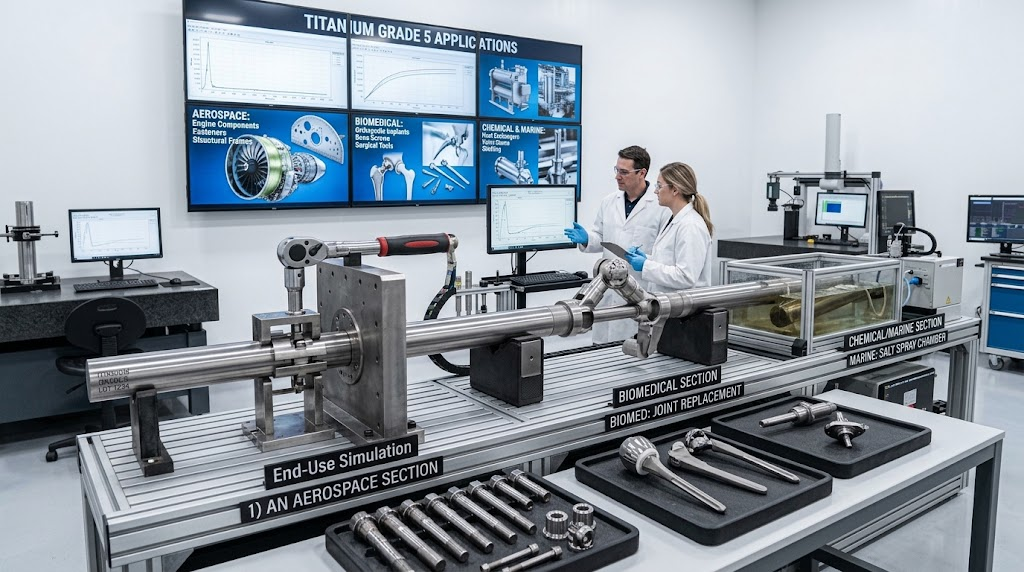
Industrial titanium bars serve environments where component failure presents significant safety and financial risks. Key application areas include:
Aerospace Structural Hardware and Fasteners
Precision-drawn and ground Ti-6Al-4V bars meeting AMS 4928 specifications form the core material for aerospace structural pins, fasteners, landing gear linkages, and hydraulic valve spools. Their high fatigue strength, resistance to galvanic corrosion when paired with carbon-fiber-reinforced polymers (CFRP), and consistent shear properties make them a key structural metal for airframes.
Subsea Marine and Downhole Tool Drive Shafts
In deep offshore oil extraction and marine propulsion, driveshafts and downhole instrument housings encounter extreme hydrostatic pressures and high-velocity seawater. While duplex stainless steels often fail from pitting or sulfide stress corrosion cracking (SSCC), double-melted Grade 5 and Grade 9 titanium bars resist marine environments while reducing suspended system mass.
Chlor-Alkali and Acid Recovery Systems
Chlorine gas generation cells, bleach washers, and acid re-boilers run under severe chemical attack. Rotating pump shafts, thermowell assemblies, and valve stems machined from Grade 7 and Grade 12 bars resist wet chlorine pitting and hydrochloric acid crevice attacks up to 260°C.
China Titanium Factory Manufacturing Capabilities, Certifications, and Quality Protocols
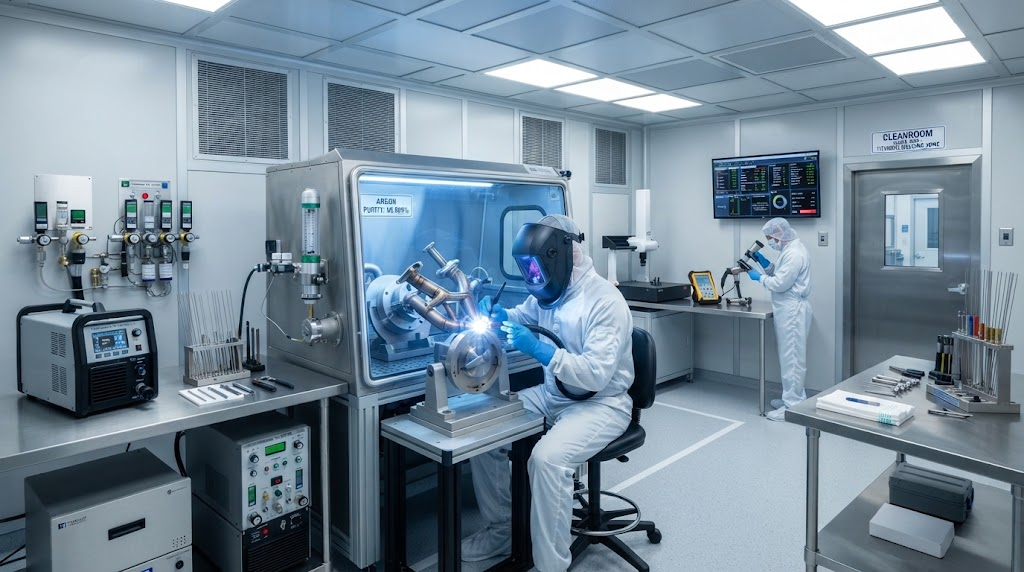
Operating from China's primary titanium manufacturing hub in Baoji, Shaanxi, China Titanium Factory provides complete metallurgical oversight across the production cycle—from high-grade raw sponge through final precision centerless grinding. Our facilities hold ISO 9001:2015, AS9100D (Aerospace), and ISO 13485 (Medical Devices) certifications.
Melting Infrastructure: Multiple 3-ton and 5-ton Vacuum Arc Remelting (VAR) furnaces, along with Electron Beam Cold Hearth Remelting (EBCHM), ensure complete inclusion dissolution and uniform chemical consistency.
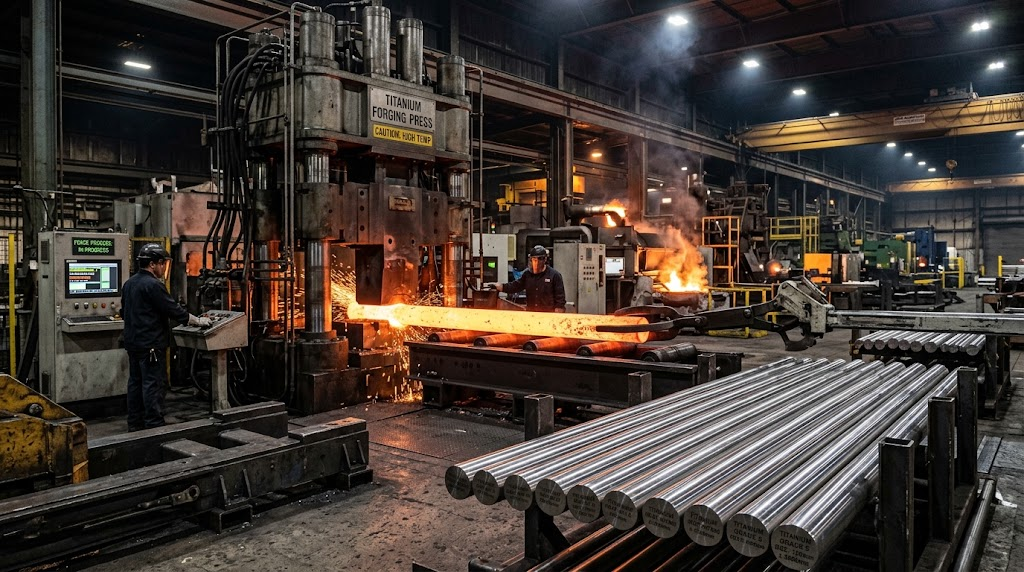
Forging & Rolling Envelope: 2,500-ton open-die fast forging presses, radial precision forging units, and automated hot-rolling lines process ingots into finished bars from Ø3 mm up to Ø450 mm.
Finishing & Tolerance Capabilities: Multi-head centerless grinding lines supply high-precision h7, h8, and h9 bars up to 6,000 mm long, featuring an Ra < 0.4 μm surface finish and straightness under 0.3 mm/m.
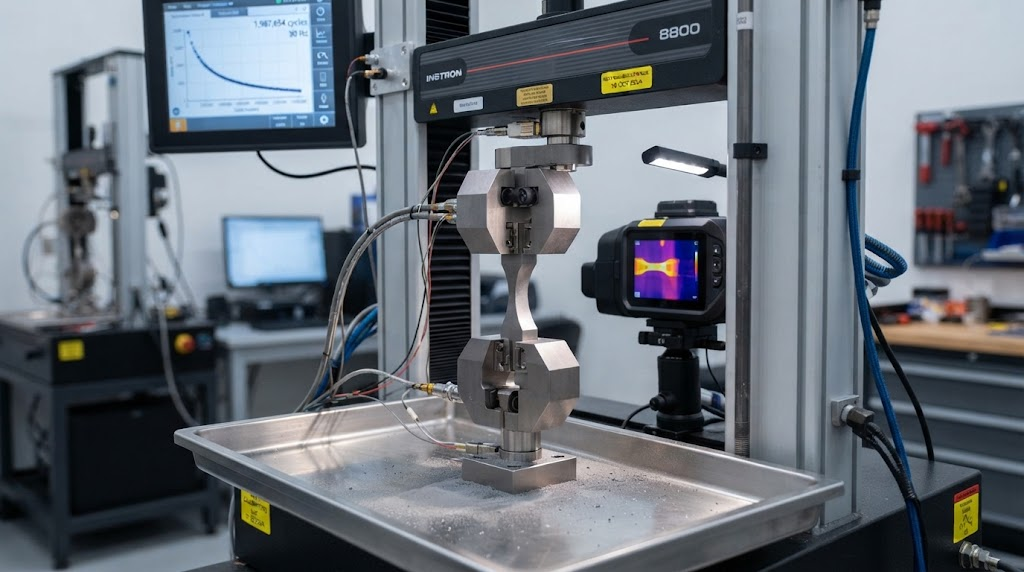
Testing & Traceability: In-house labs run full metallographic analyses, universal tensile checks, LECO combustion gas tests, and immersion ultrasonic testing (UT) adhering to AMS 2154 Class AA and ASTM E2375.
The China Titanium Quality Protocol: Anti-Counterfeit Verification and MTC Validation
The global trade in raw titanium faces challenges from material blending, where low-cost scrap is melted without proper vacuum controls. This practice introduces oxygen and nitrogen contaminants that induce severe embrittlement. China Titanium Factory implements a strict material verification system for all dispatches:
Inspection Checklist for Mill Test Certificates (EN 10204 3.1):
1. Melt Heat Traceability: Ensure the ingot heat number matches between the physical end-stamp, shipping tags, and the test certificate.
2. LECO Interstitial Gas Limits: Verify true combustion values for interstitial gases: Oxygen (O2 ≤ 0.20% for Gr 5, ≤ 0.25% for Gr 2), Nitrogen (N2 ≤ 0.03%), Carbon (C ≤ 0.08%), and Hydrogen (H2 ≤ 0.0125% / 125 ppm). Elevated hydrogen creates serious risks of delayed embrittlement cracking under mechanical stress.
3. Microstructural Phase Balance: For Ti-6Al-4V, require high-magnification micrographs confirming uniform, equiaxed alpha grains in a transformed beta matrix. Reject microstructures displaying coarse grain boundaries or continuous alpha cases.
4. Ultrasonic Validation: Confirm 100% non-destructive ultrasonic immersion testing complying with AMS 2631 Class AA / ASTM E2375 to rule out internal voids and high-density tungsten inclusions.
Procurement Technical FAQ: Grade Selection, Quality Control, and Mill Economics
When should we choose Grade 7 or Grade 12 titanium bars over standard Grade 2?
Standard ASTM B348 Grade 2 CP titanium forms a stable oxide layer in oxidizing solutions (such as nitric acid and aerated brines). However, it undergoes severe pitting and crevice corrosion in hot chlorides above 80°C (176°F) and reducing acids where pH drops below 3. Grade 7 contains 0.15% Palladium, which shifts the open-circuit corrosion potential positive, maintaining corrosion rates below 0.01 mm/year in aggressive boiling acid media. Grade 12 provides a cost-effective alternative by utilizing 0.3% Mo and 0.8% Ni to inhibit crevice corrosion up to 260°C while offering 40% higher tensile strength (Rm ≥ 485 MPa) than Grade 2.
How do you identify unrefined scrap or out-of-spec titanium bars?
Unrefined scrap melting elevates interstitial element levels. High oxygen and nitrogen increase hardness while dropping tensile elongation below minimum engineering requirements (Grade 5 requires ≥ 10% elongation). Sourcing teams can detect unrefined scrap by running LECO inert gas fusion testing to verify hydrogen stays below 125 ppm and oxygen below 0.20%. Metallographic examination under 100× to 500× optical zoom will identify anomalous acicular alpha formations or coarse unrefined prior-beta grain boundaries. China Titanium Factory supplies verifiable EN 10204 3.1 Mill Test Certificates with full heat-to-ingot traceability, supported by third-party testing from SGS or TÜV on request.
What are the financial and lead-time advantages of sourcing directly from China Titanium Factory?
Western regional distributors typically mark up inventory by 35% to 60% and charge added fees for saw cutting, heat treatment, and centerless grinding. Sourcing directly from China Titanium Factory's Baoji production base provides significant financial advantages:
Direct Cost Reductions: Save 25% to 40% on base raw material purchase costs by bypassing distributor markups.
Net-Shape Precision: Mill-delivered h7/h8 precision bars reduce Swiss CNC cycle times, eliminate lathe roughing passes, and minimize chip scrap.
Reliable Dispatch Schedules: Standard stock sizes ship within 7 to 10 days, while custom-melt alloy runs are processed, tested, and dispatched in 3 to 4 weeks.
3-Step Direct Mill Sourcing Pathway: From Spec Review to Lathe-Ready Delivery
Procure certified industrial titanium bars through our straightforward manufacturing and supply framework:
Step 1: Rapid Specification Submission: Provide your bill of materials (BOM), required ASTM/AMS specifications, alloy grades, diameter tolerances (e.g., centerless ground h7), and delivery schedules through our inquiry portal.
Step 2: Engineering Review & Fixed Mill Quotation: Our applications engineering team completes a machinability review, verifies chemical and ultrasonic testing requirements, and returns a detailed quotation with mill-direct FOB, CIF, or DDP pricing within 2 business hours.
Step 3: Metallurgical Consultation & Sample Dispatch: Review heat-traceable EN 10204 3.1 Mill Test Certificates alongside our chief metallurgist. For ongoing volume contracts, sample bar runs dispatch within 48 hours for immediate Swiss lathe tooling and CNC machining validation.