



















Defining the Titanium Advantage in Modern Acoustics
Acoustic engineering in 2026 demands materials that can withstand extreme mechanical stress while remaining incredibly light. Titanium has emerged as the gold standard for high-performance audio components.
We define a high-quality titanium speaker diaphragm by its ability to move pistonically across its entire operating frequency. This is largely due to titanium's exceptional stiffness-to-weight ratio.
"Acoustic Impedance: The physical property of a material that determines how much sound pressure is generated by a given vibration velocity. Titanium’s high Young’s modulus makes it a top-tier choice for minimizing energy loss."
Why is Titanium Preferred for High-End Tweeters?
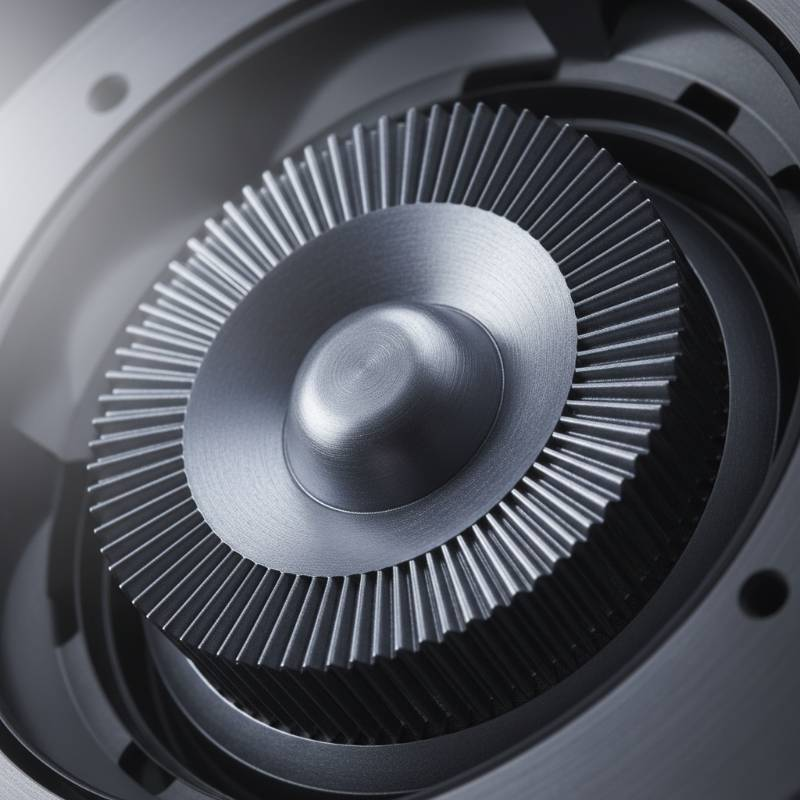
Titanium is preferred for high-end tweeters because its extreme hardness suppresses breakup modes, also known as segmental vibration. This ensures that even at ultra-high frequencies, the sound remains clear, precise, and free from the "shimmering" distortion common in softer materials.
In our testing at China Titanium Factory, we have observed that metal diaphragms maintain structural integrity far beyond the human hearing range. This prevents the diaphragm from warping or "folding" during rapid oscillations.
By using titanium foil for tweeters, manufacturers can push the crossover point higher. This results in a seamless transition between mid-range and high-frequency drivers, enhancing the overall soundstage and imaging.
Technical Specifications: Precision Foil and Sheet Gauges
Precision is not a suggestion in audio manufacturing; it is a requirement. The thickness of the sheet directly dictates the mass and the resonant frequency of the finished driver.
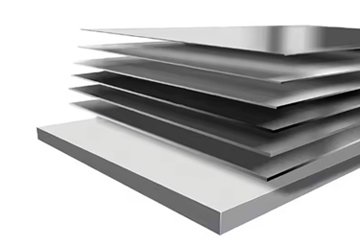
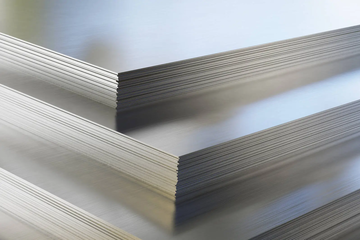
We focus on ultra-thin specifications tailored for the audio industry. Our current production lines prioritize the following ranges:
| Thickness (Inch) | Thickness (mm) | Primary Application |
|---|---|---|
| 0.012 - 0.020 | 0.3 - 0.5 | Precision Tweeters & Micro-speakers |
| 0.020 - 0.080 | 0.5 - 2.0 | High-frequency compression drivers |
| 0.080 - 0.160 | 2.0 - 4.0 | Professional PA System Components |
Our 0.012 inch titanium sheet is a best-seller for high-end residential audio. It offers the perfect balance of low mass for transient speed and enough rigidity to handle high-wattage peaks.
The Sonic Integrity Protocol (SIP): Our Material Selection Framework
To ensure consistent quality, we utilize a proprietary methodology called The Sonic Integrity Protocol (SIP). This framework ensures that every batch of titanium meets the specific acoustic needs of our clients.
Phase 1: Grain Structure Analysis – We select titanium with a specific grain orientation to prevent asymmetrical vibration.
Phase 2: Surface Tension Mapping – Ensuring the titanium foil has uniform thickness across the entire sheet to avoid "dead spots."
Phase 3: Thermal Stress Relief – A specialized annealing process that removes internal mechanical tension, preventing the diaphragm from cracking over time.
Advanced Manufacturing: Raw Material to Precision Domes
Turning a flat sheet into a high-performance dome requires more than just a simple press. The process must be controlled to maintain the material's crystalline structure.
Chemical Etching: For extremely thin diaphragms, we use chemical etching to achieve complex geometries without the mechanical stress of traditional stamping. This preserves the material’s natural damping factors.
Precision Stamping: For thicker sheets used in professional high-frequency compression drivers, precision-ground dies are used in temperature-controlled environments. This ensures the dome's radius is accurate to within microns.
Performance Comparison: Titanium vs. Resin and Composites
Many entry-level drivers use resin, silk, or composite membranes. While these are cheaper, they often suffer from "cone cry"—a type of non-linear distortion where the material deforms during movement.
Titanium provides a distinct advantage in transient response speed. Because it is stiffer, it stops moving almost instantly when the electrical signal ceases. Resin membranes tend to "overhang," blurring the sound and reducing detail.
According to research from the Audio Engineering Society (AES), metal diaphragms exhibit significantly lower total harmonic distortion (THD) at high sound pressure levels compared to soft-dome counterparts.
Global Standards and Compliance
Working with international R&D teams requires strict adherence to material standards. All our titanium sheets for audio applications comply with ASTM B265 and AMS 4911 specifications.
We provide full material traceability and chemical analysis reports with every shipment. Whether you are a boutique speaker builder in the US or a mass-market manufacturer in Europe, our global logistics network ensures your supply chain remains uninterrupted.
For more information on material grades, visit our custom titanium manufacturing page.

Frequently Asked Questions
What is the typical lifespan of a titanium diaphragm?
In professional environments, a titanium diaphragm can last for decades. Unlike resin or silk, titanium does not dry out or rot. Its lifespan is usually limited by the voice coil or the surround material, not the titanium itself.
Does titanium sound "metallic" or harsh?
This is a common misconception. "Harshness" is usually caused by poor crossover design or breakup modes. High-quality titanium, when properly engineered and damped, provides a neutral and highly accurate reproduction of the source material.
What is the minimum order quantity for custom gauges?
We support both R&D prototyping and full-scale production. While we stock standard sizes like 0.3mm and 0.5mm, custom thicknesses can be produced with competitive lead times and manageable MOQs.
Ready to Optimize Your Audio Performance?
Don't compromise on acoustic clarity. Partner with a supplier that understands the science behind the sound.
Contact our engineering team today for a quote on precision titanium sheets.
Get a Technical Consultation