
















Understanding ASTM F136 Titanium: Definition, ELI Metallurgy, and Medical Importance
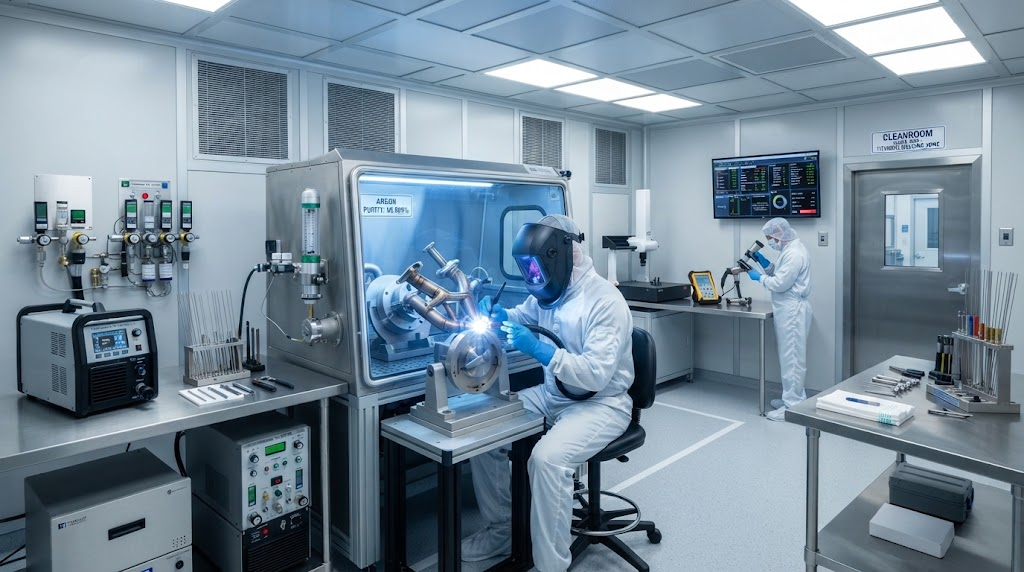
ASTM F136 is the globally recognized standard specification covering wrought Ti-6Al-4V ELI Grade 23 titanium alloy engineered specifically for surgical implant applications. By restricting interstitial elements like oxygen, nitrogen, and carbon, this biomedical standard delivers elevated fracture toughness, fatigue resistance, and biological inertness inside the human body.
In biomedical engineering, implant materials face demanding in vivo environments characterized by cyclic physiological loading, corrosive bodily fluids, and direct contact with host tissue. Standard industrial alpha-beta alloys contain interstitial elements that can induce micro-cleavage and premature fatigue cracking under physiological stress.
The "ELI" designation stands for Extra Low Interstitial. Restricting interstitial oxygen to a maximum of 0.13% and iron to 0.25% modifies the slip mechanisms within the hexagonal close-packed (HCP) alpha matrix, preventing brittle phase precipitation.
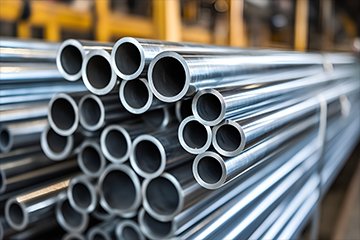
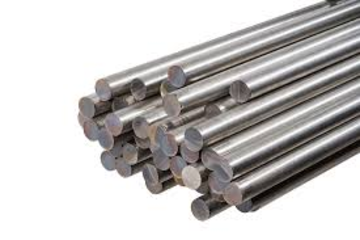
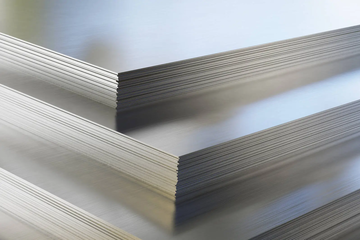
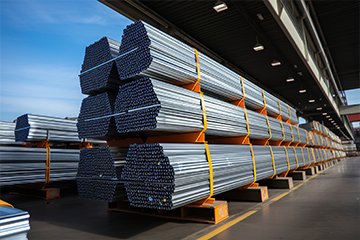
ASTM F136 defines the metallurgical requirements for wrought Titanium-6Aluminum-4Vanadium ELI alloy across bars, rods, billets, wires, and customized forgings intended exclusively for human surgical implants.
To evaluate material suitability for clinical environments, metallurgical engineers apply The Medical Implant Tri-Factor Matrix:
Interstitial Gas Purity: Maintaining Oxygen ≤ 0.13%, Nitrogen ≤ 0.05%, and Hydrogen ≤ 0.012% to preserve lattice ductility.
Microstructural Refinement: Ensuring equiaxed α+β grain morphology (grain size ≥ 8 per ASTM E112) for high-cycle dynamic fatigue strength.
Dimensional & Stress Uniformity: Centerless grinding to tight geometric tolerances with zero residual stress to support Swiss CNC machining.
Chemical Composition & Interstitial Thresholds: ASTM F136 vs. Industrial Grade 5
The difference between standard industrial Grade 5 (ASTM B348 / AMS 4928) and medical-grade ASTM F136 lies in chemical thresholds. Uncontrolled interstitials in surgical implants can lead to notch sensitivity and in vivo embrittlement.
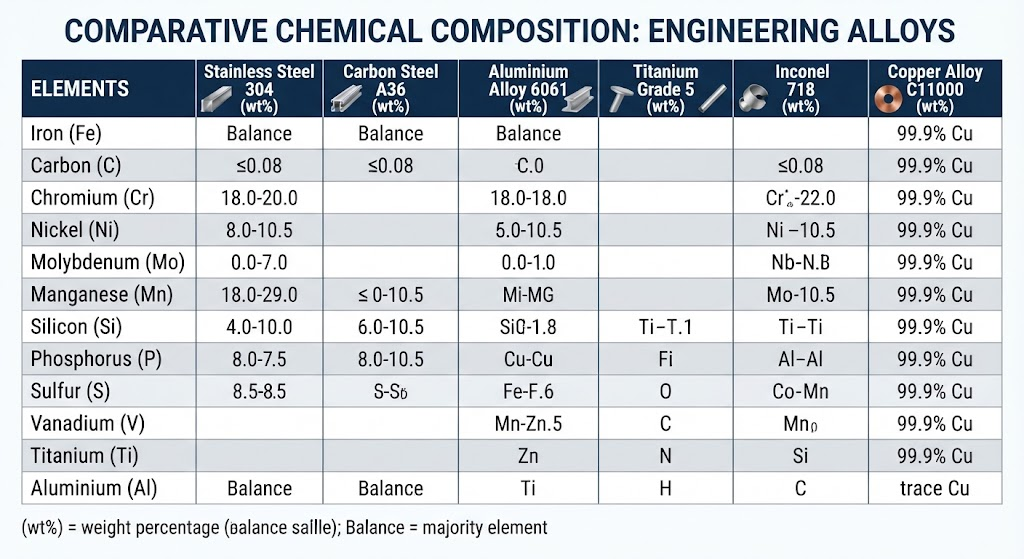
| Element | ASTM F136 (Ti-6Al-4V ELI) | ASTM B348 Grade 5 (Ti-6Al-4V) | Clinical Impact of Control |
|---|---|---|---|
| Aluminum (Al) | 5.50 – 6.50% | 5.50 – 6.75% | Alpha stabilizer; enhances tensile yield properties. |
| Vanadium (V) | 3.50 – 4.50% | 3.50 – 4.50% | Beta stabilizer; governs heat treatability and microstructural balance. |
| Oxygen (O) | ≤ 0.13% | ≤ 0.20% | Critical limit: Lower oxygen increases fracture toughness (KIC) by >30%. |
| Iron (Fe) | ≤ 0.25% | ≤ 0.40% | Minimizes beta-fleck segregation and biological cell irritation. |
| Carbon (C) | ≤ 0.08% | ≤ 0.08% | Prevents formation of titanium carbide inclusions. |
| Nitrogen (N) | ≤ 0.05% | ≤ 0.05% | Reduces lattice strain and interstitial embrittlement. |
| Hydrogen (H) | ≤ 0.012% (120 ppm) | ≤ 0.015% (150 ppm) | Prevents hydride precipitation and delayed hydride cracking (DHC). |
| Titanium (Ti) | Balance | Balance | Virgin matrix providing non-ferromagnetic biological inertness. |
Oxygen dissolves interstitially into the octahedral sites of the HCP alpha titanium lattice. When oxygen exceeds 0.13%, it restricts dislocation mobility, causing an increase in tensile strength at the expense of impact energy and fracture resistance.
Iron acts as a strong beta stabilizer. Keeping iron below 0.25% avoids micro-segregation ("beta flecks") that can act as fatigue nucleation sites under cyclic spinal or hip joint loads.
Mechanical Properties, Microstructural Grain Integrity & High-Cycle Fatigue Life
ASTM F136 requires balanced tensile properties and microstructural stability. Standard annealed bar stock must meet explicit minimum physical parameters before entering biomedical production lines.
| Property | ASTM F136 Requirement | China Titanium Factory Nominal |
|---|---|---|
| Ultimate Tensile Strength (UTS) | ≥ 860 MPa (125 ksi) | 890 – 960 MPa |
| Yield Strength (0.2% Offset) | ≥ 795 MPa (115 ksi) | 825 – 880 MPa |
| Elongation in 4D (%) | ≥ 10% | 14 – 18% |
| Reduction of Area (%) | ≥ 25% | 35 – 45% |
| Elastic Modulus (E) | 105 – 114 GPa | 110 GPa |
| Hardness (Rockwell C) | Typical: 30 – 34 HRC | 31 – 33 HRC |
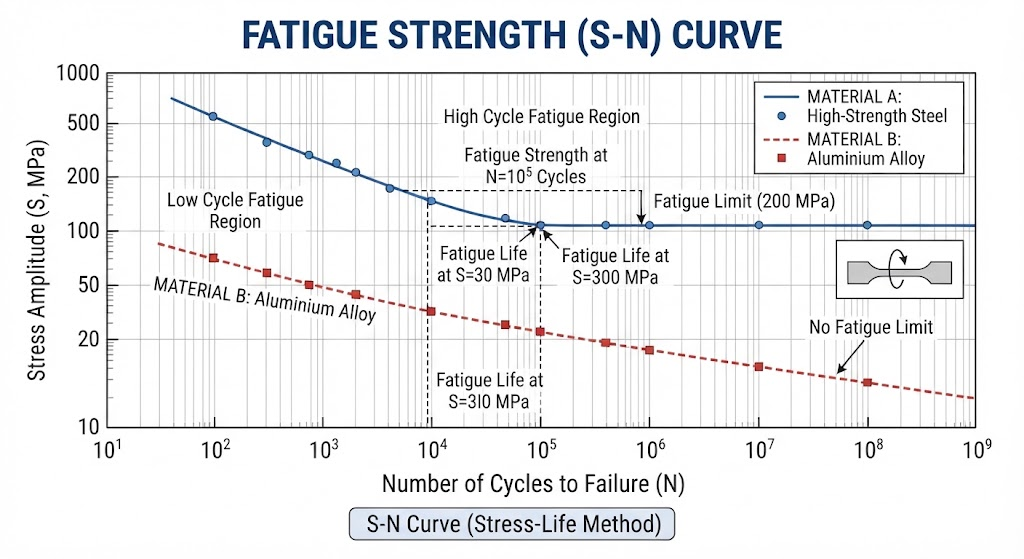
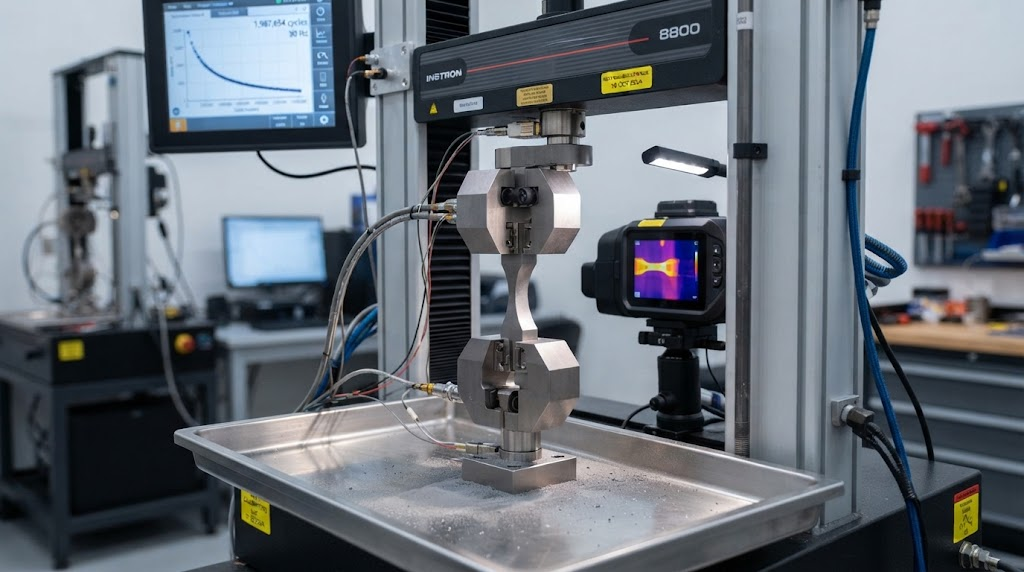
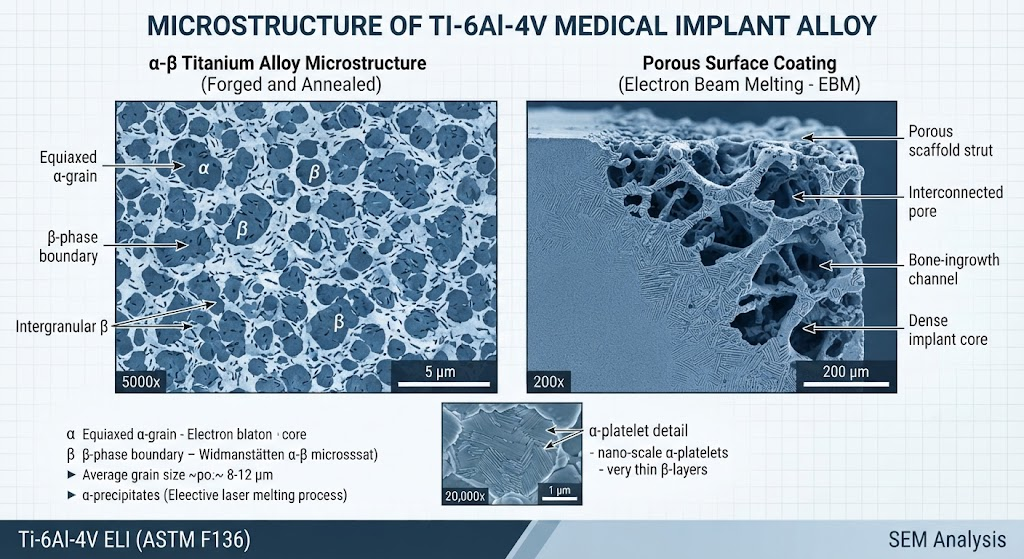
Tensile values alone do not guarantee clinical success. Implant fatigue resistance is dictated by grain morphology. Coarse lamellar structures exhibit lower fatigue initiation thresholds compared to fine equiaxed structures.
Thermomechanical processing must yield a fine, equiaxed alpha matrix with uniformly dispersed intergranular beta phase. As measured per ASTM E112, a grain size of Grade 8 or finer (grain diameter ≤ 20 μm) ensures high-cycle fatigue run-outs exceeding 107 cycles at nominal cyclic stresses of 500 to 550 MPa.
The China Titanium Factory 3x VAR Purity & Microstructural Protocol
Industrial melting routes often permit recycled titanium scrap, introducing micro-inclusions and chemical variance. China Titanium Factory implements a zero-scrap smelting and thermomechanical control procedure for medical materials.
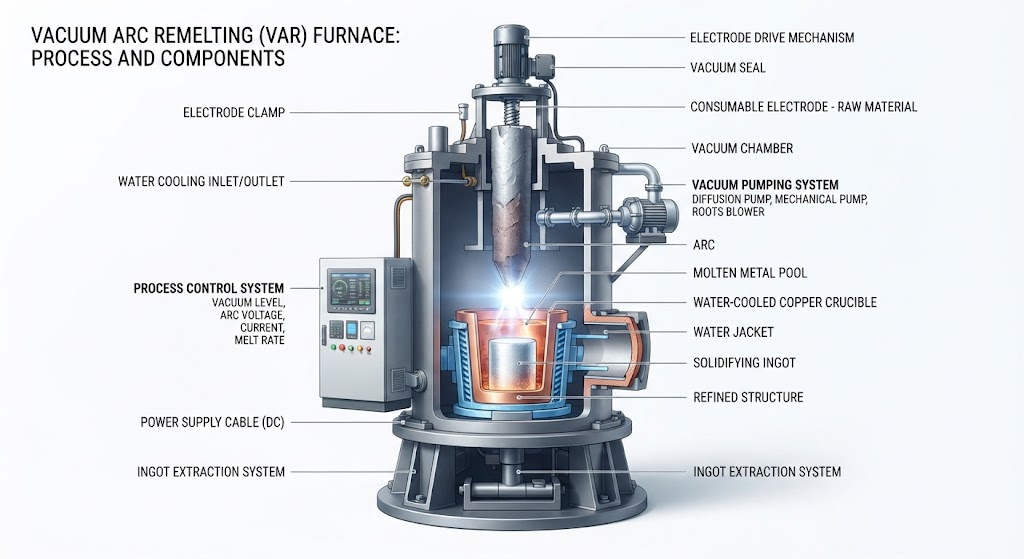
Our manufacturing protocol follows four metallurgical quality gates:
100% 0-Grade Virgin Sponge Selection: We exclusively charge small-particle, high-purity 0-grade titanium sponge, eliminating high-density inclusions (HDI) and low-density inclusions (LDI).
Triple Vacuum Arc Remelting (3x VAR): Ingots undergo three successive melting cycles in high-vacuum furnaces (≤ 10-2 Pa) to ensure complete chemical homogenization and gas degassing.
Multi-Directional Beta Forging & Alpha-Beta Finish: Billet breakdown occurs above the beta transus (approx. 980°C) followed by substantial plastic deformation (>65% reduction) within the alpha-beta window (720°C–800°C) to recrystallize the structure into equiaxed grains.
AMS 2631 Class A1 Ultrasonic NDT: Finished bars undergo multi-channel immersion ultrasonic inspection to detect subsurface internal voids or micro-discontinuities down to 0.8 mm flat-bottom holes.
Biomedical Applications: Precision Orthopedics, Trauma Fixation, and Dental Solutions
ASTM F136 Ti-6Al-4V ELI is widely specified for permanent and semi-permanent skeletal reconstruction. Its low elastic modulus (approx. 110 GPa) relative to 316L stainless steel (approx. 200 GPa) or Co-Cr alloys (approx. 240 GPa) reduces stress shielding, promoting continuous bone remodeling around implants.
Core medical device categories relying on ASTM F136 include:
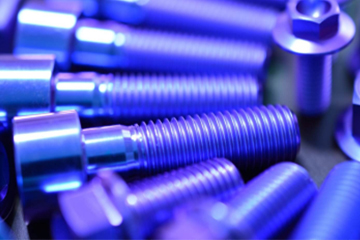
Spine & Trauma Fixation: Polyaxial pedicle screws, occipito-cervical plates, intramedullary nails, and cannulated locking bone screws.
Joint Arthroplasty: Femoral stems, acetabular shells, and tibial tray frameworks requiring dynamic fatigue strength under body weight loads.
Dental Implantology: Endosseous root fixtures, multi-unit abutments, and pre-milled prosthetic bars milled from titanium disc blanks for dental CAD/CAM.
Maxillofacial & Cranial Reconstruction: Low-profile osteosynthesis mini-plates, mesh systems, and reconstruction plates.
ASTM F136 naturally develops a stable, self-passivating titanium dioxide (TiO2) protective layer that resists physiological chloride attack. The alloy is also compatible with surface modifications including Type II hard anodization for anti-galling thread performance, and grit-blasted/acid-etched (SLA) treatments that improve direct osseointegration.
Specialized Form Factors for High-Precision Medical Manufacturing
Medical components require distinct mill product geometries and surface finishes to meet manufacturing tolerances.
China Titanium Factory supplies medical OEMs and CNC machine shops with tailored product forms:
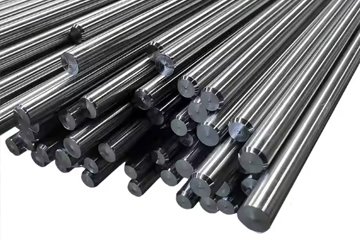
Precision Centerless Ground Bar: Available from ∅ 1.5 mm to 65.0 mm with h6 or h7 outer diameter tolerances. Sourced as medical grade titanium bar for continuous feed in high-speed Swiss lathes.
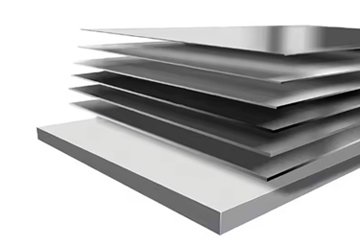
Dental CAD/CAM Disc Blanks: Diameter 98.5 mm and 95 mm stepped discs (10 mm to 30 mm thickness) subjected to vacuum stress relief to avoid post-machining warping.
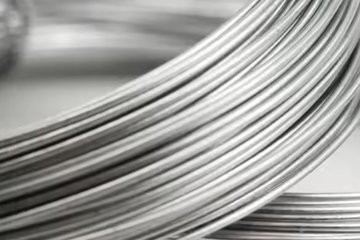
Fine Medical Wire: Spooled wire from ∅ 0.15 mm to 2.0 mm with mirror surface finishes (Ra < 0.2 μm) for bone suture anchors, cerclage wiring, and vascular clips.
Spherical Additive Powders: Plasma-atomized Ti-6Al-4V ELI powder (15–53 μm for SLM / LPBF, 45–106 μm for EBM) with sphericity exceeding 99% and low oxygen pickup for porous 3D trabecular bone scaffolds.
Machining Performance & Tool Wear Optimization on Swiss CNC Screw Lathes
Machining ASTM F136 presents technical challenges due to titanium's low thermal conductivity (approx. 6.7 W/m·K) and chemical reactivity at high temperatures. Cutting heat concentrates near the tool edge, accelerating flank wear, depth-of-cut notching, and workpiece work-hardening.
Unrelieved residual stresses in raw stock can also cause thin pedicle screws to warp upon parting off. China Titanium Factory addresses this by applying vacuum stress-relief annealing (600°C ± 10°C for 2 hours) followed by precision centerless grinding.
| Machining Operation | Cutting Speed (Vc, m/min) | Feed Rate (f, mm/rev) | Recommended Tooling & Coating |
|---|---|---|---|
| Rough Turning | 45 – 65 m/min | 0.08 – 0.15 mm/rev | Micro-grain Carbide (ISO S10-S20), AlTiN or TiAlSiN PVD |
| Finish Turning | 60 – 85 m/min | 0.02 – 0.06 mm/rev | Uncoated Sharp Polished Carbide or Fine PVD TiAlN |
| Micro Thread Whirling | 30 – 50 m/min | 0.03 – 0.08 mm/tooth | Dedicated insert profiles with high-pressure internal coolant |
| Deep Hole Gun Drilling | 25 – 40 m/min | 0.008 – 0.025 mm/rev | Solid carbide drills with ≥ 70 bar high-pressure through-coolant |
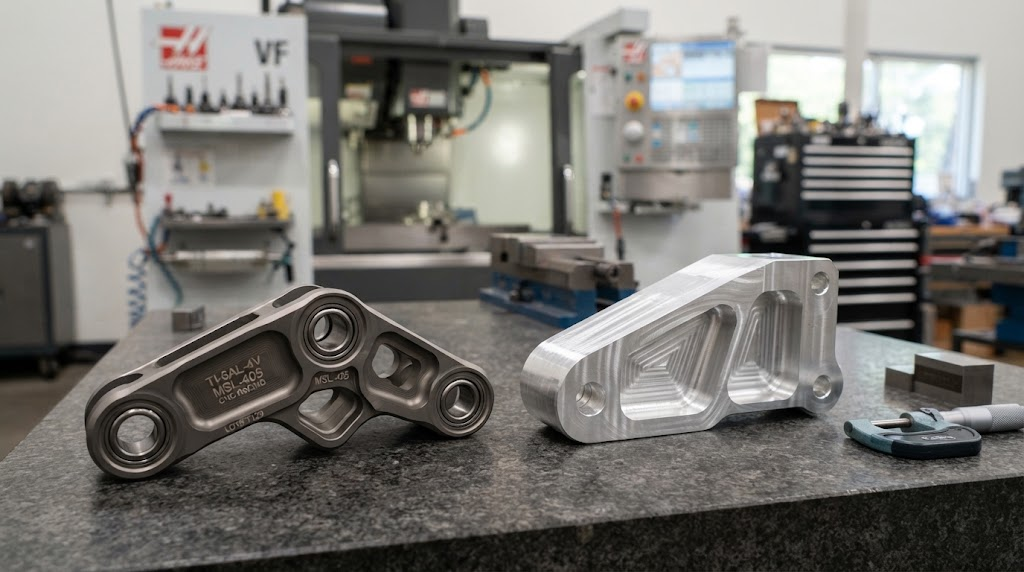
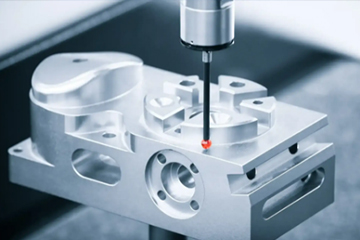
For medical manufacturers seeking ready-to-use parts, our in-house precision CNC titanium machining services utilize multi-axis Citizen Swiss lathes to machine complex implant profiles directly from certified stock.
Global Standards Harmonization & Regulatory Compliance: ISO 5832-3, MDR, and FDA 510(k)
Biomedical material sourcing requires alignment across international standards and regulatory bodies, including the US FDA and EU MDR (2017/745).
ASTM F136 shares parity with ISO 5832-3 (Implants for surgery — Metallic materials — Part 3: Wrought titanium 6-aluminium 4-vanadium alloy). Both standards enforce the same 0.13% oxygen cap and mechanical property thresholds.
| Standard Specification | Governing Body | Material Scope | Regulatory Alignment |
|---|---|---|---|
| ASTM F136 | ASTM International | Wrought Ti-6Al-4V ELI Alloy | FDA Recognized Consensus Standard |
| ISO 5832-3 | ISO International | Wrought Ti-6Al-4V (Composition D) | EU MDR Annex II Technical Documentation |
| ASTM F67 | ASTM International | Unalloyed CP Titanium (Grades 1–4) | Dental fixtures, cranioplasty (lower strength) |
| ASTM F1472 | ASTM International | Wrought Standard Ti-6Al-4V (Non-ELI) | Higher oxygen (0.20%); higher yield, lower toughness |
Step-by-Step Protocol to Authenticate ASTM F136 Mill Test Certificates (EN 10204 3.1)
To avoid non-compliant or relabeled commercial Grade 5 titanium, quality assurance engineers should use the following audit procedure when reviewing EN 10204 3.1 Material Test Certificates (MTC):
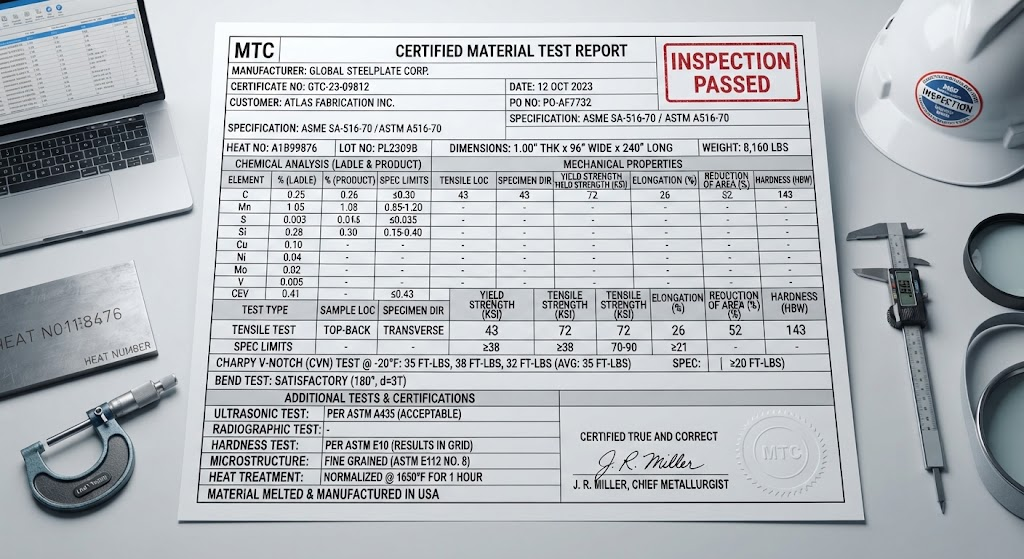
Step 1 — Interstitial Gas Cross-Check: Verify certified values for Oxygen (≤ 0.130%) and Hydrogen (≤ 0.0125%). Testing should be performed using Inert Gas Fusion (IGF) per ASTM E1409 and ASTM E1447.
Step 2 — Melting Method Verification: Ensure the MTC explicitly states Vacuum Arc Remelting (2x or 3x VAR) or Electron Beam (EB) cold-hearth melting without scrap blend designations.
Step 3 — Microstructure Documentation: Confirm the presence of metallographic inspection results stating an equiaxed alpha-beta structure with grain size ≥ 8 per ASTM E112.
Step 4 — NDT Test Records: Confirm ultrasonic testing data referenced to AMS 2631 Class A1/AA or equivalent medical immersion standards.
Step 5 — Heat Traceability: Verify that the heat number stamped on bar ends matches the ingot melt run and accompanying lab test records.
Frequently Asked Questions About ASTM F136 Medical Titanium
What is the primary difference between Grade 23 (ASTM F136) and Grade 5 (ASTM B348)?
Grade 23 is the extra-low interstitial (ELI) version of Grade 5. It caps oxygen at 0.13% (compared to 0.20% for Grade 5) and iron at 0.25% (compared to 0.40%). This difference delivers higher fracture toughness, improved ductility, and better dynamic fatigue resistance under cyclic in vivo loading.
Can ASTM F1472 be used interchangeably with ASTM F136?
No. ASTM F1472 covers standard wrought Ti-6Al-4V with up to 0.20% oxygen content. ASTM F136 specifies ELI chemistry with an oxygen limit of 0.13%. ASTM F136 is required whenever higher fracture toughness and lower notch sensitivity are needed.
Why is stress-relief annealing critical before Swiss CNC machining?
Cold-drawn or non-relieved titanium bars retain internal stresses. During aggressive turning, asymmetric metal removal releases these stresses, leading to bar warping, tool chatter, and thread lead errors. Vacuum stress-relief annealing stabilizes the core matrix.
Is ASTM F136 titanium safe for MRI scanning?
Yes. ASTM F136 is completely non-ferromagnetic. It produces minimal image artifacts during magnetic resonance imaging (MRI) and computed tomography (CT) scans compared to stainless steels.
How to Source Certified ASTM F136 Titanium from China Titanium Factory
China Titanium Factory provides an integrated, fully traceable supply chain for medical-grade titanium mill products and machined components.
The 3-Step Medical Sourcing Framework
Submit Drawing & Specifications: Provide your diameter, form factor, tolerance (e.g., h6 centerless ground), and standard requirements (ASTM F136 / ISO 5832-3).
Technical Review & Sample Package: Our metallurgical team delivers DFM feedback within 2 hours, confirms raw material yield, and prepares sample stock with complete EN 10204 3.1 MTCs.
Production & Traceable Global Dispatch: Certified production with full ISO 13485 batch traceability, ultrasonic inspection reports, and express worldwide delivery.