




















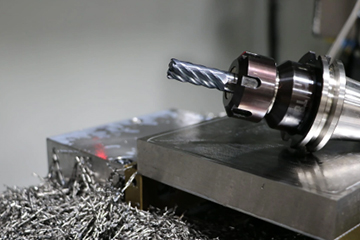


Best Electrolyte Solutions for Titanium Anodizing: AMS 2488 Formulations, Voltage-to-Color Physics & Substrate Traceability
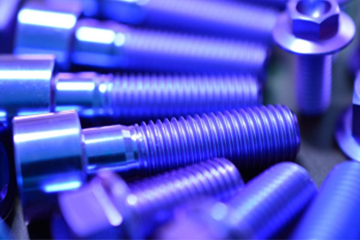
Selecting the best electrolyte solutions for titanium anodizing requires matching bath chemistry, ionic conductivity, and dielectric breakdown limits to the target SAE AMS 2488 classification and underlying alloy metallurgy. Unlike aluminum anodizing, which grows a porous Al2O3 structure requiring organic dyes and hydrothermal sealing, titanium anodizing forms a non-porous, crystalline or amorphous TiO2 barrier layer. At Xi'an Shiguang Jingyan Technology Co., Ltd., our metallurgical and surface finishing engineering teams pair Double and Triple Vacuum Arc Remelted (VAR) titanium substrates with precision electrolyte control to guarantee repeatable optical interference colors and anti-galling conversion coatings.
Electrochemical Fundamentals & Thin-Film Oxide Physics of Titanium Anodizing
Titanium anodizing operates via high-field ionic conduction rather than porous dissolution, producing a dense, non-porous titanium dioxide (TiO2) barrier film whose thickness scales linearly with applied DC voltage. While aluminum anodizing (MIL-A-8625 Type II/III) relies on sulfuric acid dissolution to open hexagonal pores for dye absorption, titanium Type III anodizing generates chromatic hues purely through thin-film optical interference. Light reflecting off the air-oxide interface interferes constructively and destructively with light reflecting off the oxide-metal substrate interface, eliminating UV dye fading.
Under SAE AMS 2488, industrial titanium anodizing is divided into two distinct functional regimes: Type II and Type III. Type II utilizes strongly alkaline baths (pH ≥ 13) to grow a 1.0–2.5 μm matte gray ceramic conversion layer engineered to prevent galling, cold-welding, and fretting fatigue on aerospace threads and hydraulic pistons. Type III utilizes acidic or neutral electrolytes (10–115 V DC) to grow 15–220 nm interference films for rapid visual part identification in surgical kits and aerospace assemblies.
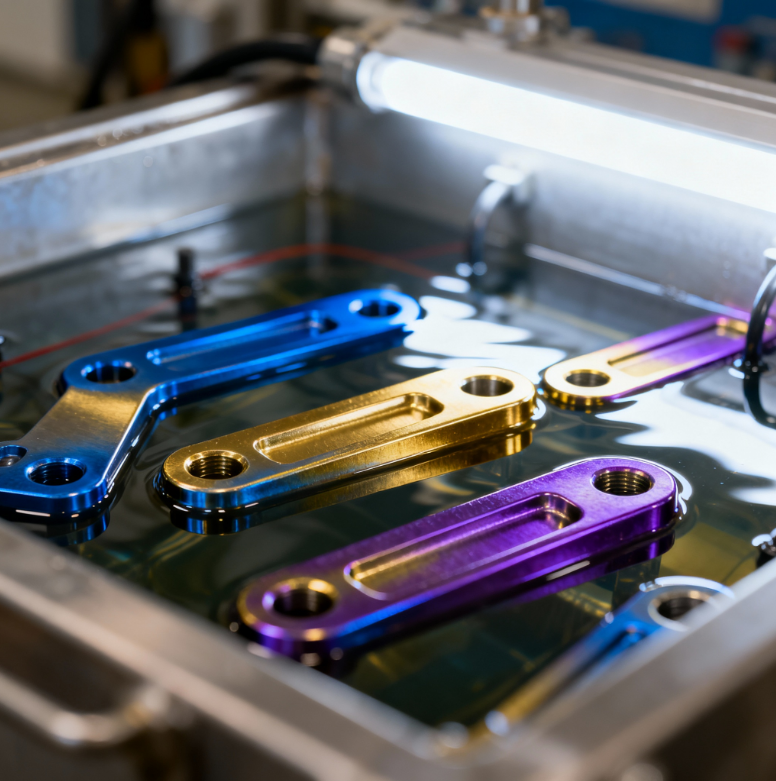
Anodic Oxide Growth Rate (1.5 nm/V to 2.0 nm/V) and Refractive Index Mechanics
Anodic TiO2 film thickness follows the linear high-field growth equation d = α × V, where the growth constant α ranges from 1.5 nm/V to 2.0 nm/V (15 Å/V to 20 Å/V) depending on electrolyte ionic strength and current density (5–20 mA/cm2). Because the refractive index of anodic TiO2 is exceptionally high (n ≈ 2.40–2.55 at 550 nm), even nanometer-scale thickness changes produce dramatic shifts in the optical path difference (2n·d·cosθ = mλ) governed by Snell's Law.
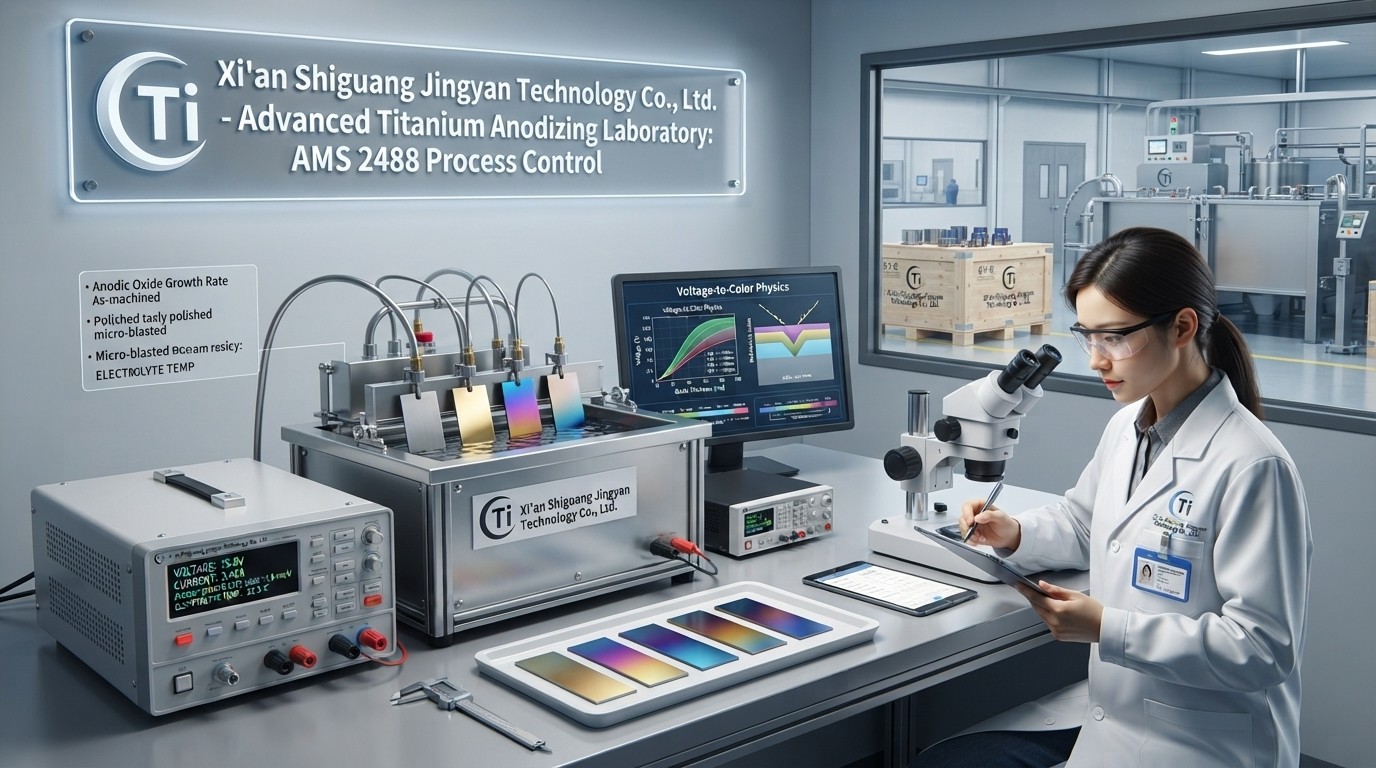
For precision CNC engineers evaluating how heavy is titanium relative to its surface treatment, the mass gain and dimensional impact of Type III anodizing are mathematically negligible. With base alloy densities of 4.51 g/cm3 for CP Titanium Grade 2 and 4.43 g/cm3 for Ti-6Al-4V Grade 5, a 100 nm TiO2 barrier layer adds less than 0.04 mg/cm2 of mass and expands external part dimensions by only 0.1 μm. Consequently, tight aerospace and medical tolerances (±0.005 mm) remain completely intact post-anodizing.
Maintaining uniform current density across complex 5-axis geometries requires strict control of bath agitation and cathode-to-anode surface area ratios (typically ≥ 2:1 using platinized titanium or 316L stainless steel cathodes). If localized Joule heating elevates bath temperature above 25°C, chemical dissolution accelerates at the outer TiO2 boundary, reducing α below 1.5 nm/V and causing downward color drift on high-aspect-ratio blind holes.
Substrate Metallurgy Response: CP Titanium (Grades 1–4) vs Alpha-Beta Alloys (Ti-6Al-4V Gr5 & Gr23 ELI)
Substrate phase composition dictates the chromatic saturation and voltage-to-color calibration of any titanium anodizing bath. Commercially Pure (CP) Titanium Grades 1 through 4 consist of a 100% hexagonal close-packed (hcp) alpha phase, which oxidizes uniformly into a chemically homogeneous TiO2 barrier film with high spectral reflectance. Conversely, alpha-beta alloys such as Ti-6Al-4V Grade 5 (AMS 4928) and Grade 23 ELI (ASTM F136) contain 5.5–6.75% aluminum and 3.5–4.5% vanadium, creating dual-phase micro-galvanic heterogeneity.
During anodic polarization of Ti-6Al-4V, aluminum-rich alpha grains and vanadium-rich body-centered cubic (bcc) beta grains oxidize at different ionic transport rates. Co-incorporation of Al2O3 and vanadium oxides (V2O5 / VO2) into the TiO2 lattice alters local electronic conductivity, increases optical absorption, and reduces the effective growth constant to 1.4–1.6 nm/V. As a result, Ti-6Al-4V Grade 5 requires a +3 V to +8 V upward offset compared to CP Grade 2 to achieve equivalent interference hues, and exhibits a slightly muted, satin-like finish.
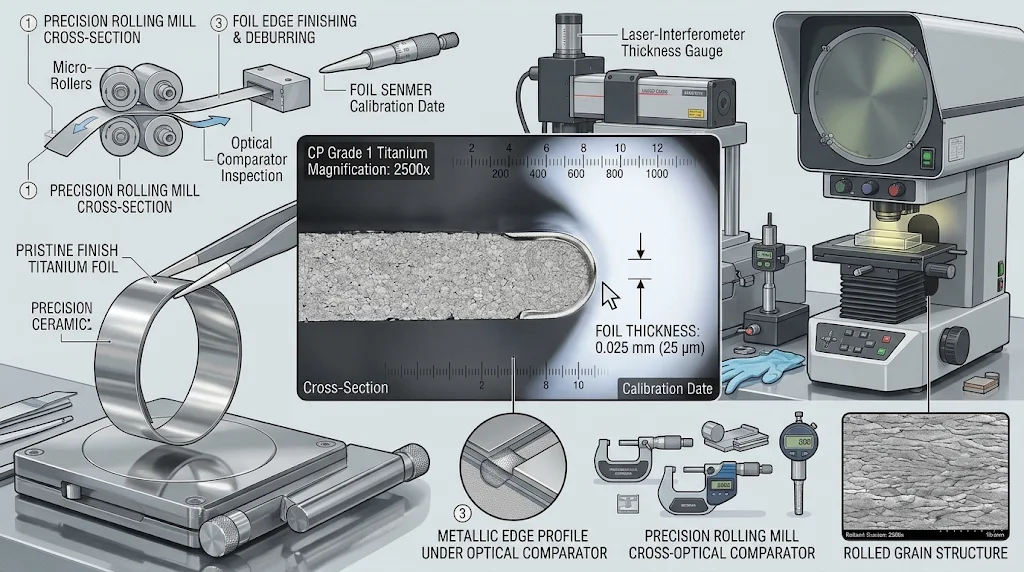
To prevent alloy segregation streaks—visible as permanent tiger-striping after anodizing—procurement teams must specify Double or Triple Vacuum Arc Remelted (VAR) bar and sheet stock. At Xi'an Shiguang Jingyan Technology Co., Ltd., all Titanium Metal Grades are supplied with EN 10204 3.1 Mill Test Certificates verifying interstitial uniformity (Fe ≤ 0.25%, O ≤ 0.20%, C ≤ 0.08%, N ≤ 0.03%, H ≤ 0.015%).
Industrial Electrolyte Formulations & Engineering Parameter Matrix
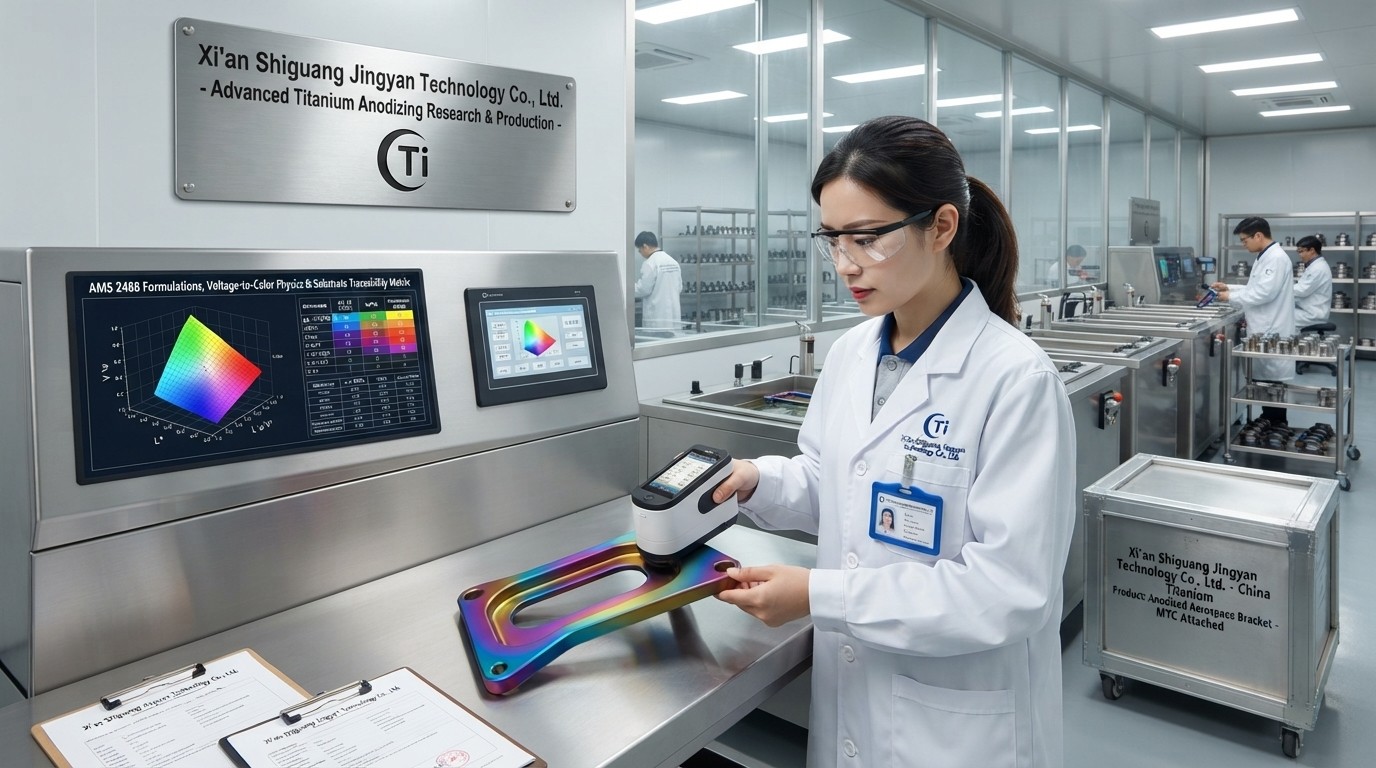
Selecting an industrial titanium anodizing electrolyte requires balancing dielectric breakdown voltage (Vspark), bath conductivity, operating pH, and regulatory residue limits. While hobbyist setups often rely on dilute household detergents, aerospace and medical production lines demand stoichiometric chemical control to prevent oxygen evolution pitting and premature film crystallization. The parameter matrix below benchmarks the six primary industrial formulations used across global manufacturing.
| Electrolyte Formulation | Concentration (g/L & wt%) | Operating pH | Bath Temp (°C) | Growth Rate (nm/V) | Breakdown Ceiling (Vspark) | AMS 2488 Class & Primary Industrial Use |
|---|---|---|---|---|---|---|
| Phosphoric Acid (H3PO4) | 50–200 g/L (5–20 wt%) | 1.0 – 2.0 | 20°C ± 2°C | 1.7 – 2.0 | 110 – 115 V | Type III: Orthopedic implants (ASTM F86), aerospace color coding |
| Phosphoric + Boric Acid (H3PO4 + H3BO3) | 50–100 g/L H3PO4 + 15–25 g/L H3BO3 | 1.2 – 2.2 | 18°C – 22°C | 1.8 – 2.0 | 115 – 125 V | Type III: High-voltage greens/teals on threaded Ti-6Al-4V |
| Trisodium Phosphate (Na3PO4·12H2O) | 20–60 g/L (2–6 wt%) | 11.5 – 12.5 | 20°C – 25°C | 1.6 – 1.8 | 100 – 110 V | Type III: General industrial color coding, low-hazard lines |
| Sulfuric Acid (H2SO4) | 10–150 g/L (1–15 wt%) | < 1.0 | 18°C – 22°C | 1.5 – 1.7 | 75 – 85 V | Type III: Rapid low-voltage (10–60 V) bronze, blue, gold |
| Citric Acid (C6H8O7) | 20–100 g/L (2–10 wt%) | 1.8 – 2.5 | 20°C – 25°C | 1.7 – 1.9 | 105 – 115 V | Type III: Zero-residue dental abutments & spinal cages |
| Alkaline Silicate / NaOH / TSP | 20–50 g/L NaOH + 30–60 g/L TSP + Na2SiO3 | ≥ 13.0 | 20°C – 30°C | N/A (Conversion) | 15 – 30 V (High Current) | Type II: Anti-galling aerospace fasteners & hydraulic actuators |
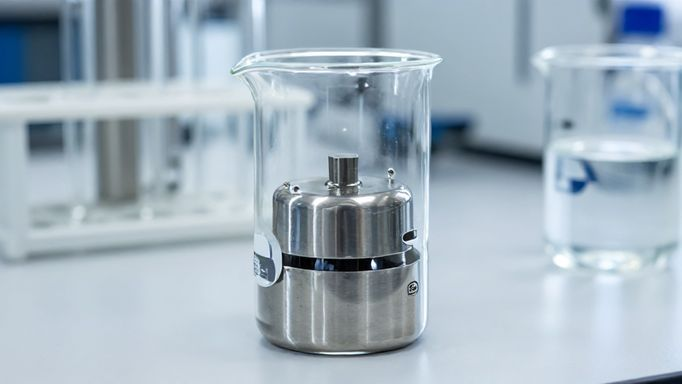
Alkaline & Trisodium Phosphate (TSP) Baths for SAE AMS 2488 Type II Anti-Galling Coatings
SAE AMS 2488 Type II anti-galling coatings require strongly alkaline electrolytes (pH ≥ 13.0) formulated with Sodium Hydroxide (NaOH, 20–50 g/L), Trisodium Phosphate (Na3PO4·12H2O, 30–60 g/L), and Sodium Metasilicate (Na2SiO3) or Sodium Tetraborate (Borax) buffers. Unlike Type III interference baths, Type II operates at 15–30 V under high current density to grow a 1.0–2.5 μm matte gray ceramic conversion layer. This porous outer matrix retains dry-film lubricants (such as MoS2 or PTFE) and prevents cold-welding, galling, and fretting fatigue in aerospace hydraulic actuators and threaded fasteners.
When Trisodium Phosphate (TSP) is used alone at lower concentrations (20–60 g/L, pH 11.5–12.5) without NaOH, it functions as a mild alkaline Type III interference bath capable of reaching 100–110 V. However, industrial QA managers must monitor TSP baths closely for atmospheric CO2 absorption, which converts hydroxide ions into carbonate species, shifting bath conductivity and causing gradual color drift over multi-week production runs.
Phosphoric Acid (H3PO4) Solutions for AMS 2488 Type III Orthopedic & Aerospace Color Coding
Phosphoric Acid (H3PO4) at 5–20 wt% (50–200 g/L, pH 1.0–2.0) is the global benchmark electrolyte for AMS 2488 Type III medical device and aerospace color coding. Under ASTM F86 and ISO 13485 surgical implant protocols, phosphate oxyanions (PO43-) incorporate into the outer TiO2 lattice during anodic growth. This phosphate incorporation suppresses premature amorphous-to-anatase crystallization, enabling smooth voltage ramping up to 110–115 V with minimal oxygen gas pitting.
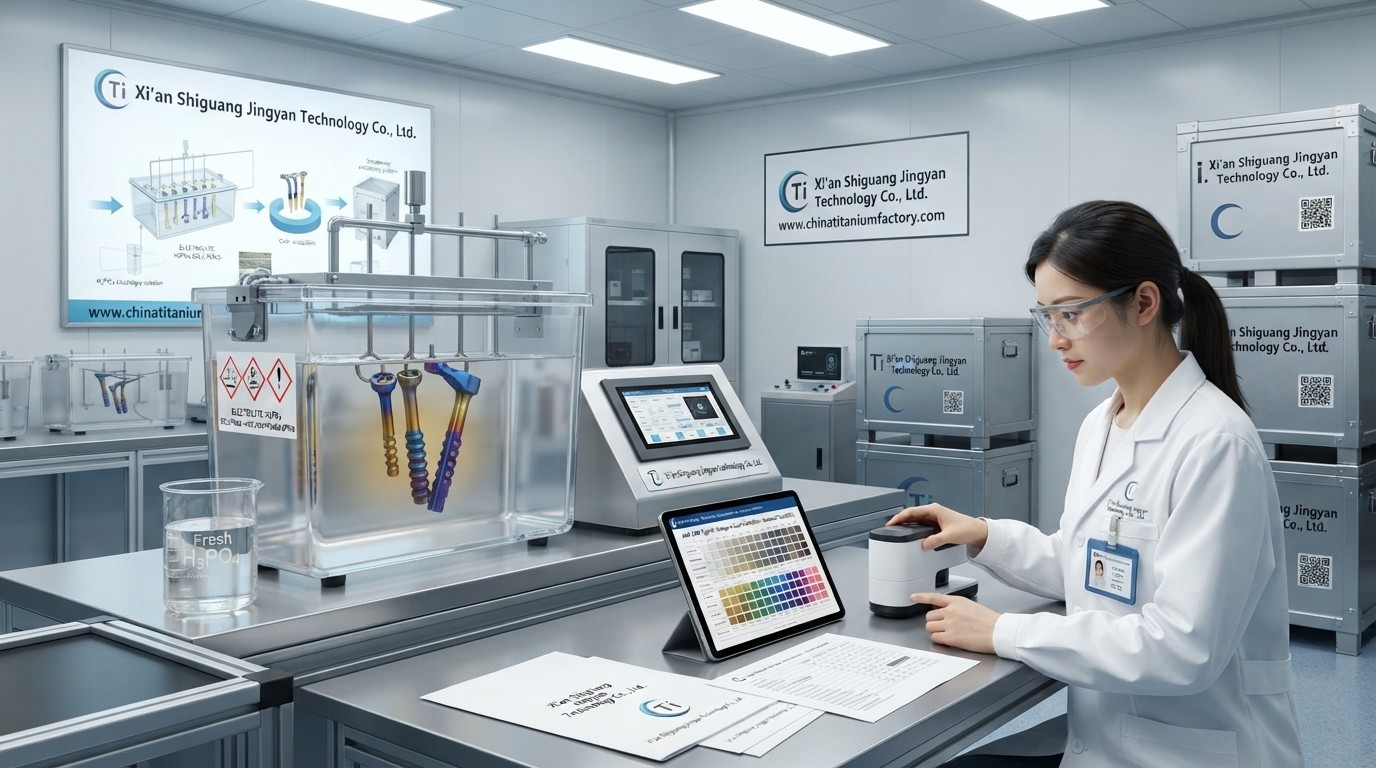
For orthopedic trauma plates and pedicle screws machined from Titanium Bar (ASTM F136 Grade 23 ELI), H3PO4 baths deliver tight batch-to-batch ΔE color consistency without introducing toxic heavy metals or sulfur residues. Furthermore, phosphoric acid exhibits low vapor pressure at 20°C, minimizing fume extraction demands compared to volatile mineral acids.
Sulfuric Acid (H2SO4) and Boric Acid Buffered Baths for High-Stability Anodic Films
Sulfuric Acid (H2SO4, 10–150 g/L, pH < 1.0) and Ammonium Sulfate ((NH4)2SO4, 10–50 g/L) baths provide exceptionally high ionic conductivity, accelerating current decay and shortening cycle times for low-voltage colors (10–60 V). However, unbuffered sulfuric acid suffers from a lower dielectric breakdown ceiling (Vspark ≈ 75–85 V) due to aggressive anodic oxygen evolution (2H2O → O2 + 4H+ + 4e-), which causes micro-pitting and dulls high-voltage greens and teals.
To overcome sharp-edge dielectric arcing on threaded CNC parts and high-voltage aerospace components, process engineers add 15–25 g/L of Boric Acid (H3BO3) to phosphoric or sulfuric baths. Boric acid acts as a weak-acid pH buffer at the anode-electrolyte boundary, stabilizing local electric field gradients and elevating Vspark above 115 V.
Organic Acids (Citric & Tartaric Acid) for Zero-Residue Biocompatible Implants
Citric Acid (C6H8O7, 20–100 g/L, pH 1.8–2.5) and Tartaric Acid are weak organic electrolytes increasingly mandated by dental abutment and spinal cage manufacturers. Because these organic acids contain zero inorganic sulfur, phosphorus, or heavy-metal ions, they eliminate residual anion leachables on porous osteointegration surfaces while simplifying wastewater neutralization and ecological disposal.
Despite lower ionic conductivity than H2SO4, citric acid supports a wide, stable voltage window (10–110 V) with minimal Joule heating when maintained at 20°C ± 2°C. Ramping times are slightly longer (45–90 seconds per batch), but the resulting TiO2 barrier film exhibits high optical clarity and zero-residue biocompatibility.
Specialized Baths for Black Anodized Titanium: PEO / Micro-Arc Oxidation vs Type III Interference
Standard AMS 2488 Type III thin-film interference cannot produce true black anodized titanium because optical phase cancellation only extinguishes narrow wavelength bands, never the entire 380–750 nm visible spectrum simultaneously. Achieving genuine, light-absorbing black anodized titanium requires Plasma Electrolytic Oxidation (PEO), also known as Micro-Arc Oxidation (MAO), operating at 250–450 V DC or pulsed bipolar AC.
In PEO/MAO processing, components are immersed in alkaline silicate-phosphate electrolytes doped with transition metal salts (cobalt, manganese, iron, or vanadate complexes). Above the dielectric breakdown threshold, controlled micro-plasma discharges fuse the TiO2 barrier into a 5–15 μm porous ceramic matrix containing light-absorbing metal oxides. This process delivers superior hardness and matte black optical absorption for tactical optics and aerospace instrumentation, though it requires post-machining allowance for the thicker ceramic build-up.
Anodizing Titanium Color Chart & Dual-Alloy Voltage Calibration (10 V to 115 V)
Reproducible color coding requires calibrating applied DC voltage to both target TiO2 thickness and substrate alloy phase. The dual-alloy calibration table below maps 5 V increments from 10 V to 115 V in a standard 10 wt% H3PO4 bath at 20°C, contrasting CP Titanium Grade 2 against Ti-6Al-4V Grade 5 / Grade 23 ELI.
| Applied Voltage (V DC) | TiO2 Thickness (nm) | TiO2 Thickness (Å) | CP Titanium Grade 2 (Alpha Phase) | Ti-6Al-4V Grade 5 / Gr23 ELI (Alpha-Beta) |
|---|---|---|---|---|
| 10 V | 18 nm | 180 Å | Light Straw / Pale Bronze | Faint Silver-Tan |
| 15 V | 27 nm | 270 Å | Warm Bronze | Dull Bronze |
| 20 V | 36 nm | 360 Å | Deep Bronze-Gold | Muted Brown-Bronze |
| 25 V | 45 nm | 450 Å | Violet-Purple | Dark Purple-Gray |
| 30 V | 54 nm | 540 Å | Royal Blue | Deep Slate Blue |
| 35 V | 63 nm | 630 Å | Cobalt / Sky Blue | Medium Steel Blue |
| 40 V | 72 nm | 720 Å | Light Ice Blue | Pale Blue-Gray |
| 45 V | 81 nm | 810 Å | Silver-Blue | Matte Silver |
| 50 V | 90 nm | 900 Å | Pale Yellow-Silver | Warm Silver |
| 55 V | 99 nm | 990 Å | Champagne Gold | Light Straw |
| 60 V | 108 nm | 1080 Å | Bright Yellow-Gold | Satin Gold |
| 65 V | 117 nm | 1170 Å | Deep Amber-Gold | Rich Bronze-Gold |
| 70 V | 126 nm | 1260 Å | Rose-Magenta | Muted Rose |
| 75 V | 135 nm | 1350 Å | Vibrant Magenta-Pink | Dull Magenta |
| 80 V | 144 nm | 1440 Å | Violet-Pink | Purplish-Pink |
| 85 V | 153 nm | 1530 Å | Blue-Teal | Muted Teal |
| 90 V | 162 nm | 1620 Å | Emerald Teal | Dark Seafoam |
| 95 V | 171 nm | 1710 Å | Bright Green | Olive-Green |
| 100 V | 180 nm | 1800 Å | Yellow-Green | Muted Chartreuse |
| 105 V | 189 nm | 1890 Å | Green-Gold | Dull Yellow-Green |
| 110 V | 198 nm | 1980 Å | Third-Order Pink-Green | Satin Gray-Green (Near Vspark) |
| 115 V | 207 nm | 2070 Å | Teal-Green (Sparking Limit) | Dielectric Breakdown Risk |
Achieving Reproducible Anodized Gold Titanium: First-Order (18–25 V) vs Second-Order (60–65 V) Hues
Engineering specifications for anodized gold titanium must explicitly distinguish between first-order bronze-gold (18–25 V, ~32–45 nm TiO2) and second-order high-luminance yellow-gold (58–65 V, ~105–120 nm TiO2). Although both voltage windows produce golden hues, second-order gold at 60–65 V is strongly preferred for surgical instruments and high-touch aerospace hardware due to superior optical stability.
When human skin contacts an anodized surface, sebum oils (refractive index n ≈ 1.48) coat the air-oxide boundary, altering the optical path length. On thin first-order films (35 nm), sebum contamination shifts the interference minimum dramatically, turning gold surfaces dull brown or purple. On thicker second-order films (110 nm), the fractional refractive shift is minimized, preserving bright gold reflectance even after handling.
High-Voltage Dielectric Breakdown (Vspark) and Anatase Crystallization Limits
Above 85–115 V, third-order interference colors (greens, teals, and pinks) approach the dielectric breakdown ceiling (Vspark) of the anodic TiO2 barrier. Under electric fields reaching 5 × 10⁶ to 107 V/cm, the amorphous TiO2 film undergoes localized crystallization into the anatase phase, generating internal compressive stress and micro-fissures.
Once micro-arcing initiates, vigorous oxygen gas evolution (2H2O → O2 + 4H+ + 4e-) ruptures the barrier film, creating powdery white spots and voltage stalling. For thin-walled aerospace components or Titanium Sheet skins requiring 95–105 V green finishes, operators must use chilled (18°C) boric-acid-buffered H3PO4 baths and limit current density below 10 mA/cm2.
Pre-Treatment Stoichiometry, Operational Boundaries & Quality Assurance Protocols
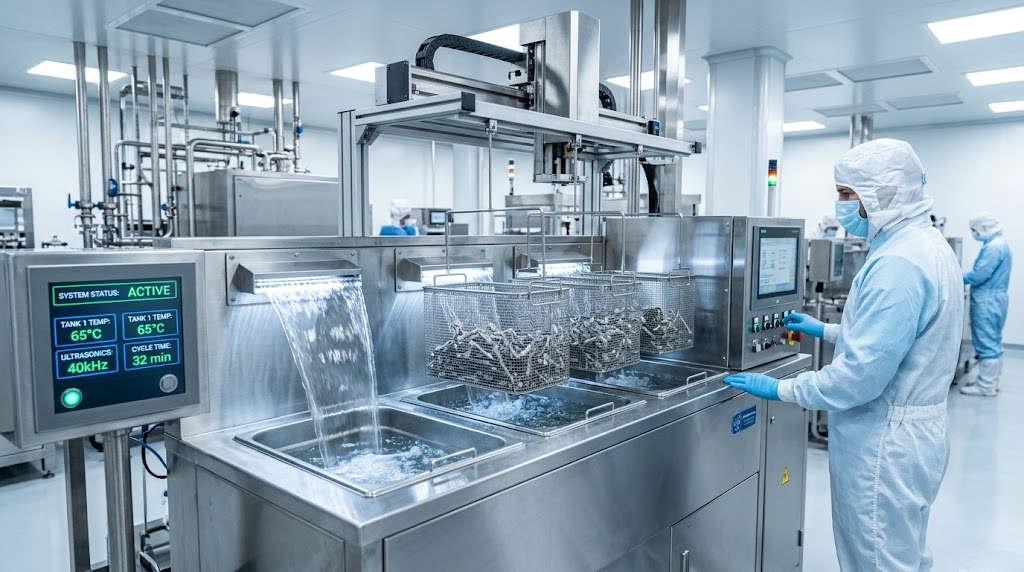
Over 80% of industrial titanium anodizing rejections stem from inadequate surface preparation or unverified substrate metallurgy rather than electrolyte failure. A rigorous pre-treatment workflow—combining alkaline degreasing, ASTM B600 acid activation, and ASTM D1193 Type II deionized water rinsing—is mandatory to establish a chemically uniform, oxide-free metallic interface prior to polarization.
ASTM B600 Nitric-Hydrofluoric Acid (HNO3/HF) Pickling Ratios & Hydrogen Embrittlement Prevention
Pre-anodizing acid activation per ASTM B600 must strictly maintain a minimum 10:1 weight ratio of Nitric Acid (15–30 wt% HNO3) to Hydrofluoric Acid (1.5–3.0 wt% HF) at 20°C–45°C. In this stoichiometric reaction, HF rapidly dissolves the native passive TiO2 scale (TiO2 + 4HF → TiF4 + 2H2O), while the oxidizer excess (HNO3) immediately passivates the nascent metal and suppresses atomic hydrogen absorption.
If the HNO3:HF ratio drops below 10:1—or if straight hydrochloric or sulfuric acid is substituted—nascent titanium absorbs atomic hydrogen, risking brittle delayed fracture. For aerospace and medical lots, bulk hydrogen content must be verified below 150 ppm (and ≤ 125 ppm for Grade 23 ELI) via ASTM E1447 inert gas fusion testing.
Alpha-Case Removal Allowances (0.5–1.2 mm), Surface Roughness (Ra), and VAR Melt Homogeneity
Residual oxygen-stabilized alpha-case formed during hot rolling or forging must be completely removed via 0.5 mm to 1.2 mm CNC machining plus AMS 2642 metallographic etch verification prior to anodizing. Alpha-case exhibits altered electrical conductivity and brittle surface micro-cracking, which manifests as permanent blotchy white or gray dead zones after anodizing.
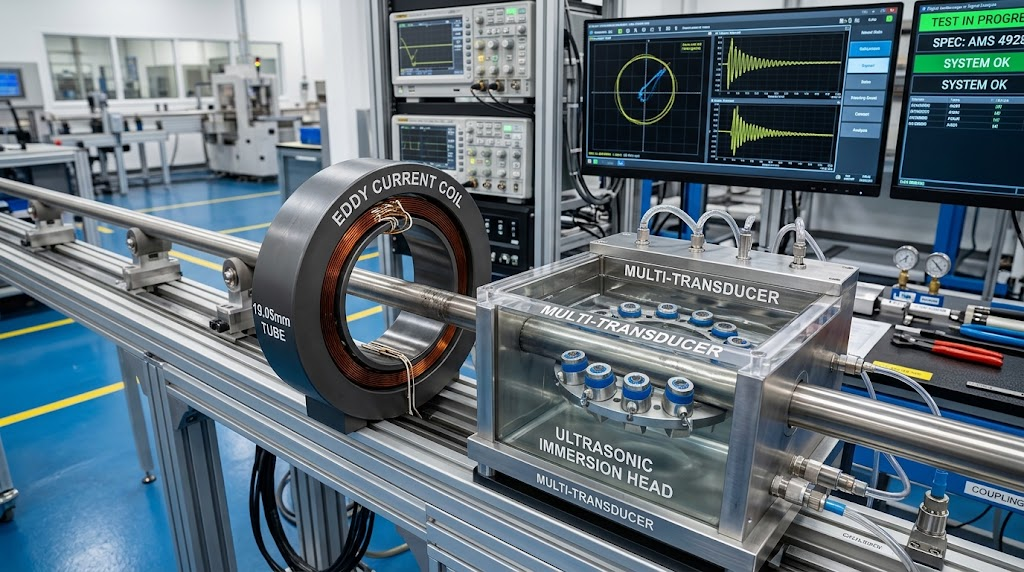
Surface roughness (Ra) also governs final chromatic perception: mirror-polished substrates (Ra ≤ 0.1 μm) yield high-chroma, jewel-like specular colors, whereas glass-bead-blasted surfaces (Ra 1.6 μm) produce matte, diffuse hues. At Xi'an Shiguang Jingyan Technology Co., Ltd., our Titanium CNC Machining division delivers alpha-case-free, centerless-ground and 5-axis finished components backed by AMS 2631 Class AA ultrasonic inspection and Double/Triple VAR melt traceability.
Operational Taboos: Halide Pitting Thresholds (Cl- ≤ 25 ppm), Abrasive Wear Limits & Chemical Attack
To prevent catastrophic batch failure and field corrosion, engineering teams must enforce four strict operational boundaries:
Deionized Water Purity: Make-up and rinse water must conform to ASTM D1193 Type II with chloride content Cl- ≤ 25 ppm and conductivity ≤ 5.0 μS/cm; elevated chlorides trigger localized halide breakdown pitting above 60 V.
Zero Fluoride Cross-Contamination: Even trace hydrofluoric acid (HF) dragged into the anodizing tank from ASTM B600 pickling will dissolve the TiO2 barrier film faster than it can grow.
Abrasive Wear Limitations: Type III interference films (15–220 nm) offer high UV stability but minimal sliding wear resistance; high-contact mechanical interfaces require AMS 2488 Type II or PVD TiN coatings.
Chemical Service Taboos: Anodized titanium must never be deployed in reducing acids (HF, HCl, concentrated H2SO4), anhydrous methanol, fuming nitric acid, or dry chlorine gas.
Technical FAQ: Resolving Anodizing Defects, Color Drift & Specification Audits
Why does Ti-6Al-4V Grade 5 turn a duller or shifted color compared to CP Grade 2 at the exact same voltage and electrolyte concentration?
CP Titanium Grade 2 is a 100% hcp alpha-phase alloy that forms a pure, optically clear TiO2 barrier layer at 1.8–2.0 nm/V. Ti-6Al-4V Grade 5 is a dual-phase alpha-beta alloy; co-oxidation of aluminum and vanadium into Al2O3 and V2O5 lowers the growth rate to 1.4–1.6 nm/V and increases light absorption, requiring a +3 V to +8 V upward offset.
What causes powdery white spots, pitting, or voltage stalling above 70 V during Type 3 titanium anodizing?
Powdery white spots and voltage stalling above 70 V indicate dielectric breakdown (Vspark) driven by excessive bath temperature (> 25°C), chloride contamination (Cl- > 25 ppm), or unbuffered sulfuric acid electrolytes. Switching to a chilled (20°C) 10 wt% H3PO4 bath buffered with 20 g/L Boric Acid (H3BO3) eliminates oxygen evolution pitting.
Can anodized titanium be stripped and re-anodized without altering critical CNC dimensional tolerances?
Yes. A brief 5–15 second immersion in a controlled 10:1 HNO3:HF (ASTM B600) pickling bath strips the 15–220 nm TiO2 interference film while removing less than 1–2 μm of base metal, preserving tight CNC tolerances. However, repeated stripping of Type II (1.0–2.5 μm) coatings is not recommended on precision threads.
How do procurement teams specify substrate quality on Purchase Orders to guarantee batch-to-batch anodizing color uniformity?
PO SPECIFICATION TEMPLATE:
MATERIAL GRADE: Ti-6Al-4V ELI per ASTM F136 / CP Ti Gr2 per ASTM B348 (Double/Triple VAR Melt).
SURFACE CONDITION: 100% Alpha-Case Free (0.5–1.2 mm machining allowance verified per AMS 2642); Surface Roughness Ra ≤ 0.4 μm.
NDT & CERTIFICATION: AMS 2631 Class AA Ultrasonic Inspection; EN 10204 3.1 MTC with ASTM E1447 Hydrogen ≤ 150 ppm.
FINISHING STANDARD: SAE AMS 2488 Type III (H3PO4 Electrolyte, Target Voltage ± 0.5 V) or Type II Anti-Galling (pH ≥ 13).
Related Technical Specifications & Material Grade Hub
| Product Line & Specification | Primary Alloys & Standards | Anodizing & Engineering Fit | Technical Resource |
|---|---|---|---|
| Titanium Metal Grades | CP Gr1, Gr2, Gr4; Ti-6Al-4V Gr5, Gr23 ELI | Alpha vs. Alpha-Beta voltage-to-color calibration | Titanium Metal Grades |
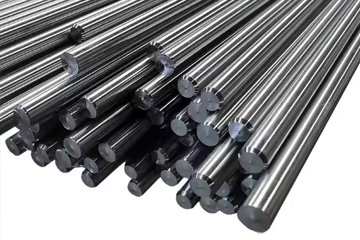
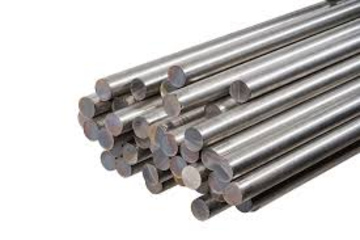
| Titanium Bar & Rod | ASTM B348, ASTM F136, AMS 4928 | Orthopedic trauma screws & aerospace fasteners | Titanium Bar |
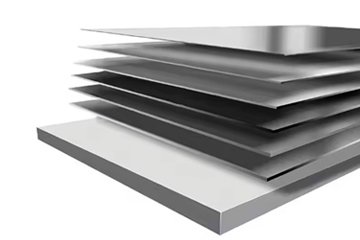
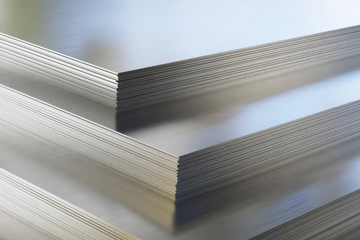
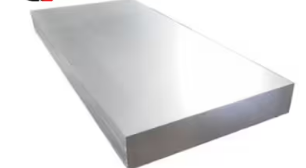
| Titanium Sheet & Plate | ASTM B265, AMS 4911 | Aerospace skins & architectural interference panels | Titanium Sheet |
| Titanium CNC Machining | 5-Axis Precision, Ra ≤ 0.4 μm | Alpha-case removal & pre-anodize surface prep | Titanium CNC Machining |
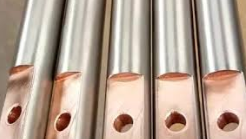
| MMO Titanium Anodes | Gr1/Gr2 Substrate + IrO2/Ta2O5 | Industrial electrochemical & anodizing tank cathodes | Titanium Anodes |
Technical Consultation & Mill Test Certificate (MTC) Requests
Partner with Xi'an Shiguang Jingyan Technology Co., Ltd. for Double/Triple VAR titanium substrates and turnkey AMS 2488 surface finishing:
Step 1: Upload 3D CAD/DFM files (STEP, IGES, DWG) for rapid tolerance verification and target anodizing voltage matching.
Step 2: Receive a 12-hour DFM feasibility feedback report & certified EN 10204 3.1 MTC + AMS 2631 Ultrasonic Inspection sample dossier.
Step 3: Direct video engineering consultation with our Senior Metallurgical Staff to finalize batch traceability and ISPM 15 export packaging.
Submit Engineering RFQ & Request MTC Dossier
Direct Engineering Desk: sales@chinatitaniumfactory.com