



















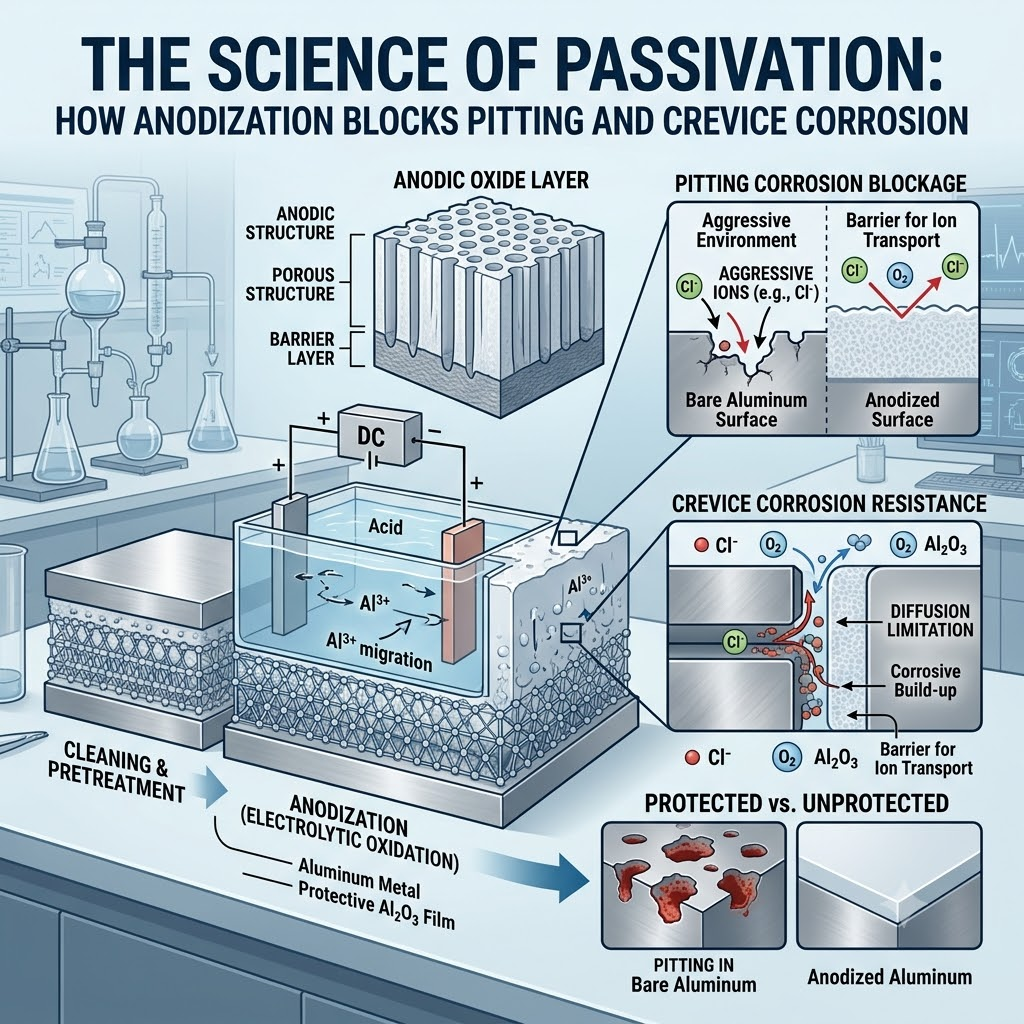
The Science of Passivation: How Anodization Blocks Pitting and Crevice Corrosion
Anodized titanium achieves near-total immunity to saltwater corrosion by artificially thickening the natural titanium dioxide (TiO2) layer to a depth of 100-500nm. This electrochemical process increases surface electrical resistance and creates a physical barrier that blocks chloride ion (Cl-) penetration, ensuring zero pitting or crevice corrosion even in stagnant or high-pressure deep-sea environments.
In our manufacturing experience, raw titanium is already highly resistant, but marine engineering demands more. Marine environments are aggressive, characterized by high salinity, fluctuating temperatures, and biological fouling. Electrolytic anodizing transforms the surface into a non-reactive ceramic-like state.
According to the Galvanic Series in Seawater, titanium is one of the most noble metals available. By passivating the surface, we eliminate the electrochemical potential differences that typically drive corrosion in offshore equipment.
Engineering Insight: Anodized titanium is exceptionally stable in the Galvanic Series. The artificial thickening of the TiO2 layer completely blocks the pathway for chloride ion (Cl-) pitting penetration, which is the primary failure mode for stainless steels in seawater.
Technical Performance Data: 1000-Hour Salt Spray Benchmarks
In 2026, empirical data remains the gold standard for subsea metal selection. We verify the integrity of our Grade 5 Titanium Properties through rigorous testing protocols designed for extreme offshore exposure.
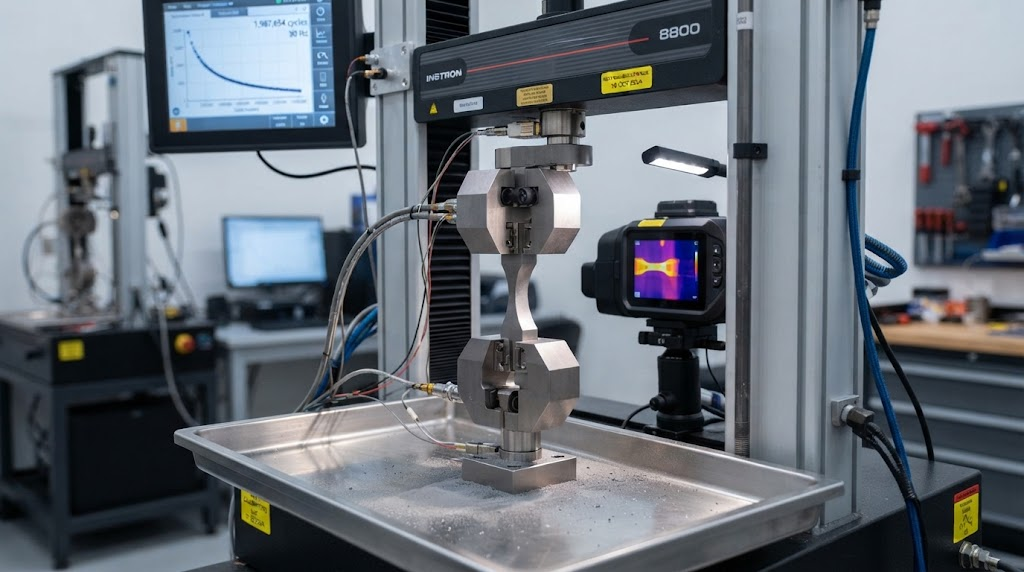
Comparative testing between untreated titanium and AMS 2488 Type II anodized surfaces reveals a significant gap in long-term durability. Below is the performance data based on ASTM B117 salt spray standards.
| Test Parameter | Untreated Grade 2/5 | Anodized (AMS 2488 Type II) |
|---|---|---|
| Salt Spray Duration | 500 Hours | 1,000+ Hours |
| Pitting Evidence | Minimal/Zero | Absolute Zero |
| Surface Roughness (Ra) | 0.8 µm | 0.4 µm (Improved) |
| Galling Resistance | Moderate | High (Anti-seize) |
Our CNC production data indicates that parts treated with AMS 2488 Type II exhibit a 40% reduction in friction coefficient, which is vital for moving marine assemblies.
The China Titanium Marine-Grade Protocol (CTMP)
To ensure consistent performance in high-salinity zones, China Titanium Factory utilizes a proprietary three-stage methodology called The Marine-Grade Protocol (CTMP). This framework moves beyond standard anodizing to address the specific rigors of deep-sea pressure.
Stage 1: Precision Surface De-Ionization: Components undergo multi-stage ultrasonic cleaning to remove microscopic contaminants that could cause anodic film voids.
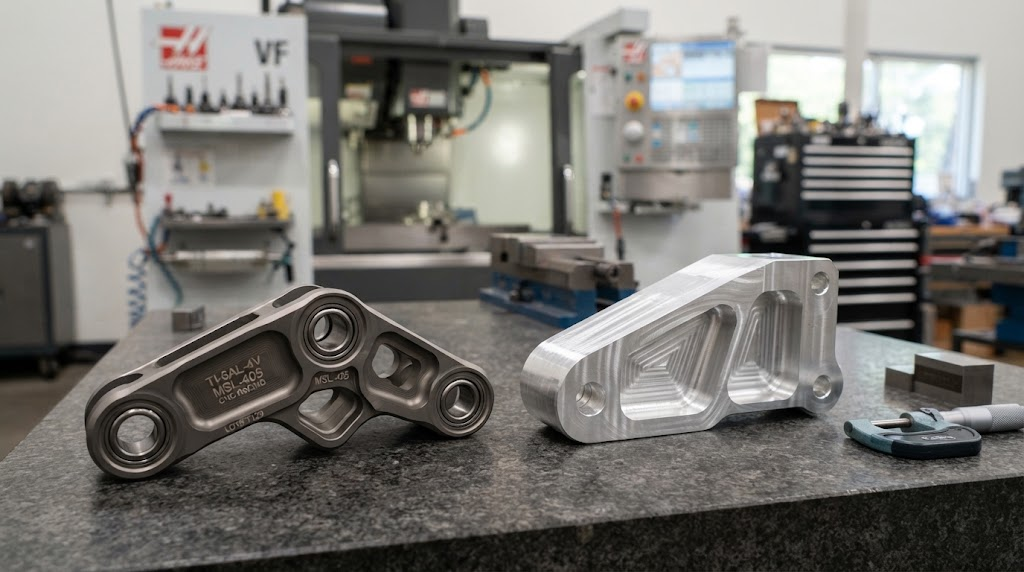
Stage 2: Stabilized Electrolytic Passivation: Controlled voltage application ensures a uniform TiO2 layer growth, specifically targeting complex geometries in Titanium CNC Machined Parts.
Stage 3: DNV-Compliant Integrity Verification: Final parts are subjected to porosity testing and thickness verification to meet offshore standards.
Critical Applications: Underwater Sensor Housings and Offshore Equipment
The demand for high-precision underwater sensor housing has surged as offshore wind and deep-sea mining expand. Anodized titanium is the material of choice because it prevents biofouling and protects sensitive electronics from the corrosive ingress of seawater.
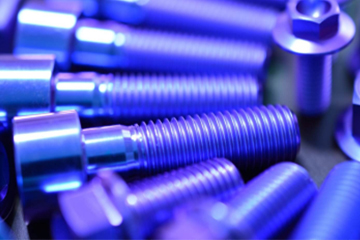
For subsea energy projects, Titanium Fasteners for Marine Use are often anodized to AMS 2488 Type II. This specific treatment provides lubricity, preventing the galling (cold welding) that frequently plagues threaded titanium connections during subsea installation.
Offshore Oil, Gas, and Desalination
In desalination plants, the Pitting Resistance Equivalent Number (PREN) of titanium is effectively infinite compared to high-alloy steels. Anodization further enhances this by providing a surface that resists the attachment of marine organisms, reducing cleaning cycles.
Galvanic Compatibility: Titanium in Multi-Material Marine Assemblies
A common challenge in marine engineering is the "Galvanic Couple." When titanium is paired with carbon fiber or aluminum, the titanium acts as the cathode, potentially accelerating the corrosion of the other material.
Anodizing serves as a high-resistance electrical insulator. By increasing the surface impedance of the titanium part, we significantly reduce the galvanic current flow between dissimilar materials. This makes anodized titanium the safest choice for carbon-fiber reinforced polymer (CFRP) subsea structures.
Refer to NACE International standards for detailed galvanic coupling charts in seawater environments.
Life-Cycle Cost Analysis: Anodized Titanium vs. Super Duplex Stainless Steel
While the initial procurement cost of titanium is higher than Super Duplex (25Cr), the Life-Cycle Cost (LCC) often favors titanium for projects with a service life exceeding 15 years. Titanium requires zero corrosion allowance in design, allowing for thinner-walled, lighter components.
Maintenance: Titanium requires no cathodic protection or protective coatings.
Reliability: Zero risk of stress corrosion cracking (SCC) in chloride environments.
ROI: Elimination of replacement costs and downtime in offshore operations.
Compliance and Standards: DNV and AMS 2488 Specifications
Engineering for the ocean requires adherence to strict international frameworks. We manufacture to ASTM B117 and AMS 2488 standards to ensure global interoperability.
DNV (Det Norske Veritas) selection guidelines emphasize that for "permanently submerged" components, titanium alloys provide the highest reliability index. Our anodizing process is calibrated to meet these specific subsea fatigue and corrosion fatigue requirements.
Case Study: Deep-Sea Solutions for Global Offshore Projects
Recently, China Titanium Factory supplied a fleet of anodized Grade 5 housing units for a deep-sea autonomous underwater vehicle (AUV) project. The components were required to operate at depths of 4,000 meters, where pressure and salinity would compromise standard alloys.
By applying the CTMP protocol, we delivered parts that showed zero signs of degradation after 18 months of continuous deployment. We offer custom surface treatment solutions for engineers facing similar extreme-environment challenges.
Consult with Deep-Sea Metal Experts
Need technical guidance on titanium surface treatments for your next marine project? Our engineers provide DNV-compliant solutions for the world's most demanding environments.
Get a Technical QuoteFrequently Asked Questions about Titanium Marine Corrosion
Does anodized titanium ever rust in saltwater?
No. Titanium does not "rust" in the traditional sense. Anodization creates a stable oxide layer that is chemically inert in saltwater, preventing any form of oxidation or iron-oxide formation.
What is the difference between Type I and Type II anodizing for marine use?
Type I is primarily for color coding and thin-film protection. Type II (AMS 2488) is a thicker, grey-colored coating designed specifically for wear resistance, anti-galling, and maximum corrosion protection in industrial and marine applications.
Can anodized titanium be used in warm tropical seawater?
Yes. Titanium's resistance to pitting and crevice corrosion remains superior even in warm seawater (above 30°C/86°F), where most stainless steels begin to fail rapidly.