

















Seamless vs. Welded Titanium Tubing: Choosing the Right Path for Industrial Performance
Engineers often face a crossroads when specifying materials for high-pressure chemical reactors. The debate between Seamless vs. Welded Titanium Tube isn't merely a matter of preference. It's a calculation of metallurgical integrity against project budgets. In the current 2026 industrial climate, supply chain agility and material efficiency have pushed welded technology into the spotlight, yet seamless continues to hold its ground in extreme niches.
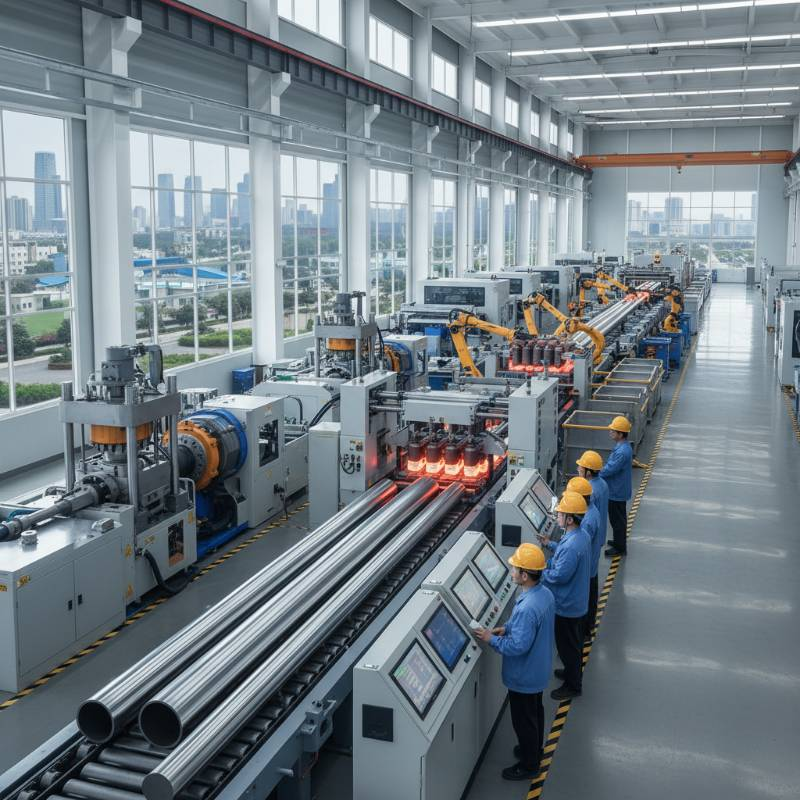
At China Titanium Factory, our data shows that the gap between these two manufacturing methods has narrowed. Modern automation has transformed how we view weld seams. However, misapplying a tube can lead to catastrophic failure in corrosive environments. We need to look at the "First Principle of Titanium Selection": The manufacturing method must match the failure mode of the environment.
Defining the Standards: Understanding ASTM B338 Grade 2 Tubing
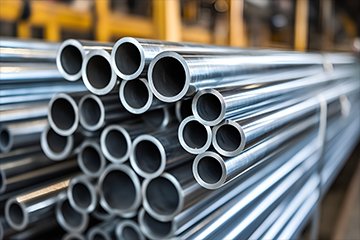
Most chemical processing applications rely on ASTM B338 Grade 2 Tubing. This specification covers both seamless and welded titanium and titanium alloy tubes intended for surface condensers, evaporators, and heat exchangers.
"ASTM B338 is the primary standard for titanium tubing in heat transfer equipment, requiring rigorous testing for chemical composition and mechanical properties regardless of the manufacturing route."
Grade 2 titanium is the "workhorse" of the industry. It offers an optimal balance of moderate strength and excellent ductility. Its corrosion resistance—driven by a stable, protective oxide layer—is legendary in saltwater and chloride-rich chemical environments. Whether you choose welded titanium pipe or its seamless counterpart, the base material chemistry remains a critical constant.
The TIG Advantage: Precision Welding Without Filler
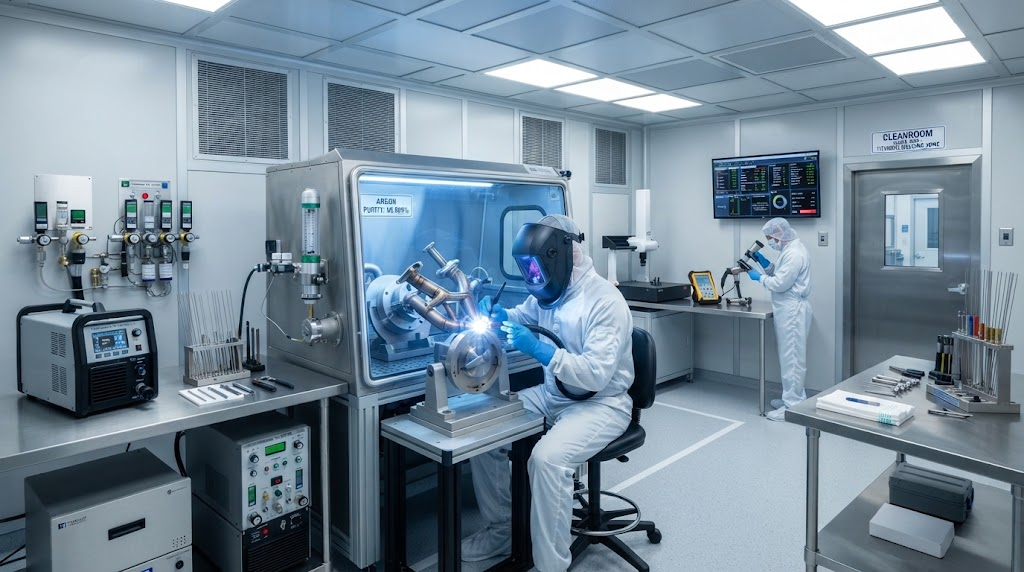
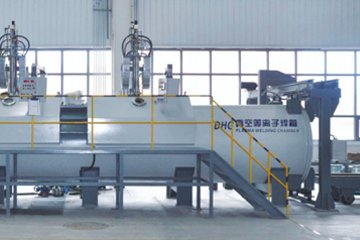
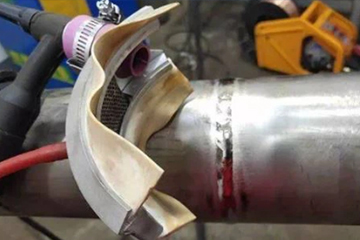
A common misconception is that a weld is a point of weakness. This is no longer the case with TIG welding without filler. In this automated process, the edges of the titanium strip are fused using a Tungsten Inert Gas (TIG) arc. Because no filler metal is added, the chemical composition of the weld zone is identical to the parent metal.
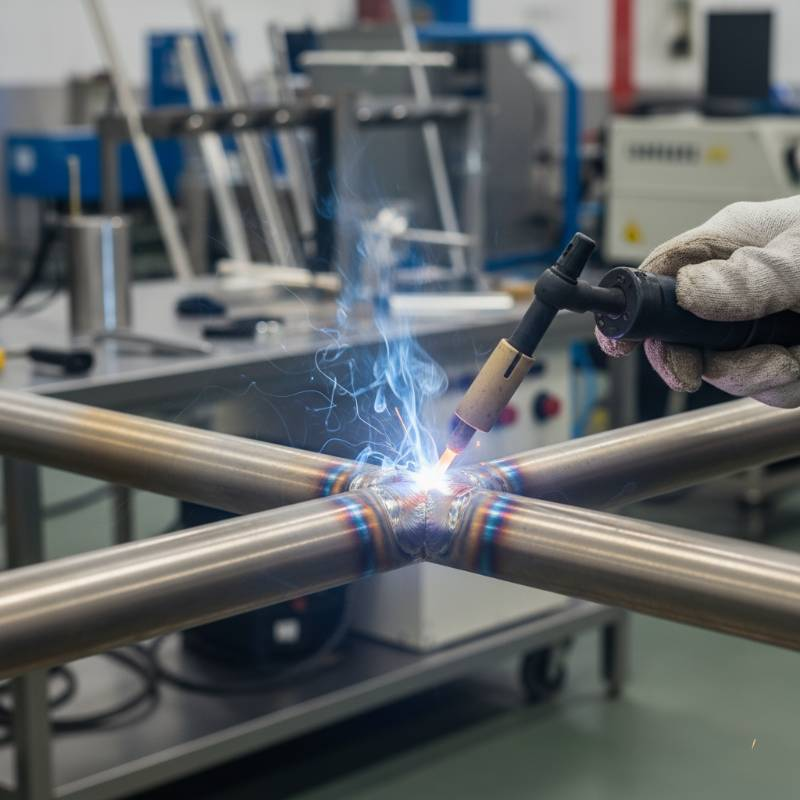
According to our analysis at the factory, this autogenous welding ensures chemical homogeneity. The microstructure of the weld is then refined through cold-working and annealing. By the time the Grade 2 titanium tube reaches the final stage, the weld line is often invisible to the naked eye and exhibits corrosion resistance nearly identical to the base material. This process is significantly more efficient than the multi-step extrusion required for seamless tubes.
The 'Titanium Integrity Matrix' (TIM): Our Proprietary Selection Framework
To simplify procurement, we developed The Titanium Integrity Matrix (TIM). This framework helps engineers move past the "seamless is always better" bias. It ranks three critical vectors: Pressure, Chemical Volatility, and Budgetary Constraints.
Step 1: Pressure Mapping – Is your operating pressure below 15,000 psi? If yes, welded is likely the superior economic choice.
Step 2: Thermal Cycling – Does the application involve rapid temperature swings? Welded tubes with proper annealing handle thermal expansion with high reliability.
Step 3: Lifecycle Costing – Calculate the 20-40% upfront savings against the expected 20-year maintenance cycle.
By following the TIM framework, our clients often find that welded tubing meets 90% of industrial chemical reactor requirements while freeing up capital for other critical components.
Pressure Thresholds: When Seamless is Non-Negotiable
Despite the advances in welding, seamless tubing remains king in ultra-high-pressure scenarios. We define the "Golden Rule of Seamless" as any application where internal pressures exceed 20,000 psi. At these levels, the microscopic risks of weld porosity—no matter how small—become unacceptable.
Seamless tubes are manufactured through extrusion or rotary piercing. There is no longitudinal seam. This absence of a joint provides a higher margin of safety against burst pressures and makes seamless titanium tubing the only choice for aerospace hydraulic lines and deep-sea oil and gas exploration where structural risk must be zero.
Mechanical Property Comparison: ASTM B338 Grade 2 Data
To assist in technical validation, the following table outlines the mechanical requirements for Grade 2 titanium. These standards apply to both seamless and welded varieties, ensuring a baseline of safety.
| Property | Minimum Value | Maximum Value |
|---|---|---|
| Tensile Strength | ≥ 345 MPa (50 ksi) | N/A |
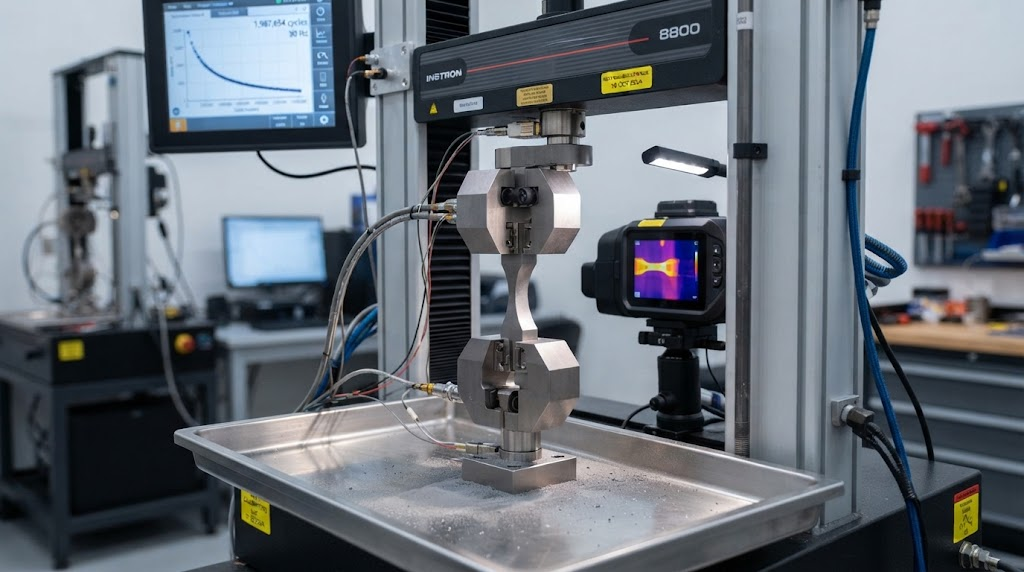
| Yield Strength (0.2% offset) | 275 MPa (40 ksi) | 450 MPa (65 ksi) |
| Elongation in 2 in. or 50 mm | 20% | N/A |
Economic Analysis: Procurement Savings and Total Cost of Ownership
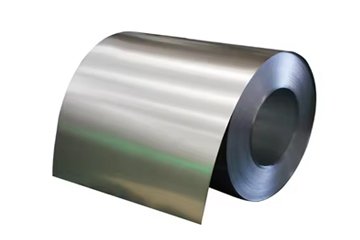
In 2026, the economic argument for welded tubing is stronger than ever. Manufacturing a welded tube is a continuous process starting from a flat-rolled coil. This results in much higher yields and lower energy consumption compared to the labor-intensive seamless process. Typically, welded titanium tubing is 20% to 40% less expensive than seamless of the same dimensions.
Beyond the initial price, consider lead times. Welded tubes can be produced faster and in longer continuous lengths, reducing the number of field joints required during installation. For a large-scale chemical reactor, these savings in labor and material can represent hundreds of thousands of dollars in total cost of ownership (TCO) reductions.
Quality Assurance: 100% NDT and Class 1 Weld Integrity
How do we guarantee that a welded tube performs like a seamless one? The answer lies in Non-Destructive Testing (NDT). Our facility provides 100% Eddy Current Testing (ECT) to detect surface and near-surface defects. For critical high-pressure applications, we employ Radiographic Testing (X-ray) to inspect the internal structure of the weld.
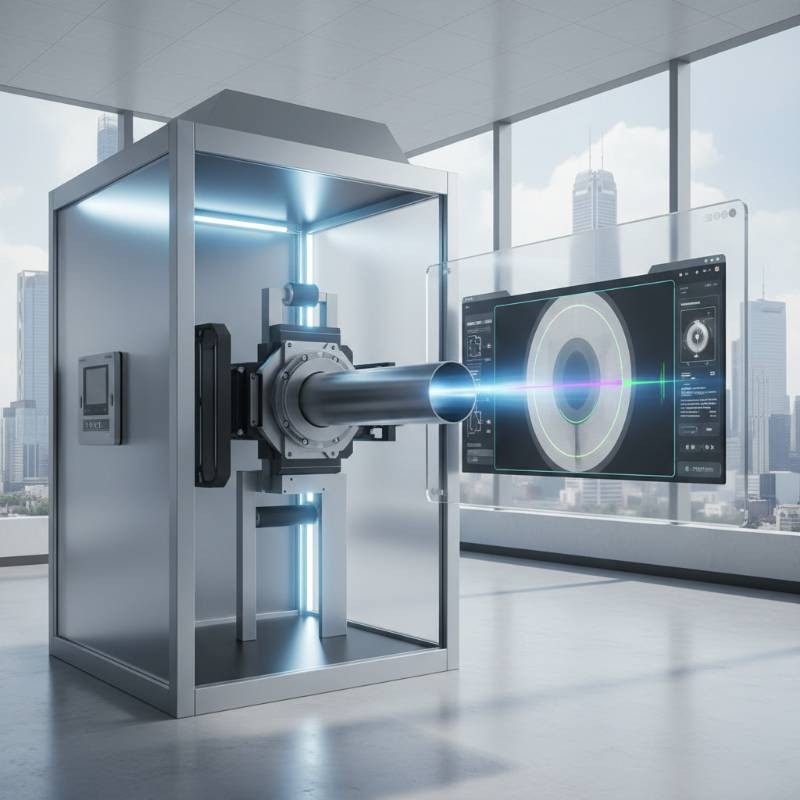
We ensure every weld reaches Class 1 quality standards. This means the weld is full-penetration, free of inclusions, and meets the same rigorous stress-testing as the base metal. When you source from titanium fabrication services with these certifications, the "welded vs. seamless" debate becomes one of technical specification rather than a fear of quality.
Frequently Asked Questions
Is welded titanium tubing as corrosion-resistant as seamless?
Yes. Because we use TIG welding without filler, the chemistry of the weld is identical to the base metal. After proper heat treatment, the corrosion resistance is functionally the same for most chemical environments.
What is the difference between ASTM B338 and ASTM B861?
While ASTM B338 focuses on tubing for condensers and heat exchangers (often thinner walls), ASTM B861 is the standard for seamless titanium pipe used in general service and structural applications.
Can welded tubing be used in high-vibration environments?
Yes, provided it has undergone 100% NDT and proper annealing. Modern welding techniques governed by the American Welding Society standards ensure the weld zone can withstand significant mechanical stress.
Ready to Optimize Your Reactor Design?
Stop overpaying for seamless tubing when welded can do the job with equal integrity. Contact our technical team today for a quote on ASTM B338 Grade 2 tubing with 100% X-ray verification.
Get a Technical Consultation