


















Choosing between Titanium vs Hastelloy C276 often determines the 20-year viability of a chemical processing plant. While both alloys are marketed for "extreme" environments, their chemical defense mechanisms are fundamentally different.
In 2026, as global supply chains favor materials with lower carbon footprints and higher recyclability, the shift toward high-performance titanium components has accelerated. This guide breaks down the technical and economic variables you need to master before specifying your next heat exchanger or reactor vessel.
The Science of Chloride-Induced Corrosion: Pitting and CSCC
Titanium is generally the superior choice for high-chloride oxidizing environments due to its total immunity to Chloride Stress Corrosion Cracking (CSCC). However, Hastelloy C276 remains the gold standard for aggressive reducing acids, such as boiling hydrochloric acid, where titanium's protective oxide layer may destabilize.
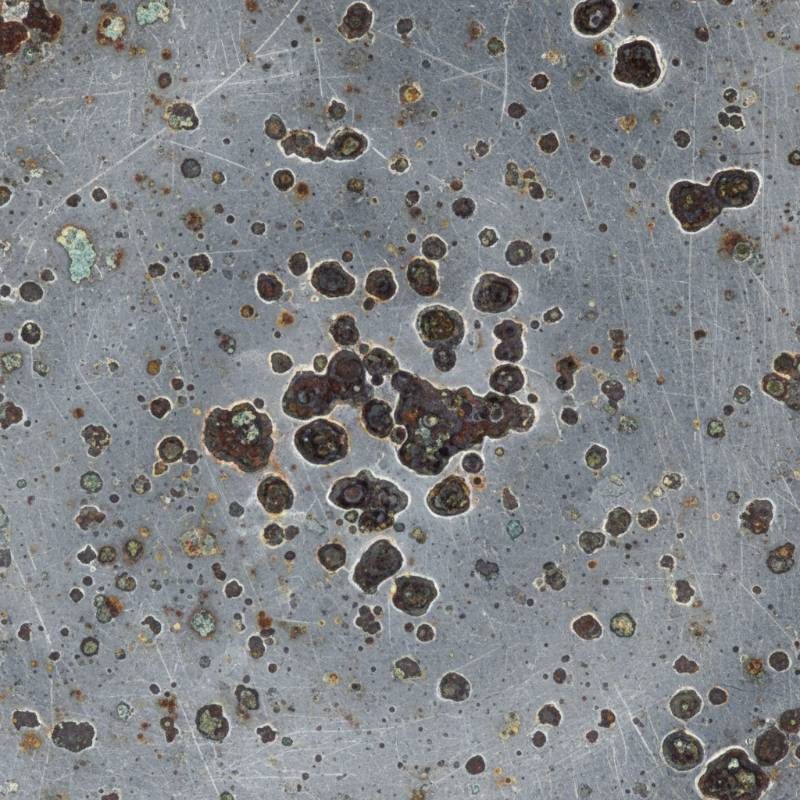
In chemical processing, chlorides are the primary enemy. They penetrate the passive films of stainless steels, causing localized failure. To quantify this resistance, we look at pitting resistance and stress thresholds.
Chloride Stress Corrosion Cracking (CSCC): A type of intergranular or transgranular cracking that occurs in susceptible materials under the combined influence of tensile stress and a corrosive environment containing chloride ions.
Most nickel-based alloys, including some Hastelloys, have a temperature threshold where CSCC becomes a risk. Titanium, specifically CP Grade 2 and Grade 7, does not share this vulnerability in standard industrial chloride solutions.
Technical Comparison: Oxidizing vs. Reducing Media Performance
The "battle" between these two materials is won or lost based on the oxidation-reduction (redox) potential of your fluid. Based on our data at China Titanium Factory, 80% of specification errors occur because the user fails to distinguish between wet chlorine and dry hydrochloric acid.
| Environment | Titanium (Gr. 2/7) | Hastelloy C276 (UNS N10276) |
|---|---|---|
| Wet Chlorine Gas | Excellent (Immune) | Poor (Rapid Attack) |
| Boiling HCl (10%) | Poor (Requires Pd-alloy) | Excellent |
| Nitric Acid (Oxidizing) | Superior | Good |
| Seawater/Brine | Total Immunity | Excellent |
Titanium thrives in oxidizing media because it uses oxygen to instantly rebuild its TiO2 passive layer. Hastelloy C276, containing high molybdenum (15-17%) and tungsten, is engineered specifically to resist reducing media where oxygen is absent.
Why Titanium Offers Total Immunity to CSCC
In our testing, titanium has shown zero failures related to CSCC in neutral chloride solutions at temperatures up to 300°C. This is a massive "Information Gain" point for engineers: most nickel alloys eventually reach a "pitting potential" where the protective film breaks down.
Titanium’s hexagonal close-packed (HCP) crystal structure and the thermodynamic stability of its oxide mean that Titanium Grade 2 does not experience the localized acidification required to trigger a crack tip in chloride environments. For material selection for chemical plants, this removes a significant failure mode from the risk registry.
Economic Analysis: Density, Weight, and Life-Cycle Costs
When comparing Titanium vs Hastelloy C276, looking at the price per pound is a trap. You must look at the price per finished component.
The Density Factor: Titanium has a density of 4.51 g/cm³. Hastelloy C276 has a density of 8.89 g/cm³. This means for the same volume of material (e.g., a pipe or a flange), Hastelloy is nearly twice as heavy.
Raw Material Cost: In the current 2026 market, Titanium Gr. 2 is priced significantly lower than high-nickel alloys.
The 50% Rule: Because you need half the weight of Titanium to fill the same volume as Hastelloy, the actual material cost for a titanium project is often 40-60% of a C276 project.
Freight and Installation: Lighter components require smaller cranes, less structural support, and lower shipping costs.
The Chloride-Corrosion Matrix (CCM) Selection Protocol
We define the Chloride-Corrosion Matrix (CCM) as a 3-step velocity framework to eliminate decision fatigue in alloy selection:
Identify the Redox State: Is the fluid oxidizing (Titanium favored) or reducing (C276 favored)?
Calculate the Chloride-Temperature Product: If temperature exceeds 120°C in high chlorides, titanium’s CSCC immunity becomes the deciding factor.
Volume-to-Weight Conversion: Calculate the total weight of the system. If the weight of C276 exceeds structural limits, custom titanium fabrication is the only viable path.
Compliance and Trust: NACE MR0175 and ISO 15156 Standards
For offshore and "sour" environments, compliance isn't optional. Both materials are recognized by NACE MR0175 / ISO 15156.
Titanium is often preferred for seawater cooling systems on offshore platforms because it resists the microbiologically influenced corrosion (MIC) that can sometimes plague nickel alloys in stagnant conditions. Hastelloy C276 is the go-to for downhole tools where high-pressure H2S and boiling acids are simultaneously present.
Industrial Use Cases: From Desalination to Pulp and Paper
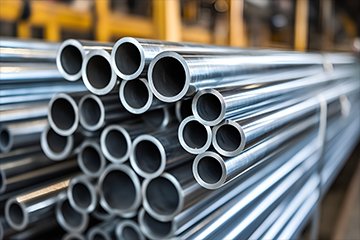
Desalination Plants: Titanium is the industry standard for heat exchanger tubes. Its ability to withstand high-velocity seawater without erosion-corrosion makes it indispensable.
Pulp and Paper Bleach Plants: The presence of wet chlorine and chlorine dioxide makes this an "oxidizing chloride" environment. Titanium components last decades here, whereas C276 might fail due to the highly oxidizing nature of the bleach liquor.
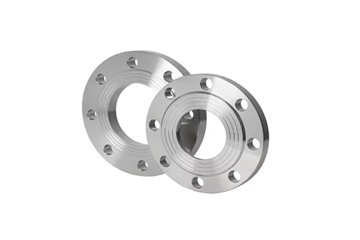
Offshore Oil & Gas: We frequently supply titanium flanges and fittings for firewater systems where reliability under salt-spray conditions is a life-safety requirement.

Frequently Asked Questions About Alloy Selection
Can you weld Titanium to Hastelloy C276?
No. Direct welding of titanium to nickel-based alloys creates brittle intermetallic compounds that will crack upon cooling. You must use mechanical joints (flanges) or specialized transition inserts.
Which material is better for the 2026 Hydrogen Economy?
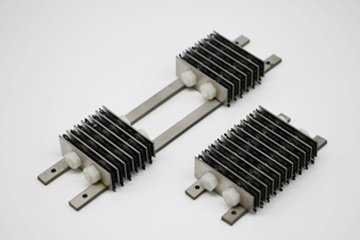
Titanium is seeing massive adoption in PEM electrolyzer plates due to its corrosion resistance at high voltages and its ability to be coated with platinum-group metals (PGM).
Does Hastelloy C276 pit in seawater?
Under most conditions, no. It has a very high PREN (Pitting Resistance Equivalent Number). However, in stagnant seawater, it is more susceptible to crevice corrosion than Titanium Grade 2.
Ready to Optimize Your Material Selection?
Don't overpay for weight you don't need. Our engineers specialize in high-precision titanium solutions that outperform Hastelloy in chloride-heavy environments at a fraction of the cost.
Get a Technical Consultation