


















The Engineering Choice: Ti-6Al-4V vs. Ti-3Al-2.5V for Deep-Sea Pressure Hulls
Selecting the right alloy for a deep-sea pressure hull isn't just about strength. It's about surviving a 20,000 PSI crush. Engineers typically weigh the high-strength capabilities of Ti-6Al-4V (Grade 5) against the superior cold-formability of Ti-3Al-2.5V (Grade 9). In the current 2026 subsea landscape, the margin for error has vanished as we explore deeper "Hadai" zones.
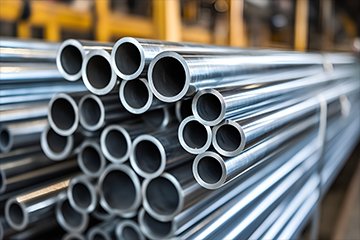
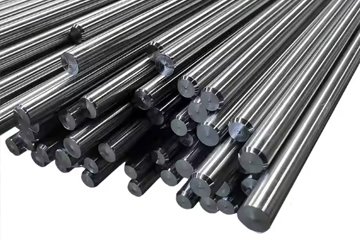
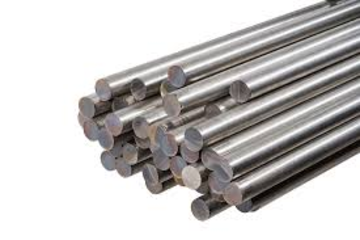
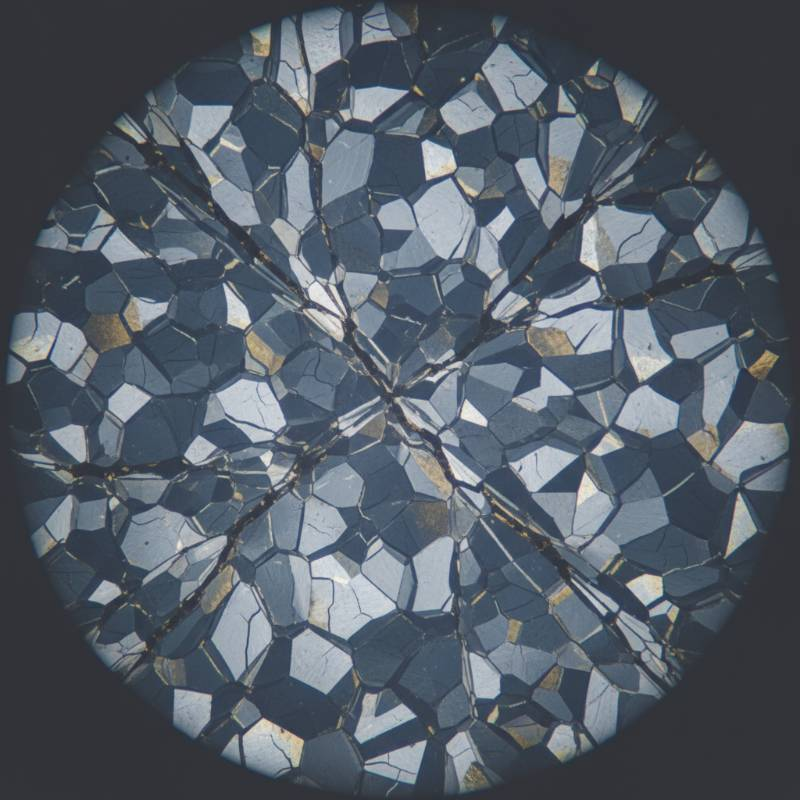
At China Titanium Factory, we've observed a pivot toward high-integrity material grades that prioritize fracture toughness over raw yield strength. While Ti-3Al-2.5V is excellent for hydraulic tubing and smaller components, the primary structure of a manned or autonomous deep-sea vehicle often necessitates the alpha-beta crystalline structure of Ti-6Al-4V.
Defining the Deep-Sea Pressure Hull: Requirements and Constraints
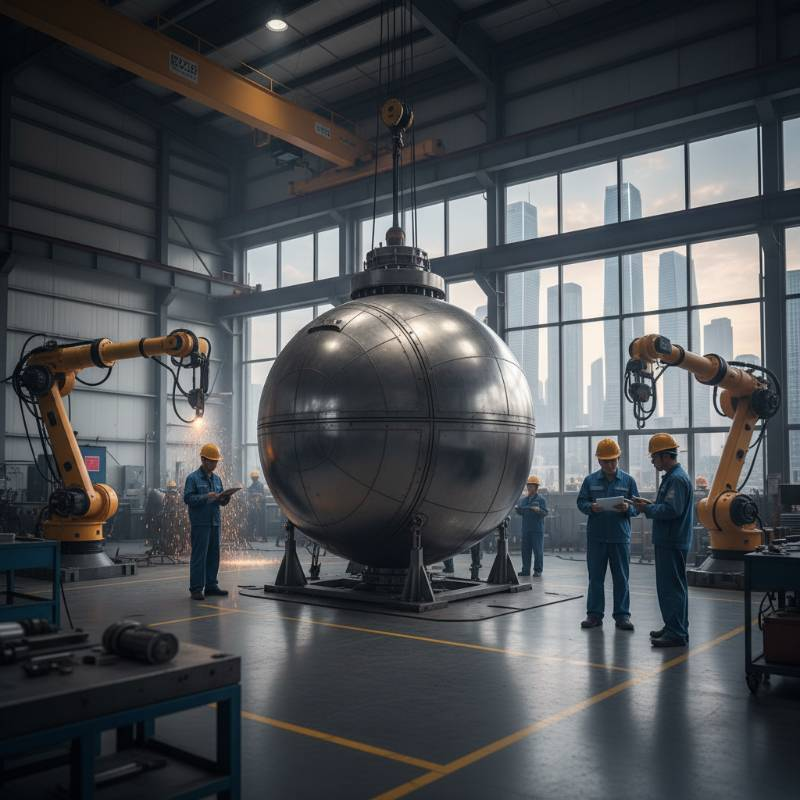
A pressure hull is the ultimate barrier between an explorer and a lethal environment. The design must account for hydrostatic pressure, which increases by approximately 14.5 PSI for every 10 meters of depth. At 11,000 meters, that's over 16,000 PSI—and safety factors usually push the design requirement to 20,000 PSI.
Deep-Sea Pressure Hull: A structural enclosure designed to resist external hydrostatic pressure while maintaining a habitable or instrument-safe internal environment. Success depends on the alloy's elastic modulus and its ability to resist buckling under compressive loads.
Weight is the enemy. A heavy hull requires more foam for buoyancy, increasing the vehicle's size and drag. Titanium’s density (roughly 4.5 g/cm³) compared to its high yield strength makes it the "Golden Material" for these applications. However, not all titanium is created equal when the pressure mounts.
Performance at 20,000 PSI: Reaching the 11,000m Depth Rating
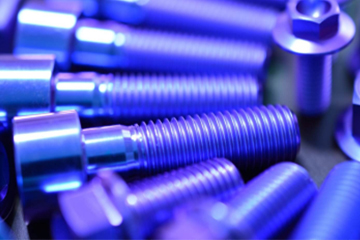
Reaching the bottom of the Mariana Trench requires an 11,000m depth rating alloy. While Ti-6Al-4V ELI (Extra Low Interstitials) has historically been the standard, 2026 engineering trends highlight the rise of Ti-15333 (Ti-15V-3Cr-3Sn-3Al). This metastable beta alloy offers even higher strength and better cold-rollability for specialized hull inserts and fasteners.
At 20,000 PSI, the material experiences massive compressive stress. We define the success of a deep-sea titanium hull by its ability to maintain dimensional stability without microscopic yielding. Ti-6Al-4V provides a yield strength of roughly 830-900 MPa, which is essential for maintaining the hull's spherical geometry under the weight of the entire ocean.
Corrosion Dynamics: Titanium vs. High-Strength Steel in High-Velocity Currents
Corrosion isn't just about standing water; it's about erosion-corrosion in high-velocity subsea currents. When a submersible moves at speed or encounters deep-ocean jets, the protective oxide layer on most metals is stripped away. Titanium is different. It reforms its TiO2 layer almost instantly.
| Material | Corrosion Rate (mm/y) | Pitting Resistance |
|---|---|---|
| High-Strength Steel (HY-100) | 0.15 - 0.50 | Low |
| Ti-6Al-4V / Ti-3Al-2.5V | < 0.0025 | Immune |
| Ti-15333 Alloy | < 0.0020 | Immune |
Data provided by ASM International suggests that titanium's immunity to pitting in seawater makes it the only viable choice for long-term deployments where maintenance is impossible.
How to Prevent Stress Corrosion Cracking (SCC) in Marine Submersibles
Stress Corrosion Cracking (SCC) is the silent killer of deep-sea hulls. It occurs when the combination of tensile stress and a corrosive medium (seawater) leads to sudden, brittle failure. SCC in submersibles is particularly dangerous because it can propagate at stresses well below the material's yield point.
To prevent SCC, engineers follow our "Golden Rule of Subsea Integrity": Surface finish is not aesthetic; it is structural. Any scratch or machining mark can serve as a nucleation point for a crack. We recommend the following strategies:
ELI Grades: Use Ti-6Al-4V ELI to reduce oxygen content, which significantly improves fracture toughness and SCC resistance.
Controlled Cooling: Post-weld cooling rates must be strictly managed to avoid brittle phase formations.
Shot Peening: Introducing compressive residual stresses on the hull surface to counteract the tensile stresses that drive SCC.
The Proprietary 'Hydrostatic Integrity Index' (HII) for Material Selection
At China Titanium Factory, we utilize the Hydrostatic Integrity Index (HII) to guide our clients. The HII is a weighted formula that balances three critical factors: Specific Strength, Fracture Toughness, and Weldability.
According to our analysis, while Ti-3Al-2.5V scores high on weldability, its lower HII score for thick-walled applications makes it unsuitable for primary hulls. Ti-6Al-4V remains the dominant choice for HII-optimized designs because it achieves a superior balance of compressive strength and crack arrest capability.
Fabrication and Welding: Ti-6Al-4V vs. Ti-3Al-2.5V
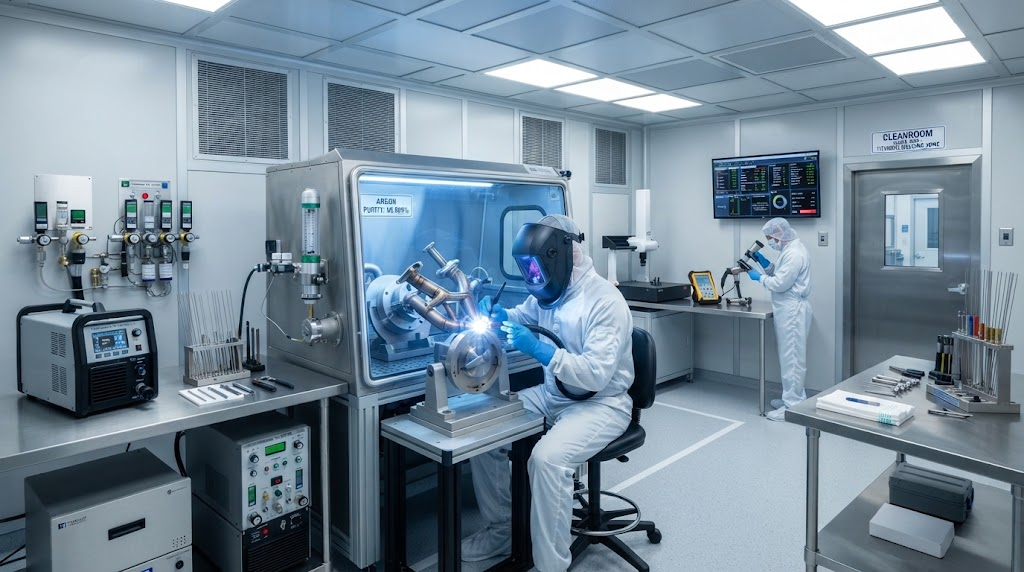
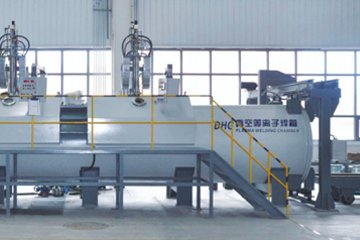
Welding a 4-inch thick titanium sphere is a feat of engineering. Electron Beam Welding (EBW) is the preferred method for Ti-6Al-4V hulls because it provides a deep, narrow weld with a minimal heat-affected zone (HAZ). This is crucial for maintaining the material properties across the seam.
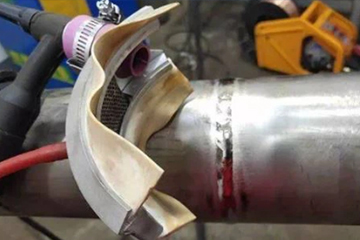
For thinner auxiliary components, TIG welding is often used. Regardless of the method, Post-Weld Heat Treatment (PWHT) is mandatory in 2026 standards to relieve residual stresses that would otherwise invite SCC. Titanium fabrication for deep-sea use requires an inert atmosphere (vacuum or argon purge) to prevent oxygen embrittlement.
Visualizing Fatigue: S-N Curves and Lifecycle Analysis
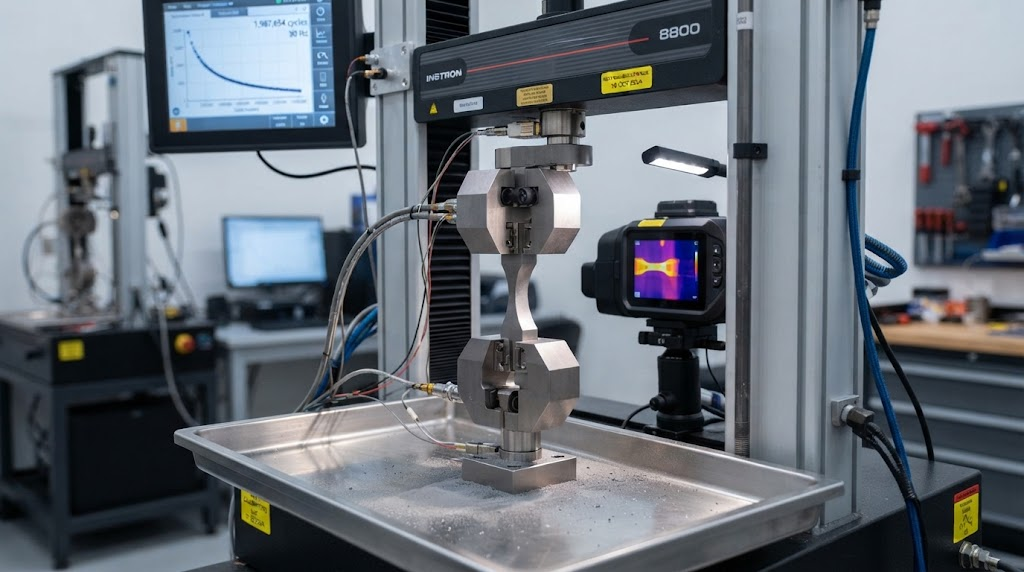
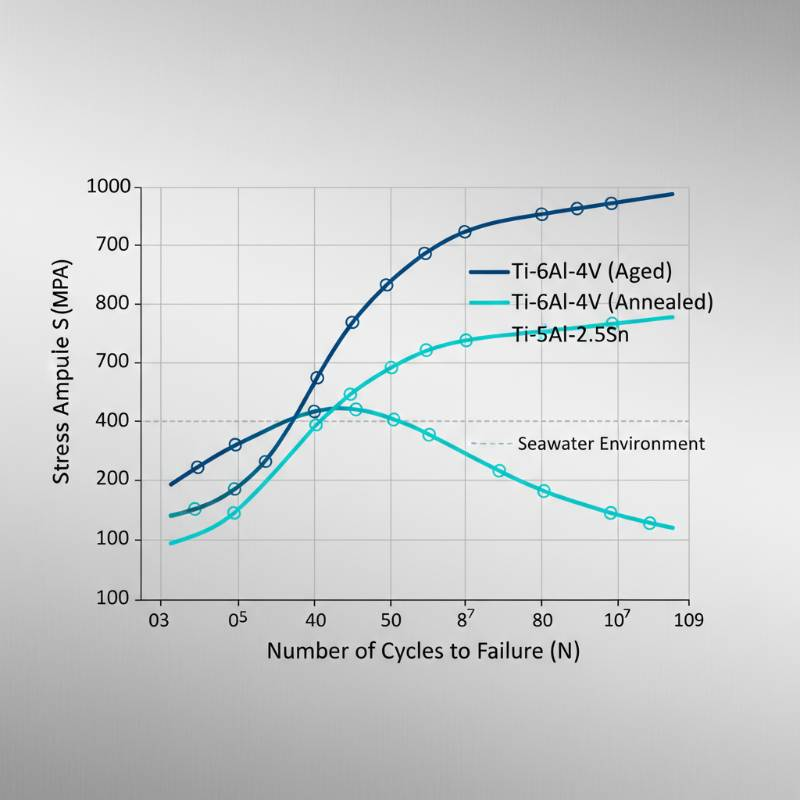
Deep-sea hulls undergo cyclic loading—compression during descent and relaxation during ascent. This fatigue can eventually lead to failure. S-N curves (Stress vs. Number of Cycles) for Ti-6Al-4V show a distinct fatigue limit, meaning if the stress is kept below a certain threshold, the hull could theoretically last indefinitely.
However, real-world conditions like minor surface abrasions or thermal gradients can shift these curves. For a 20,000 PSI rating, we design for a "Safe Life" rather than an "Infinite Life," typically specifying a maximum number of dives before a mandatory full-body NDT (Non-Destructive Testing) inspection.
Commercial Realities: Cost-Index and Sustainability
Titanium is an investment. In 2026, the cost-index of Ti-6Al-4V remains higher than steel, but the ROI is found in the operational life. A titanium hull does not need the expensive anti-corrosion coatings or frequent dry-docking required by steel vessels.
Furthermore, the circular economy has reached the subsea sector. Decommissioned titanium hulls are 100% recyclable. The high-value scrap can be processed back into ingots for less critical aerospace or industrial components, significantly lowering the "true cost" of the material over its lifecycle.
Frequently Asked Questions
Why is Ti-6Al-4V preferred over Ti-3Al-2.5V for main hulls?
Ti-6Al-4V has significantly higher yield strength (approx. 120 ksi vs 70 ksi). For thick-walled pressure hulls, this strength is necessary to resist the massive compressive forces of the deep ocean without making the hull prohibitively heavy.
What is the role of Ti-15333 in deep-sea exploration?
Ti-15333 is a high-strength beta alloy used for components that require high formability and extreme strength, often used in the 11,000m depth rating category for specialized fasteners and structural inserts.
How do you prevent SCC in a titanium hull?
Prevention involves using ELI (Extra Low Interstitial) grades, ensuring a mirror-like surface finish to prevent crack nucleation, and performing post-weld heat treatment to remove residual stresses.
Ready to Build for the Abyss?
Whether you are designing for 6,000m or the full 11,000m depth, our engineering team provides the metallurgical expertise needed to ensure mission success. Get a technical consultation on your next deep-sea project today.
Contact China Titanium Factory