

















Engineering the Abyss: Why Titanium Dominates Deep-Sea Exploration
Operating at depths exceeding 6000 meters subjects equipment to hydrostatic pressures surpassing 60 MPa (approx. 8,700 psi). At these extremes, traditional materials fail due to weight constraints or catastrophic corrosion. Titanium alloys serve as the backbone of modern oceanography, offering the highest strength-to-weight ratio of any metallic element.
For deep-sea submersibles, every kilogram saved in the pressure hull translates directly to increased scientific payload or longer mission endurance. Our metallurgical experience at China Titanium Factory confirms that titanium's immunity to seawater corrosion—even in stagnant or anaerobic conditions—eliminates the need for heavy corrosion allowances required by high-strength steels.
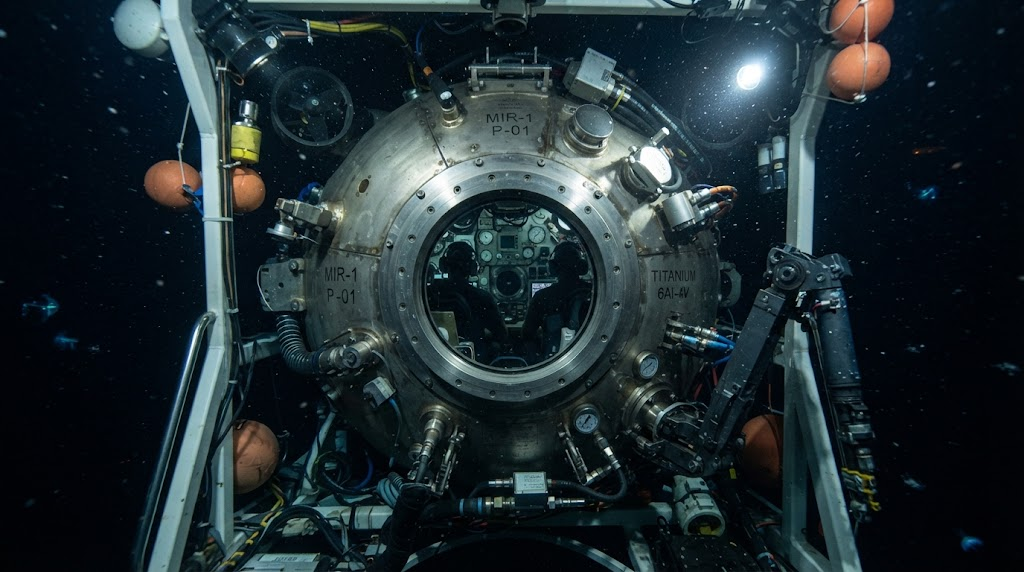
Titanium alloys for deep-sea submersibles are chosen for their exceptional yield strength, low density, and high fracture toughness. For depths of 6000m and beyond, Ti-6Al-4V ELI (Grade 23) is the industry standard, providing the necessary ductility to withstand cyclic pressure loading without brittle failure.
Material Specifications for Extreme Depths: Grade 23 vs. Grade 5
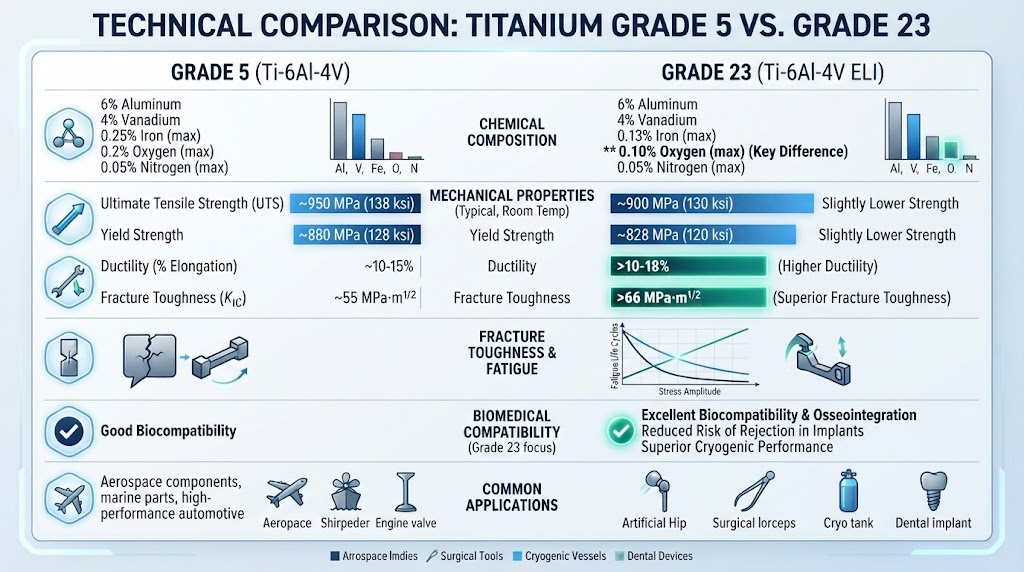
While Grade 5 (Ti-6Al-4V) is common in aerospace, deep-sea engineering requires the "Extra Low Interstitial" version, known as Titanium Grade 23 ELI Specifications. By strictly limiting oxygen, nitrogen, and iron content, we significantly enhance the alloy's fracture toughness and resistance to Stress Corrosion Cracking (SCC).
"In our manufacturing experience, maintaining oxygen levels below 0.13% is critical for components operating at 6000m+ depths to ensure the material remains ductile under extreme hydrostatic compression."
| Property | Ti-6Al-4V (Grade 5) | Ti-6Al-4V ELI (Grade 23) |
|---|---|---|
| Yield Strength (min) | 825 MPa | 795 MPa |
| Fracture Toughness (K1c) | 45-60 MPa√m | 75-100 MPa√m |
| Oxygen Content (max) | 0.20% | 0.13% |
| Standards Compliance | ASTM B265 / B381 | ASTM F136 / ISO 5832-3 |
The China Titanium Deep-Sea Integrity Protocol (CT-DSIP)
To meet the rigorous safety standards of DNV GL and the ASME Pressure Vessel Code, we developed the China Titanium Deep-Sea Integrity Protocol (CT-DSIP). This proprietary 7-step quality framework ensures that every component—from the smallest bolt to the primary hull—is verified for extreme environment reliability.
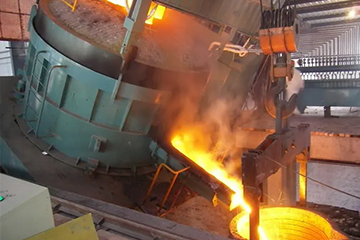
Vacuum Melting: Double or triple VAR (Vacuum Arc Remelting) to ensure chemical homogeneity.
Multi-Directional Forging: Refines grain structure to eliminate anisotropy in large sections.
Precision Heat Treatment: Annealing cycles optimized to maximize toughness.
100% Ultrasonic Testing (UT): Detection of internal inclusions as per AMS 2631 Class AA.
Microstructure Analysis: Verification of alpha-beta grain distribution.
Hydrostatic Simulation: Computational modeling of stress distribution at 600 bars.
Final Certification: Full traceability from raw sponge to finished component.
Manufacturing Large-Scale Forgings for Spherical Hulls
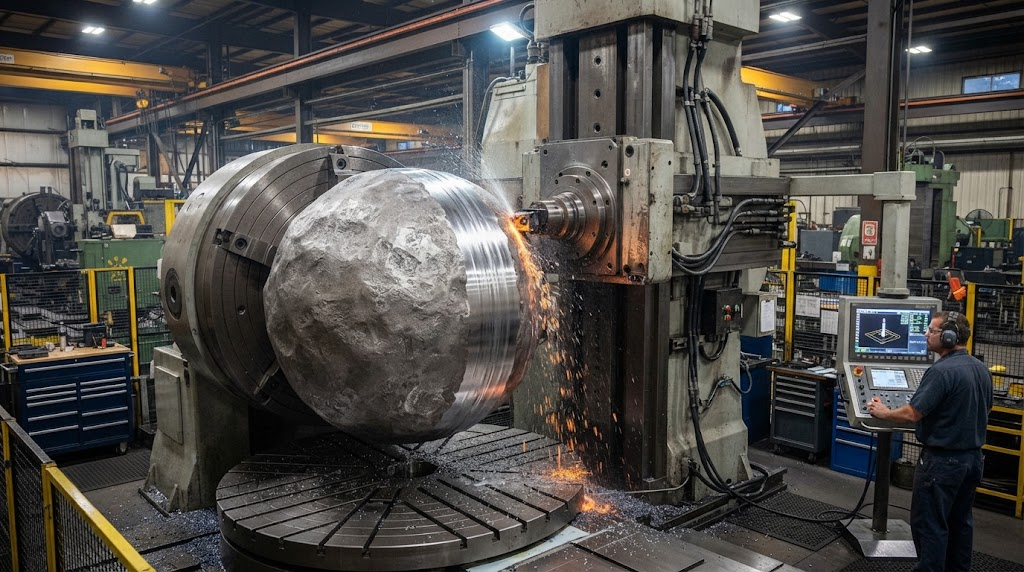
The spherical pressure hull is the most critical component of any manned or unmanned submersible. Producing these requires Large-Scale Titanium Forgings that maintain uniform properties throughout thick cross-sections (often exceeding 120mm).
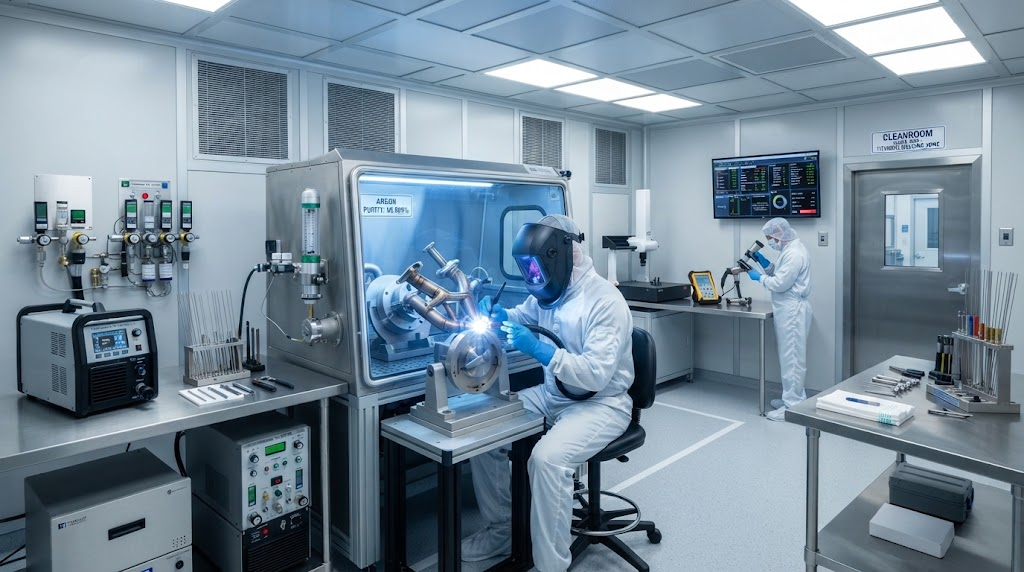
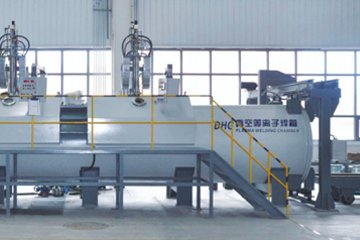
We utilize Electron Beam (EB) welding for joining thick titanium plates. EB welding in a vacuum environment prevents atmospheric contamination and results in a narrow Heat Affected Zone (HAZ), which is vital for maintaining the fatigue life of the hull. Post-weld stress-relieving heat treatments are performed in our high-capacity vacuum furnaces to prevent dimensional distortion during deep-sea deployment.
Challenges and Solutions: Hydrogen Embrittlement and Fatigue
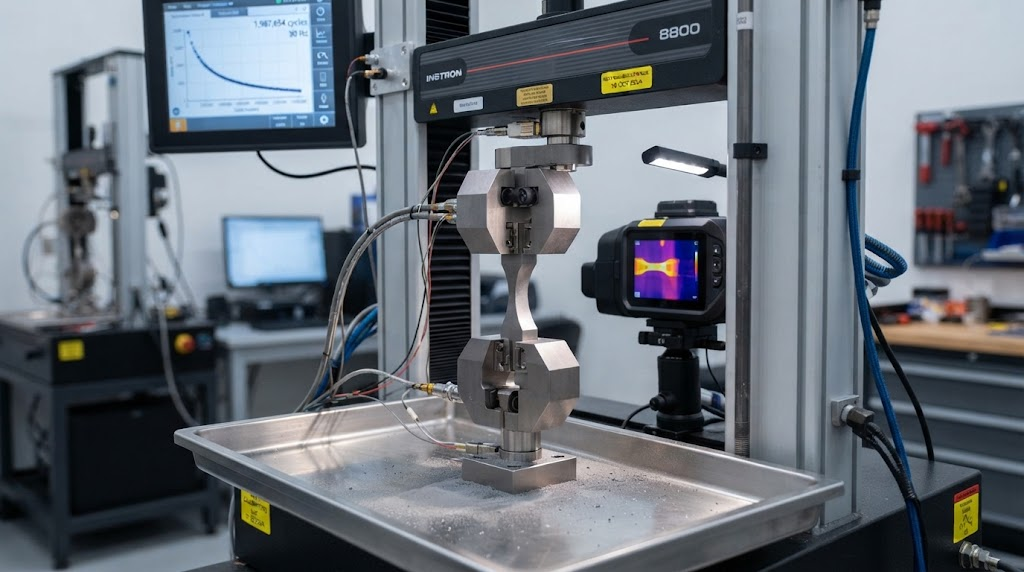
Deep-sea environments present a unique challenge: hydrogen embrittlement. While titanium is naturally resistant, the use of cathodic protection systems on submersibles can generate nascent hydrogen. At China Titanium Factory, we mitigate this by selecting alloys with specific microstructures that inhibit hydrogen diffusion.
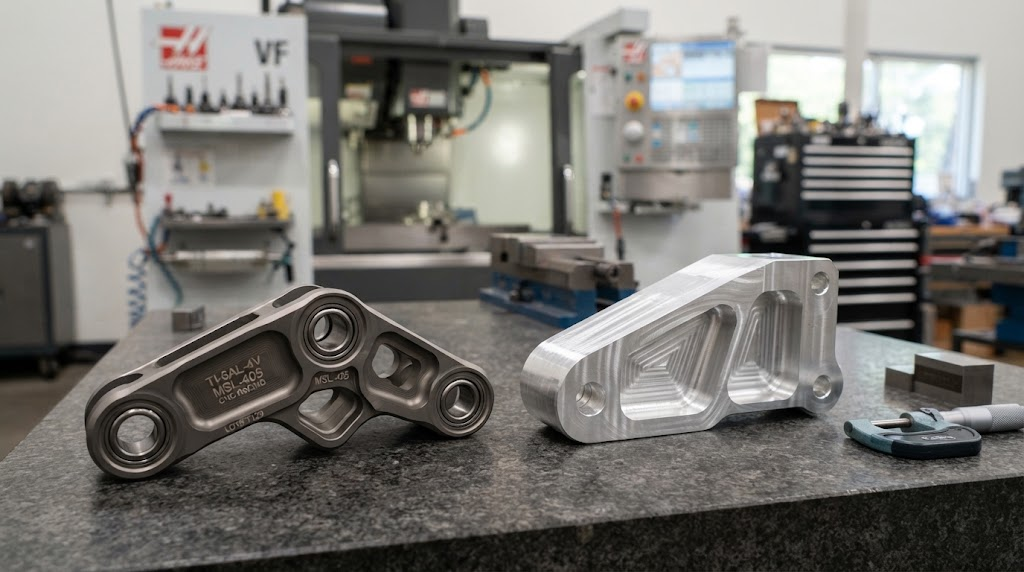
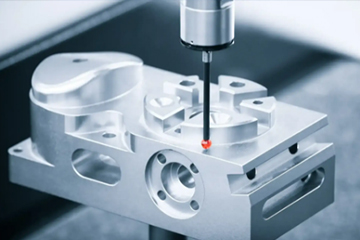
Corrosion fatigue is another concern for long-term AUV deployments. Cyclic loading from repeated dives can initiate cracks at surface imperfections. Our Custom CNC Machined Marine Parts undergo specialized surface finishing, such as glass bead peening, to introduce compressive residual stresses that significantly extend the fatigue life of connectors and housings.
Case Study: Powering 7000m Rated Autonomous Underwater Vehicles (AUVs)
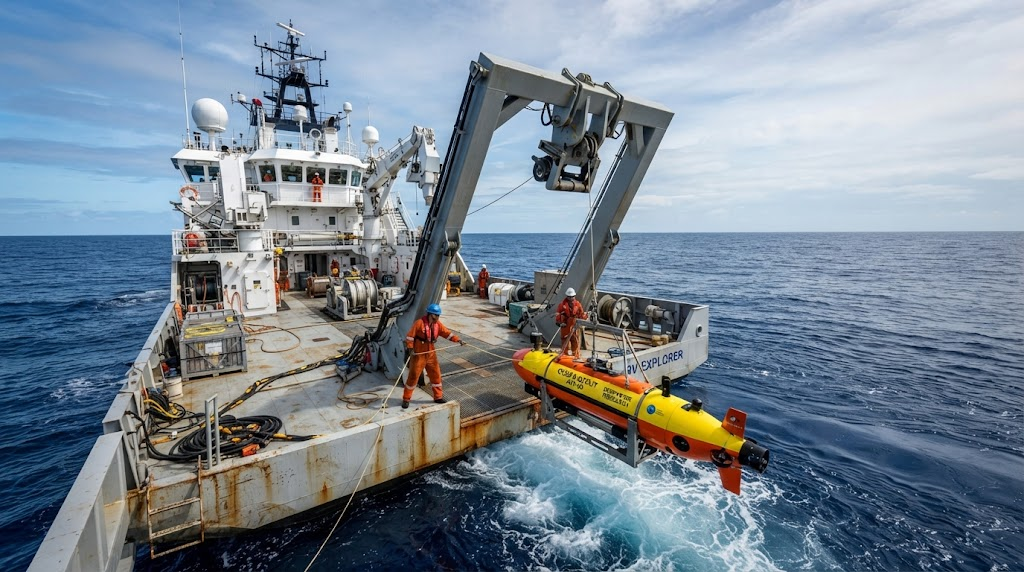
In early 2026, China Titanium Factory completed a contract for a fleet of 7000m-rated AUVs destined for the Mariana Trench. The client required a 35% reduction in housing weight compared to their previous stainless steel design to accommodate high-resolution sonar arrays.
By utilizing Grade 23 ELI for the main pressure cylinders and Titanium Fasteners for Marine Use, we achieved a 42% weight reduction. The vehicles successfully completed 50 test dives to 7000m with zero signs of material fatigue or galvanic corrosion, proving the efficacy of our CT-DSIP protocol in real-world extreme conditions.
2026 Market Outlook: The Future of Deep-Ocean Infrastructure
The demand for deep-sea titanium is accelerating in 2026, driven by the expansion of deep-sea mining for rare earth minerals and the monitoring of subsea carbon capture storage (CCS) sites. As offshore energy moves into deeper waters, the need for reliable, maintenance-free titanium connectors and sensors has become paramount.
We are seeing a shift toward "Commercial-Grade Reliability"—where the extreme standards of manned submersibles are being applied to mass-produced ROV components. China Titanium Factory is leading this transition by scaling our CNC production of standardized titanium housings to reduce lead times for global marine technology firms.
Our Deep-Sea Product Portfolio and Services
As an integrated manufacturer, we provide a full spectrum of titanium solutions for the marine sector. Our facility is AS9100 and ISO 9001 certified, ensuring every part meets international aerospace and maritime standards.
Titanium Pressure Vessels: Custom diameters up to 2500mm for manned and unmanned hulls.
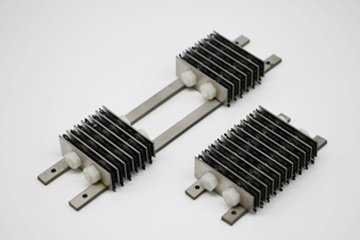
Marine Connectors: High-precision CNC-machined Grade 5 and Grade 23 connectors.
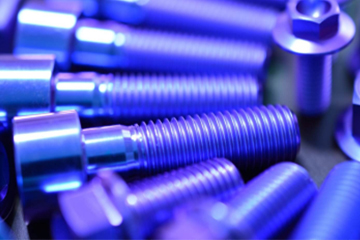
High-Strength Fasteners: ASTM F467/F468 compliant bolts and nuts for critical structural joints.
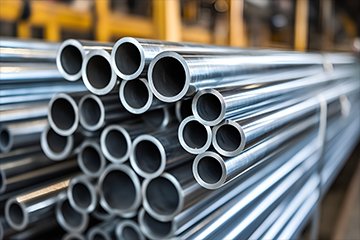
Seamless Titanium Pipes: For hydraulic systems operating under extreme external pressure.
Custom Forgings: Hemispheres, rings, and complex blocks for specialized scientific instruments.
Ready to Engineer for the Deep?
Get technical consultation and factory-direct pricing for your 6000m+ depth projects.
Request a Custom QuoteFrequently Asked Questions About Deep-Sea Titanium
How do you weld 100mm thick titanium for submersibles?
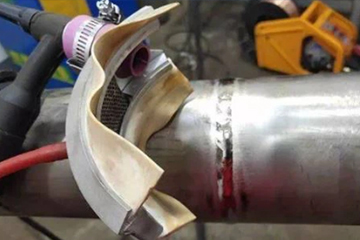
We primarily use Electron Beam (EB) welding or multi-pass TIG welding with trailing gas shields. EB welding is preferred for 100mm+ thicknesses as it provides full penetration in a single pass with minimal distortion, maintaining the structural integrity required for 6000m+ depths.
Why is Grade 23 better than Grade 2 for submersibles?
Grade 2 is commercially pure titanium and lacks the strength required to resist the crushing pressures at 6000m without becoming excessively thick and heavy. Grade 23 ELI provides the high yield strength of an alloy while maintaining the toughness needed to prevent brittle fracture in cold, high-pressure seawater.
Titanium vs. Steel for submersibles: Which is more cost-effective?
While titanium has a higher initial material cost, it is more cost-effective over the vehicle's lifecycle. It requires no painting, no corrosion allowance, and its lower weight reduces the size and cost of the flotation foam and propulsion systems needed.