
























Understanding Titanium Anode Fluoride Corrosion in Modern Electrochemistry
Fluoride ions are the Achilles' heel of titanium. While titanium is celebrated for its legendary corrosion resistance in chlorine and seawater, fluoride changes the game entirely. In 2026, as industrial processes push for higher efficiency in hydrogen production and wastewater treatment, managing titanium anode fluoride corrosion has become a primary operational priority.
At China Titanium Factory, we’ve observed that even trace amounts of fluoride—often under 50 ppm—can initiate rapid substrate degradation. This isn't just a surface issue. It is a fundamental threat to electrochemical stability. When the protective TiO2 layer dissolves, the underlying metal is exposed to aggressive electrolyte attack, leading to catastrophic failure of the entire electrode assembly.
The Science of Fluoride Ion Interaction and Passive Film Breakdown
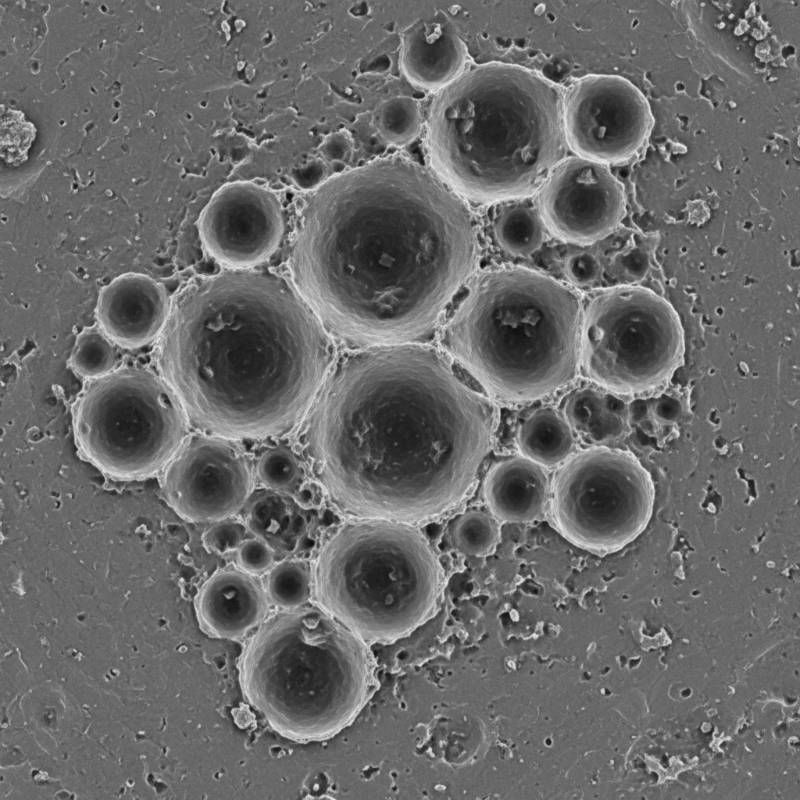
Titanium relies on a thin, tenacious oxide film for protection. Fluoride ions (F⁻) possess a small ionic radius and high electronegativity. They don't just sit on the surface; they penetrate. They react with the oxide layer to form soluble [TiF6]²⁻ complexes.
"Fluoride-induced corrosion is defined by the transformation of the stable TiO2 passive layer into highly soluble titanium fluorides, leading to localized pitting corrosion and a total loss of substrate integrity."
Our research indicates that Electrochemical Impedance Spectroscopy (EIS) fluctuations often precede visible damage. A sudden drop in charge-transfer resistance usually signals that the passive film breakdown is underway. If you are seeing erratic voltage readings in your industrial electrolysis cells, fluoride is the likely culprit.
Root Causes of MMO Coating Failure in Fluoride-Rich Environments
Mixed Metal Oxide (MMO) coatings are designed to be catalysts, not barriers. When fluoride ions reach the interface between the coating and the titanium base, the "anchor" is lost. MMO coating failure causes are often misunderstood as simple wear, but the reality is more complex.
Premature failure is often caused by an insulating TiO2 layer forming between the coating and substrate. In cathodic protection, check for electronic shorting where anode potential shifts negatively beyond its corrosion potential. This shift accelerates the migration of fluoride ions toward the substrate, creating a "peeling" effect where the catalyst literally falls off the metal.
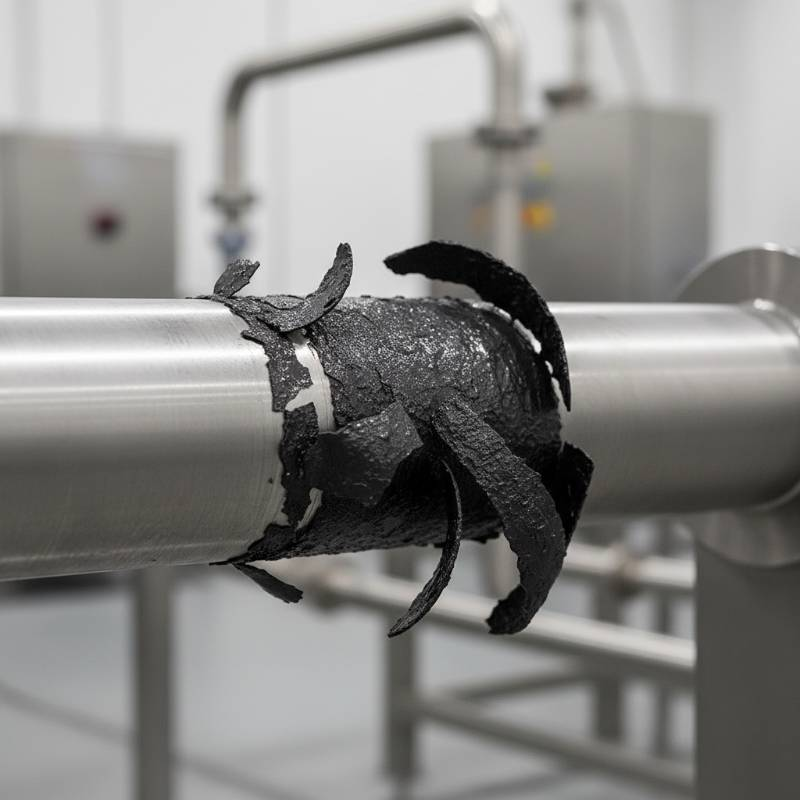
According to recent technical standards from NACE International, substrate preparation is the only defense against this interface-level attack. At our facility, we utilize a specialized vacuum-sintering process to ensure maximum adhesion before the fluoride ions can find a path to the base metal.
The FRP-5 Anode Resilience Framework: A Proprietary Protocol for 2026
To combat the unique challenges of 2026 electrochemical environments, we define the FRP-5 Protocol. This is our "Golden Rule" for ensuring anode longevity in harsh chemistry. We don't just supply parts; we apply a systematic methodology.
F1: Flux Analysis – Real-time monitoring of fluoride ppm levels in the electrolyte.
R2: Resistance Mapping – Using EIS to track the health of the insulating TiO2 layer.
P3: Potential Locking – Ensuring the anode potential never shifts into the critical corrosion zone.
-4: Substrate Shielding – Applying a densified interlayer to block ion migration.
-5: Coating Thickness Estimator – Calibrating catalyst loading based on the expected fluoride-to-chloride ratio.
By following the FRP-5 Protocol, plants have extended the service life of their titanium anodes by up to 40% in environments previously considered "unserviceable."
Troubleshooting Titanium Anode Passivation and Short Circuits
When an anode fails, it usually does so loudly or silently. Titanium anode passivation is the silent failure. The voltage climbs steadily as the insulating layer grows, eventually choking the current. Conversely, anode short circuit troubleshooting is required when current spikes or "hot spots" appear on the electrode surface.
Shorting often occurs when fluoride ions cause localized pitting that bridges the gap between the anode and cathode with conductive corrosion products. At China Titanium Factory, our first principle is: "A passivated anode is a dying anode; a shorted anode is a dangerous one." Immediate removal and surface analysis are required to prevent rectifier damage.
Anode Health Diagnostic Checklist: Symptoms and Solutions
Use this utility to perform a quick field assessment of your electrochemical cells. If you check more than two boxes, your system is likely suffering from fluoride-induced electrode degradation.
| Symptom | Likely Cause | Immediate Action |
|---|---|---|
| Cell voltage abnormal increase | Substrate passivation/insulating layer | Check fluoride ppm; verify coating thickness |
| Coating discoloration | Catalyst depletion or chemical attack | XRF analysis of coating loading |
| Uneven current distribution | Localized delamination of MMO | Inspect for physical pitting or "peeling" |
| Rapid voltage spikes | Intermittent electronic shorting | Check electrode spacing and debris |
Mitigation Strategies: Thresholds, pH, and Temperature Control
How much fluoride is too much? The critical concentration limits depend heavily on the solution's pH. In acidic environments (pH < 3), even 10 ppm of fluoride can be lethal to titanium. In alkaline conditions, the metal is slightly more resilient, but the risk remains.
Temperature effects are another multiplier. For every 10°C increase in electrolyte temperature, the rate of titanium anode fluoride corrosion roughly doubles. If your process requires high temperatures, consider switching to a tantalum-stabilized substrate or increasing the MMO coating density. For more on advanced material options, see our guide on MMO coating formulations.
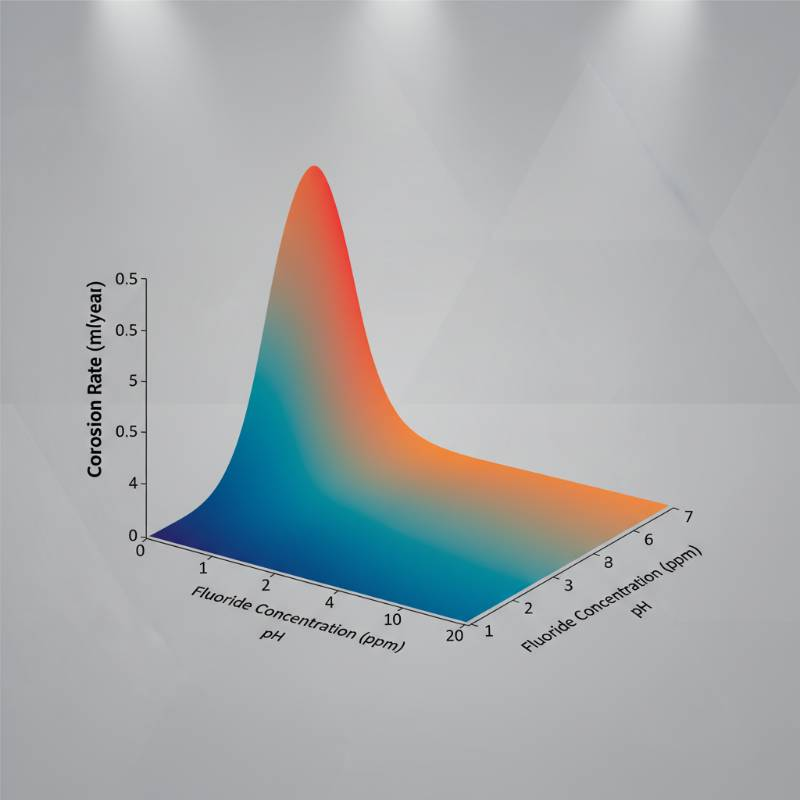
Data from the Journal of Electrochemical Science confirms that maintaining a temperature below 60°C and a pH above 5 significantly extends the life of standard Grade 1 titanium substrates.
Stop Fluoride From Eating Your Profits
Don't wait for a voltage spike to tell you your anodes are failing. Get a professional anode failure analysis and upgrade to fluoride-resistant technology today.
Contact Our Engineering TeamFrequently Asked Questions
Can I perform re-coating on anodes damaged by fluoride?
Yes, but only if the substrate pitting is minimal. If the fluoride has etched deep "craters" into the titanium, the surface must be mechanically ground and chemically etched before re-coating to ensure the new MMO layer doesn't fail prematurely.
What is the absolute fluoride ppm limit for MMO anodes?
For standard titanium anodes, we recommend keeping fluoride below 50 ppm. If your process exceeds 100 ppm, you must use specialized protective interlayers or alternative substrate materials like Niobium.
Do alloying elements like Palladium help?
Titanium Grade 7 (Ti-Pd) offers superior resistance to general corrosion, but fluoride ions are still aggressive toward the oxide film. While it helps, it is not a "magic bullet" for high-fluoride environments.