





















The Critical Role of Titanium Bipolar Plates in Fuel Cell Stacks
Titanium bipolar plates serve as the structural and functional backbone of high-performance Proton Exchange Membrane Fuel Cells (PEMFC). They execute four vital functions: distributing reactant gases (hydrogen and oxygen), removing heat from the reaction zone, conducting electrons from the anode of one cell to the cathode of the next, and managing water byproduct.
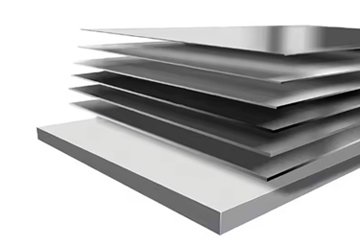
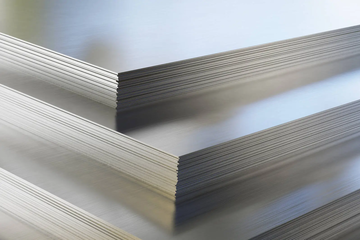
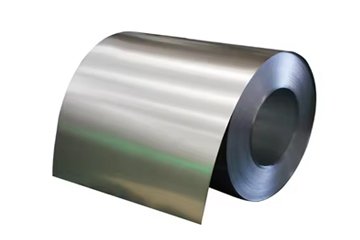
Titanium bipolar plates are the definitive choice for mobile fuel cell stacks where power density and durability are non-negotiable. By leveraging Precision Titanium Foil for Stamping, engineers can reduce total stack volume by 30% compared to traditional graphite plates, making them indispensable for the automotive and aerospace sectors.
Technical Advantages: Why Titanium Outperforms Alternative Materials
In the harsh electrochemical environment of a fuel cell, materials must withstand pH levels between 2 and 3 at operating temperatures up to 90°C. While stainless steel 316L was once a common alternative, titanium provides a significantly higher specific strength and superior corrosion resistance.
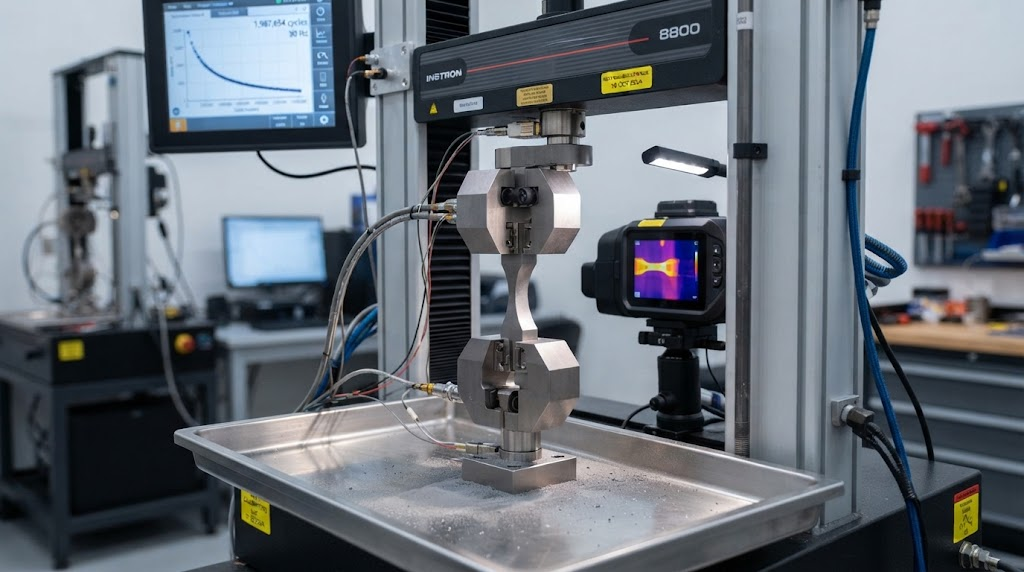
Our metallurgical data indicates that titanium's passive oxide layer remains more stable under anodic potentials than chromium-based oxides found in steels. This stability prevents the leaching of metal ions (like Fe³⁺ or Cr³⁺), which can poison the membrane electrode assembly (MEA) and degrade stack performance over time.
| Property | Titanium (Grade 1) | Stainless Steel 316L | Impregnated Graphite |
|---|---|---|---|
| Density (g/cm³) | 4.51 | 7.98 | 1.85 |
| Tensile Strength (MPa) | 240 - 350 | 515 | 20 - 50 |
| Corrosion Rate (μA/cm²) | < 1.0 | 2.5 - 5.0 | Negligible |
| Min. Thickness (mm) | 0.05 - 0.1 | 0.1 | 1.0 - 2.0 |
Material Selection: Grade 1 vs. Grade 2 Titanium for Thin-Gauge Stamping
Choosing the correct alloy grade is paramount for balancing formability and structural integrity. Most high-volume automotive PEMFC projects utilize Grade 1 titanium according to ASTM B265 standards.
Grade 1 offers the highest ductility with an elongation rate typically exceeding 24%. This allows for the high-speed stamping of complex flow field geometries—such as serpentine or parallel micro-channels—without the risk of micro-cracking. For larger stationary fuel cells where mechanical pressure on the stack is higher, Grade 2 is occasionally preferred for its higher yield strength.
For more details on alloy properties, consult our Titanium Grade Comparison Guide.
The China Titanium "Ultra-Thin Precision" Protocol
To meet the rigorous demands of the 2026 hydrogen economy, we have developed a proprietary manufacturing framework: The Ultra-Thin Precision Protocol. This method ensures that every plate maintains dimensional stability under high current density.
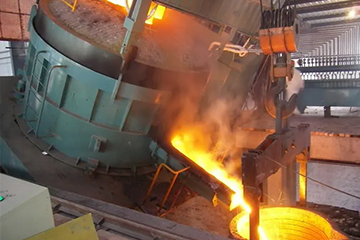
Phase 1: VAR Purity Control – We utilize triple Vacuum Arc Remelting (VAR) to eliminate interstitial impurities (O, N, H), ensuring maximum material consistency.
Phase 2: Progressive Cold Rolling – Achieving thicknesses as low as 0.05mm with a tolerance of +/- 0.005mm.
Phase 3: Vacuum Stress-Relief – Critical for preventing "spring-back" during high-speed stamping of flow fields.
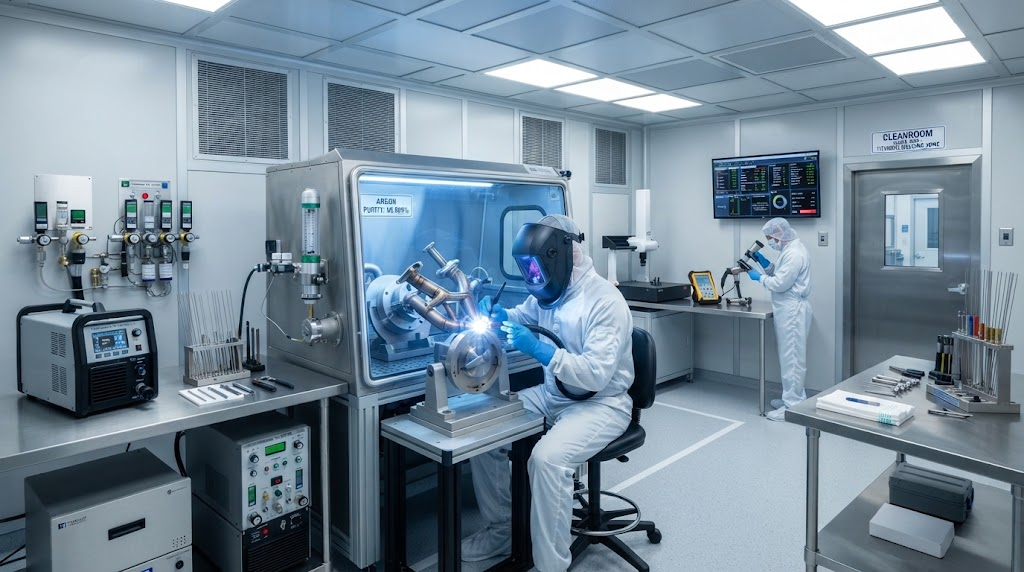
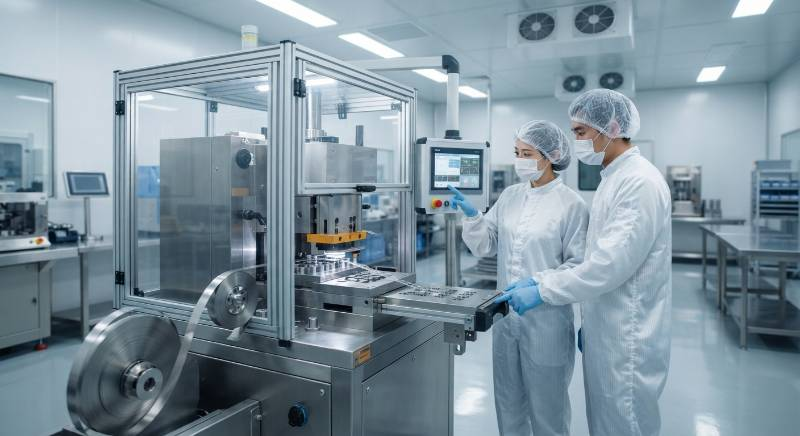
Phase 4: ISO Class 7 Stamping – Precision stamping in a controlled environment to prevent surface contamination from particulates.
Phase 5: Digital AOI Verification – 100% Automated Optical Inspection for channel depth and plate flatness.
Surface Engineering: Reducing Interfacial Contact Resistance (ICR)
The primary technical challenge with titanium is its rapid formation of a non-conductive TiO₂ passivation layer. This layer increases Interfacial Contact Resistance (ICR), which reduces the overall efficiency of the fuel cell stack. To solve this, we apply advanced Physical Vapor Deposition (PVD) coatings.
Our current production data shows that Titanium Nitride (TiN) and Amorphous Carbon (a-C) coatings can reduce ICR to below 5 mΩ·cm² under a compaction pressure of 140 N/cm². These coatings not only enhance conductivity but also act as a secondary barrier against corrosion.
"In our manufacturing experience, the transition from precious metal coatings like gold to advanced carbon-based PVD has been the single greatest factor in reducing the Levelized Cost of Energy (LCOE) for PEMFC systems." — Senior Metallurgical Engineer, China Titanium Factory.
Mitigating Hydrogen Embrittlement in Long-Term Operations
Hydrogen embrittlement occurs when atomic hydrogen diffuses into the titanium lattice, forming brittle hydrides. This is particularly concerning on the anode side of the bipolar plate. We mitigate this through specific surface treatments and lattice-stabilization techniques.
By controlling the grain size during the annealing phase of our "Ultra-Thin Precision" Protocol, we create more grain boundaries that act as hydrogen traps, slowing the diffusion into the bulk material. Additionally, our PVD coatings serve as an effective diffusion barrier, extending the service life of the plates to over 20,000 operational hours.

In 2025, a leading European heavy-duty truck manufacturer approached us to replace their existing stainless steel bipolar plates for a 150kW fuel cell stack. The objective was to increase the power-to-weight ratio for long-haul logistics.
We supplied 0.1mm Grade 1 titanium plates with a specialized conductive ceramic coating. The results were immediate: a 22% reduction in total stack weight and a 5% increase in voltage efficiency at peak current density. These trucks have now surpassed 8,000 hours of road testing with zero recorded failures related to plate corrosion or ICR degradation.
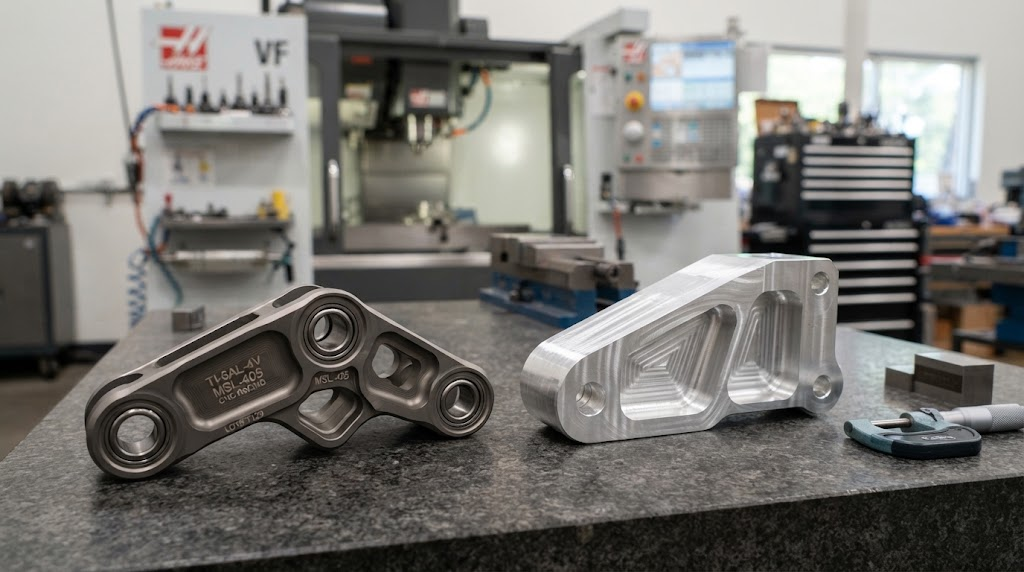
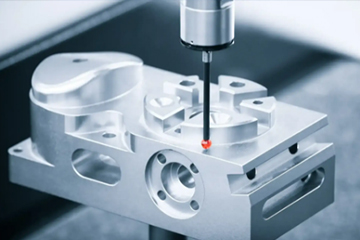
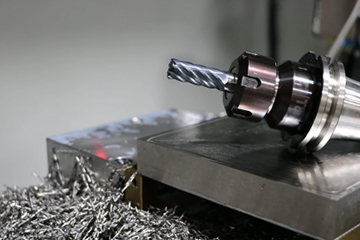
For components requiring even tighter tolerances, we offer Custom CNC Machining Services for high-pressure stack manifolds and end plates.
Market Outlook 2026: Trends in Bipolar Plate Manufacturing
The global shift toward green hydrogen has accelerated the demand for mass-produced titanium components. In 2026, we are seeing a move toward ultra-thin 0.05mm foils for aviation fuel cells, where every gram of weight saved translates directly into increased flight range.
Furthermore, automation in PVD coating lines is driving down the cost of titanium plates, narrowing the price gap with stainless steel. As manufacturing scales, titanium is becoming the standard not just for high-end applications, but for mass-market passenger vehicles as well.
Our Titanium Bipolar Plate Product Range & Custom Services
China Titanium Factory provides end-to-end solutions from raw material sourcing to finished, coated bipolar plates. We operate under ISO 9001:2015 certified quality management systems.
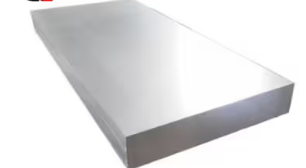
Thickness Range: 0.05mm to 0.3mm
Materials: Grade 1, Grade 2, and Titanium-Palladium alloys (for extreme corrosion)
Coatings: TiN, CrN, a-C, Gold, and Platinum-group metals
Prototyping: Chemical etching or CNC machining for R&D phases
Mass Production: High-speed progressive stamping (up to 60 strokes per minute)
Ready to Optimize Your Fuel Cell Stack?
Contact our engineering team today for a technical consultation or a custom quote on your bipolar plate project.
Request a Custom QuoteFrequently Asked Questions (FAQ)
What is the typical lead time for custom-stamped titanium bipolar plates?
For new designs, tooling typically takes 4-6 weeks. Once tooling is validated, production lead times are usually 2-4 weeks depending on order volume and coating requirements.
Do you provide coating thickness verification?
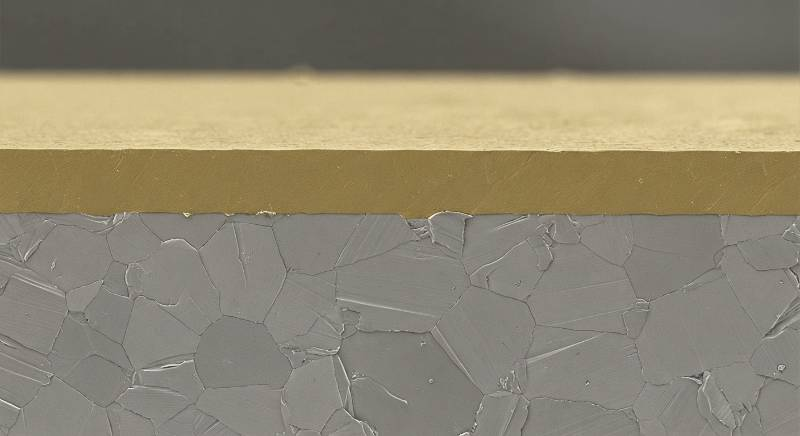
Yes, we use X-ray Fluorescence (XRF) and cross-sectional SEM analysis to verify coating thickness and uniformity across the entire flow field.
Can you assist with flow field design optimization?
While we primarily manufacture to customer specifications, our engineering team can provide feedback on "design for manufacturability" (DFM) to ensure your flow field can be stamped reliably without material thinning.