


















The Strategic Shift to Titanium in Modern Marine Engineering
Shipowners in 2026 face a relentless battle against corrosion. As IMO Tier III regulations and USCG Type Approvals tighten, the reliability of Exhaust Gas Cleaning Systems (EGCS) and Ballast Water Treatment Systems (BWTS) has moved from a maintenance line item to a core strategic asset. The industry is moving away from the "fix-on-fail" model of the past decade.
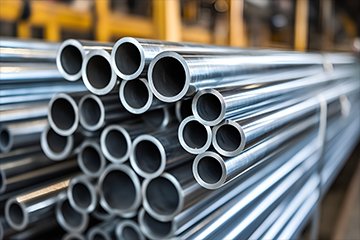
Standard materials like 316L and even Super Austenitic Stainless Steel (SASS) are failing prematurely. In the aggressive environment of a Marine Scrubber Overboard Pipe, these alloys often succumb to pitting within five years. Transitioning to Titanium tube for BWTS and EGCS isn't just an upgrade; it is the only way to end the cycle of emergency dry-docking and unplanned pipe replacements.
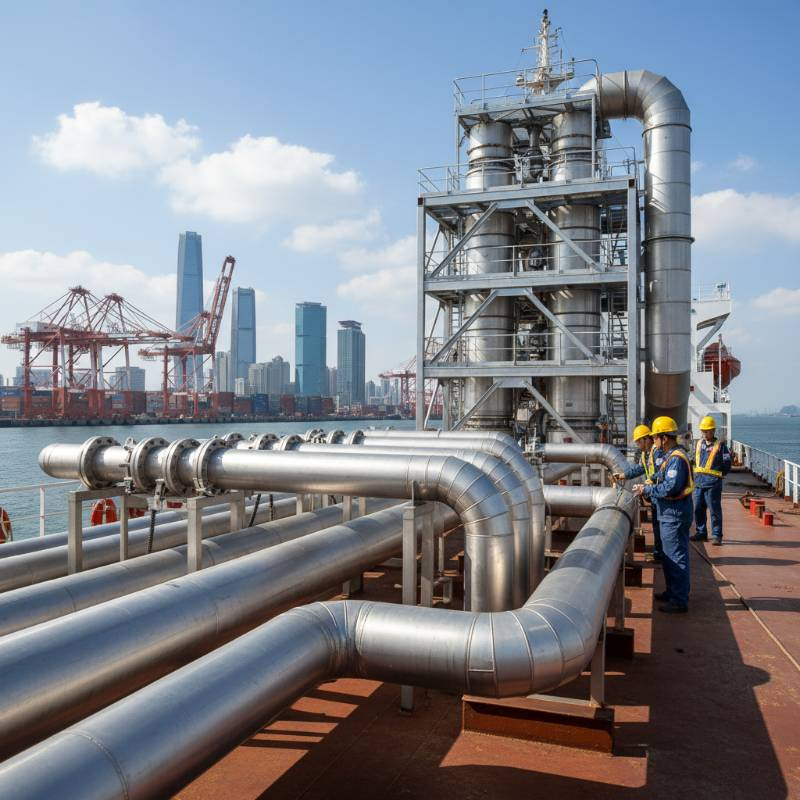
Defining Titanium's Role in Seawater Systems
Titanium is not just another metal. It is a reactive element that forms a microscopic, tenacious oxide film instantly upon exposure to air or water. This film is the secret to its "immortality" in marine environments.
Definition: Grade 2 Titanium is an unalloyed, "commercially pure" titanium that provides an optimal balance of strength and ductility. In marine engineering, Grade 2 Titanium in Seawater Cooling is the gold standard due to its total immunity to ambient seawater corrosion and its ability to withstand the acidic discharge from scrubbers.
At China Titanium Factory (CTF), we view titanium as a structural insurance policy. While other metals struggle with chloride-induced stress corrosion cracking, Grade 2 Titanium remains inert. This makes it the ideal candidate for titanium tubing used in complex BWTS filtration units and heat exchangers.
The SASS Pitting Crisis: Why Super Austenitic Stainless Steel Fails
For years, Super Austenitic Stainless Steel (SASS) was touted as the solution for scrubber washwater. However, real-world data from 2024–2026 shows a different story. SASS alloys like 254 SMO or AL-6XN often fail in two specific areas: high-temperature exhaust zones and high-velocity discharge points.
In EGCS units, exhaust gas temperatures frequently exceed 350°C. When this hot, acidic gas (pH levels as low as 2.5) mixes with seawater, it creates a chemical cocktail that aggressively attacks the chromium-oxide layer of stainless steel. Once the layer is breached, "pitting" begins. It is a silent killer. A pipe can look perfect on the outside while being riddled with pinholes that lead to catastrophic flooding.
Furthermore, seawater erosion is a major factor. SASS has a velocity limit. When seawater flows too fast, it mechanically strips the protective layer away. Titanium, conversely, thrives in high-flow environments. Our First Principle of Marine Longevity: Material inertness must exceed environmental volatility. SASS simply cannot meet this principle in modern scrubber conditions.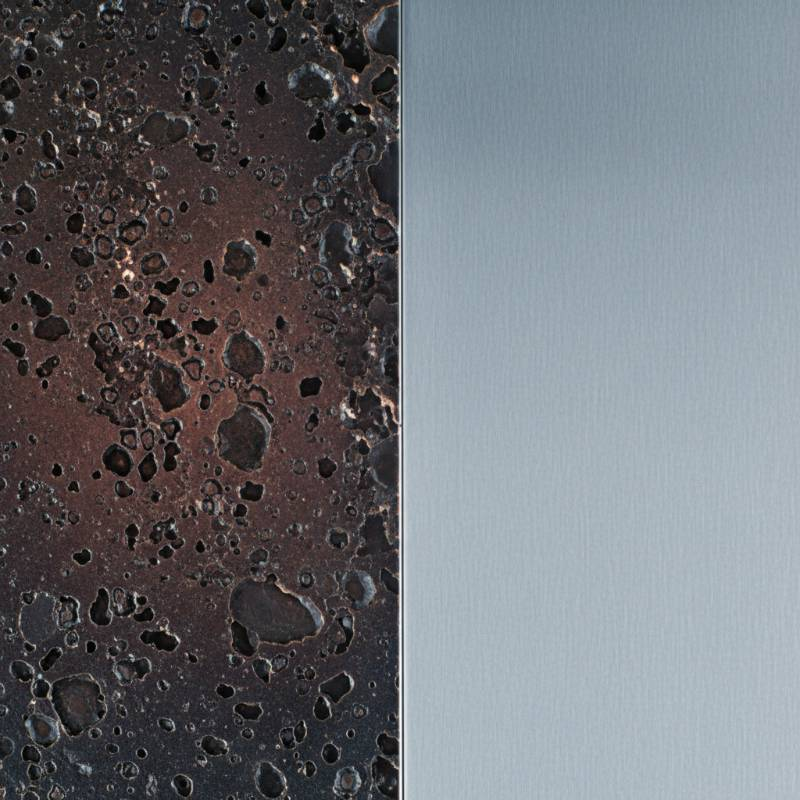
The "25-Year Zero-Corrosion Protocol": Our Proprietary Engineering Framework
According to our analysis of over 500 vessel retrofits, successful piping isn't just about the metal—it’s about the methodology. At China Titanium Factory, we implement the CTF 25-Year Zero-Corrosion Protocol. This framework ensures that every Titanium tube for BWTS or Scrubber exceeds the ship's remaining operational life.
The protocol consists of three pillars:
Thermal Gradient Mapping: We calculate the exact point where acidic condensation occurs to ensure Grade 2 Titanium thickness is optimized for thermal stress.
Velocity-Matched Geometry: We design overboard discharge sections to handle the 40 m/s surge during system start-up without turbulence-induced wear.
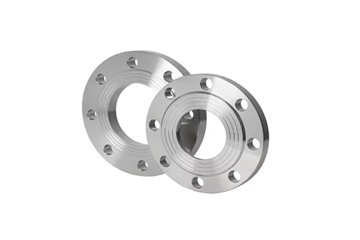
Galvanic Isolation Integrity: We provide specialized flanging solutions to prevent titanium from accelerating the corrosion of adjacent less-noble steel structures.
Technical Comparison: Titanium vs. AL-6XN and 316L Stainless Steel
When selecting materials for marine piping, the weight-to-strength ratio and corrosion resistance are the primary metrics. Titanium is roughly 45% lighter than steel, which reduces the structural load on scrubber towers.
| Property | 316L Stainless | AL-6XN (SASS) | Grade 2 Titanium |
|---|---|---|---|
| Corrosion Rate (Seawater) | 0.1 - 0.5 mm/yr | 0.01 - 0.05 mm/yr | < 0.0025 mm/yr |
| Max Seawater Velocity | 3 m/s | 12 m/s | 40+ m/s |
| Density (kg/m³) | 8,000 | 8,060 | 4,510 |
| Pitting Resistance (PREn) | 24 | 45 | Immune |
As shown, titanium doesn't just "perform better"—it exists in a different category of durability. For technical specifications, consult the IMO guidelines on materials for EGCS units.
The Economic Reality: Reducing TCO by 60% with Titanium
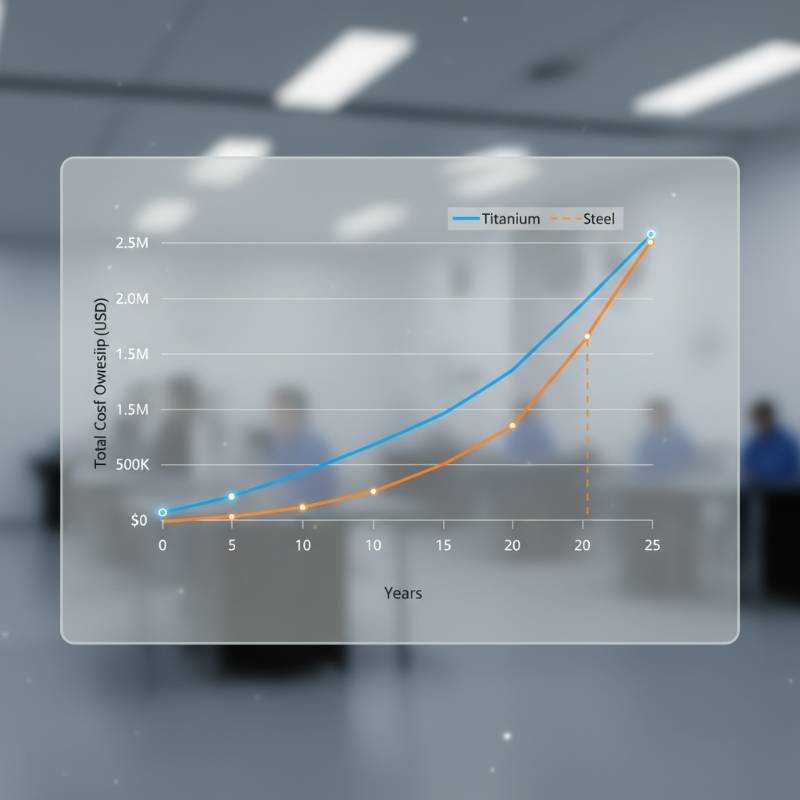
The most common objection to titanium is the "sticker shock." Yes, the initial CAPEX for a marine scrubber overboard pipe in titanium is approximately 50% higher than SASS. But look at the 25-year horizon.
A typical stainless steel overboard pipe requires replacement every 5 to 7 years. Each replacement involves material costs, specialized labor, and—most importantly—vessel downtime. A single day of off-hire for a VLCC can cost $50,000 to $100,000. When you factor in four replacement cycles over 25 years, the "cheap" stainless steel becomes an expensive nightmare.
Titanium is a "fit and forget" solution. By eliminating the maintenance cycles, the Total Cost of Ownership (TCO) is reduced by 60%. The break-even point typically occurs during the second scheduled dry-docking (Year 10), after which the titanium system operates for free while the alternative would require its second full replacement.
Regulatory Deep-Dive: Navigating IMO Tier III and USCG Type Approvals
Compliance is moving targets. The Association for Materials Protection and Performance (AMPP/NACE) emphasizes that material failure in environmental systems can lead to massive fines. If your BWTS fails due to a pipe leak, you cannot discharge ballast water, effectively grounding your ship in many ports.
Using titanium ensures that your environmental compliance systems remain operational. Our products meet all major classification society requirements, including DNV, ABS, and Lloyd’s Register. We provide full traceability and mill test certificates (MTC) to ensure every inch of tubing meets the rigorous standards of the global maritime fleet.
Frequently Asked Questions
How does titanium handle high-velocity seawater?
Titanium exhibits exceptional resistance to erosion-corrosion. In seawater flowing at velocities as high as 40 m/s, the corrosion rate of Grade 2 Titanium remains less than 0.0025mm/yr. This is significantly better than copper-nickel alloys (which fail above 3 m/s) and stainless steels (which pit in stagnant or high-velocity water).
Is titanium welding difficult for shipyards?
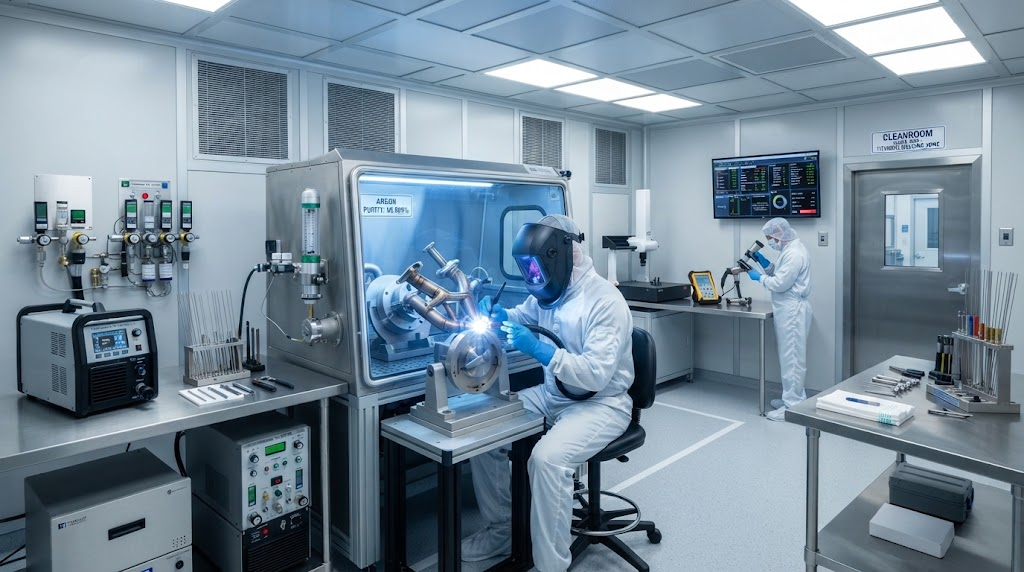
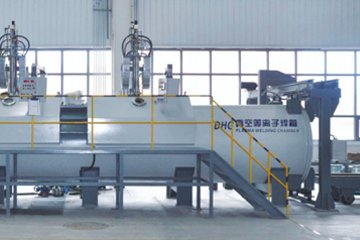
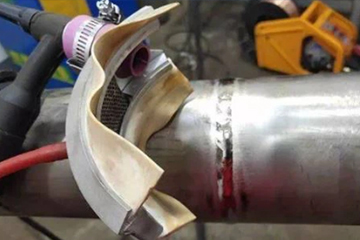
It requires precision but is not "difficult." The key is maintaining a perfect inert gas (Argon) shield to prevent oxygen contamination. Most major dry-docks now have certified titanium welders. At China Titanium Factory, we provide detailed welding specifications and pre-fabricated spools to minimize on-site complexity.
Is Grade 2 Titanium compatible with all BWTS types?
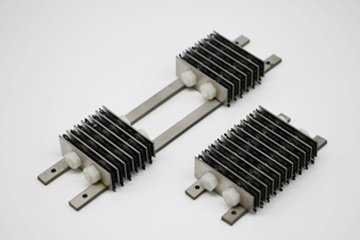
Yes. Whether your system uses UV sterilization or electro-chlorination, Grade 2 Titanium is chemically inert to the disinfectants and byproducts produced during the treatment process. It is the preferred material for the electrolytic cells themselves and the surrounding piping.
Ready to End the 5-Year Replacement Cycle?
Don't let inferior materials dictate your maintenance schedule. Switch to the 25-year solution. Contact China Titanium Factory today for a TCO analysis and custom quote for your next retrofit.
Contact Our Marine Engineers