
















Topside Weight Reduction: The Core Engineering Challenge
Replacing carbon steel with industrial titanium alloys reduces offshore topside dry piping weight by 55% to 70% while permanently eliminating marine seawater corrosion. Titanium's physical density of 4.51 g/cm³ compared to carbon steel's 7.85 g/cm³, combined with a zero required corrosion allowance under ASME design codes, provides the primary physical foundation for major offshore weight shedding.
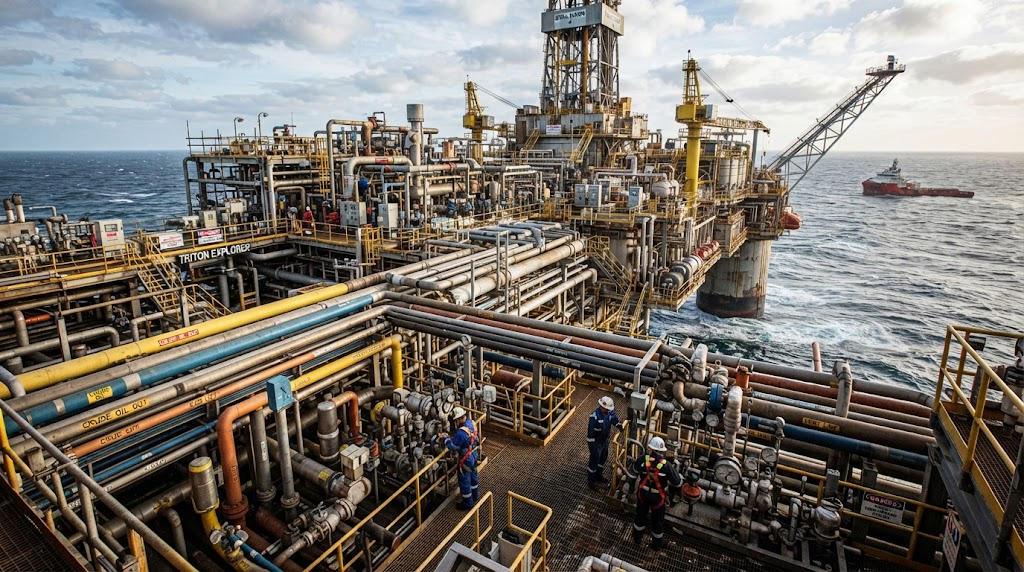
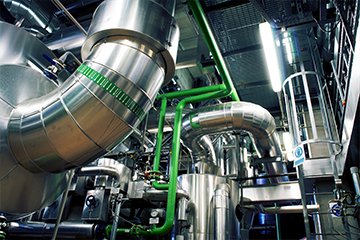
In offshore field development—including fixed jackets, tension-leg platforms (TLPs), and Floating Production Storage and Offloading (FPSO) vessels—topside payload capacity directly dictates field recovery economics. Every excess metric ton installed on topside modules demands structural reinforcement throughout the supporting hull, columns, or foundation pilings.
Engineers traditionally specified heavy-wall carbon steel with internal vulcanized rubber linings, organic coatings, or continuous chemical dosing to survive seawater exposure. This approach incurs severe weight penalties from oversized wall schedules, heavy flange classes, structural supports, and replacement inventory.
Topside Payload Capacity: The maximum allowable operational weight of all process modules, piping, manifolds, and accommodation equipment mounted above the structural deck of an offshore facility without exceeding stability, buoyancy, or fatigue limits.
The Cascade Weight Effect: How Topside Savings Multiply Sub-Structure Mass
Offshore structural systems follow non-linear weight compounding dynamics. Topside dry mass reductions trigger a structural multiplier that decreases structural steel tonnage in deepwater moorings, buoyant hulls, and sub-sea jacket frames.
In deepwater platforms and FPSOs, this dynamic operates at an empirical ratio between 1:2.5 and 1:3.5. Eliminating 100 metric tons of process piping from upper deck modules eliminates roughly 250 to 350 metric tons of required structural steel in hull framing and ballasting systems.
Buoyancy Requirements: Lower topside center of gravity (CoG) reduces the required hull displacement and ballast water volume.
Structural Fatigue Reduction: Lighter upper decks minimize horizontal wave-induced bending moments and dynamic fatigue on structural nodes.
Foundation Piling Optimization: Fixed jackets require fewer and smaller-diameter foundation piles driven into the seabed.
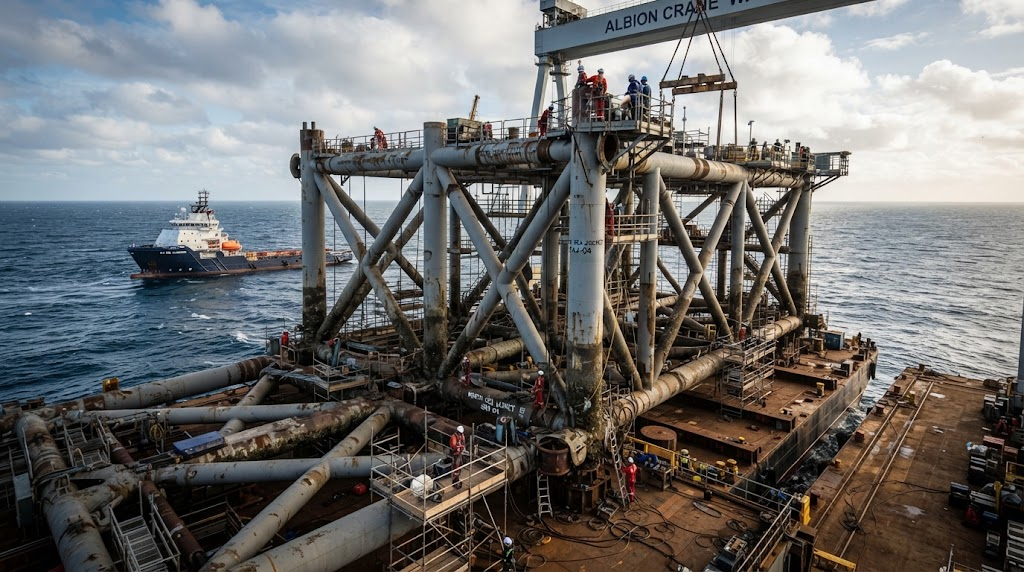
The China Titanium Weight Cascading Protocol (CT-WCP)
To assist offshore EPC contractors during Front-End Engineering Design (FEED) studies, China Titanium Factory developed the China Titanium Weight Cascading Protocol (CT-WCP). This framework quantifies direct and secondary capital savings when switching from lined steel or copper-nickel alloys to titanium.
Baseline System Audit: Establish process line geometry, design pressures, fluid velocities, and required ASME B31.3 corrosion allowances for carbon steel (typically 3.0 mm to 6.35 mm).
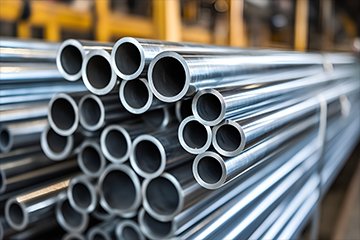
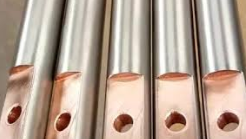
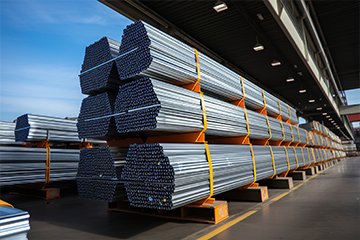
Down-Gauging Wall Optimization: Recalculate schedule requirements using Titanium Seamless and Welded Pipes under zero-corrosion conditions (CA = 0 mm).
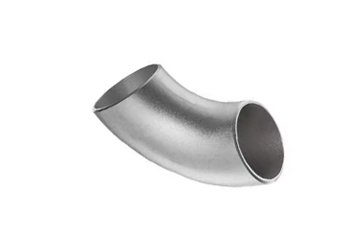
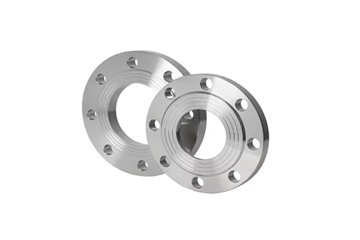
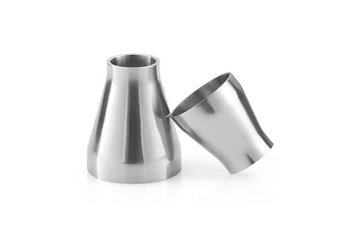
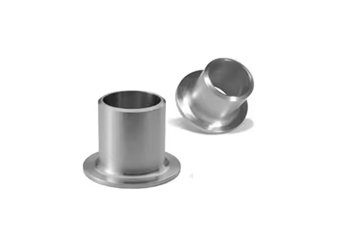
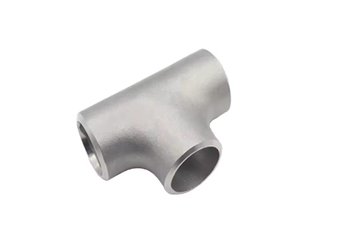
Fitting and Flange Downsizing: Transition ANSI class ratings to thinner neck profiles using forged Offshore Titanium Flanges & Pipe Fittings manufactured to ASME B16.5 / B16.9.
Cascade Factor Multiplier: Apply platform-specific buoyancy and structural coefficients (typically 2.8x) to compute total substructure CAPEX reduction.
Direct Mechanical & Physical Properties: Titanium vs Carbon Steel
Evaluating titanium alloys against industry-standard offshore carbon steels highlights significant specific strength (strength-to-density ratio) advantages. While ASTM A106 Gr. B and API 5L X52 display solid mechanical yield values, their high density creates heavy dead loads.
| Material Property | ASTM A106 Gr. B (Carbon Steel) | API 5L X52 (Carbon Steel) | Ti Grade 2 (UNS R50400) | Ti Grade 5 (UNS R56400 / Ti-6Al-4V) |
|---|---|---|---|---|
| Density (g/cm³) | 7.85 | 7.85 | 4.51 | 4.43 |
| Yield Strength (min. MPa) | 240 | 360 | 275 | 828 |
| Tensile Strength (min. MPa) | 415 | 460 | 345 | 895 |
| Modulus of Elasticity (GPa) | 205 | 205 | 105 | 114 |
| Specific Yield Strength (kN·m/kg) | 30.5 | 45.8 | 61.0 | 186.9 |
| Seawater Corrosion Rate (mm/yr) | 0.15 - 0.50 (Unprotected) | 0.15 - 0.50 (Unprotected) | < 0.001 (Immune) | < 0.001 (Immune) |
Commercially Pure Grade 2 Titanium delivers double the specific yield strength of standard ASTM A106 Gr. B carbon steel. When engineers upgrade critical pressure boundary hardware or dynamic risers to Grade 5 (Ti-6Al-4V), the specific yield strength increases by more than 600% compared to carbon steel.
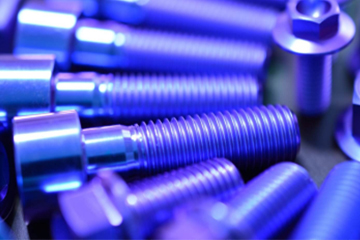
For high-load fastening systems subject to harsh spray, using Titanium Grade 5 (Ti-6Al-4V) Fasteners prevents seizing, eliminates rust bloom, and reduces bolting mass across flange assemblies by 44%.
ASME B31.3 Code Compliance & Wall Thickness Sizing Analysis
The primary driver for titanium's weight advantage over carbon steel lies in piping wall thickness calculations under ASME B31.3 Process Piping codes. Pressure design minimum wall thickness ($t$) is calculated via:
t = [P D / (2 (S E W + P * Y))] + cWhere:
P: Internal design pressure (psig or bar)
D: Outside pipe diameter (in or mm)
S: Allowable material stress value at design temperature (psi or MPa)
E: Longitudinal quality factor
W: Weld joint strength reduction factor
Y: Material geometry coefficient (0.4 for ferritic/titanium alloys below 482°C)
c: Sum of mechanical allowances plus corrosion/erosion allowance
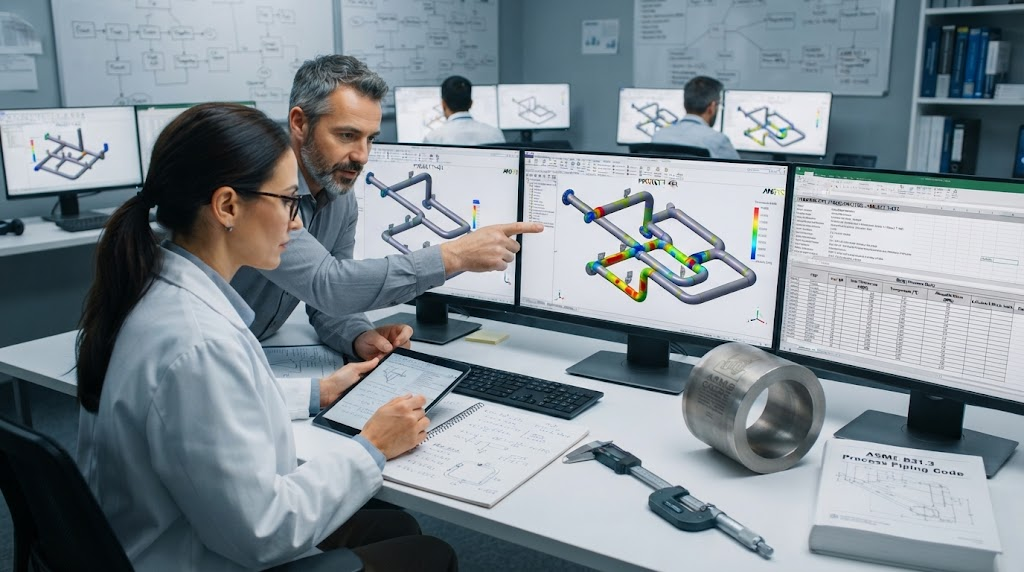
For seawater utility systems, firewater mains, and cooling circuits, offshore design specifications mandate a carbon steel corrosion allowance ($c$) of 3.0 mm to 6.35 mm. For Grade 2 and Grade 5 titanium, the allowable corrosion allowance is explicitly $c = 0.0\text{ mm}$.
Consider an 8-inch (DN200) offshore seawater line designed for 20 bar (290 psig) at 35°C:
Carbon Steel (ASTM A106 Gr. B): Requires Schedule 40 or Schedule 80 to satisfy the base pressure calculation plus a mandatory 3.2 mm corrosion allowance and 12.5% mill undertolerance. Nominal wall thickness equals 8.18 mm, yielding a dry pipe weight of 42.5 kg/m.
Grade 2 Titanium (ASTM B861): With $c = 0\text{ mm}$ and an allowable design stress of 100 MPa (14,500 psi), Schedule 5S or 10S provides full code compliance. Nominal wall thickness equals 2.77 mm, yielding a dry pipe weight of 7.3 kg/m.
This design step eliminates 82.8% of the piping run's bare material weight. When combined with smaller structural brackets and pipe racks, it yields an overall module weight reduction above 70%.
Corrosion Immunity & 30+ Year Total Cost of Ownership (TCO)
Topside carbon steel systems degrade rapidly in aerated, warm marine environments. Pitting corrosion, crevice corrosion, and microbiologically influenced corrosion (MIC) often breach steel lines within 3 to 7 years of active service.
Titanium forms a stable, self-healing rutile ($TiO_2$) oxide layer instantaneously upon atmospheric or aqueous contact. This passive layer maintains electrochemical stability across extreme oceanic conditions.
Flow Velocity Limits: Carbon steel lined with CuNi is restricted to fluid flow velocities below 3.0 m/s to prevent erosion-corrosion. Titanium handles flow rates exceeding 20 m/s without protective film breakdown, enabling downsized pipe diameters.
Elimination of Biocides and Coatings: Titanium operations do not require toxic sodium hypochlorite dosing or expensive epoxy barrier maintenance.
Cathodic Protection Savings: Unlined internal steel circuits demand dedicated sacrificial zinc or aluminum anode sleds, adding subsea deadweight. Titanium does not require internal cathodic protection.
While carbon steel presents lower initial material procurement costs (CAPEX), its cumulative operational expenditure (OPEX) mounts quickly from ultrasonic wall thickness checks, coating repairs, emergency clamping, and mid-life field replacements. Titanium runs maintenance-free across modern 30-year asset design lives, lowering Total Cost of Ownership (TCO) by 40% to 65%.
Target Offshore Application Profiles & Material Selection Matrix
Offshore topside and subsea applications require tailored material selection based on operating pressures, media chemistry, and weight sensitivity. The following matrix illustrates optimal alloy deployment based on offshore service conditions.
| System Application | Traditional Steel Spec | Optimal Titanium Spec | Direct Weight Savings | Key Operational Driver |
|---|---|---|---|---|
| Seawater Cooling Loops | A106 Gr. B + Rubber Lining | ASTM B861 Grade 2 Seamless | 65% - 75% | Elimination of wall erosion and delamination risk |
| Firewater Deluge Mains | Galvanized Carbon Steel | ASTM B861/B862 Grade 2 | 58% - 70% | Zero clogging from rust scales; wet/dry readiness |
| Subsea Dynamic Risers | API 5L X65 / X70 Heavy Wall | ASTM B381 Gr. 5 / Gr. 29 | 48% - 58% | High fatigue resistance to vortex-induced vibrations |
| Shell & Tube Exchangers | Carbon Steel Shell + CuNi Tubes | ASTM B338 Grade 2 Welded Tubes | 50% - 62% | Thin tube walls ($0.7\text{ mm}$) improve thermal transfer |
| Manifold Valve Blocks | Clad Carbon Steel Forgings | ASTM B348 / B381 Grade 5 | 45% - 55% | High structural strength in compact envelopes |
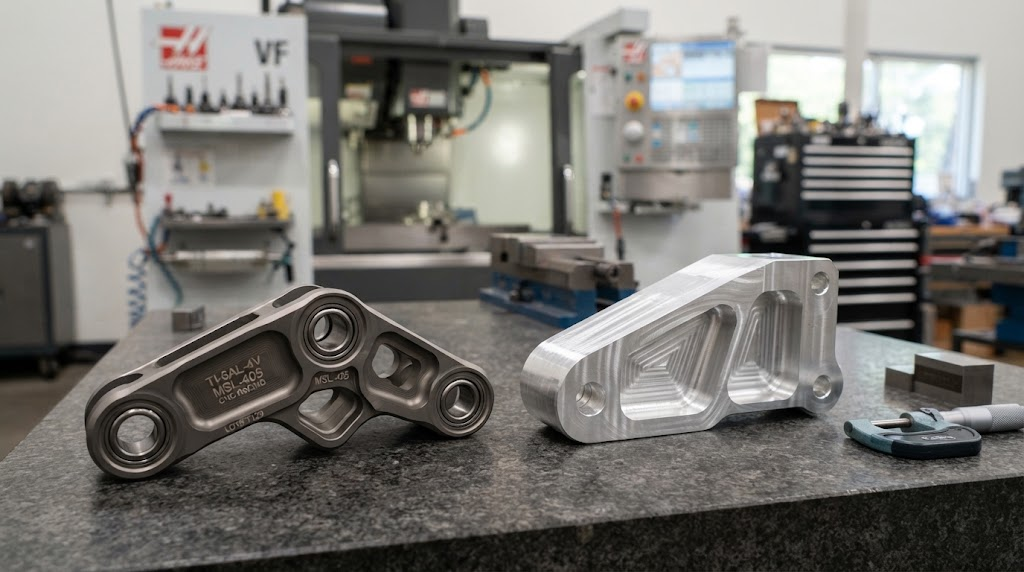
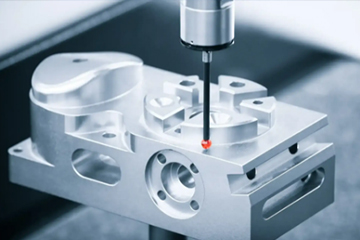
For custom valve bodies, compact subsea manifolds, and specialized flow-control equipment, precision engineering with Custom CNC Machined Titanium Components eliminates the need for weld overlays or mechanical cladding.
Case Study: FPSO Topside Seawater Cooling System Retrofit
A leading deepwater operator in the Santos Basin faced severe payload constraints when modifying an existing FPSO for higher gas throughput. The seawater cooling supply and overboard discharge systems comprised 1,420 linear meters of rubber-lined carbon steel pipe (sizes 4" to 14" NPS).
Replacing the deteriorating steel layout with thin-walled ASTM B861 Grade 2 titanium yielded documented field results:
Direct Topside Dry Weight Savings: Reduced piping mass from 194.5 metric tons to 54.2 metric tons (an immediate 140.3 metric ton savings, or 72.1% reduction).
Substructure Buoyancy Improvement: The 140-ton topside reduction, calculated using the 1:3 cascade ratio, freed up 420 tons of hull displacement capacity. This allowed the integration of an additional gas compression train without upgrading structural sponsons.
Installation Velocity: Lighter pipe spools allowed field technicians to perform manual alignment without overhead cranes, cutting turnaround crane days by 40%.
Certified Manufacturing Capabilities: China Titanium Factory
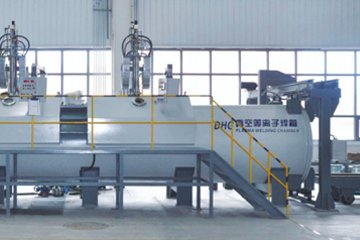
China Titanium Factory operates dedicated vacuum arc remelting (VAR) furnaces, precision extrusion presses, and advanced CNC machining centers to support demanding offshore procurement programs.
Production Scope: Seamless pipes up to 24-inch NPS (ASTM B861 / ASME SB861), large-diameter longitudinal welded pipes up to 48-inch NPS (ASTM B862), and forged blind/weld-neck flanges up to Class 2500 (ASTM B381).
Quality Assurance: Certified under ISO 9001:2015, AS9100D, and pressure equipment directive (PED) standards. Full compliance with NORSOK M-650 qualification for special materials.
Traceability & Non-Destructive Testing (NDT): 100% hydrostatic testing, hydrostatic-pneumatic cycling, ultrasonic inspection (UT), eddy current testing (ET), and EN 10204 3.1 / 3.2 inspection certification with full mill chemical heat traceability.
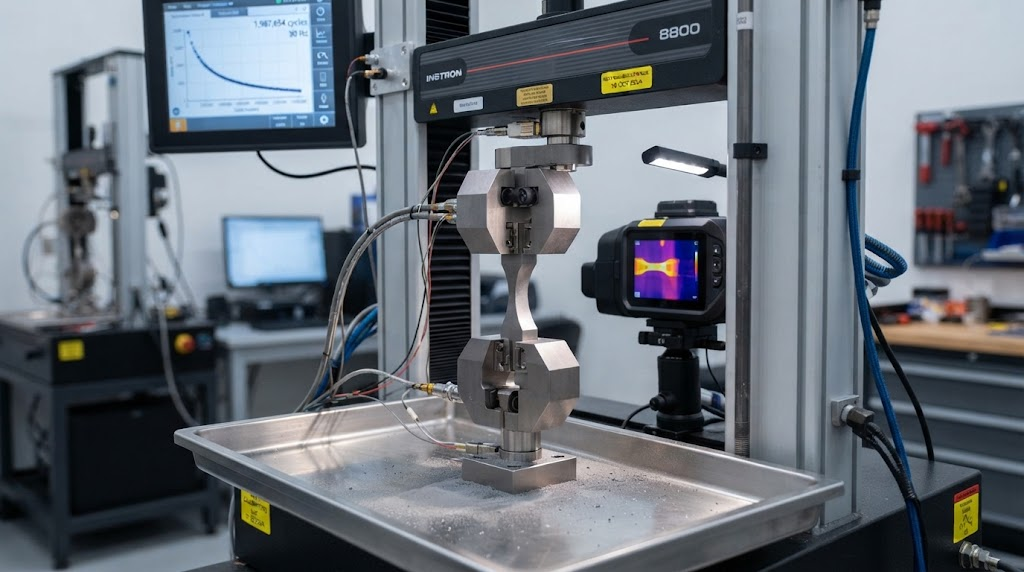
Mill Assurance: In our manufacturing facilities, every heat of Grade 2 and Grade 5 titanium undergo strict microstructural validation, interstitials monitoring (O, N, C, H), and yield testing to guarantee pressure integrity in sour subsea environments.
Frequently Asked Questions (FAQ)
How do you prevent galvanic corrosion when connecting titanium to existing carbon steel piping?
Titanium is cathodic (noble) to carbon steel. When directly bolted without protection in an electrolyte like seawater, it causes rapid galvanic attack of the adjacent steel. Engineers prevent this using full dielectric isolation gasket kits (such as GRE G10 retainers with PTFE seals), isolation bolt sleeves, coated washers, or short transition spools of duplex stainless steel.
Can titanium offshore piping be welded directly in offshore shipyard environments?
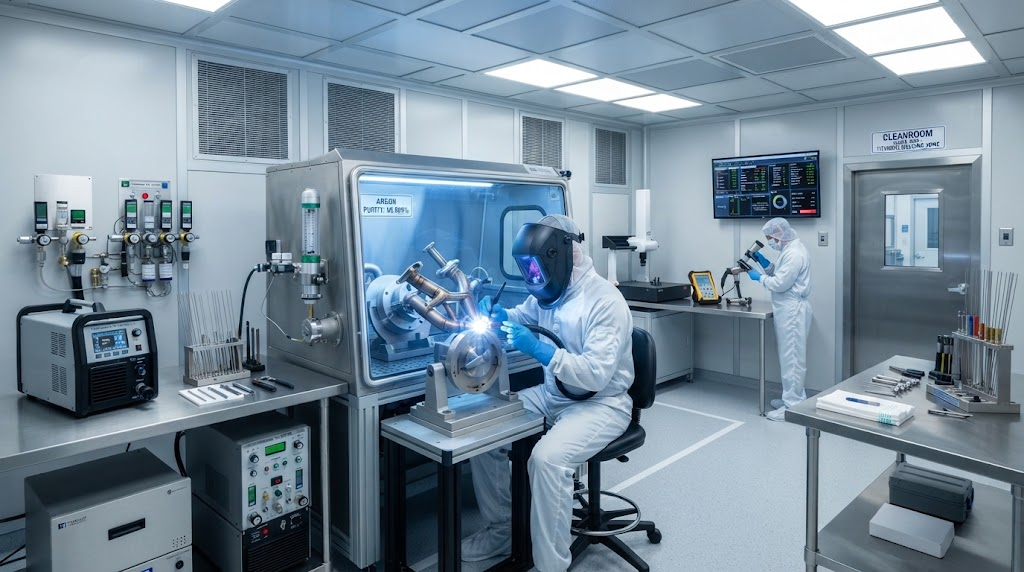
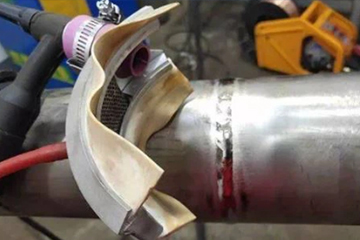
Yes, provided strict inert atmospheric shielding is maintained. Titanium field welding requires high-purity inert gas backing (99.999% argon) and trailing shields to protect the hot weld pool (above 400°C) from atmospheric oxygen, nitrogen, and hydrogen embrittlement in accordance with ASME Section IX / AWS G2.4 standards.
What is the typical cost amortization (payback) period for offshore titanium installations?
The upfront material premium of titanium is typically recouped within 2 to 4 years of platform deployment. Payback drivers include the elimination of planned piping turnarounds, removal of corrosion inhibitor injection programs, and structural steel savings achieved during jacket and hull fabrication.
What are the standard mill lead times for large-diameter offshore titanium spools?
Standard seamless pipe schedules (up to 12" NPS) ship within 4 to 6 weeks from China Titanium Factory raw stock. Custom large-diameter welded spools (14" to 48") or complete pre-fabricated isometric spools typically require 8 to 12 weeks, including full third-party EN 10204 3.2 witness testing.
Optimize Your Offshore Topside Weight Today
Work directly with the metallurgical engineers at China Titanium Factory to model your pipe wall thicknesses under ASME B31.3, evaluate cascade weight benefits, and source certified ASTM B861/B381 components.