




















The Science of Survival: How Cathodic Protection Prevents Metal Decay
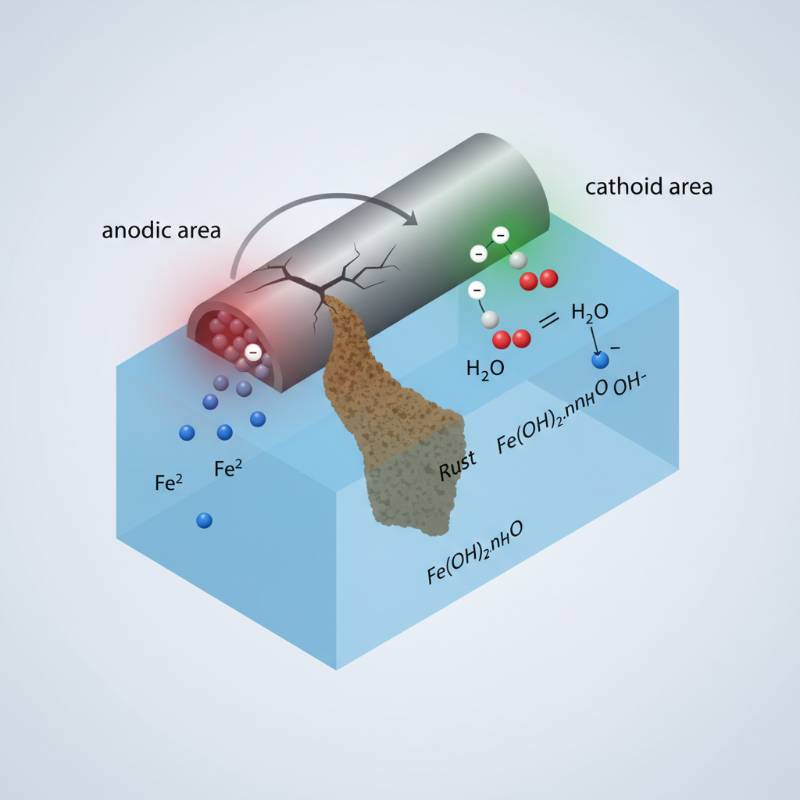
Corrosion eats profit. It’s that simple. When steel is submerged in an electrolyte like seawater or buried in moist soil, an electrochemical reaction begins. This process turns your expensive infrastructure back into iron oxide—rust. To stop this, engineers utilize cathodic protection.
"Cathodic protection is a technique used to control the corrosion of a metal surface by making it the cathode of an electrochemical cell."
At China Titanium Factory, we’ve observed that understanding the electrochemical series is vital. By introducing a more "active" metal into the circuit, you shift the electrical potential of the structure you want to save. Whether you choose sacrificial anodes vs impressed current cathodic protection (ICCP) depends entirely on the scale of the "war" you are fighting against oxidation.
Sacrificial Anodes: The 'Sacrificial Lamb' of Marine Engineering
Sacrificial anodes are the blue-collar workers of corrosion prevention. They are simple, passive, and reliable. You bolt a block of zinc, magnesium, or aluminum to your hull or tank, and the metal literally gives its life for the structure. These metals have a more negative electrochemical potential than steel.
Because these anodes are more reactive, the "corrosion current" flows from the anode to the steel. The anode disappears; the steel remains intact. This is why we call them the sacrificial lamb. According to our analysis at China Titanium Factory, aluminum anodes are increasingly favored over zinc due to their higher electrochemical capacity and lower weight.
Pros and Cons of Galvanic Systems
Pros: No external power required, low initial cost, easy to install, and virtually impossible to over-protect the structure.
Cons: Limited current output, high drag on vessels, and requires frequent replacement as the metal is consumed.
For more technical specifications on anode materials, you can consult AMPP (formerly NACE International) standards for offshore assets.
Impressed Current Cathodic Protection (ICCP): The High-Tech Active Shield
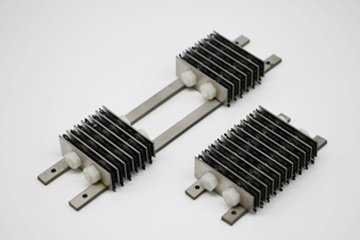
If sacrificial anodes are a passive shield, ICCP is an active energy field. Instead of relying on the natural voltage of the metal, an ICCP system uses an external DC power source—a transformer rectifier. This current is fed through highly durable, non-consumable anodes, often made of MMO coated titanium.
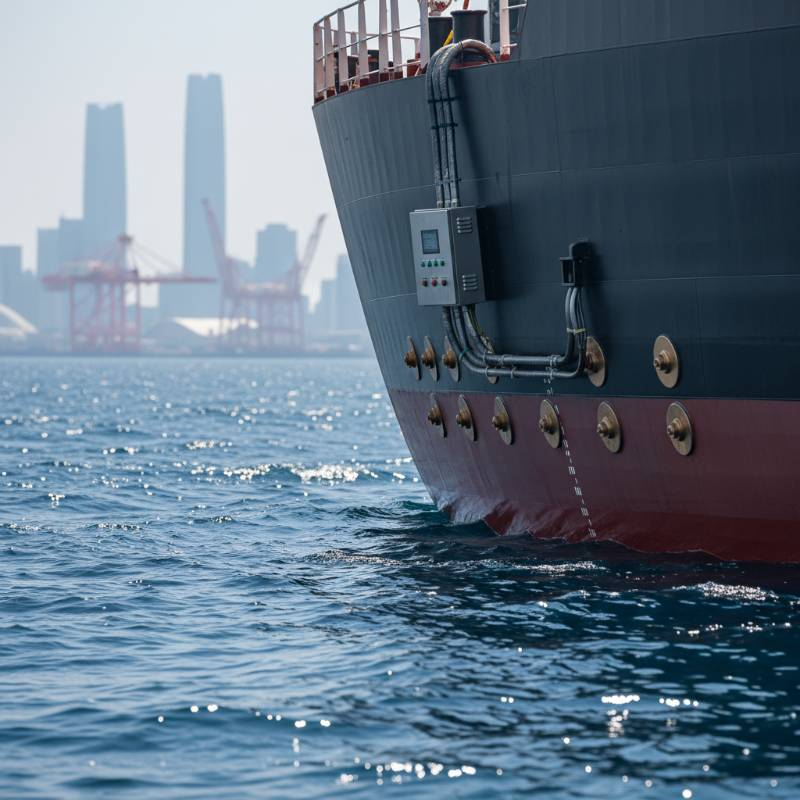
Reference electrodes act as the "brain" of the system. They constantly monitor the electrical potential of the hull. If the system detects a risk of corrosion, the rectifier automatically increases the current. It is a precise, self-regulating loop. We define ICCP as the gold standard for large-scale maritime vessels and deep-sea pipelines where replacing anodes every two years is physically or economically impossible.
Core ICCP Components
Transformer Rectifier: Converts AC to DC power.
Insoluble Anodes: Usually Titanium-based, providing the current path.
Reference Cells: Monitoring the level of protection.
Dielectric Shield: Preventing local over-protection around the anode.
The Asset-Integrity Lifecycle Protocol (AILP): A Proprietary Selection Framework
Choosing between sacrificial anodes vs impressed current cathodic protection (ICCP) isn't a coin toss. At China Titanium Factory, we utilize the Asset-Integrity Lifecycle Protocol (AILP) to guide our clients. The Golden Rule of AILP is: "The complexity of the protection must be proportional to the cost of the asset's downtime."
The AILP 3-Step Analysis
Environment Mapping: We analyze water resistivity and salinity. High-resistivity environments (like brackish water) often demand the high driving voltage of ICCP.
Surface Geometry: Complex shapes with many nooks and crannies favor sacrificial anodes because they provide "local" protection without the need for complex wiring.
Operational Lifespan: If the asset needs to stay submerged for 15+ years without dry-docking, ICCP is the only logical choice.
Head-to-Head: Comparing Performance, Cost, and Environmental Impact
The debate of sacrificial anodes vs impressed current cathodic protection (ICCP) often comes down to the bottom line. While sacrificial systems are cheaper on Day 1, the maintenance logs tell a different story over a 10-year period.
| Feature | Sacrificial Anodes | ICCP System |
|---|---|---|
| Initial Cost | Low | High |
| Maintenance | Replacement every 2-5 years | Annual system checks |
| Control | None (Automatic/Passive) | Fully Adjustable |
| Weight/Drag | Significant | Minimal |
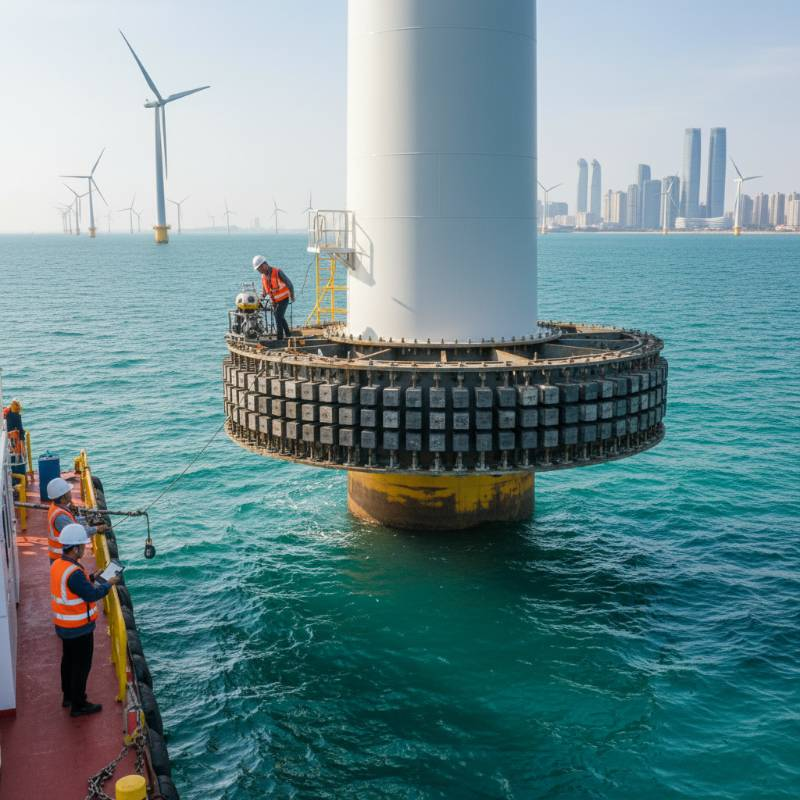
Environmental impact is also a growing concern. Sacrificial anodes release heavy metal ions into the ocean as they dissolve. ICCP systems are considered "greener" in terms of metal runoff, though they do require electrical energy. Many DNV-certified projects now mandate ICCP for large offshore wind foundations to minimize environmental leaching.
Industrial Use Cases: Protecting Hulls, Pipelines, and Offshore Foundations
In the real world, the choice is often dictated by the industry. Ship hulls for massive container ships almost exclusively use ICCP. The drag reduction alone saves thousands in fuel costs compared to hundreds of bulky sacrificial blocks.
Conversely, underground pipelines may use a hybrid approach. Remote sections of a pipe might rely on magnesium sacrificial anodes where power is unavailable. Near pumping stations, ICCP is deployed to handle the bulk of the current demand. At China Titanium Factory, we specialize in providing the titanium components necessary for these rugged industrial environments.
Frequently Asked Questions (FAQ)
How long do ICCP systems last?
With proper maintenance of the control unit and reference electrodes, the titanium anodes in an ICCP system can last 20 years or more. The power unit itself typically requires servicing every 5-10 years.
Can sacrificial anodes be used with ICCP?
Yes, this is known as a hybrid system. Sacrificial anodes can provide "hot spot" protection in areas where the ICCP current cannot easily reach due to shielding, such as inside sea chests or around complex rudder assemblies.
What happens if an ICCP system fails?
If the power supply fails, the asset is immediately vulnerable to corrosion. This is why ICCP systems include alarms and remote monitoring. Unlike sacrificial anodes, which fail slowly as they are consumed, ICCP failure is binary—it's either on or off.
Ready to Shield Your Assets?
Don't let corrosion compromise your infrastructure. Whether you need high-grade sacrificial anodes or advanced titanium ICCP components, our engineers are ready to apply the AILP framework to your project.
Consult Our Corrosion Experts