Engineered titanium anodes are dimensionally stable electrodes fabricated by applying electrocatalytic mixed metal oxide (MMO) or noble metal layers onto high-purity unalloyed titanium substrates. Sourcing premium titanium anodes for sale from China Titanium Factory provides lower cell overpotentials, exceptional corrosion resistance, and stable operational geometry across high-amperage industrial electrochemical systems.
In classical electrochemistry, soluble anodes such as graphite, lead-antimony alloys, and cast iron degrade rapidly under high current loads. This degradation contaminates electrolyte baths and introduces geometric variance. In contrast, insoluble Dimensionally Stable Anodes (DSA) maintain rigid inter-electrode gaps throughout their operating lifecycle.
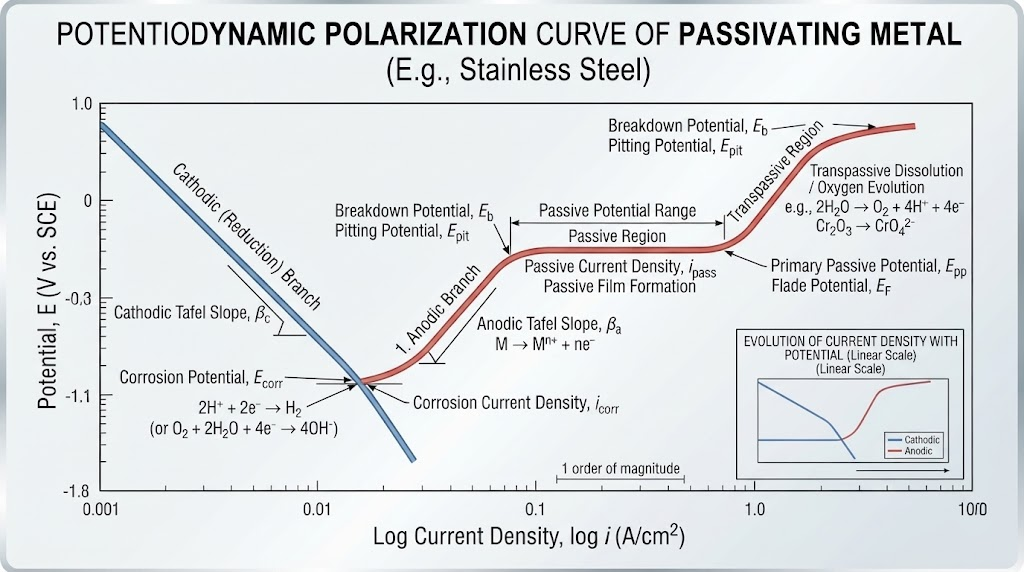
Dimensionally Stable Anode (DSA): An insoluble electrode consisting of an inert, corrosion-resistant valve metal substrate (typically ASTM B265 Grade 1 titanium) coated with conductive, catalytic transition metal oxides that facilitate specific oxidation reactions without substrate dissolution.
By shifting from conventional lead-alloy anodes to catalytic MMO-coated titanium, plant operators routinely achieve a 15% to 25% reduction in overall cell voltage. In high-output chlor-alkali and electrowinning facilities, this operational shift yields energy savings exceeding 350 kWh per ton of produced product.
| Performance Parameter | MMO/DSA Titanium Anodes | Lead-Alloy (Pb-Sn-Ca) | Graphite Electrodes |
|---|---|---|---|
| Chlorine Overpotential (@ 2000 A/m²) | < 0.05 V | > 0.50 V | 0.15 – 0.30 V |
| Oxygen Overpotential (@ 2000 A/m²) | 0.25 – 0.35 V | 0.80 – 1.10 V | N/A (Rapid Oxidation) |
| Maximum Current Density | Up to 20,000 A/m² | < 1,000 A/m² | < 800 A/m² |
| Coating Dissolution Rate | < 1.0 mg/kAh | 1,000 – 5,000 mg/kAh | Volumetric Sloughing |
| Substrate Reusability | 100% (Multiple Recoatings) | 0% (Melt Down Only) | 0% (Consumable) |
The efficiency of a catalytic electrode depends directly on matching the outer oxide solid solution to the primary anodic reaction. At China Titanium Factory, we tailor noble metal oxide combinations to deliver selective electrocatalysis while suppressing unwanted side reactions.
In environments containing active halides, such as chlor-alkali brine cells, seawater electrolysis systems, and on-site sodium hypochlorite generation, chlorine evolution is the dominant pathway. Ruthenium oxide (RuO2) provides exceptional catalytic activity for the chlorine discharge reaction:
2Cl⁻ → Cl₂ + 2e⁻ (E° = +1.36 V vs NHE)
Because pure RuO2 is susceptible to oxidation in solutions containing trace oxygen, our engineers stabilize the active crystal lattice with Iridium Oxide (IrO2) and Titanium Dioxide (TiO2). This binary and ternary matrix guarantees chlorine overpotentials below 40 mV at 3,000 A/m², while preventing premature surface passivation.
For processes carried out in non-halide, highly acidic media—such as sulfuric acid, nitric acid, or methanesulfonic acid electrolytes—the primary anodic process is the Oxygen Evolution Reaction (OER):
2H₂O → O₂ + 4H⁺ + 4e⁻ (E° = +1.23 V vs NHE)
Under these conditions, RuO2 degrades into volatile RuO4. To prevent this breakdown, we utilize an IrO2-Ta2O5 multi-layer coating system. Tantalum pentoxide acts as a robust, chemically inert valve-metal binder that halts electrolyte penetration toward the titanium base.
These Ir-Ta formulations represent our primary configuration for continuous electro-galvanizing, electrolytic copper foil manufacture, PCB high-speed pulse plating, and deep-well Impressed Current Cathodic Protection (ICCP) systems operating under AMPP (NACE) specifications.
For specialized electrodeposition requiring high bath purity, China Titanium Factory supplies platinized titanium anodes fabricated via high-purity electroplating or thermal platinum-salt decomposition. Standard platinum layer thicknesses range from 1.0 µm to 10.0 µm. These are widely used in hard chromium plating, precious metal recovery, and fuel cell current collection.
For aggressive industrial wastewater treatment involving refractory organics and perchlorate synthesis, we manufacture Alpha- and Beta-phase Lead Dioxide (Ti/PbO2) electrodes. These electrodes provide high oxygen overpotentials (>1.70 V vs. SCE), generating hydroxyl free radicals (•OH) directly at the anode boundary.
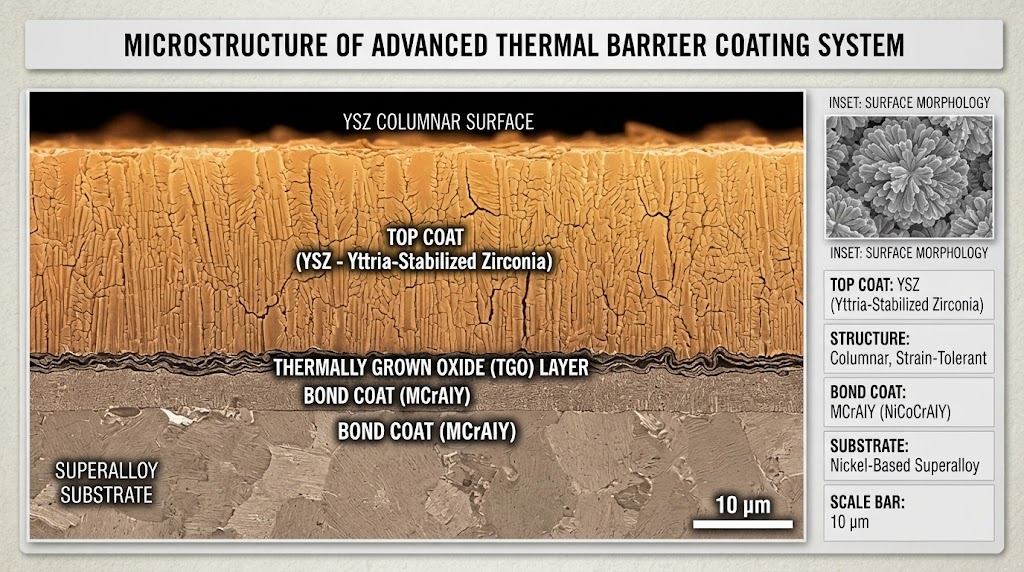
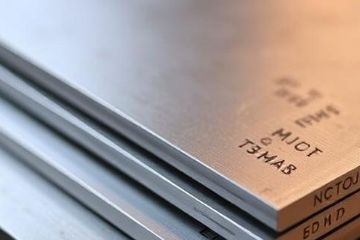
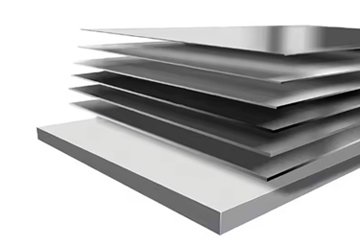
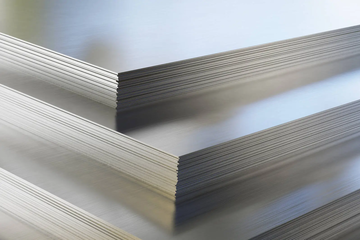
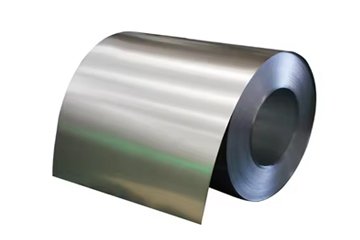
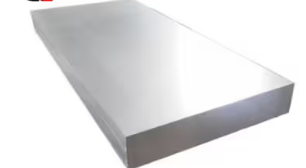
Substrate geometry governs local mass transfer rates, current distribution uniformity, and gas-bubble disengagement kinetics. Our integration with ASTM B265 Titanium Sheet and Plate production allows us to fabricate fully customized, tight-tolerance cell geometries in-house.
Expanded diamond mesh anodes are engineered to maximize active surface contact while preventing the "gas screen" effect. Rapid gas disengagement lowers ohmic bubble resistance across the electrolyte:
Standard Diamond Openings (LWD × SWD): 4.5 × 2.5 mm, 6.0 × 3.0 mm, 12.5 × 5.0 mm.
Substrate Thickness: 0.5 mm to 3.0 mm unalloyed Grade 1 titanium.
Slotted Plates: Custom waterjet or laser-cut linear patterns for vertical continuous plating cells requiring precise hydrodynamic flow profiles.
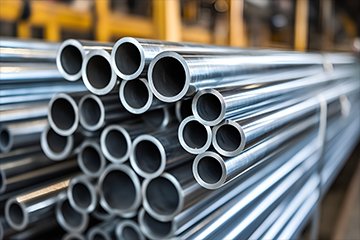
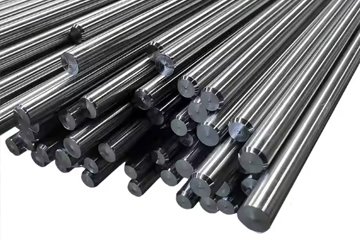
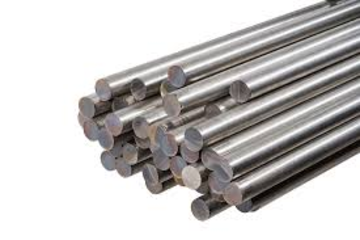
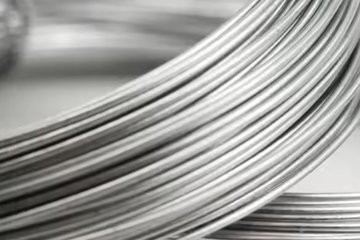
For cathodic protection and internal tank piping geometries, we utilize seamless Grade 1 tubing from our dedicated Titanium Seamless and Welded Tubes production lines. Solid core geometries are built using premium Titanium Wire and Rod Electrodes.
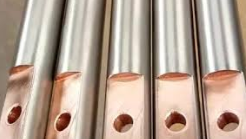
MMO Tubular Strings: Diameters of 19 mm, 25 mm, and 32 mm with center-crimped XLPE/Kynar dual-jacketed cables, factory-tested to verify electrical connection resistance is under 0.001 Ω.
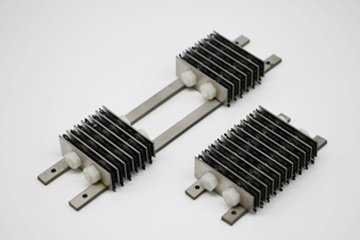
ICCP Ribbon Anodes: 6.35 mm and 12.7 mm widths for above-ground storage tank bottoms and reinforced concrete protection, paired with titanium conductor connecting bars.
Custom Engineered Assemblies: Complete flange, busbar, and cell frame assemblies produced through our Custom CNC Titanium Machined Components division.
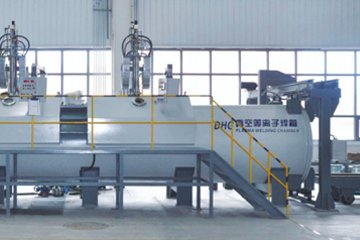
Achieving catalytic lifespans exceeding 10 to 20 years requires precise mechanical, chemical, and thermal processing. China Titanium Factory manufactures every anode under the proprietary China Titanium UltraCoat™ Thermal Decomposition Protocol.
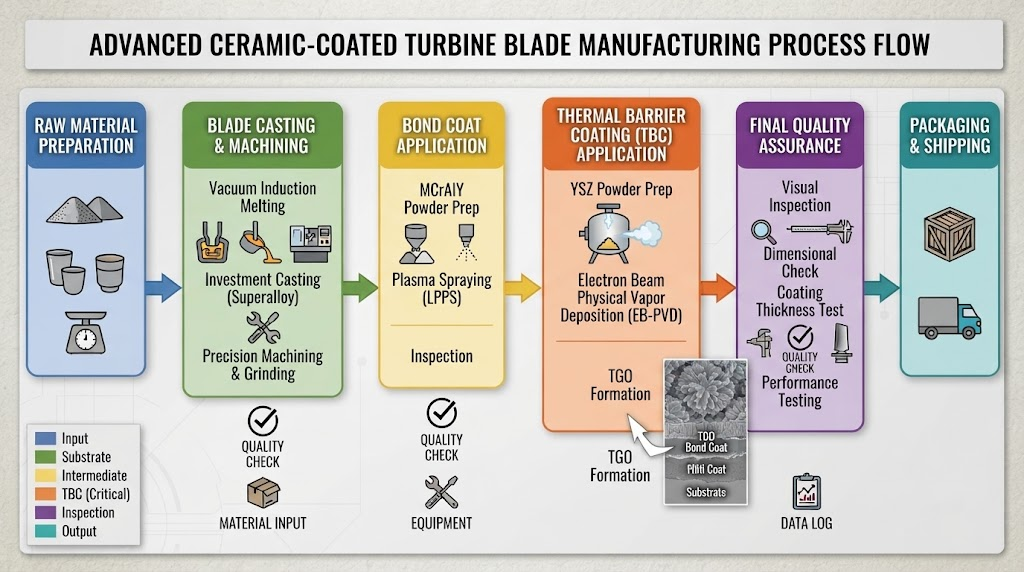
Substrate Surface Activation: Virgin ASTM B265 Grade 1 titanium plates undergo corundum blasting to establish a targeted anchor profile (Ra 4.5–6.5 µm). The material is then etched in boiling 20% hydrochloric acid (HCl) to produce a protective titanium hydride (TiH₂) surface layer.
Precursor Formulation & Micro-Deposition: High-purity noble metal salts (RuCl₃, H₂IrCl₆, TaCl₅, H₂PtCl₆) are dissolved in organic solvent matrices and applied via automated micro-metered cross-coating heads.
Intermediate Pyrolysis Curing: Coated substrates enter computer-controlled multi-zone furnaces (400°C to 520°C). This decomposes the metal salts into crystalline oxides while maintaining an unoxidized metallic base.
Multi-Layer Solid Solution Interleaving: Steps 2 and 3 are repeated between 12 and 26 times. This builds up the target catalyst load (2 g/m² to 40 g/m²) while eliminating straight-through micro-fissures down to the titanium base.
Final Stress-Relieving Oxidation: Coated parts undergo an extended post-baking cycle (500°C–560°C for 2–6 hours). This stabilizes the crystal lattice and forms a tough intermediate TiO₂/catalyst diffusion zone.
To eliminate premature cell failure in industrial operations, China Titanium Factory maintains strict quality verification standards aligned with global chemical and cathodic protection norms.
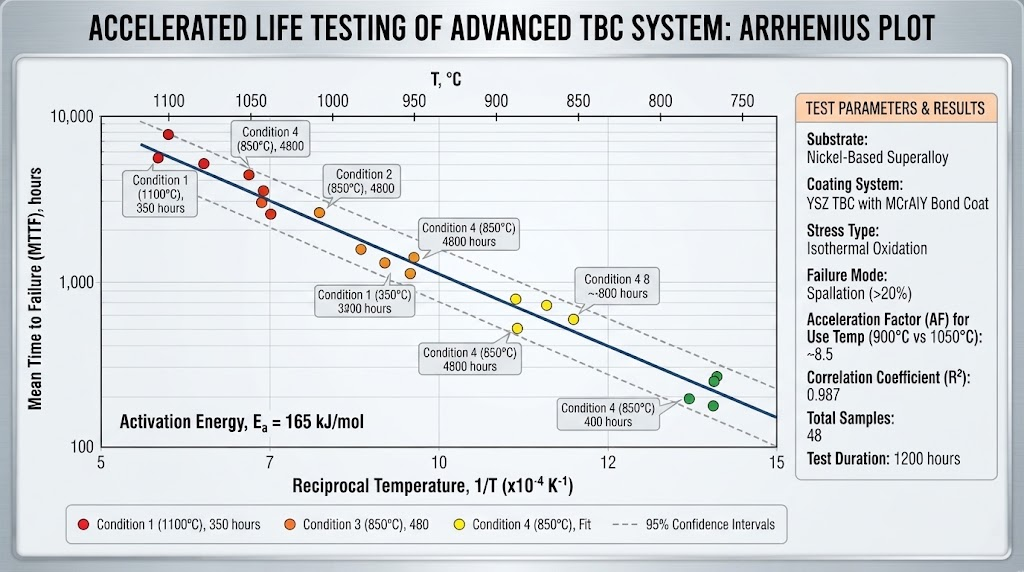
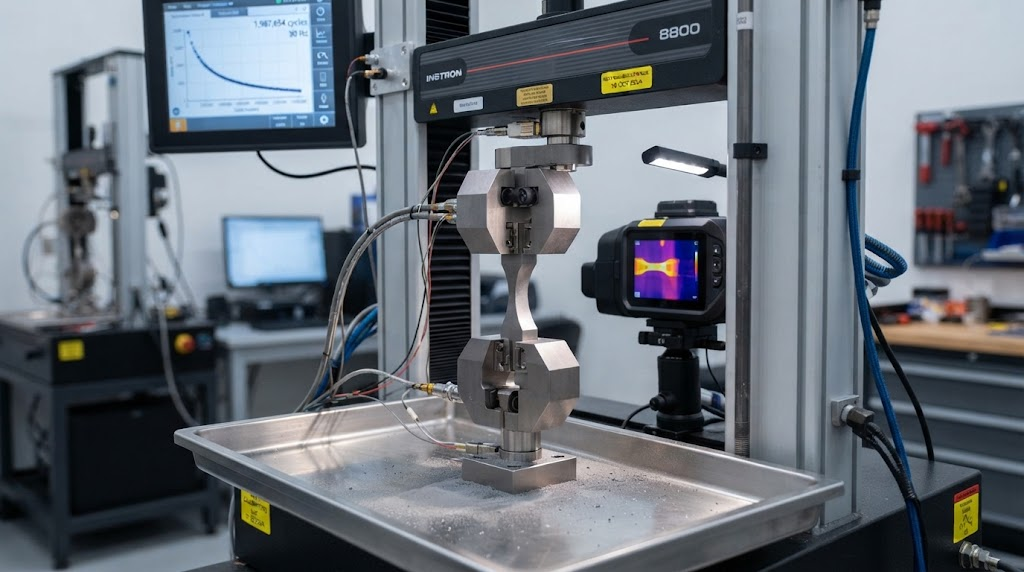
Engineering Insight on NACE TM0108 Compliance: "Our production batches undergo strict Accelerated Life Testing (ALT) in aggressive 1.0 M H₂SO₄ solutions at extreme current densities exceeding 10,000 to 20,000 A/m². The test runs until a 5.0 V cell potential spike confirms deactivation. This test verifies that the catalytic coating will exceed its specified service life in lower current operational environments."
Every shipment is backed by verified testing documentation:
Chemical Traceability: Complete EN 10204 3.1 Mill Test Certificates verifying ASTM B265 / ASTM B338 Grade 1 mechanical and chemical compliance, with iron content held below 0.03% to prevent substrate embrittlement.
Coating Thickness & Homogeneity: High-precision, non-destructive X-ray Fluorescence (XRF) spectrometry validates total catalyst loading and verifies uniform element dispersion across the active surface.
Adhesion Testing: Standardized cross-hatch mechanical tape and thermal shock testing (cycling between 500°C and 20°C ice-water quench) verify zero interfacial delamination.
Unalloyed titanium substrates do not dissolve during normal electrolysis. When an MMO anode reaches its end-of-life deactivation point, the underlying base metal remains structurally intact. China Titanium Factory offers closed-loop industrial recoating and refurbishment services that significantly lower lifetime operating costs.
Our refurbishment process removes the depleted oxide layer through controlled molten salt or non-destructive chemical stripping, cleans and re-etches the substrate, and applies a brand-new UltraCoat™ catalyst formulation. This restoration returns the electrode to 100% of its original electrocatalytic performance.
| Cost Driver | New Anode Fabrication | Substrate Recoating Service | Procurement Savings |
|---|---|---|---|
| Substrate Titanium Cost | 100% Standard Cost | $0.00 (Customer Owned) | 100% Metal Savings |
| Structural Machining / CNC | 100% Fully Billed | $0.00 (Existing Substrate) | 100% Machining Savings |
| Noble Metal Application | 100% Custom Formula | 100% (Equivalent Loading) | 0% (Equal Performance) |
| Total Cost of Ownership | Baseline (100%) | 35% – 50% Baseline | 50% – 65% Total Savings |
Correctly sizing your titanium anodes balances operating current density, target system lifetime, and precious metal loading. Sizing an MMO anode system requires four baseline calculations:
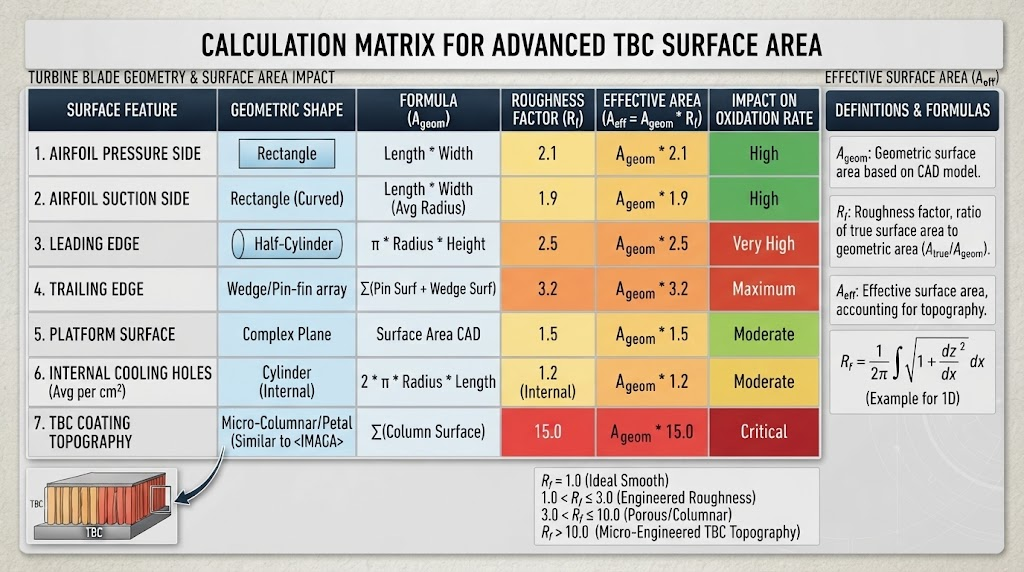
Area (m²) = Total Cell Current (A) / Operating Current Density (A/m²)
Example: For an electroplating cell operating at 6,000 A total current with an Ir-Ta anode target current density of 1,500 A/m²: Active Area = 6,000 / 1,500 = 4.0 m².
Loading (g/m²) = (Operating Current Density × Operating Target Hours × Dissolution Rate) / Utilization Factor
Where the dissolution rate for certified Ru-Ir in saturated brine is typically 0.5 to 1.2 mg/kAh, and the catalyst utilization factor before deactivation is ~60% (0.60).
Chlor-Alkali / Brine Chlorination: Select RuO₂-IrO₂-TiO₂ (10–20 g/m² noble metal). Max operating current density: 3,000–4,000 A/m².
Acidic Electrowinning / Copper Foil: Select IrO₂-Ta₂O₅ (15–35 g/m² noble metal). Max operating current density: 8,000–15,000 A/m².
Soil / Seawater ICCP Cathodic Protection: Select IrO₂-Ta₂O₅ / RuO₂-IrO₂ dual coating (6–12 g/m²). Operating current density: 50–100 A/m² in soil; 600 A/m² in seawater.
China Titanium Factory supplies chemical plants, water treatment engineering firms, and cathodic protection contractors worldwide with straightforward, factory-direct procurement terms.
Rapid Prototyping & Custom Sizing: Standard samples and custom test plates fabricated to client CAD drawings in 5 to 7 business days. Full production orders typically ship in 2 to 4 weeks.
Global Logistics & Incoterms: We offer flexible international shipping terms including EXW, FOB (Shanghai/Tianjin), CIF, and full DDP door-to-door delivery with cleared customs duties.
Export Packaging Standards: Coated MMO surfaces are vulnerable to mechanical abrasion during transit. All anodes are packed with multi-layer protective PE film wrapping, shock-absorbing high-density EVA foam separators, and ISPM-15 certified reinforced plywood crates for export.
Contact our electrochemical engineering team with your electrolyte chemistry, operating current density, and dimensional drawings for an exact pricing quote.
Get an MMO Anode QuoteLifespan depends on electrolyte composition, current density, bath temperature, and catalyst loading. Ru-Ir anodes in chlor-alkali systems regularly run for 6 to 10 years. In acidic electrowinning cells, Ir-Ta anodes last 3 to 8 years at current densities above 5,000 A/m². For impressed current cathodic protection (ICCP), our MMO tubular and ribbon anodes are engineered to meet NACE standards for 25+ years of continuous service.
No. Standard MMO and DSA titanium anodes must never be operated under reversed polarity. Connecting an MMO anode to a negative cathodic potential reduces the catalytic oxide layer into metal hydrides or stripped metallic fines. This leads to immediate coating loss and base-metal passivation. If current reversal is required for periodic descaling, consult our engineering team for specialized bipolar coatings.
ASTM B265 Grade 1 titanium is unalloyed, high-purity titanium that delivers the highest electrical conductivity and ductile formability of all titanium grades. Grade 5 contains aluminum and vanadium alloying elements that form non-conductive, passive boundary films under high anodic potentials. This increase in internal electrical resistance makes Grade 5 unsuitable as an electrocatalytic substrate.
Passivation occurs when the catalytic oxide layer wears thin, allowing the underlying titanium substrate to oxidize and form a non-conductive TiO₂ dielectric barrier. This barrier sharply increases cell voltage. Common causes include operating beyond design current densities, fluoride ion contamination (F⁻ > 50 ppm), reverse polarity, or high organic fouling that blocks electrolyte diffusion.



Contact Us
Room 21003, 10th Floor, Unit 2, Building 1, Xianning International Plaza, No.29 Xianning West Road, Beilin District, Xi'an City
Copyright © Xi'an Shiguang Jingyan Technology Co., Ltd. All Rights Reserved.