














Understanding Titanium Sintered Felt GDL in PEM Electrolysis
Proton Exchange Membrane (PEM) electrolyzers are the engine of the green hydrogen economy. Inside these stacks, the Gas Diffusion Layer (GDL) plays a dual role: it must transport water to the catalyst and usher oxygen gas out. While carbon GDLs work for fuel cells, they disintegrate at the high potentials of a PEM anode. This is why Titanium Sintered Felt GDL is the industry standard.
"We define Titanium Sintered Felt as a three-dimensional porous structure composed of micron-sized titanium fibers, vacuum-sintered to form a rigid, highly conductive metallic network."
At China Titanium Factory, we’ve observed that many stack failures stem from poor GDL selection. A GDL isn't just a spacer. It is the primary electrical bridge between the bipolar plate and the catalyst coated membrane (CCM). If the contact is weak, efficiency plummets.
The Material Science: Sintering Process and Porosity Control
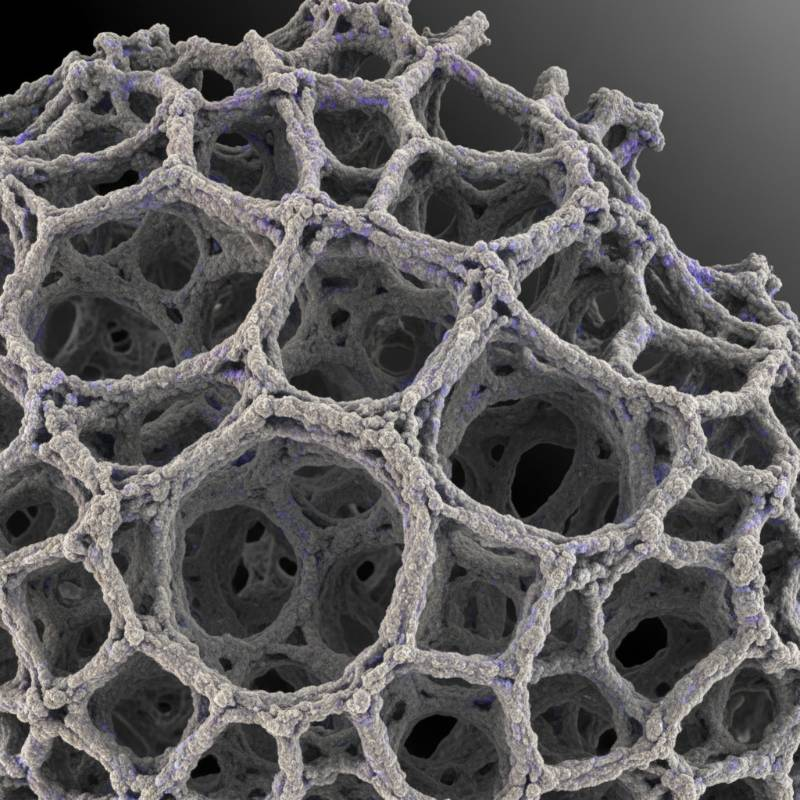
Manufacturing high-performance titanium felt is an exercise in precision. We start with high-purity titanium fibers, often ranging from 10 to 50 micrometers in diameter. These fibers are laid into a non-woven mat and then subjected to high-temperature vacuum sintering.
This process fuses the fibers at their contact points without melting the entire structure. The result? A material with high mechanical strength that remains over 70% porous. Porosity control is vital. Too dense, and the water cannot reach the catalyst. Too sparse, and the electrical resistance becomes unmanageable.
Surface Morphology and Fiber Uniformity
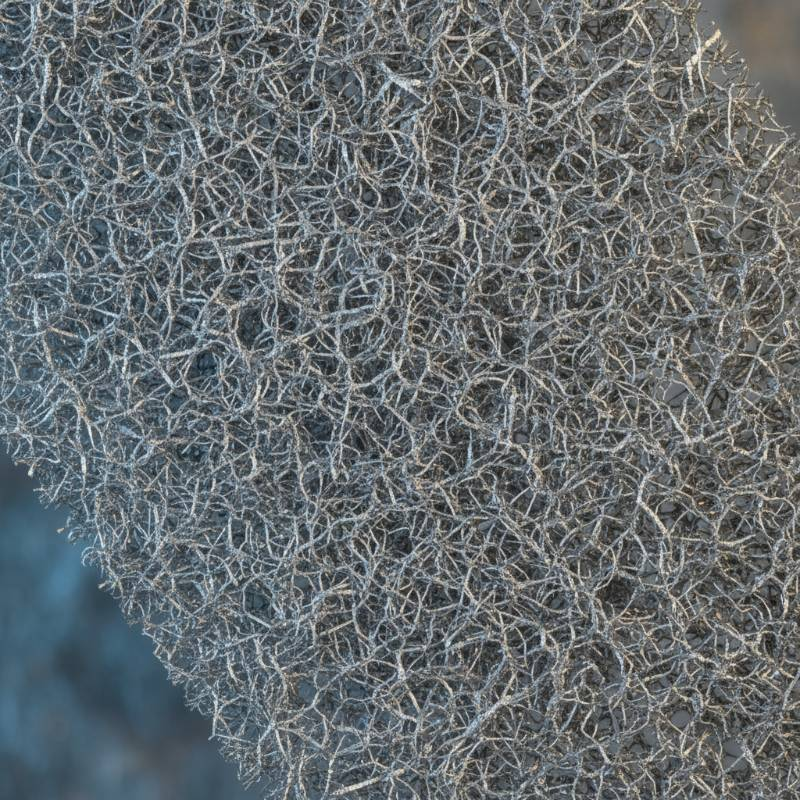
Uniform fiber distribution prevents "hot spots" in the electrolyzer. According to our analysis, a randomized fiber orientation provides the best balance of multi-directional fluid flow and vertical electron transport. This mechanical integrity ensures the felt doesn't collapse under the high clamping pressures of the stack.
Titanium Felt vs. Carbon Paper: Choosing the Right GDL
Why not use cheaper carbon paper? The oxygen evolution reaction (OER) occurs at potentials exceeding 1.5V. In these acidic, oxidizing conditions, carbon turns into CO2 and washes away. Titanium, however, forms a protective (though resistive) oxide layer that maintains structural integrity.
| Property | Carbon Paper | Titanium Sintered Felt |
|---|---|---|
| Corrosion Resistance | Poor (Oxidizes) | Excellent |
| Operating Voltage | < 1.2V | > 2.0V |
| Mechanical Strength | Brittle | Ductile/Strong |
The Quad-Factor GDL Selection Protocol: A Systematic Approach
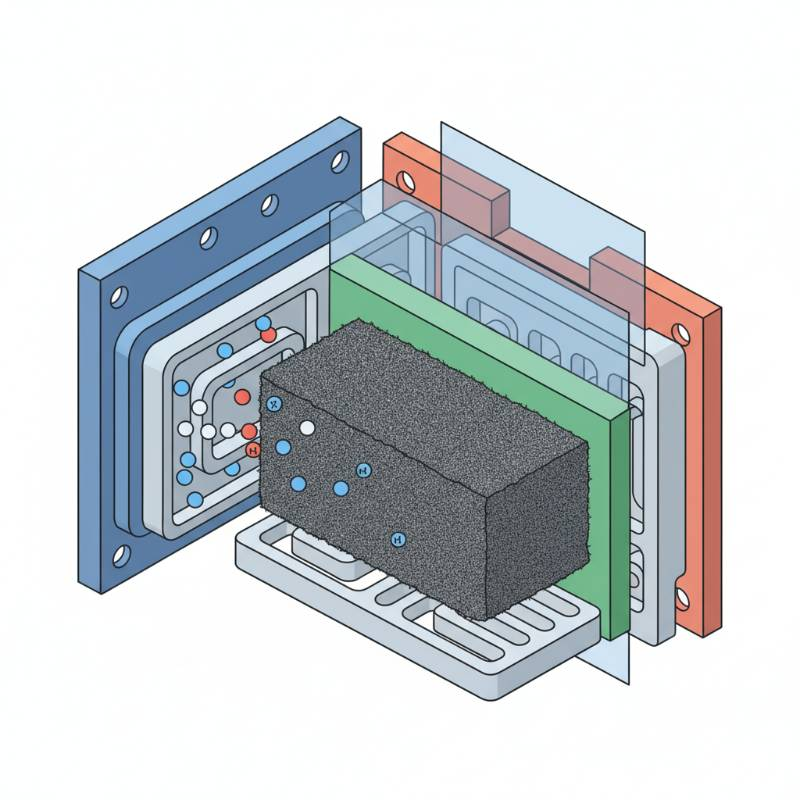
At China Titanium Factory, we utilize The Quad-Factor GDL Selection Protocol to guide our partners. This isn't guesswork; it's engineering. We evaluate four critical pillars to ensure stack optimization:
Porosity Distribution: We target a gradient that facilitates gas bubble removal.
Mean Pore Size: Usually kept between 10µm and 30µm to prevent membrane "intrusion" under pressure.
Compressed Thickness: We calculate the "effective thickness" under 2MPa of stack pressure.
Surface Conductivity: This is the Golden Rule of GDL Optimization: Interfacial contact resistance (ICR) is the silent killer of stack efficiency; prioritize surface conductivity over raw material volume.
Advanced Coating Technologies: Platinum and Iridium Enhancements
Raw titanium has a flaw: it forms a non-conductive TiO2 layer. To combat this, we apply Platinum coating thickness optimization via electroplating or PVD. Platinum prevents the oxide layer from growing, keeping the ICR low for thousands of hours.
While Platinum electroplating is common, some high-end applications use Iridium coatings to further enhance catalytic activity at the interface. Research from the National Renewable Energy Laboratory (NREL) confirms that even a thin, 100nm layer of Pt can reduce voltage loss by over 50mV at high current densities.
Technical Performance: Pressure Drop and Porosity Estimation
Mass transport is all about fluid dynamics. A high pressure drop across the GDL forces the pump to work harder, lowering the system's overall efficiency. We use Darcy's Law to estimate permeability. In our testing, we found that a 0.25mm PEM electrolyzer component felt with 70% porosity provides the optimal "sweet spot" for 2A/cm² current density.
Don't ignore the bubbles. If oxygen gas cannot escape the felt quickly, it masks the catalyst sites. This "gas blinding" is the primary cause of voltage spikes in poorly designed stacks.
Sustainability and Green Manufacturing in GDL Production
Green hydrogen must be green from the ground up. Our sintering furnaces are powered by renewable energy offsets, and we implement a circular economy model. Titanium scrap from the cutting process is recycled back into the fiber drawing stage. According to data from the U.S. Department of Energy, increasing the recyclability of stack components is key to meeting the $1/kg hydrogen target.
Installation Best Practices and Maintenance for PEM Stacks
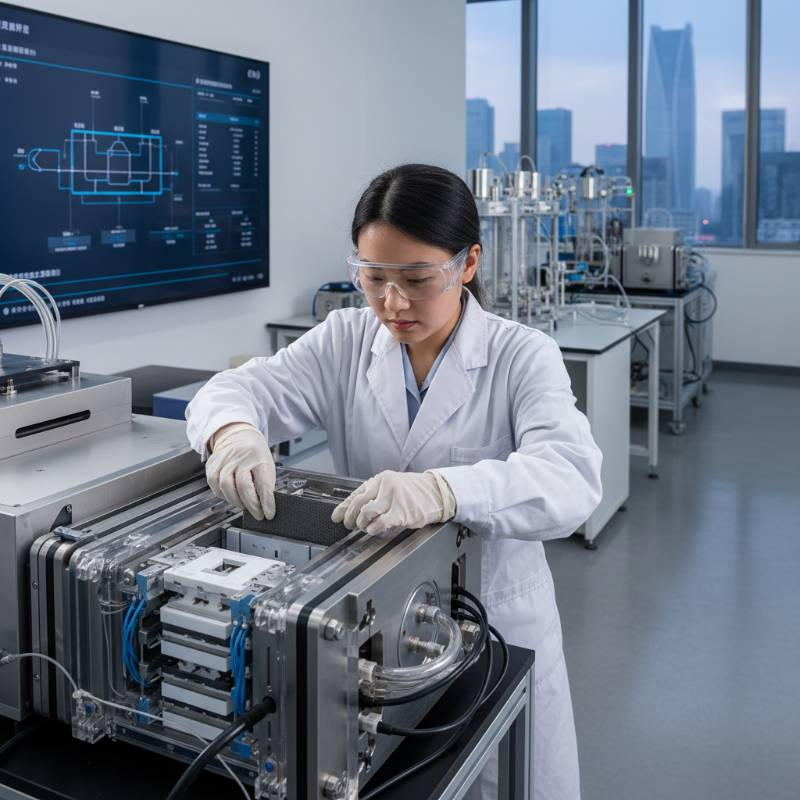
Handling titanium felt requires care. It’s tough but sensitive to contamination. Always use lint-free gloves. Even a tiny amount of skin oil can poison the membrane catalyst. When cutting to size, use laser or water-jet cutting to minimize fiber shedding at the edges.
Compression management is critical. We recommend a 15-20% compression ratio. Over-compressing crushes the pores and kills mass transport. Under-compressing leads to high electrical resistance and localized heating.
Frequently Asked Questions About Titanium Sintered Felt
What is the typical lead time for custom-sized GDLs?
Standard sheets are often in stock. Custom sizes or specific Platinum coating thicknesses typically require 2-3 weeks for production and quality verification.
Can I get R&D samples for testing?
Yes. We support hydrogen research by providing small-format samples. Contact our technical team at China Titanium Factory to discuss your specific porosity requirements.
How do I prevent the edges of the felt from piercing the membrane?
This is a common issue called "fiber puncture." We recommend using a sub-gasket or requesting "edge-smoothed" felt during the manufacturing process to protect the CCM.
Ready to Optimize Your PEM Stack?
Don't let inefficient GDLs bottleneck your hydrogen production. Leverage our Quad-Factor Selection Protocol and high-purity titanium solutions today.
Get a Technical Quote